Can You Do This Yourself
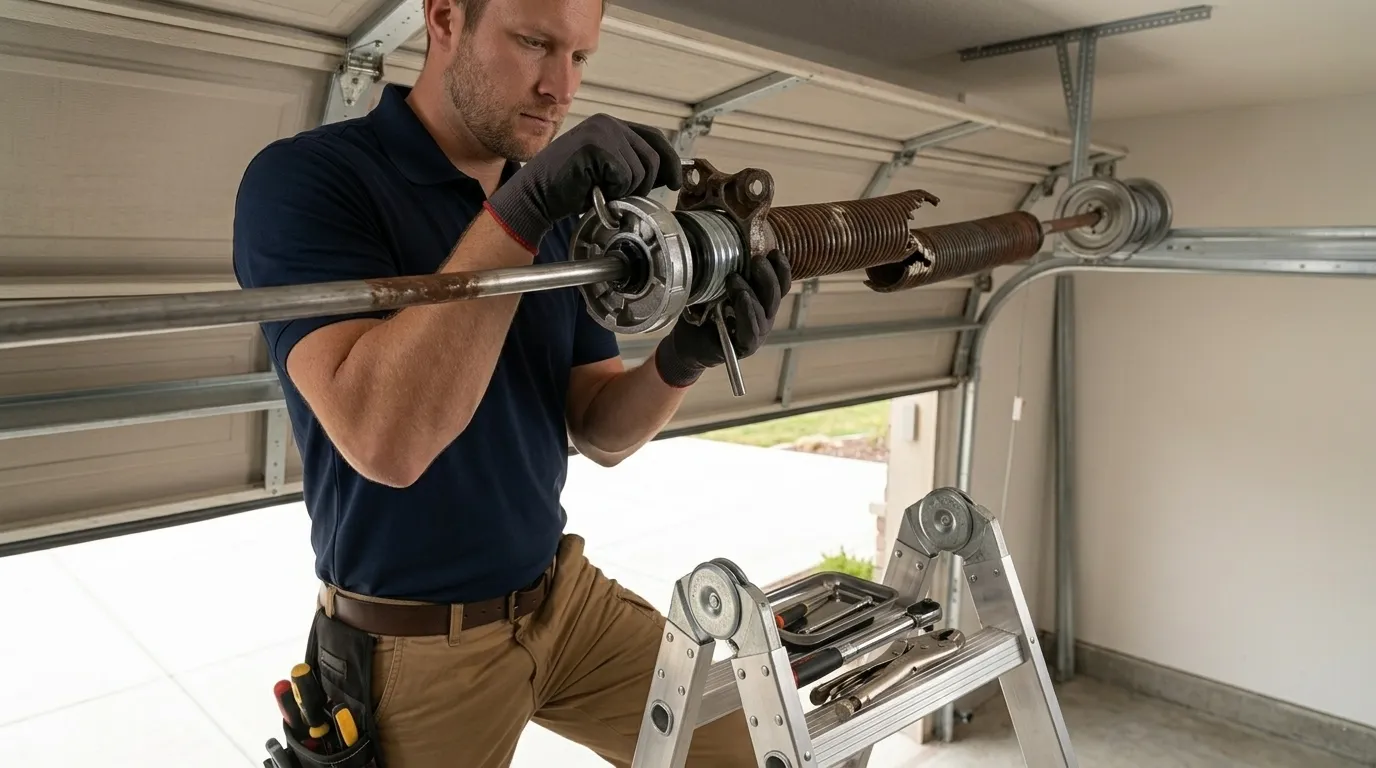
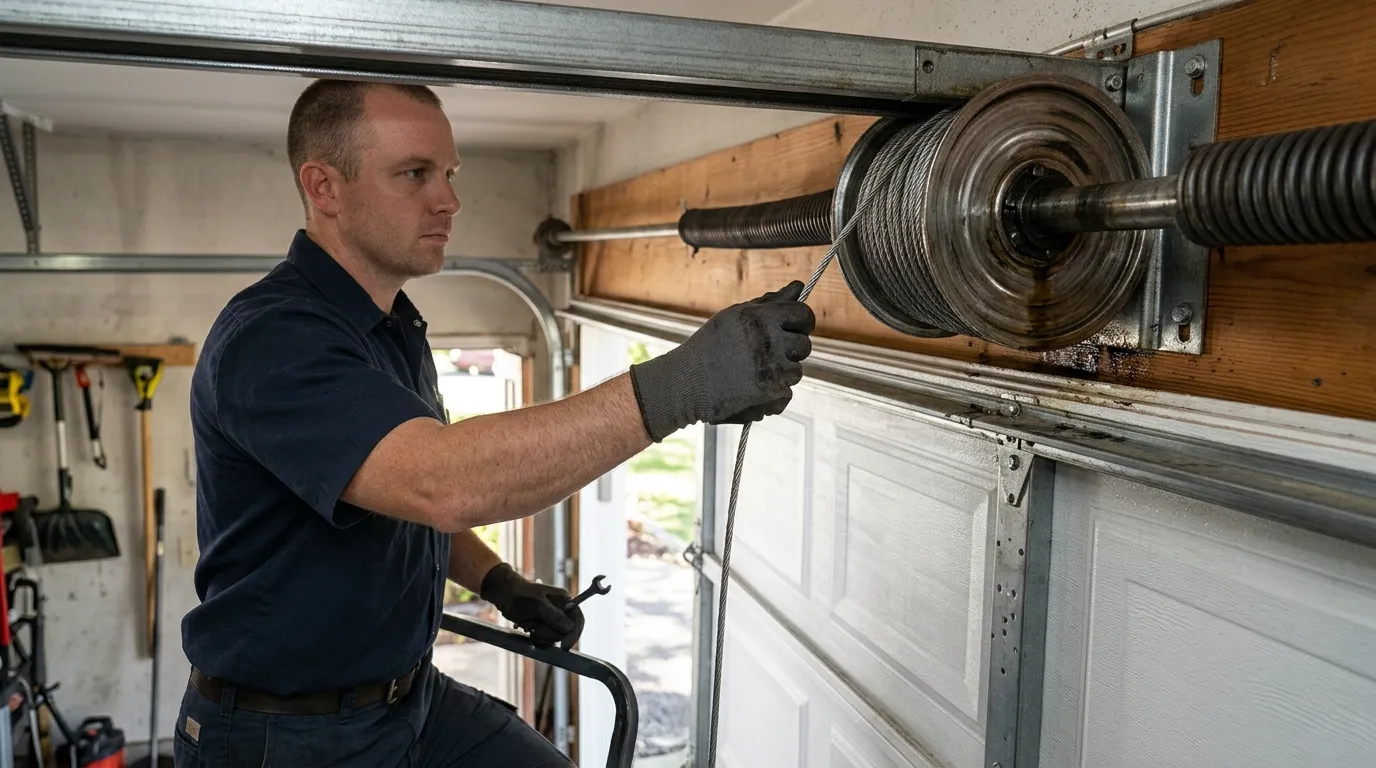
If the door won't open and you hear a bang or see a gap in the coiled spring above the door, don't try to force it with the opener or by hand. A torsion spring holds serious tension, and releasing it wrong can break fingers or worse. Winding cones, unbalanced springs, and cable drums aren't a weekend project even for a handy owner - the tools for a safe wind-down aren't something most garages have sitting in a drawer.
What you can check yourself: pull the release cord and see if the door moves freely by hand when it's down halfway. If it drops or shoots up, that's a spring problem, not an opener problem, and it needs a service call. If the door just won't respond to the wall button or remote, check that the opener is plugged in and the safety sensors near the floor aren't blocked or knocked out of alignment - that's a five-minute fix a lot of owners can do themselves before calling anyone.
The one thing worth being honest about: once a torsion spring shows rust pitting or a visible gap in the coil, there's no adjustment that buys you real time. It's a replacement job, not a lubrication job.
What the Fix Involves
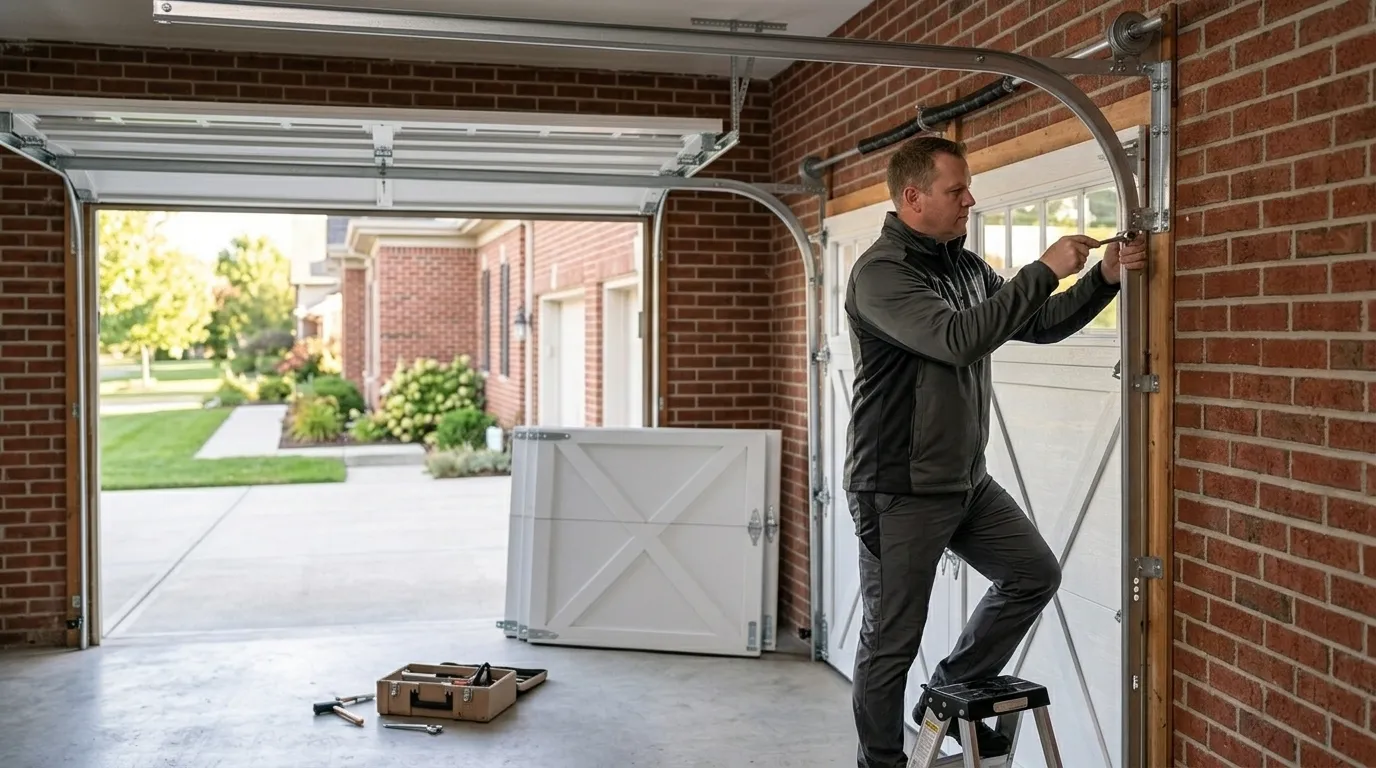
For a broken or worn-out torsion spring, the job is a full spring swap, not a repair - springs don't get patched. That means matching the new spring's wire size and wind direction to the door's weight and track drop, then winding it to the correct number of turns with winding bars, not by guesswork. Cables and drums get inspected at the same time since they carry the same load and wear on the same schedule.
On older single-spring setups common in houses from the 1960s and 70s, we'll walk through whether it makes sense to convert to a two-spring system for better balance, or stick with a like-for-like replacement - that decision depends on the door's weight and the track condition, not just what's cheapest today.
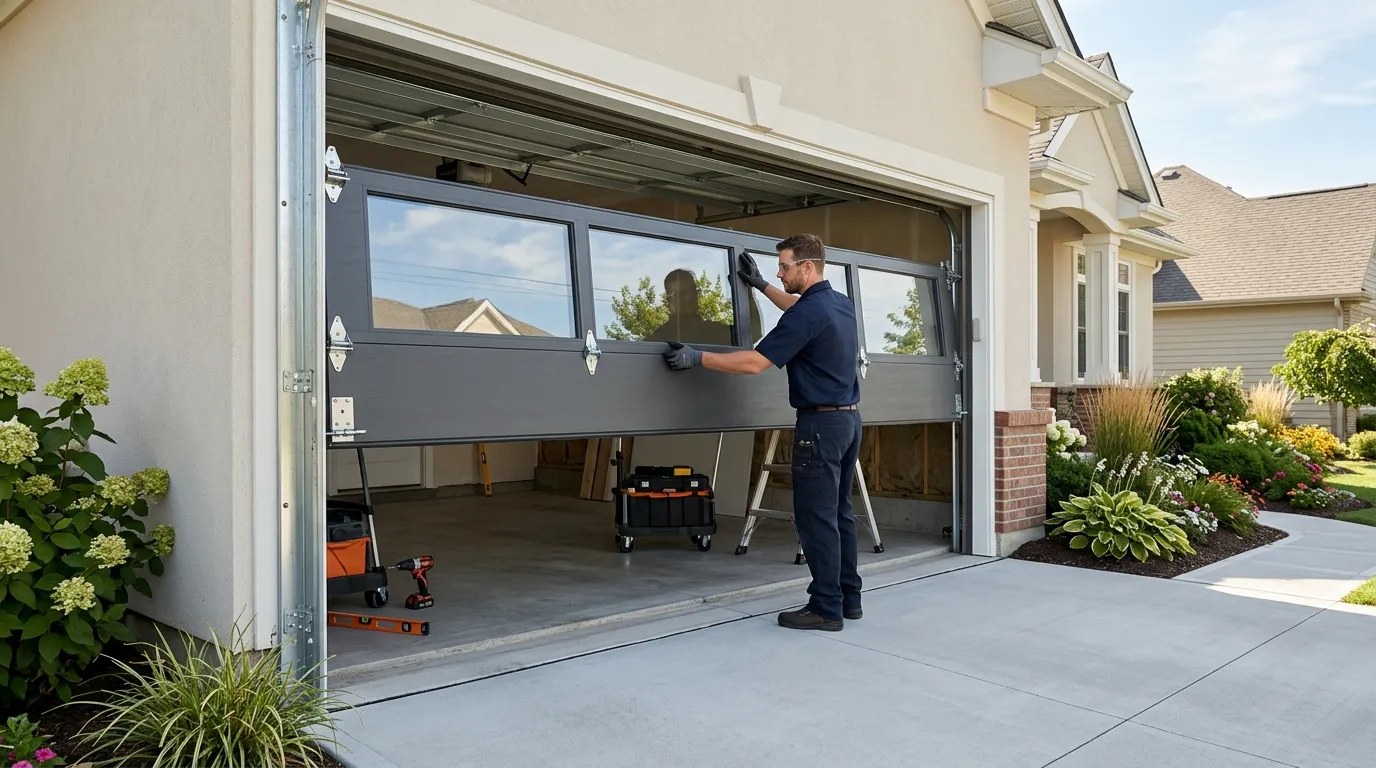
Rollers and hinges usually get a look too, since a spring failure often follows years of a door running slightly out of balance, which grinds down rollers faster than normal. If the door has been struggling for a while, expect us to flag worn rollers or a bent track section rather than just swap the spring and call it done - patching the symptom while ignoring the cause is how the same call happens again in eighteen months.
What Causes It Around Here
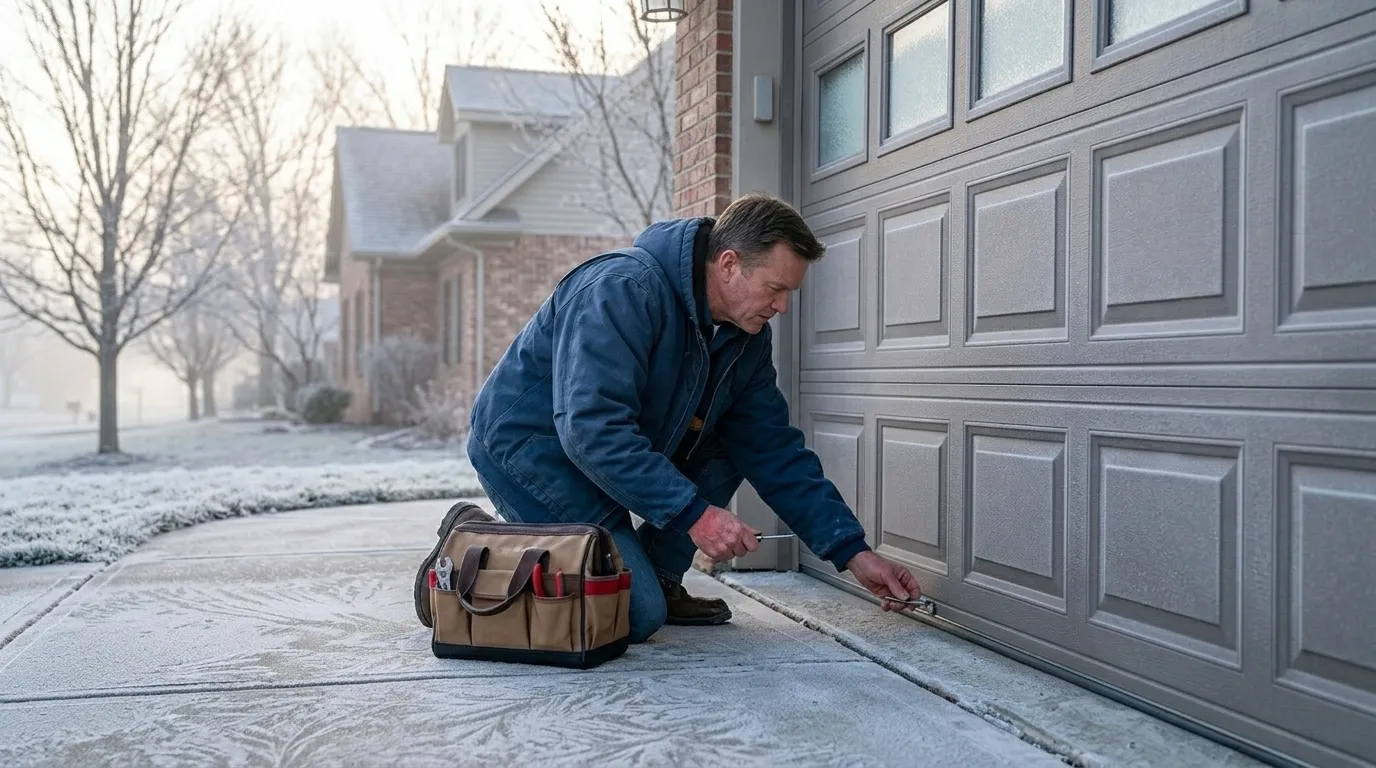
Toms River sits in a cold, severe winter climate band, and that temperature swing is the real driver behind early spring failure. Steel loses some flexibility in the cold, and a spring that's already near the end of its rated cycle count fatigues faster through a Toms River winter than it would somewhere with milder swings. Combine that with housing built mostly in the 1960s and 70s - original springs, original hardware, decades of cycles - and you get a predictable failure pattern across this area, not a random one.
Across the 46 named communities within a few miles of Toms River, from Leisure Village East and Pine Lake Park in close to Waretown and Forked River further out, the housing stock runs the same age and the same climate exposure, so the same spring-fatigue calls show up house after house. With 84,621 owner-occupied houses in the wider service area, that's a lot of garages carrying original torsion hardware past its expected working life.
Salt air isn't a factor we can speak to without more specific data, so we won't claim it here - the cold-cycle fatigue on aging springs is the pattern we actually see and can back up.