The Situation
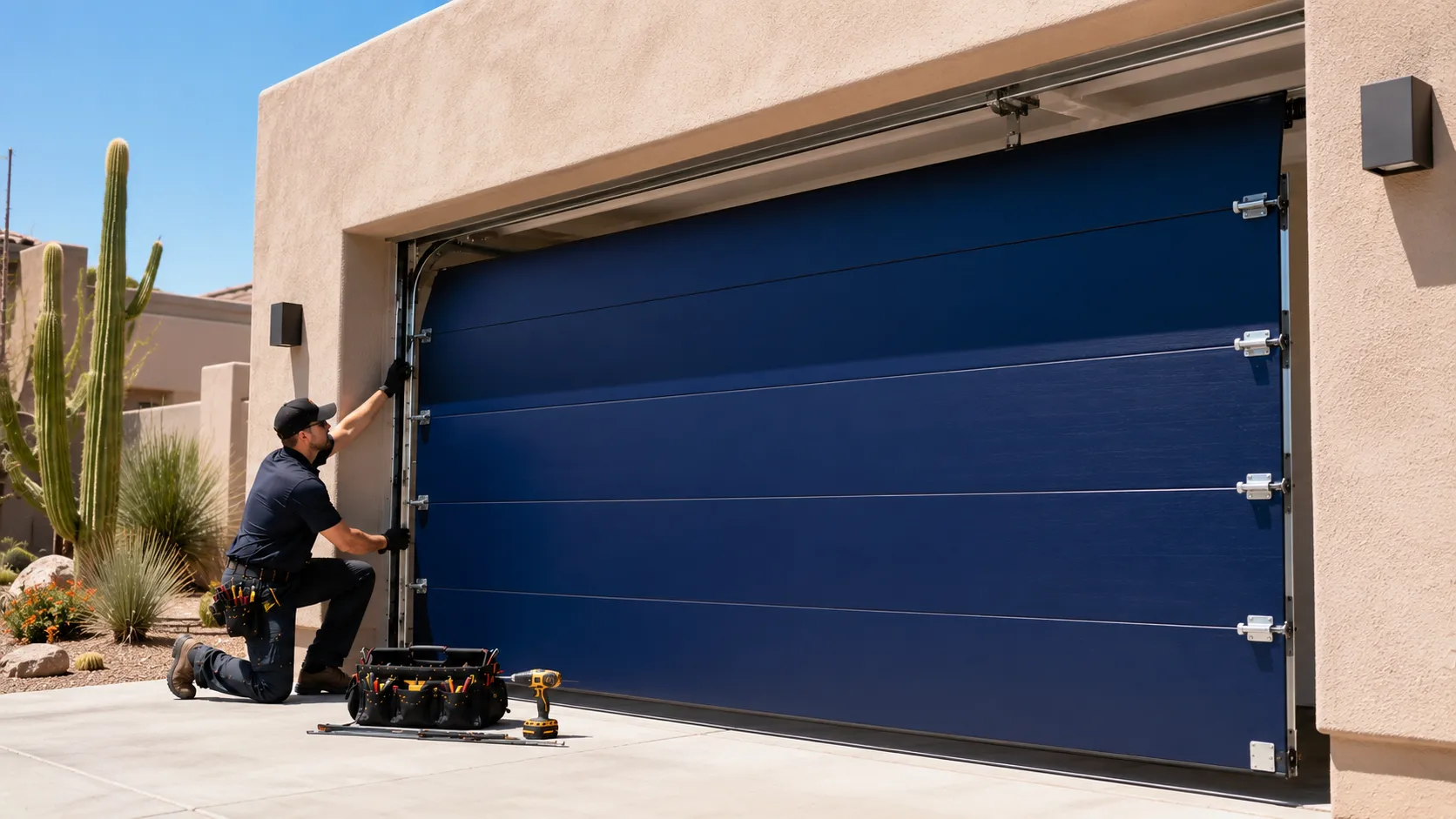
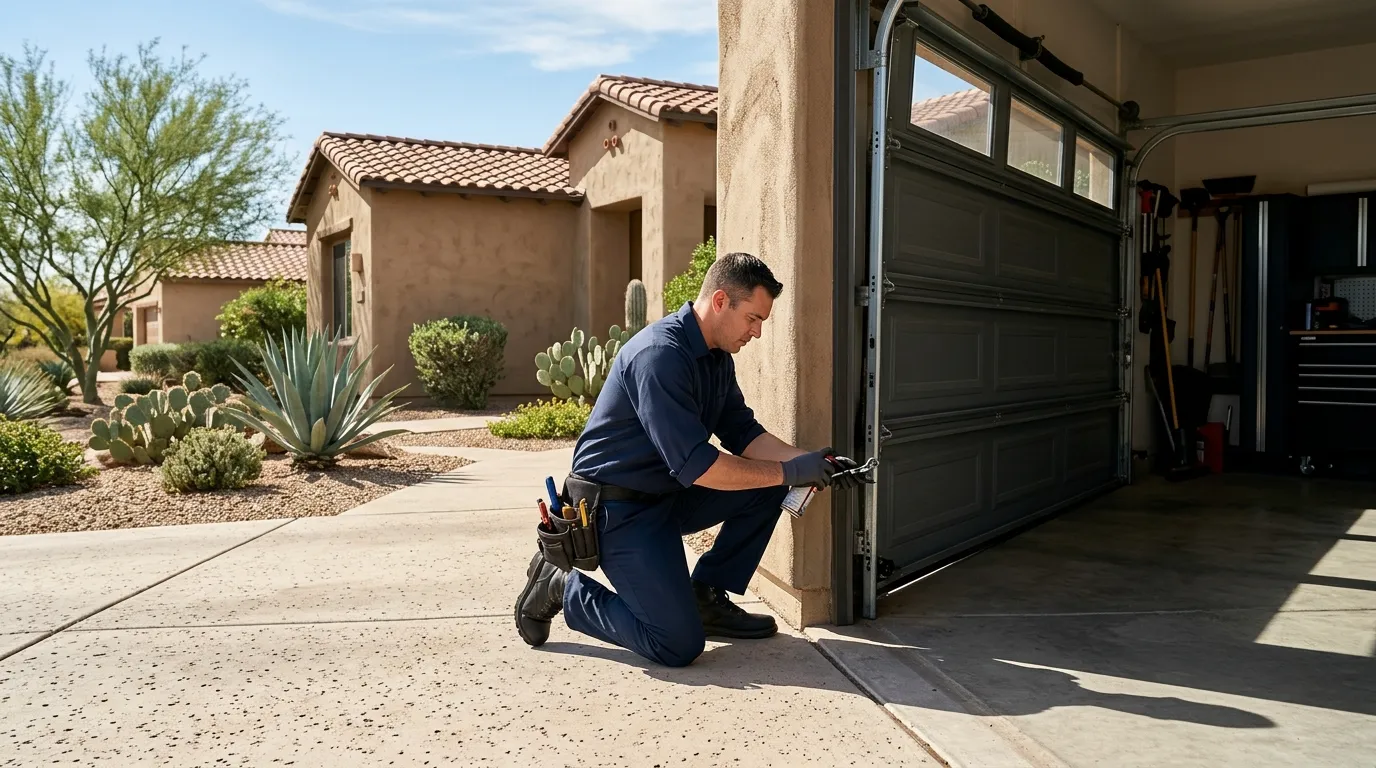
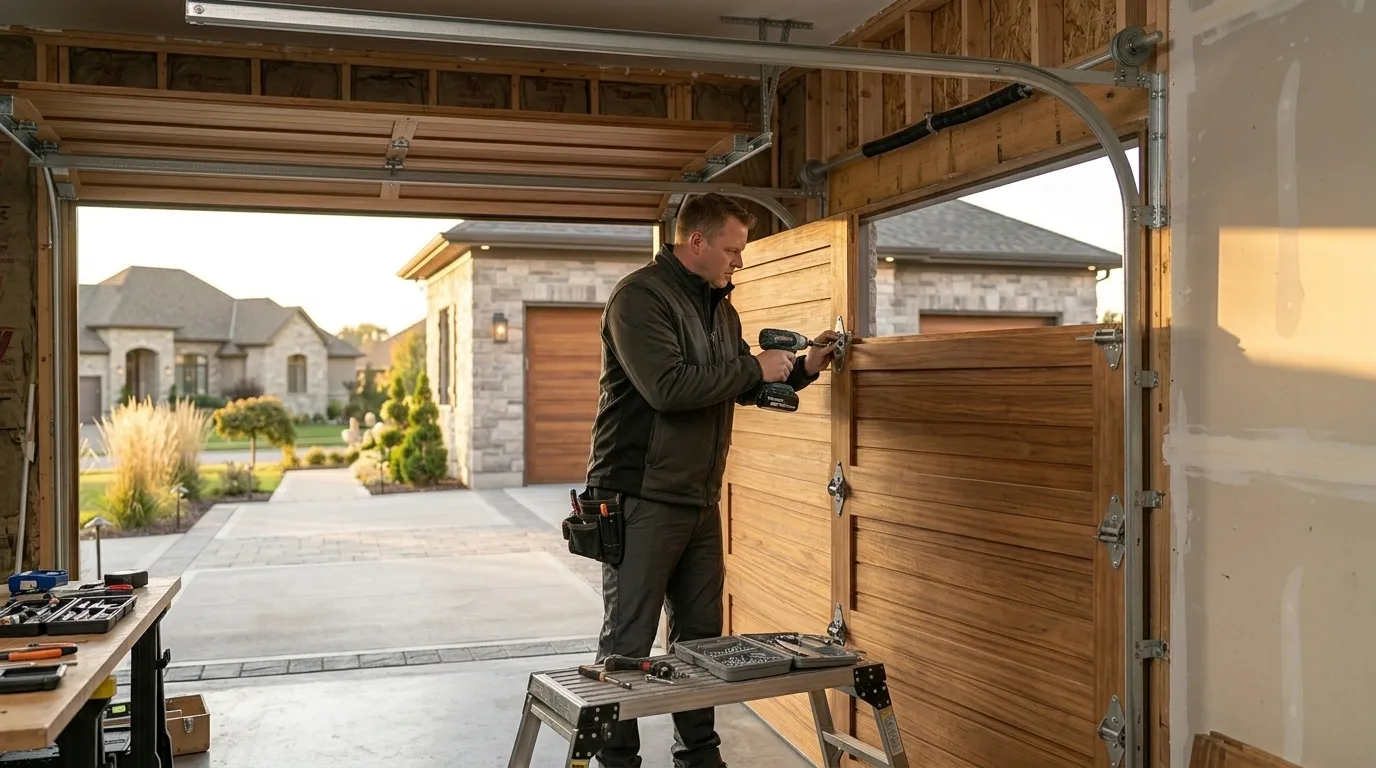
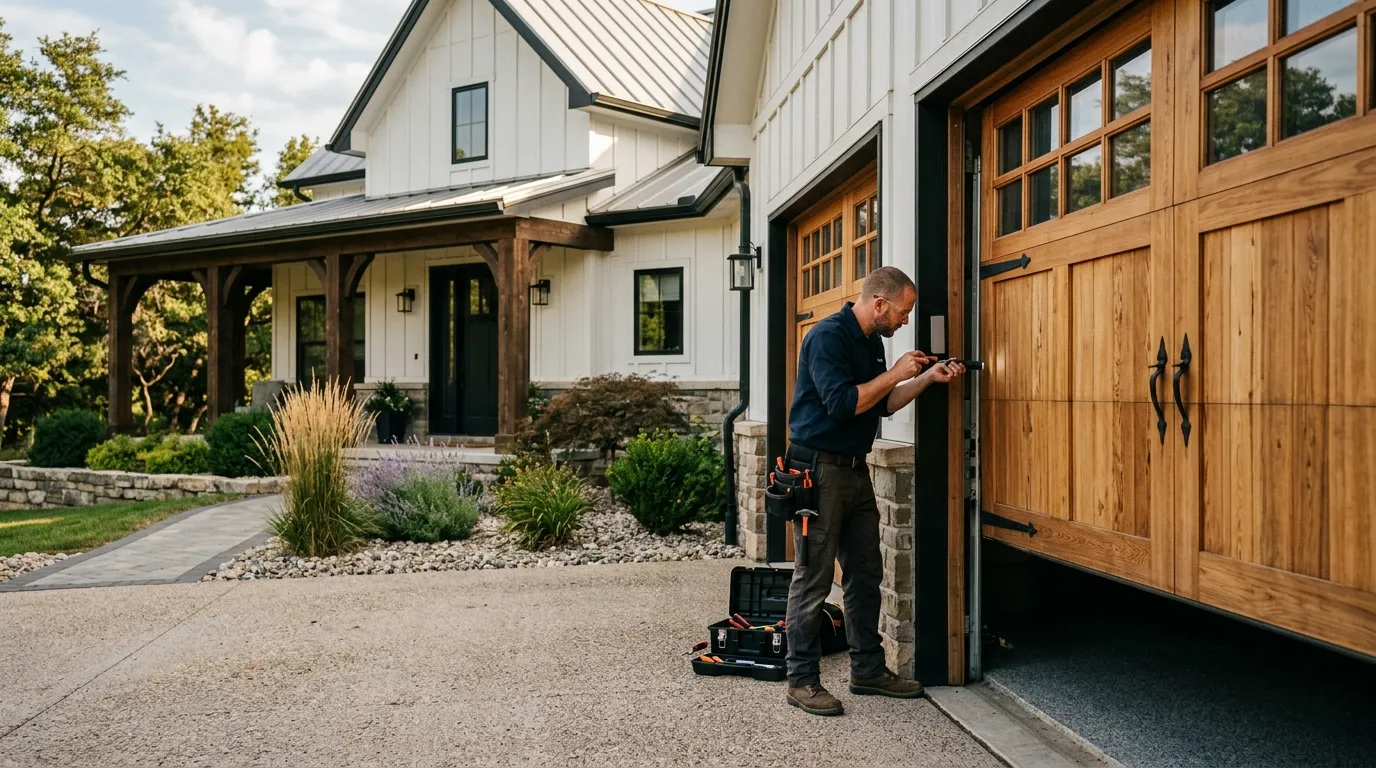
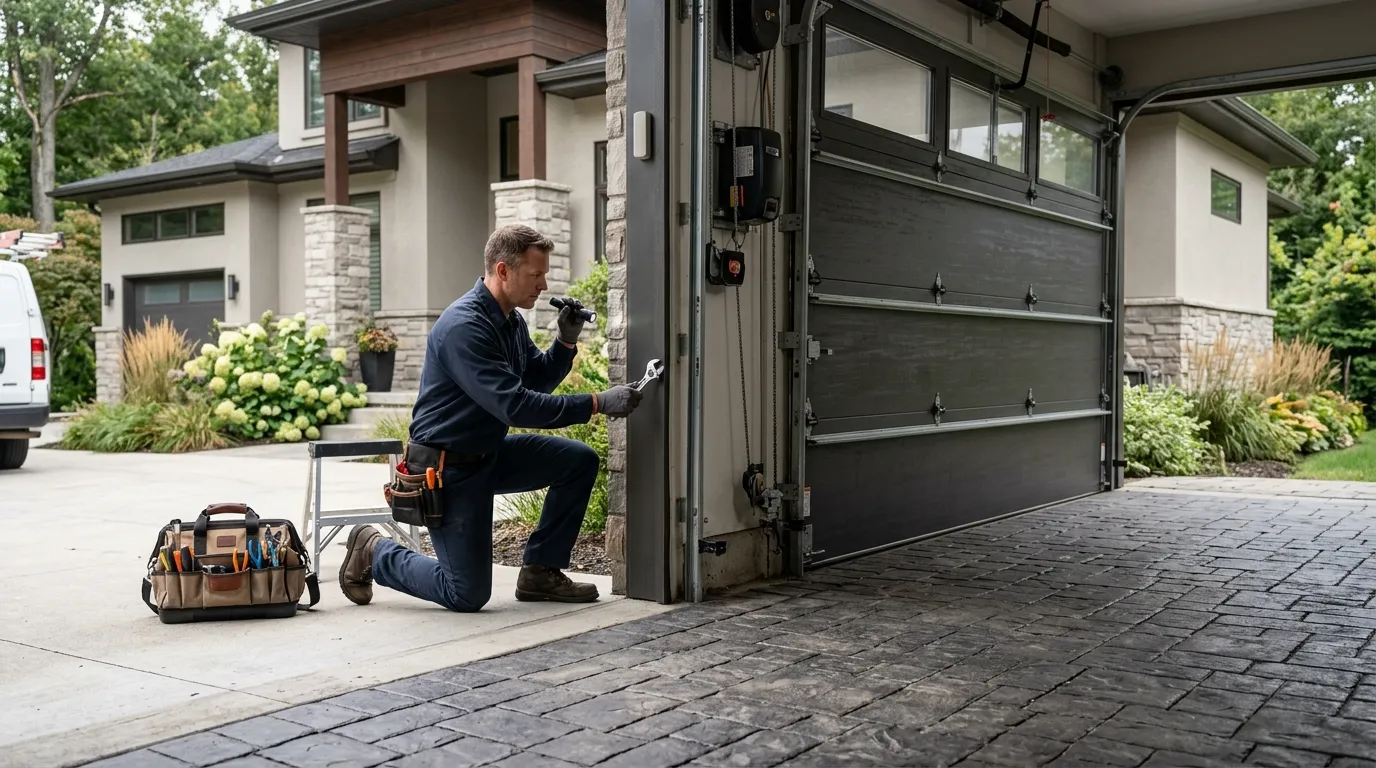
A door off its track doesn't happen out of nowhere. In a lot of the houses we get called to around here, the track brackets are the same ones installed when the house went up, and with median construction dating to 1972, that's decades of expansion and contraction working on the same sheet-metal bends. The bracket that holds the vertical track to the jamb loosens a fraction of an inch at a time. Nobody notices until the door binds on one side, or a roller pops clean out of the channel and the panel hangs crooked.
Across the 46 named areas in this part of the county, we see two patterns most often: track brackets that have worked loose from decades of use, and horizontal track that's sagged where the hanger straps were never tightened after the original install. Either way, the door doesn't derail all at once. It walks a little more out of true every time it cycles, until one day the roller finally jumps the lip of the track and the door stops moving, or worse, comes down at an angle.
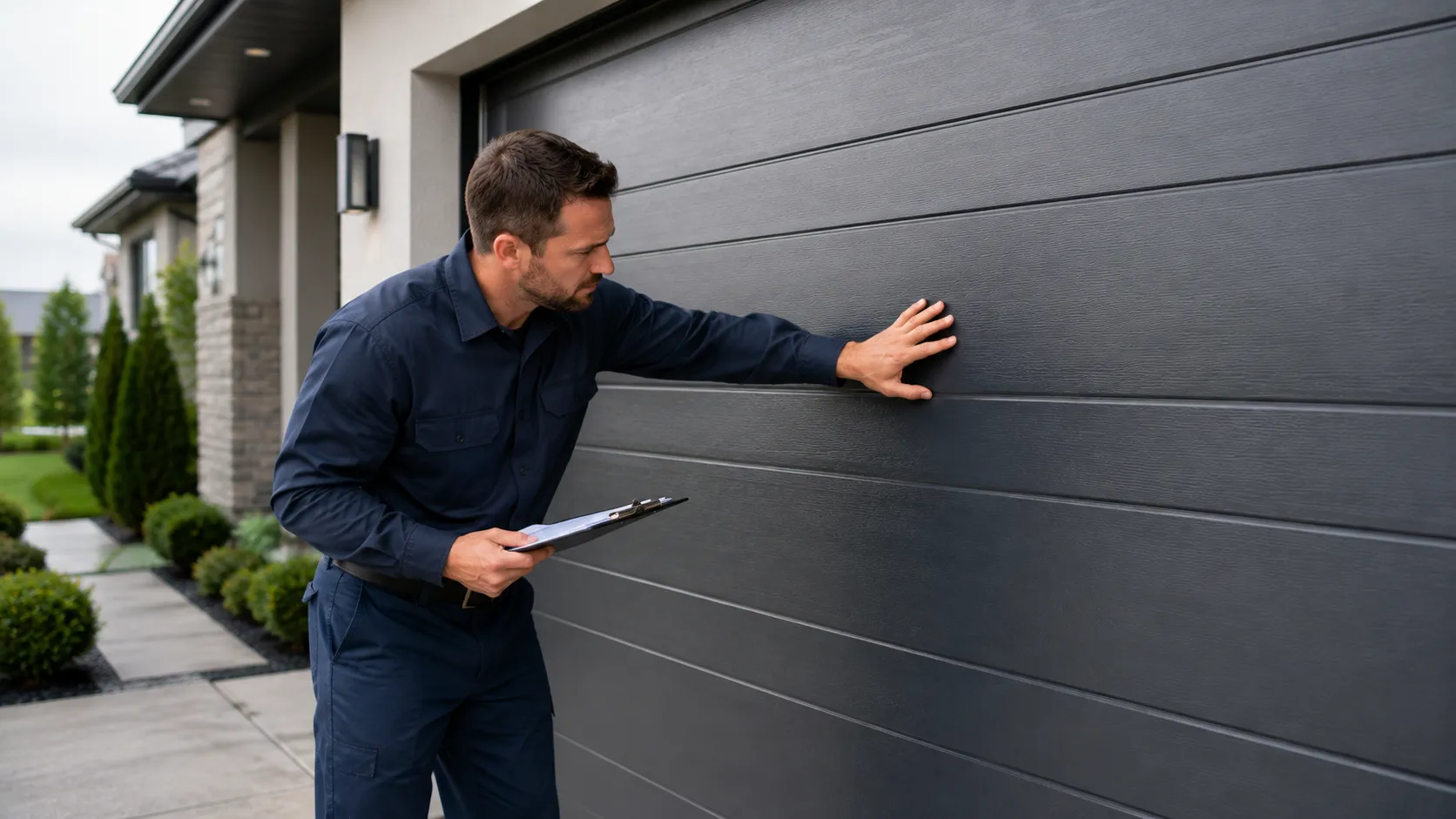
If your door is sticking on one side before it opens, or you hear a scrape near the top corner, that's usually the track pulling away from the wall, not the opener.
What Local Conditions Do
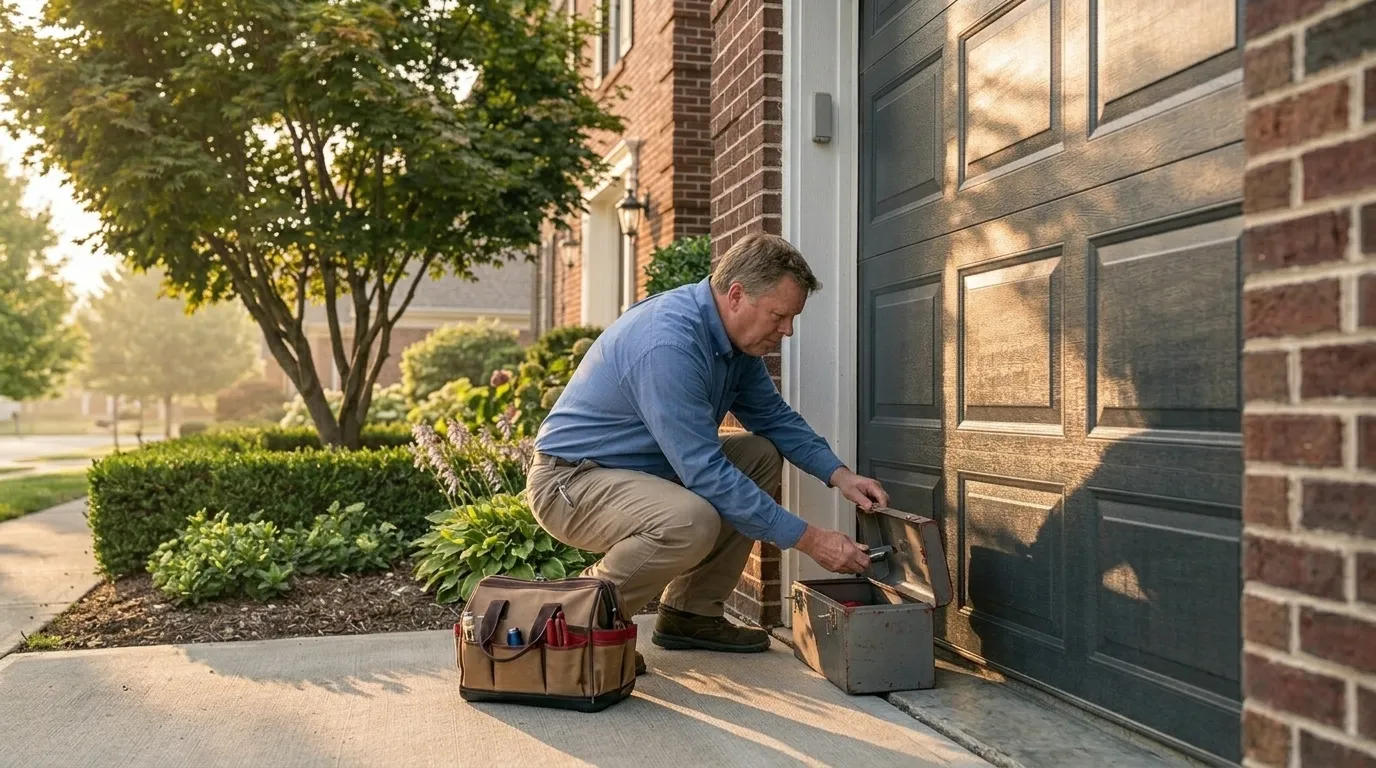
Toms River sits in a cold-severe climate band, and that matters more for tracks than most homeowners think. Steel track and steel brackets contract in a hard freeze and expand again once temperatures climb back up, and that cycle repeats itself every winter a house stands. On a home built in the 1960s or 70s - which describes most of the stock in this area - those brackets have been through fifty-plus years of that cycle. The screws work loose in the wood jamb a little further each season, and the track picks up a slight lean that a level will show even when the door still looks fine from the driveway.
Homes going back to the late 1930s through the early 2000s also mean a wide mix of jamb materials and bracket styles, so there's no single fix that applies to every house. A track that's been re-shimmed once already needs a different repair than one that's never been touched since the original build.
Leaving It Alone
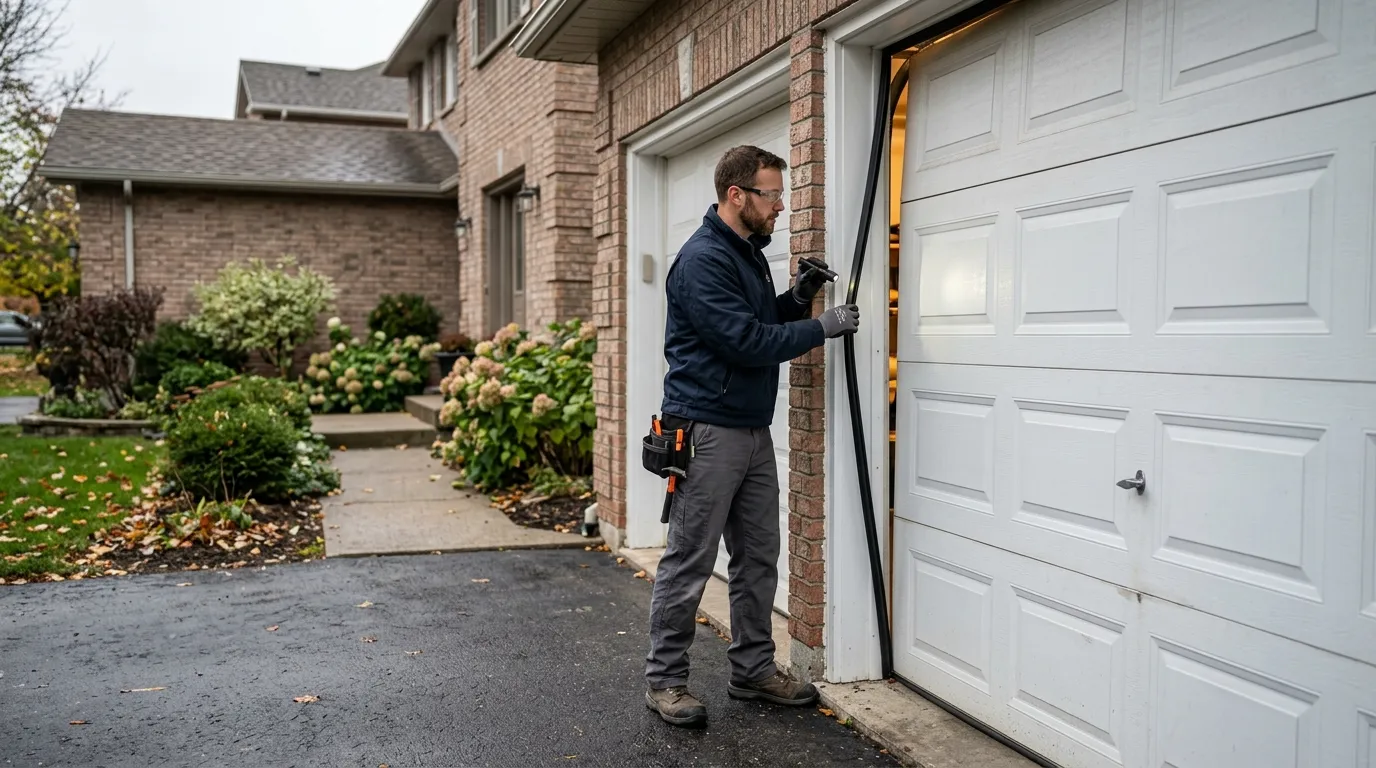
A door that's slightly off track will keep running for a while, and that's exactly the problem. Every cycle grinds the roller against the edge of the channel instead of rolling smoothly inside it, which wears the roller flat and starts bending the track a little more each time. Left long enough, the door can come off the track entirely mid-cycle, and on a double door that's real weight coming down unevenly. We'd rather get a call when the door is just starting to bind than after a panel has already dropped.