The Situation
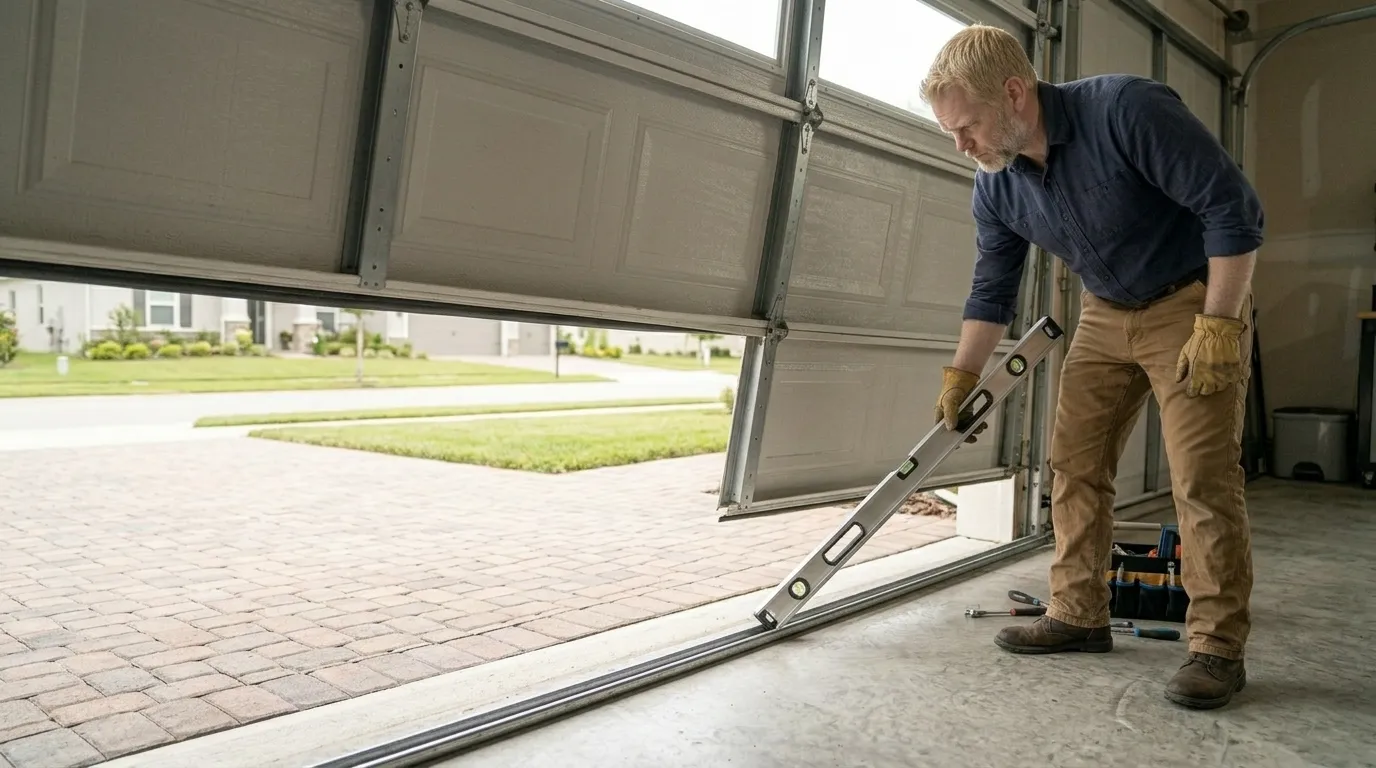
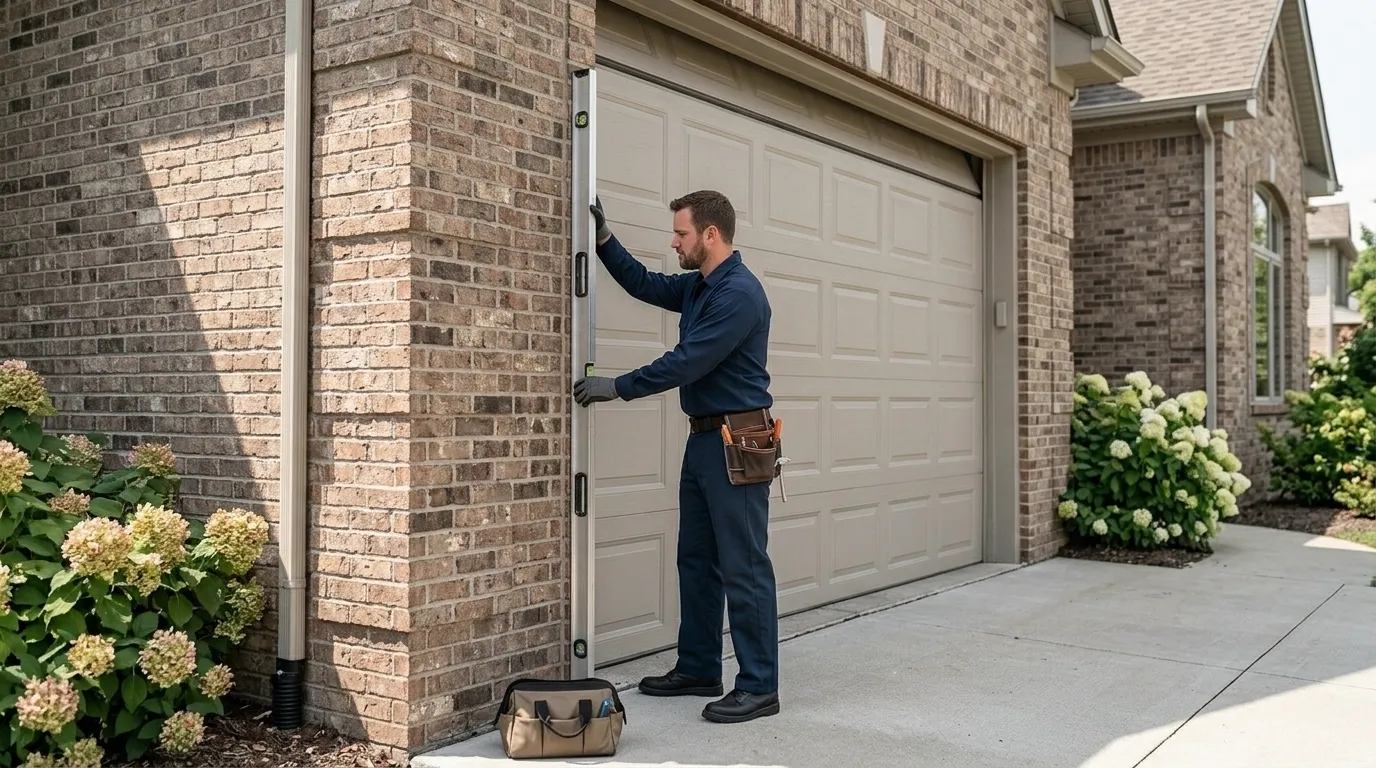
Toms River's housing stock runs from 1938 up through 2005, with the median year sitting at 1972. That means most of the doors we get called out to are original or a first replacement, matched to whatever hardware was standard when the section of town went up. Across the 46 named areas that make up this service area - from Leisure Village East and Pine Lake Park closer in to Holiday City-Berkeley and the shore-adjacent sections out toward Bayville - the bulk of the stock is 1960s and 70s construction. That era used lighter steel, single-layer panels, and torsion springs sized to the door weight of the day, not to today's insulated retrofits. When a homeowner in one of these neighborhoods calls about a door that's suddenly heavy to lift or won't seat right on the track, the first thing we check is whether the spring or hardware still matches the panel it was built for, because a lot of it doesn't anymore.
What Local Conditions Do
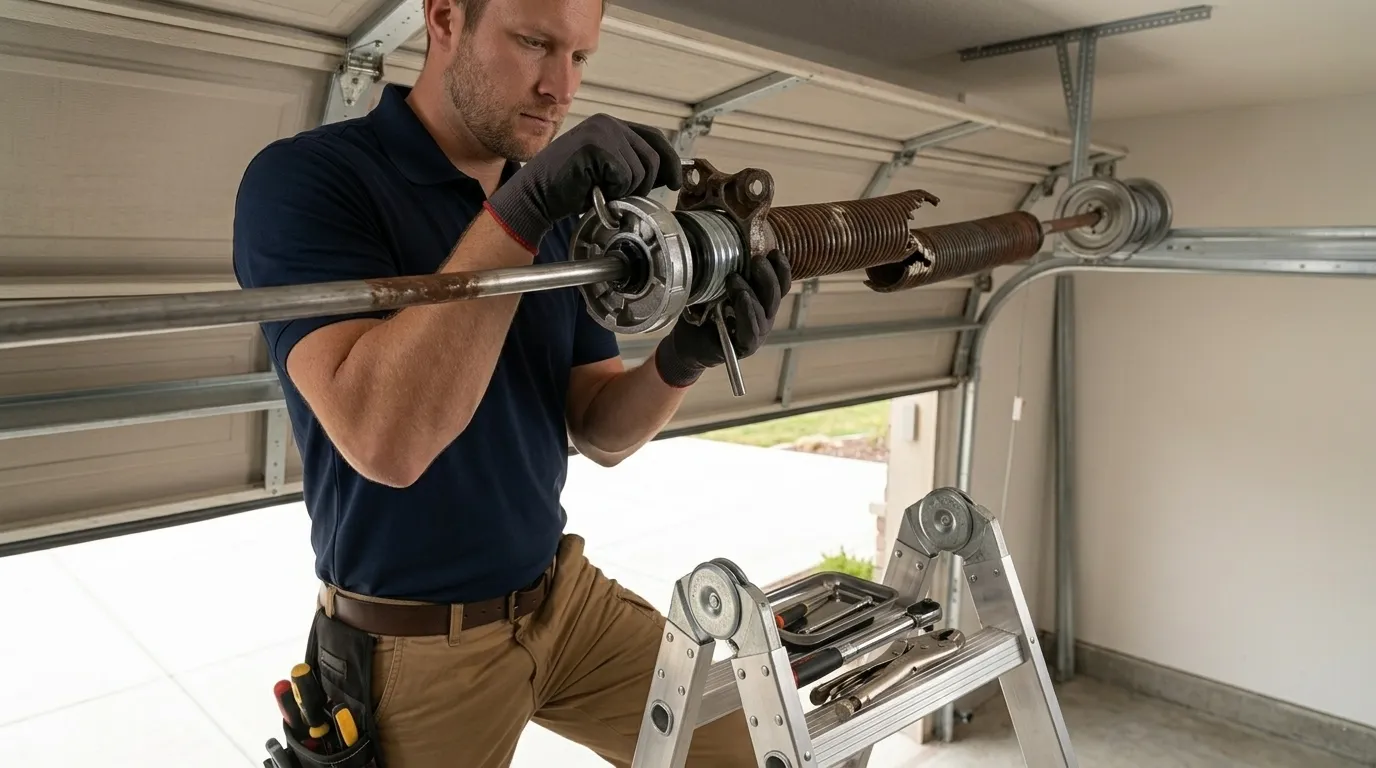
This area sits in a severe cold climate band, and Toms River is close enough to the barrier islands - Seaside Heights is about 7 miles out, Lavallette about 6 - that the salt air off the shore reaches inland neighborhoods too, not just the towns directly on the water. Cold contracts steel, and a torsion spring that's already fatigued from age tightens up and loses lift capacity faster in winter than it would in a milder climate. Salt-laden air speeds up corrosion on tracks, hinges, and bottom brackets, especially on doors that don't get hosed down or checked regularly. On a house built in the 1960s or 70s with original hardware, we see both problems stacking: metal that's decades past its rated cycle count, sitting in a climate that accelerates wear on exactly that metal. That combination is why a spring that seems fine in October can snap on a January morning, and why we tell owners in the older sections of town not to wait for a slow-close or a grinding noise before getting it looked at.
Leaving It Alone
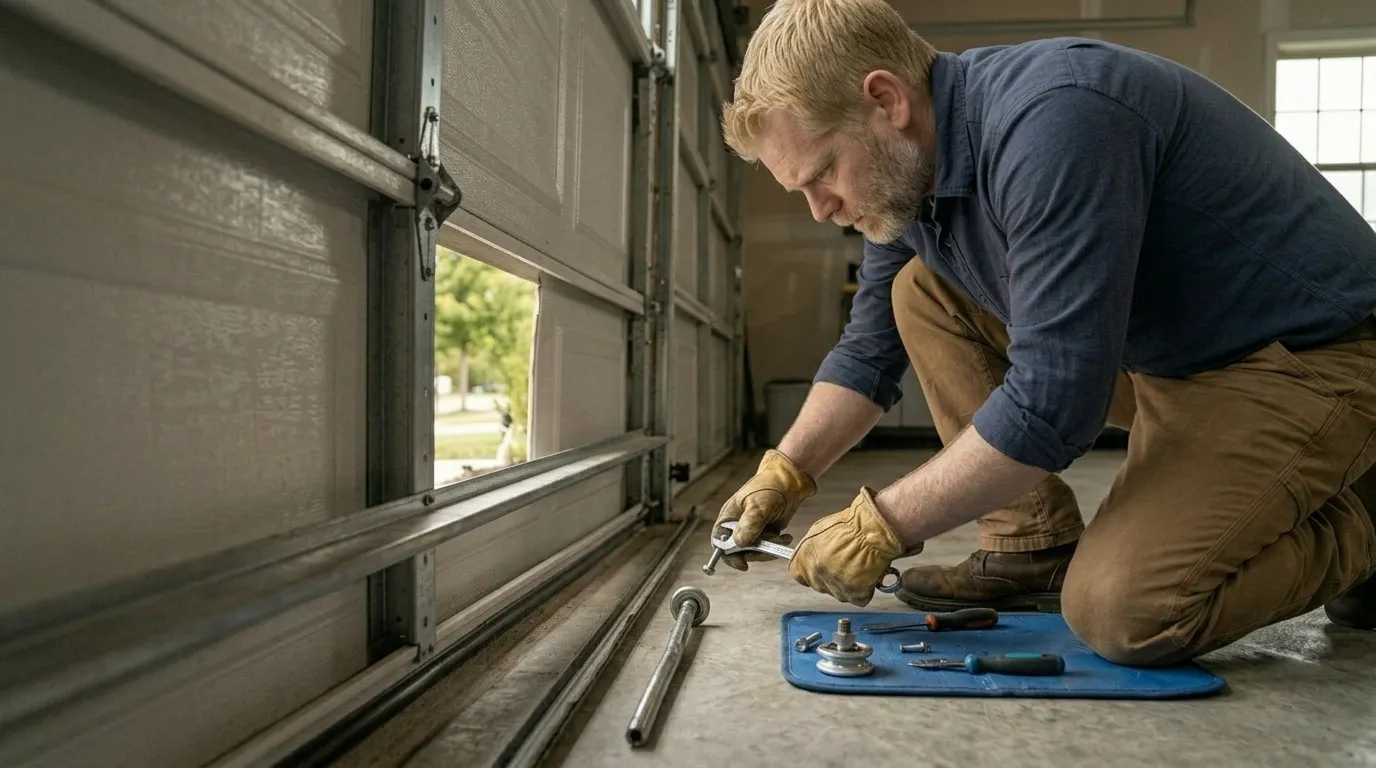
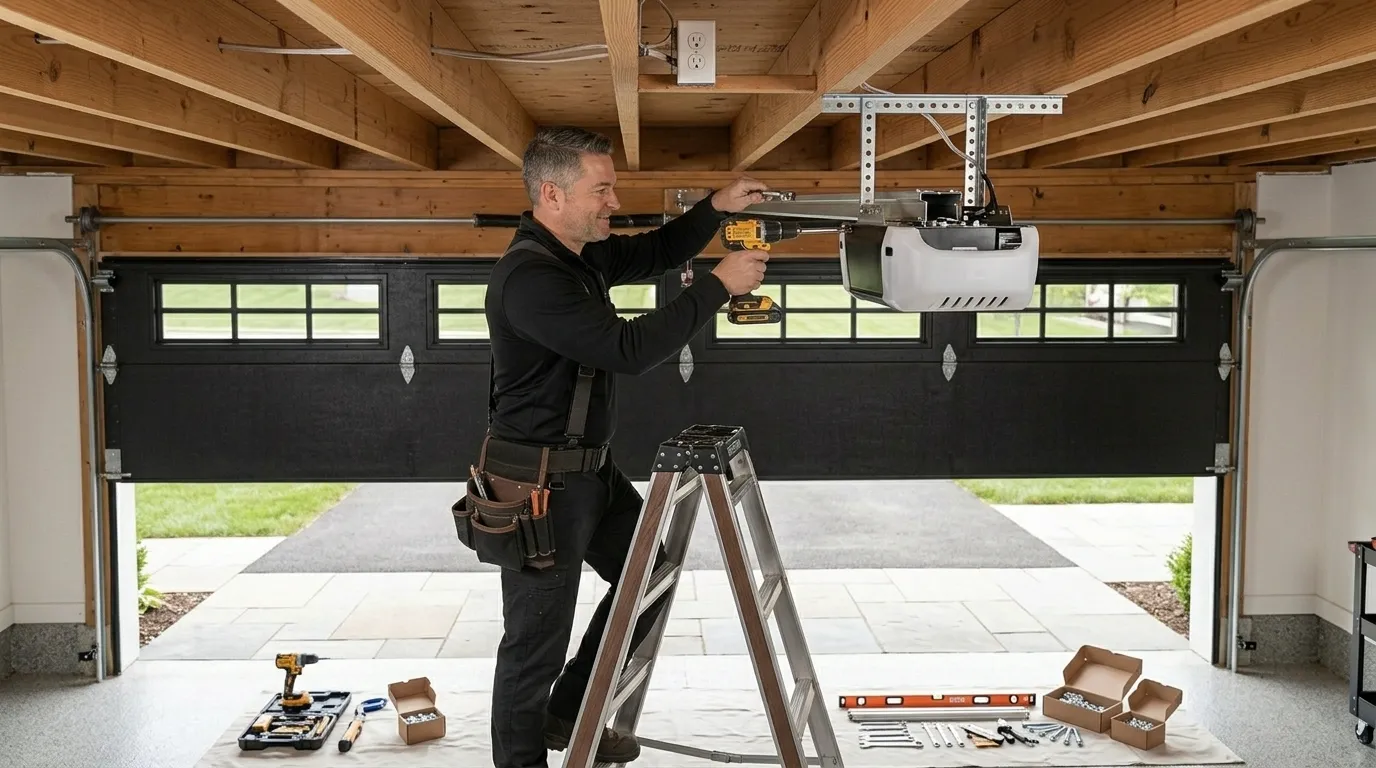
A door on a house built before insulation rules doesn't fail all at once, it fails in stages, and each stage costs more to catch late. A torsion spring under tension that's lost its coating to age and salt air doesn't just squeak, it can let go with enough force to bend the shaft or crack a cable drum on the way down. On the older stock across this service area, we've seen owners keep opening a door with a visibly stretched or rusted spring because it still worked, right up until it didn't, usually with the door stuck halfway or the opener straining hard enough to burn out a motor built for a lighter, newer panel. Ignoring a slow issue on a house this age rarely stays a small fix. We'd rather get a call about a noise now than a call about a door that's come off the track with a car parked under it.