24/7 Emergency Service Open 7 days · 7am–8pm Serving Toms River, NJ & nearby
(732) 359-5246
Toms River, NJ

What Your Garage Door Is Trying to Tell You

Toms River homes built mostly 1938-2005 carry original hardware into a cold, damp shore climate. Here's what the grinding, popping, and slapping sounds actually mean.

What Your Garage Door Is Trying to Tell You

The Situation

Most of the houses in Toms River and the surrounding communities like Pine Lake Park, South Toms River, and Holiday City South went up between 1938 and 2005, with a heavy concentration in the 1960s and 70s. That means a lot of original torsion springs, original tracks, and openers that have been replaced once, maybe twice, but on hardware nobody upgraded.

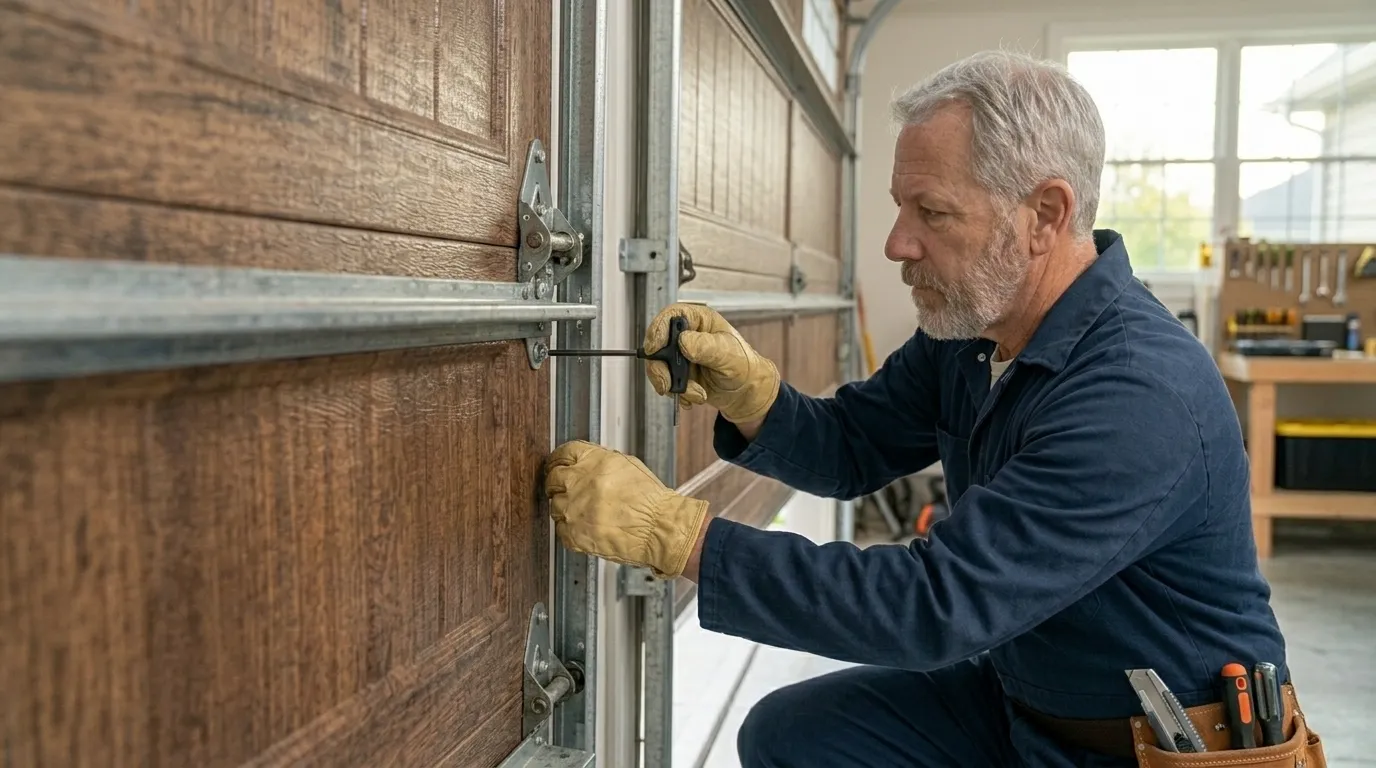
A door that's fine for fifteen years starts making noise for a reason, not randomly. A rhythmic thump on the way up usually means a roller has gone flat or a hinge is loose. A sharp bang, especially first thing on a cold morning, is often a torsion spring losing tension - not broken yet, but close. A grinding sound from the top of the door points to the opener's drive gear, which wears out faster on the older chain-drive units still common in this age of housing stock.

We hear the same three or four sounds over and over across neighborhoods from Holiday Heights to Beachwood, because the houses share a build era. If your door sounds different than it did a year ago, that's data, not background noise.

What It Costs

We're not going to hand you a number here that doesn't hold up depending on what's actually wrong - spring replacement, roller swap, and opener gear repair are three different jobs with three different price tags, and quoting one figure for all of them would be a guess dressed up as a fact.

What we can tell you: a repair almost always costs less than a full door replacement, and on the older torsion setups common in this area, a spring job is usually the cheaper of the two once you're past the point of no return. The honest limitation is that we can't price a job over the phone from a description of a noise. Torsion spring wind direction, door weight, and whether the drum or cable is also worn all change the number, and guessing wrong either lowballs you or scares you off a job that didn't need to be that expensive.

What we will do is look at the door, tell you which of the sounds above it's making, and give you a real number before we touch anything.

What Local Conditions Do

Toms River sits in a cold-severe climate band, and that matters more to a garage door than most homeowners expect. Steel contracts in cold weather, which tightens tolerances on tracks and rollers that were already worn from decades of use. On a door built or fitted in the 1960s or 70s, that contraction is often what turns a quiet slack cable into an audible slap against the track on a January morning.

Humidity swings do the rest of the damage. Salt air and damp winters common to this stretch of the Jersey Shore corrode spring coils and hinge pins faster than they would inland, and once a coil starts pitting, it loses tension unevenly - which is exactly the kind of noise that sounds like nothing until it's a snapped spring under load.

We see this pattern consistently on the older housing stock through Pine Lake Park, Holiday City-Berkeley, and the Leisure Village communities, where original hardware has been through fifty-plus winters. It's not that the door is defective. It's that cold-severe climate plus decades-old steel is a combination that eventually talks back.

Leaving It Alone

A door that grinds or thumps doesn't fix itself, and waiting rarely saves money. A torsion spring under uneven tension - the kind that develops in this climate on 1960s and 70s hardware - doesn't just get quieter with time. It gets closer to snapping, and a spring failing under load can bend a track or drop a door on whatever's underneath it.

The honest version of this: not every noise needs a same-day call. A single squeak from a dry hinge is a five-minute fix with a can of the right lubricant, and you don't need us for that. But a grinding gear, a slapping cable, or a bang on cold mornings is the sound of a part at the end of its life, and on houses built in the era common across Toms River, that part is usually original. Ignoring it doesn't buy you time. It just moves the repair from a planned appointment to an emergency one.
How it works

From “it’s stuck” to “it’s fixed”

Tell us what’s wrong - Toms River garage door service
1

Tell us what’s wrong

Describe the symptom - won’t open, loud bang, opener runs but the door won’t move.

On-site diagnosis - Toms River garage door service
2

On-site diagnosis

A technician tests the door under power and by hand and finds what actually failed.

Clear, up-front plan - Toms River garage door service
3

Clear, up-front plan

You get the fix that’s needed and what drives the cost - before any work starts.

Repaired & tested - Toms River garage door service
4

Repaired & tested

The repair is done, the door is set true and tested, and the work area left clean.

Next step

Serving Toms River, NJ - tell us what your door’s doing and we’ll take it from there.

How we work

What to expect

Diagnosis firstEvery visit starts by finding what actually failed - not a pre-written parts list.
The right part for the doorSprings and openers matched to the door’s weight and age, so the fix holds up.
Straight answersWhen a repair makes more sense than a replacement - or the reverse - you hear it plainly.
Clean, careful workTension released safely, hardware set true, the door tested under power before we leave.
Questions

Frequently asked

Straight answers about garage door repair in Toms River. Still unsure? Ask us directly.

Why does my garage door bang loudly on cold mornings?

Steel contracts in cold weather, and in a climate band like ours that's classified cold-severe, a torsion spring or loose cable that's marginal the rest of the year becomes noisy in winter. On older Toms River-area hardware from the 1960s-70s building era, this is one of the most common calls we get once temperatures drop.

Is a grinding noise from the opener serious?

It usually means the drive gear inside the opener is wearing down, which is common on older chain-drive units still installed in homes built through the 1970s in this area. It won't fix itself, but it's rarely an emergency - schedule it before it fails completely and strands the door.

Can I just lubricate the noise away?

Sometimes. A dry hinge or roller squeak often responds to the right lubricant on the right parts. But a rhythmic thump, a slap on cold mornings, or a grinding gear point to worn hardware, not dryness, and lubricant won't fix a spring losing tension or a gear wearing down.

Ready to get your garage door sorted?

Tell us what it’s doing and where you are in Toms River - we’ll take it from there.

Request a QuoteCall