24/7 Emergency Service Open 7 days · 7am–8pm Serving Toms River, NJ & nearby
(732) 359-5246
Toms River, NJ

What an Older Garage Door Is Worth Fixing in Toms River

Toms River homes built 1938-2005 often carry original doors and hardware. Here's how to tell if repair still makes sense or if replacement is the smarter call.

What an Older Garage Door Is Worth Fixing in Toms River

The Situation

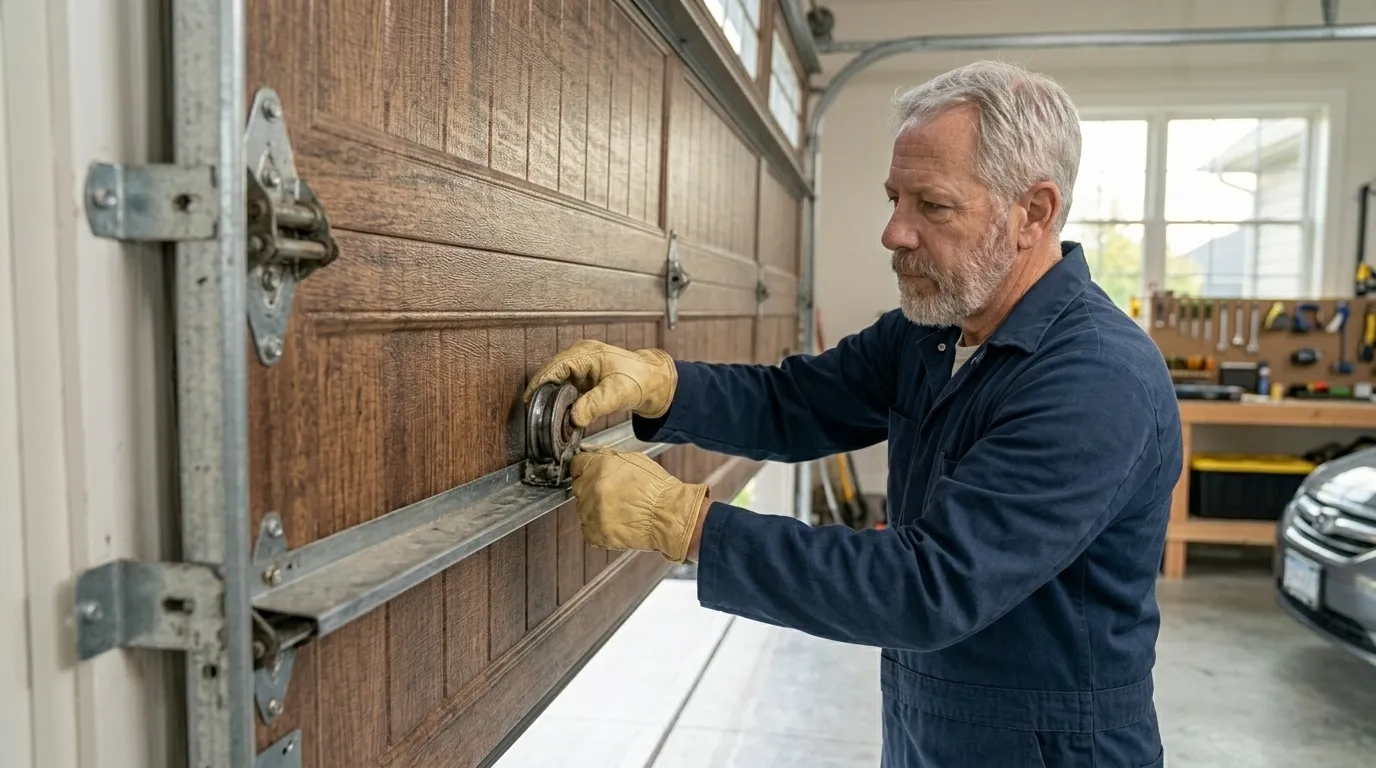
Most of the housing stock in the Toms River service area went up between 1938 and 2005, with the median build year sitting around 1972. That means a lot of doors and openers on the road today are original or close to it, especially across the 46 named communities we cover, where the bulk of construction clusters in the 1960s and 70s. A door that age was built to a different standard than what's sold now, and the hardware on it - hinges, rollers, the torsion spring itself - is often sized for a lighter panel than the reinforced steel doors going in today.

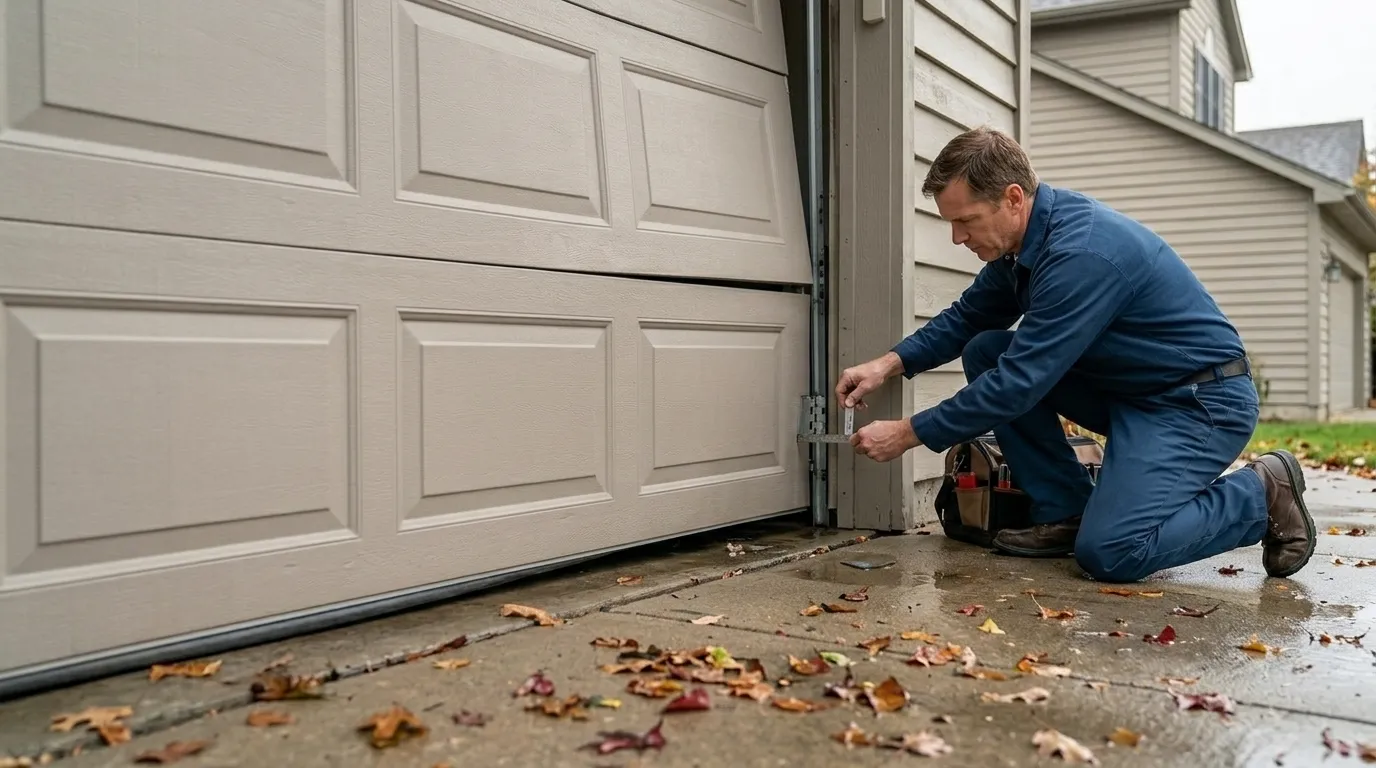
When we get a call on a door from that era, the first question isn't "is it broken" but "is it worth putting new parts on this specific door." Sometimes yes. A solid wood or early steel panel with a good frame can run another decade on new springs and rollers. Other times the door itself has sagged, warped, or rusted through at the bottom panel, and no amount of new hardware fixes that. Age alone doesn't decide it - the condition of the panel and track does.

What It Costs

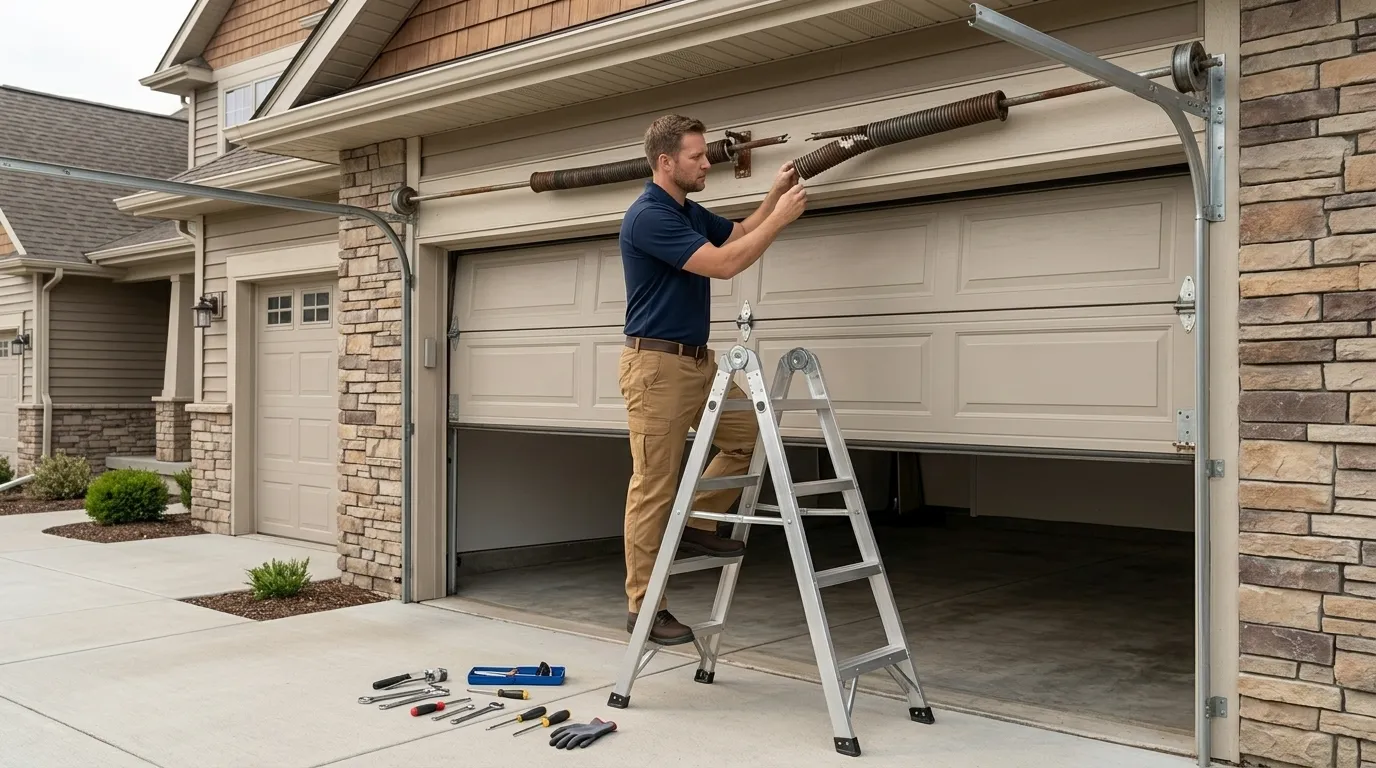
We don't publish a flat price here because the honest number depends on what's actually wrong - a broken torsion spring is a different job than a bent track or a panel that's rusted out from years of coastal damp. What we can tell you is how the local housing stock changes the math. A door original to a 1960s or 70s build often needs a spring sized to specs nobody stocks off the shelf anymore, which adds a wait, not just a part cost. Newer doors installed since the 1990s tend to use standard hardware, so those repairs move faster and cheaper.

Given the median household income in this area sits at $97,037, most homeowners we talk to want a straight answer on repair versus replacement before we touch anything - not a sales pitch either direction. If a repair on an older door is going to need a second and third fix within a year because the track is bent and the spring was only the first symptom, we'll say so up front instead of billing you twice.

What Local Conditions Do

Toms River sits in a cold, severe climate band, and that matters more for an older door than people expect. Steel panels from the 1970s and 80s don't have the insulation core that later doors do, so they expand and contract more with the swing between summer humidity and winter cold. Over enough winters that flexing works screws loose in the track brackets and can throw the door out of square at the corners - which is a different repair than a spring going, and often gets misread as one.

Wood-panel doors from the same era, common on the older side of the housing stock, absorb moisture during wet stretches and swell at the bottom rail. That swelling is why an old wood door that used to close flush sometimes drags or won't seat right against the weather seal. None of this is dramatic - it's slow wear that adds up over 40-plus years of cold-climate cycling, and it's a big part of why a door built in 1972 behaves differently than one built in 2005.

Leaving It Alone

Not every noise or stiff spot means the door is done. If a door from the 1960s or 70s stock still tracks straight, closes flush, and the spring hasn't failed, there's often no reason to touch it beyond routine lubrication and a hardware check. We won't push a replacement on a door that's still doing its job just because of its age.

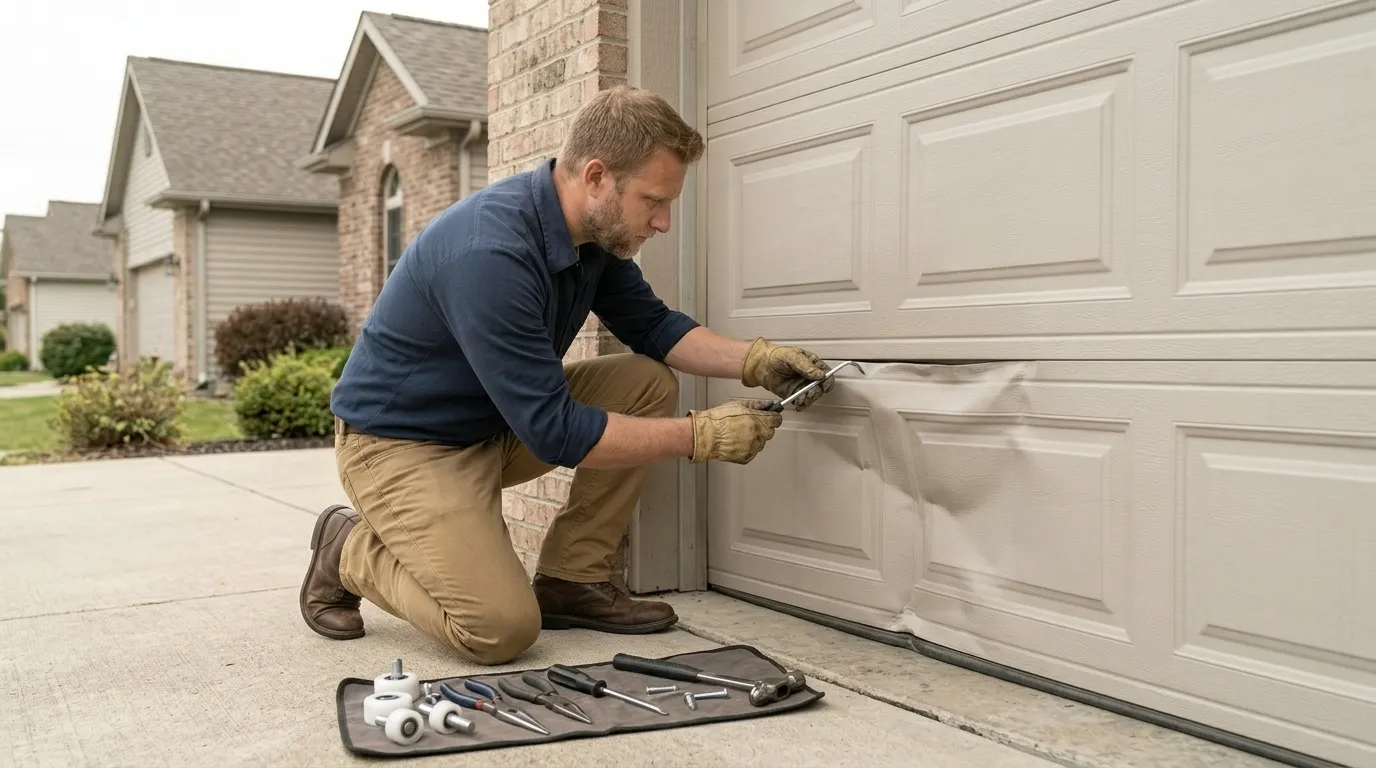
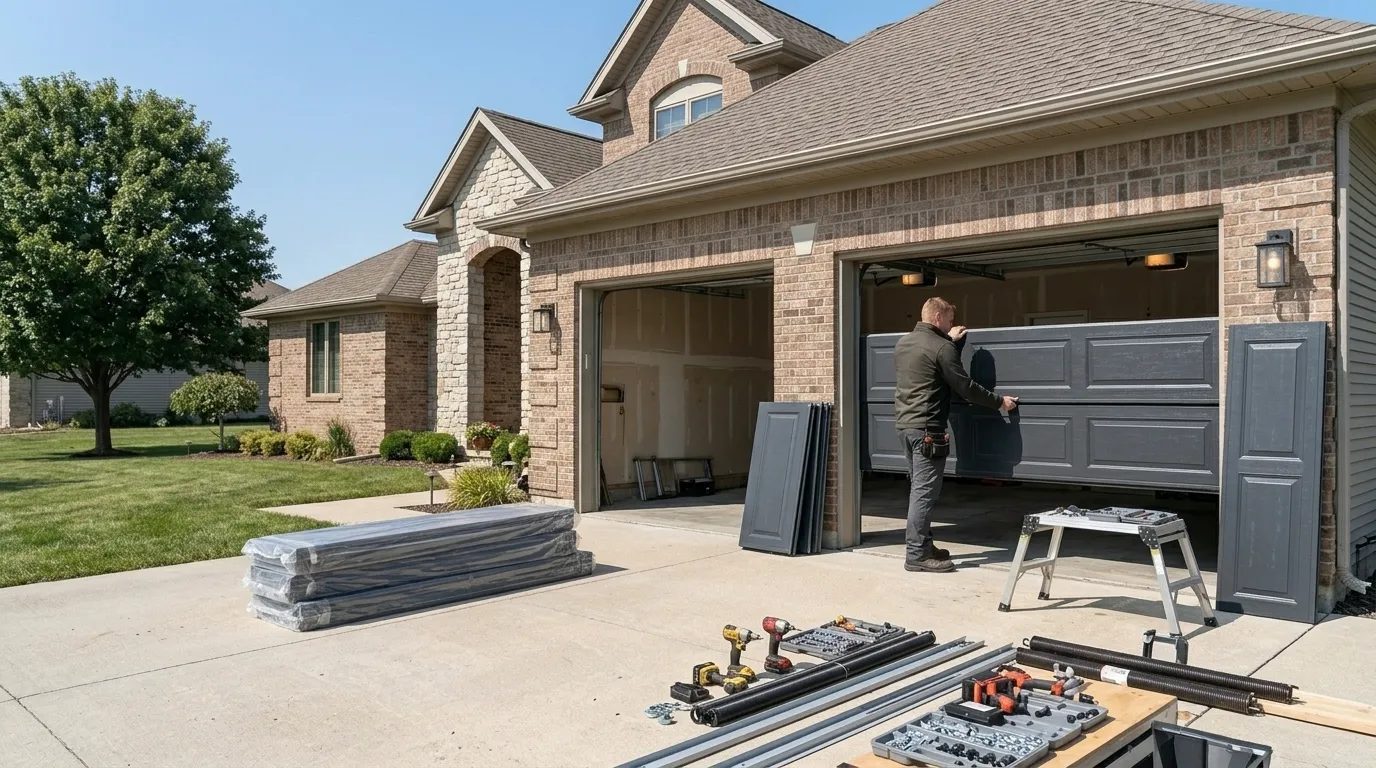
Where we do tell people to stop repairing and start pricing a new door: when the track has been bent and straightened more than once, when the bottom panel has rot or rust through the steel, or when the opener is original equipment and parts for it haven't been made in years. At that point another repair is a stopgap, not a fix, and across the roughly 84,621 owner-occupied houses in this service area, that's a call most owners only want to make once.

How it works

From “it’s stuck” to “it’s fixed”

Tell us what’s wrong - Toms River garage door service
1

Tell us what’s wrong

Describe the symptom - won’t open, loud bang, opener runs but the door won’t move.

On-site diagnosis - Toms River garage door service
2

On-site diagnosis

A technician tests the door under power and by hand and finds what actually failed.

Clear, up-front plan - Toms River garage door service
3

Clear, up-front plan

You get the fix that’s needed and what drives the cost - before any work starts.

Repaired & tested - Toms River garage door service
4

Repaired & tested

The repair is done, the door is set true and tested, and the work area left clean.

Next step

Serving Toms River, NJ - tell us what your door’s doing and we’ll take it from there.

How we work

What to expect

Diagnosis firstEvery visit starts by finding what actually failed - not a pre-written parts list.
The right part for the doorSprings and openers matched to the door’s weight and age, so the fix holds up.
Straight answersWhen a repair makes more sense than a replacement - or the reverse - you hear it plainly.
Clean, careful workTension released safely, hardware set true, the door tested under power before we leave.
Questions

Frequently asked

Straight answers about garage door repair in Toms River. Still unsure? Ask us directly.

How do I know if my garage door is original to the house?

If your home was built between 1938 and 2005, which covers most of the Toms River area, check the spring and hinge style - older torsion springs are often a nonstandard size, and steel panels from before the 1990s usually lack a foam insulation core. If neither has been replaced, it's likely original or close to it.

Does the cold weather here actually damage garage doors?

Yes, over time. Toms River sits in a cold, severe climate band, and repeated freeze-thaw cycling loosens track hardware and can swell wood panels on older doors. It's rarely sudden damage - it's gradual, which is why it often gets misdiagnosed as a spring problem when it's really a track alignment issue.

Is it cheaper to repair or replace an old door?

It depends on the specific damage, not the age alone. A door with a bad spring but a straight track and solid panel is usually worth repairing. A door with a bent track, rotted panel, or an opener with no available parts is usually cheaper to replace outright than to keep patching.

Ready to get your garage door sorted?

Tell us what it’s doing and where you are in Toms River - we’ll take it from there.

Request a QuoteCall