Can You Do This Yourself
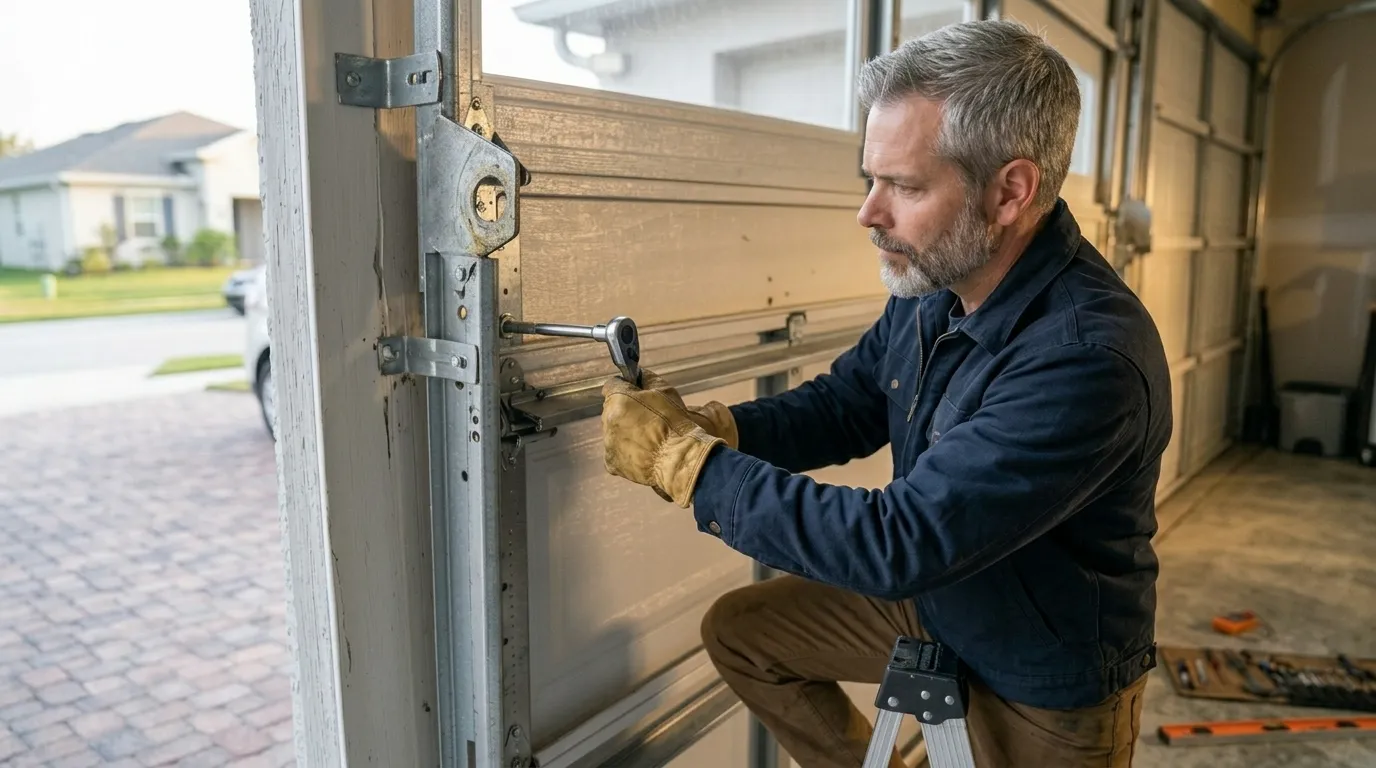
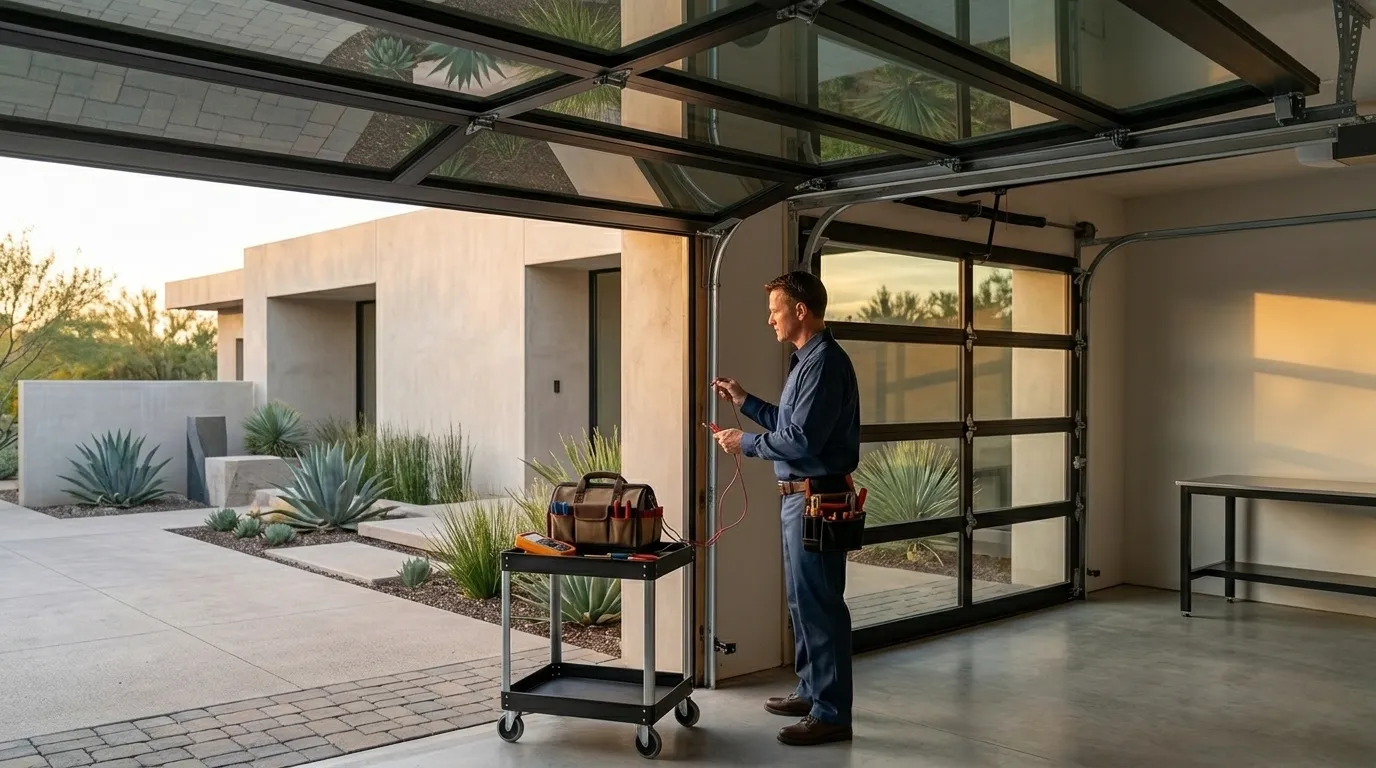
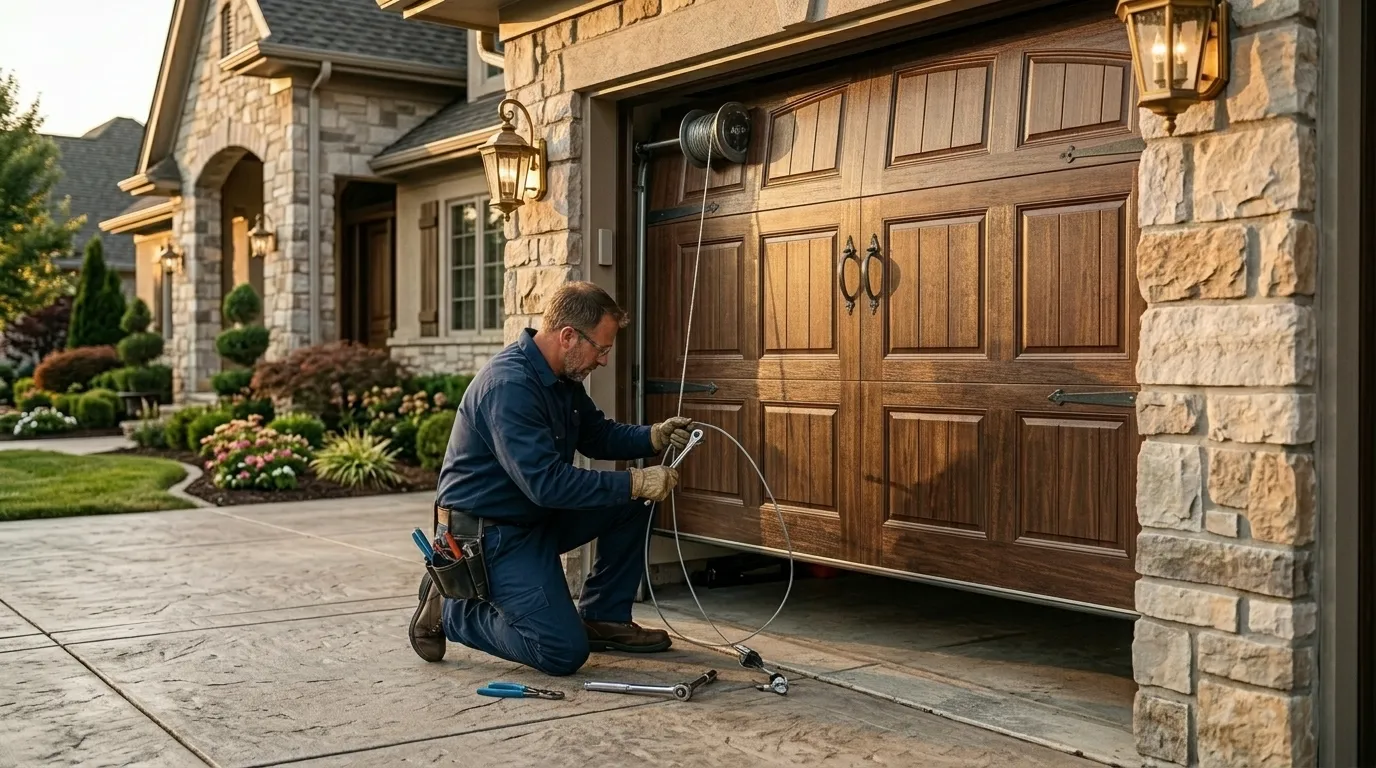
A torsion spring holds a full winter's worth of stored force, and on the older doors we see around Toms River - installed anywhere from 1938 up through the mid-2000s, with most of the stock dating to the 1960s and 70s - that spring is often original or a first-time replacement wound tighter than it should be. Winding or unwinding it without the right bar and clamps is how people lose fingers, not a figure of speech. If the spring is intact and you're just dealing with a noisy roller or a track that's slightly out of alignment, you can often true it up yourself with a level and a rubber mallet. Lubricating hinges and rollers twice a year is fine DIY work too. But once a cable has jumped a drum, a spring has snapped, or the door won't stay up on its own, that's a call, not a project. We'll say plainly: replacing a spring yourself to save a service fee is one of the worst trades you can make on a door this size. It isn't about skill, it's about the door weighing more than you do and the spring being under enough tension to bend the bar you're holding.
What the Fix Involves
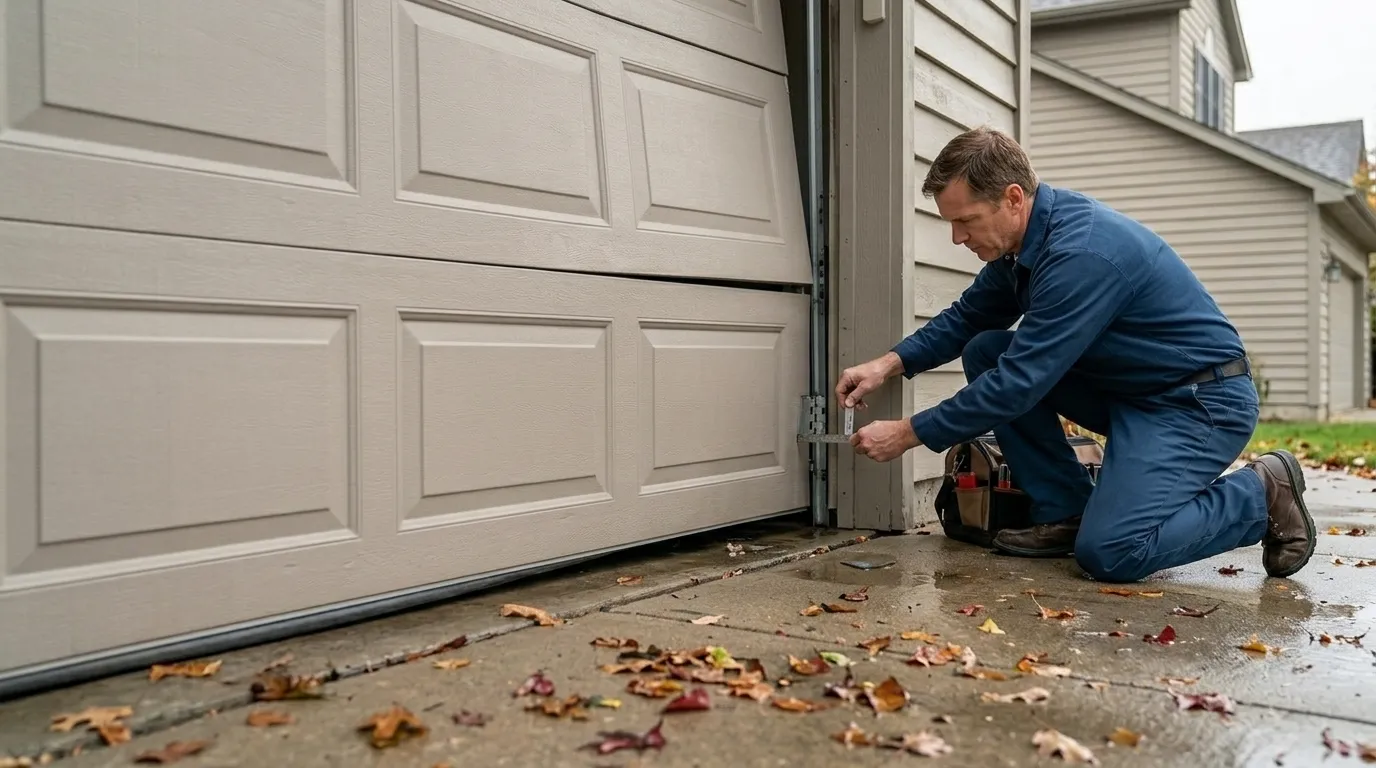
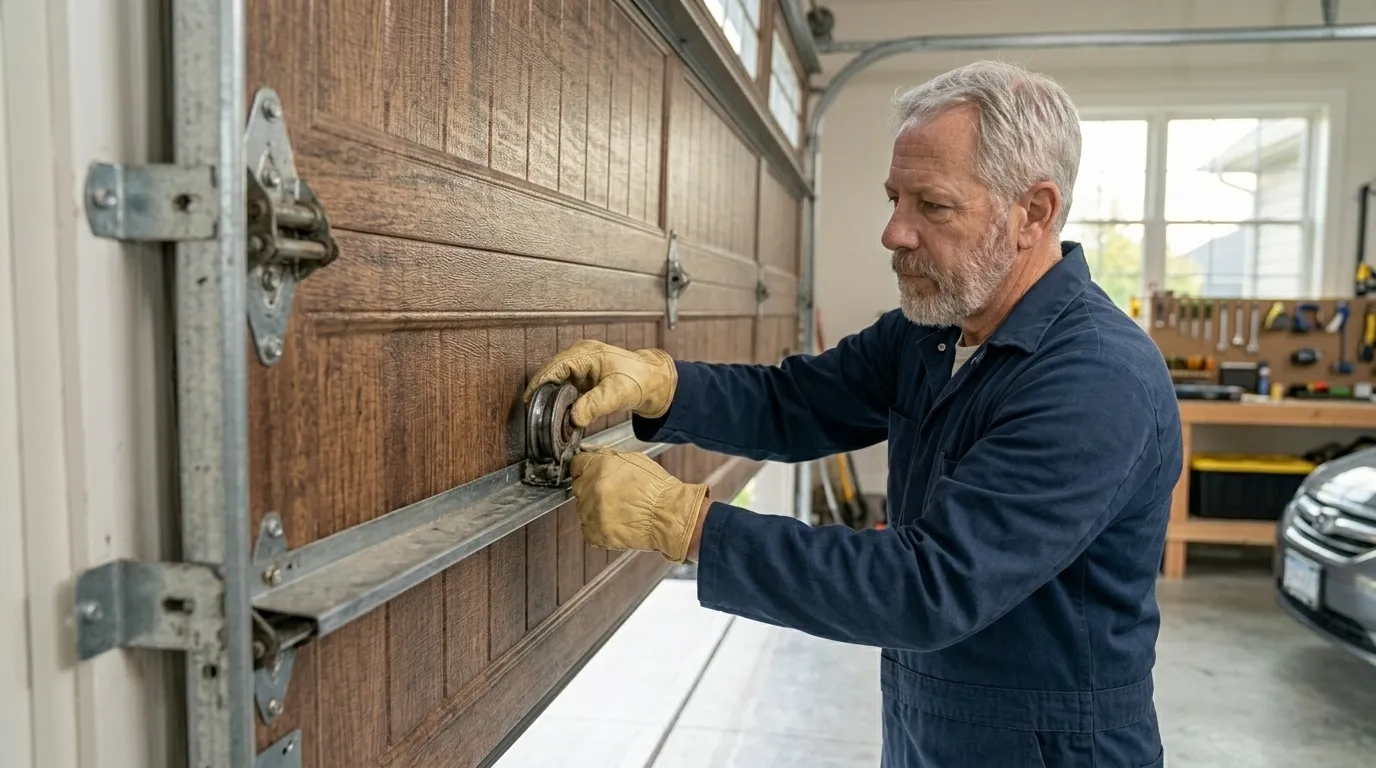
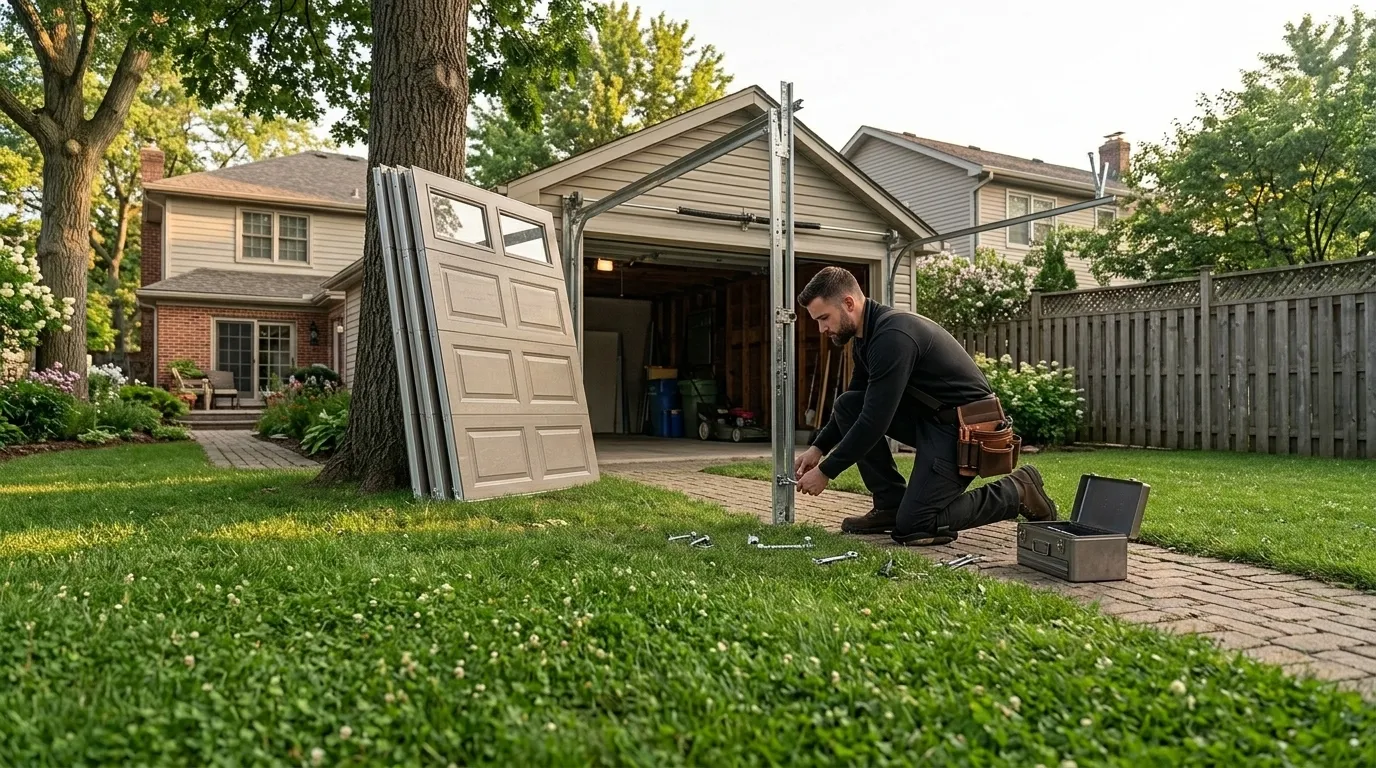
A spring replacement means matching wire gauge, coil length, and wind direction to the door's actual weight, not just swapping in whatever's on the truck - undersized springs are common on older Toms River doors that were re-sprung once already by someone in a hurry. We measure the door, check the drums and cables at the same time, and replace both springs on a double door even if only one broke, since the other is the same age and close behind it. For track and roller issues, the fix is usually re-squaring the track to the framing and swapping steel rollers for sealed nylon ones, which run quieter and hold up better through a cold winter. Opener repairs depend on what's failed - a logic board, a stripped gear, a worn sensor - and we'll tell you straight when a 15-year-old opener is cheaper to replace than to keep patching. One limit worth saying up front: if the door panels themselves are rusted through or badly warped, no amount of spring or track work fixes that, and we'll tell you it's a door replacement conversation, not a repair.
What Causes It Around Here
Toms River sits in a cold-climate band with real seasonal swings, and steel contracts in cold weather the same way it expands in summer heat. On a torsion spring that's already fatigued from decades of cycles, a hard cold snap is often the final straw - the metal is less forgiving when it's cold, and that's when we get the most snapped-spring calls. Combine that with a housing stock where a large share of homes, across the 46 named communities in this part of Ocean County, went up in the 1960s and 70s, and you get a lot of doors running original or near-original torsion hardware well past its intended life. Newer sections built out through the 2000s tend to bring us opener and sensor calls instead of spring calls, since the mechanical parts fail before the springs do. It isn't bad luck tied to one street - it's the math of an aging door meeting a cold night.