The Situation
Most houses around Toms River went up between 1938 and 2005, with the median sitting close to 1972, and the bulk of the stock across the 46 areas we work in leans hard into 1960s and 70s construction. That means a lot of garages still running the torsion spring and hardware that came with the house, or a straight swap done decades back with the same style parts. Those springs were wound for a certain number of cycles and a certain temperature range, and neither holds forever. Add in a climate band this area sits in - rated severe cold - and you get a spring that's been creaking along fine through October and November and then lets go the first real hard freeze. Steel contracts in the cold. A spring already fatigued from thirty or forty years of lifting a heavy door loses whatever give it had left, and it snaps instead of just wearing thin. This isn't a rare event on this side of the county - it's what happens to original-era hardware once winter actually sets in. If your door is from that same build window and nobody's replaced the springs, you're on borrowed time once the temperature drops hard.
What Local Conditions Do
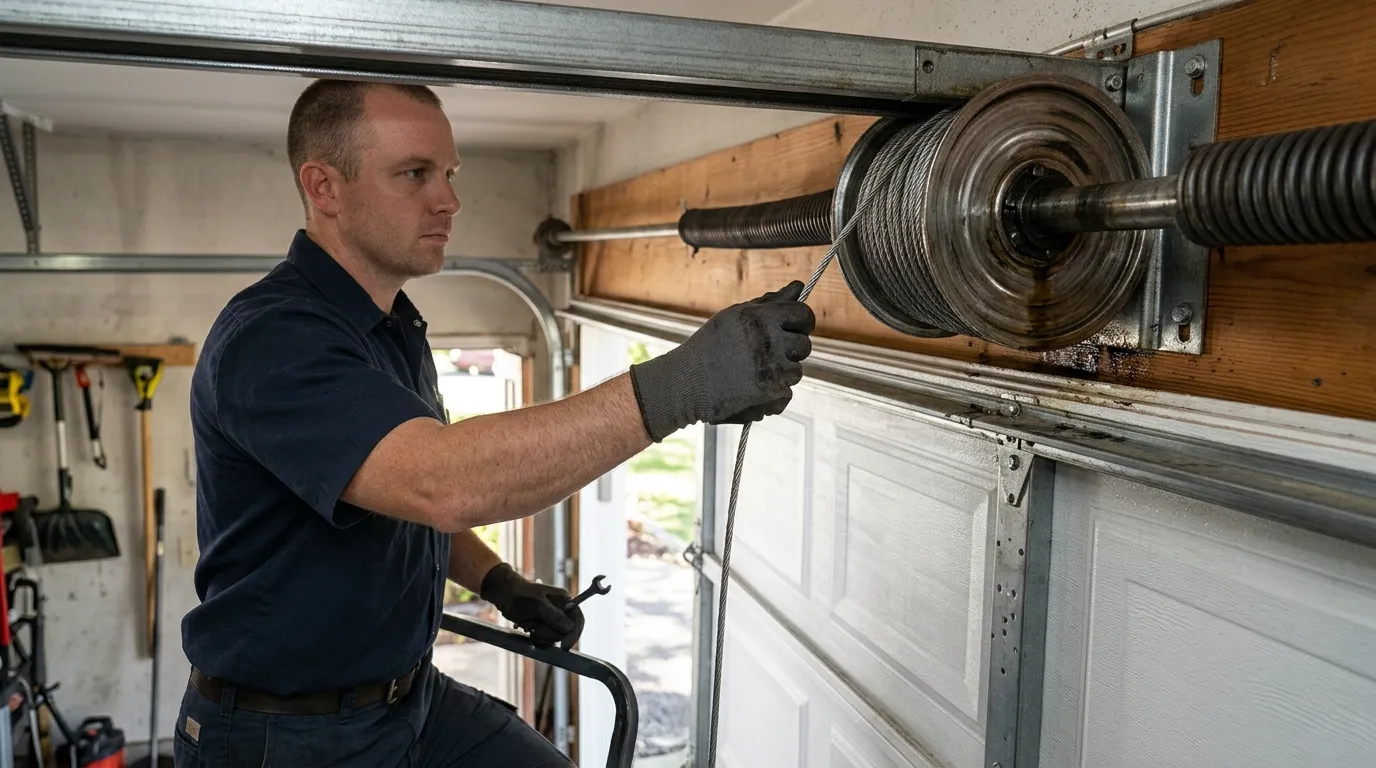
Cold and old hardware feed each other. A torsion spring is basically a length of wound steel, and steel gets less flexible as it cools - that's just physics, but it lands harder here because so much of the housing stock is from that 1960s-70s wave and hasn't seen the spring replaced since. A spring already near the end of its cycle life doesn't need much of a push to go. The severe cold rating this area carries means we're not talking about a mild dip a couple nights a year - it's sustained cold stretches that keep metal contracted for days at a time, which is exactly when a marginal spring gives out. The same goes for rollers and cables on doors from that same era: nylon rollers get brittle, galvanized cable that's been fine all year gets stiff and starts fraying at the drum. None of this is dramatic until the morning you go to leave for work and the door won't move.
Leaving It Alone
Across the service area there are 84,621 owner-occupied houses, and a broken spring doesn't stay a one-part problem if you drive the opener against it. The opener isn't built to lift a door with a dead spring - it'll try, strain the gears, and you'll end up paying for a spring and an opener instead of just a spring. Waiting also means living with a door that can drop fast and hard, which is a real risk if anyone's underneath it or reaching in. We won't tell you every delayed repair ends badly, because plenty of doors sit for a week before anyone calls and nothing happens in that window. But once a spring's gone, the door is unsafe to run on the opener, and every day you drive it that way is a day closer to a second repair bill.