24/7 Emergency Service Open 7 days · 7am–8pm Serving Toms River, NJ & nearby
(732) 359-5246
Toms River, NJ

What Buying a Replacement Door Here Actually Involves

A look at what buying a replacement door here actually involves, from the age of local housing stock to what the region's cold winters do to steel panels and track hardware.

What Buying a Replacement Door Here Actually Involves

The Situation

Most of the housing stock across this service area went up between 1938 and 2005, with the median build year landing around 1972. That means the majority of garages you'll find in the 46 named communities we cover - from Leisure Village East and Pine Lake Park to Holiday City South and South Toms River - still have doors and hardware from that 1960s-70s wave of construction. A lot of those original doors are single-layer steel or wood panel, hung on track systems that predate the insulated, wind-load-rated doors that are standard on new builds today.

If your garage is original to a house built in that window, the door itself is likely older than the roof shingles, and the opener (if it's been swapped at all) is probably a second or third replacement bolted onto first-generation track. That mismatch - old track, newer opener, original springs - is the most common reason a "simple" door swap turns into a bigger job once we're actually standing in the garage.

We don't guess at this over the phone. The right call depends on what's actually mounted on your header and jamb, and that varies house to house even within the same development.

What It Costs

We're not going to put a number here that doesn't hold up once we're in your garage. What we can tell you is what moves the number: the size of the opening, whether the existing track and header can take a standard door or need reframing, and whether you want an insulated panel - which, given the cold winters this area gets, is worth asking about rather than assuming.

Household income across the service area runs a median around $97,037, which tells us this is a market where people replace a door because it's worn out or failing, not because they're chasing a look. That's the mindset we price toward: solid hardware, a door rated for the climate, nothing sold on top that you don't need.

The honest limitation: we can't give you a firm number without seeing the opening, the track, and the header in person. A door that looks like a straight swap on a 1970s-built house sometimes isn't, once we find out the jamb was never squared to begin with.

What Local Conditions Do

This area sits in a cold, severe winter climate band, and that matters more for a garage door than most homeowners expect. Steel panels contract in a hard freeze and expand again on a 40-degree swing a few days later - repeated enough winters, that cycle works seams and hinges loose faster than it would somewhere milder. On houses built in the 1960s and 70s, before insulated doors were common, that uninsulated steel is also doing nothing to stop cold air from moving into an attached garage, which on a lot of these older floor plans sits right against a bedroom or laundry wall.

Moisture is the other half of it. Ice buildup at the bottom track in a cold snap can freeze a door to the slab overnight, and if the weatherstripping on an original door has hardened and cracked - which it does, eventually, on anything that old - that ice works its way further in each time.

None of this is unique to one street or one development. It's a function of the age of the housing stock this area was largely built during, paired with winters that are hard on any door that wasn't built with that in mind.

Leaving It Alone

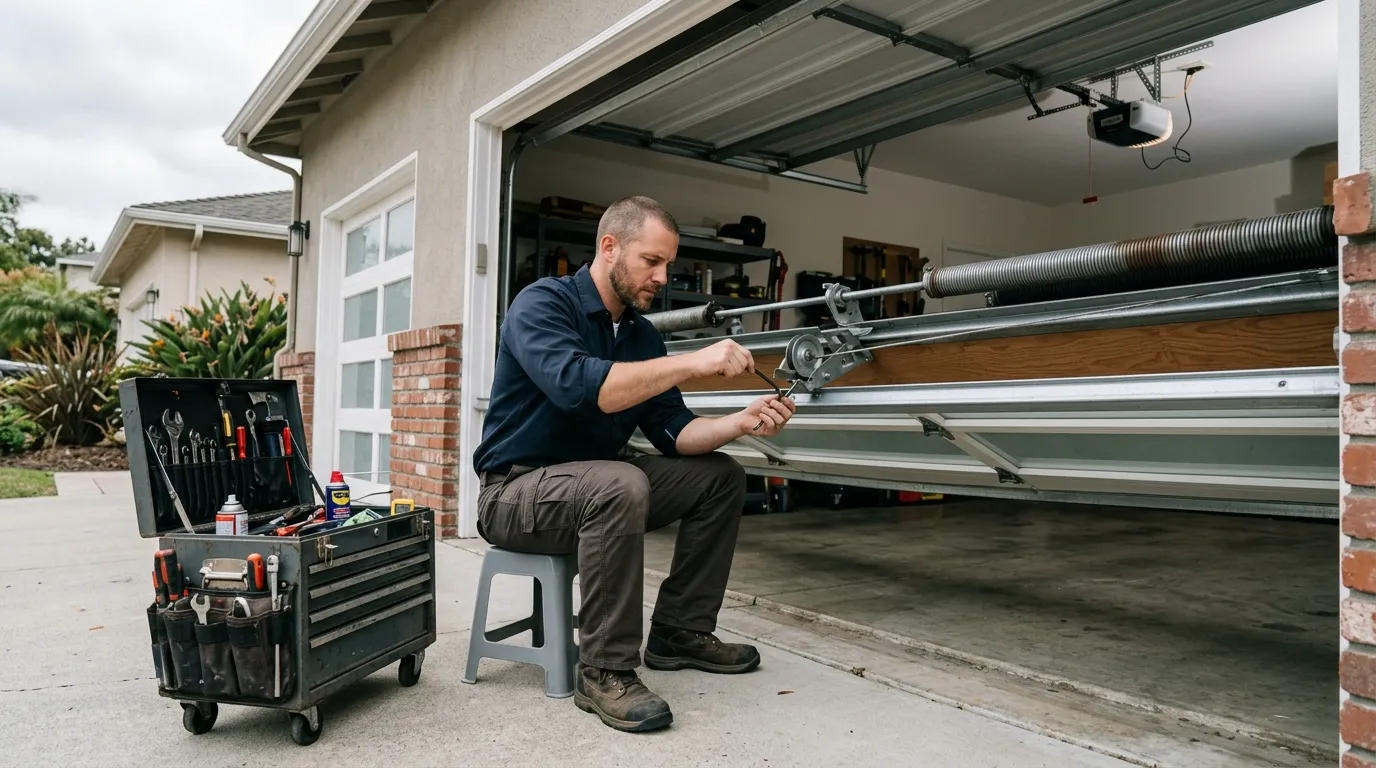
A door on original 1960s-70s hardware doesn't fail gracefully. Torsion springs on that vintage of installation are usually sized for the door weight of that era, not for anything heavier put on later, so when a spring goes, it tends to go without much warning. On a door that old, the bigger issue is usually finding matching rollers, hinges, or a replacement panel - a lot of that original hardware simply isn't made anymore, so a repair on one panel can mean the whole door needs to come out anyway.

In a cold climate, an uninsulated door left in place also keeps costing you every winter in the form of heat loss into an attached garage, which is worse the longer the house has had that original door.

We're not going to tell you every old door needs replacing tomorrow. Plenty of them are fine, serviced and adjusted, for years yet. But once a door from that 1960s-70s wave starts showing cracked panels, sagging track, or hardware that's clearly been improvised over the years, patching it usually costs more over time than replacing it once.
How it works

From “it’s stuck” to “it’s fixed”

Tell us what’s wrong - Toms River garage door service
1

Tell us what’s wrong

Describe the symptom - won’t open, loud bang, opener runs but the door won’t move.

On-site diagnosis - Toms River garage door service
2

On-site diagnosis

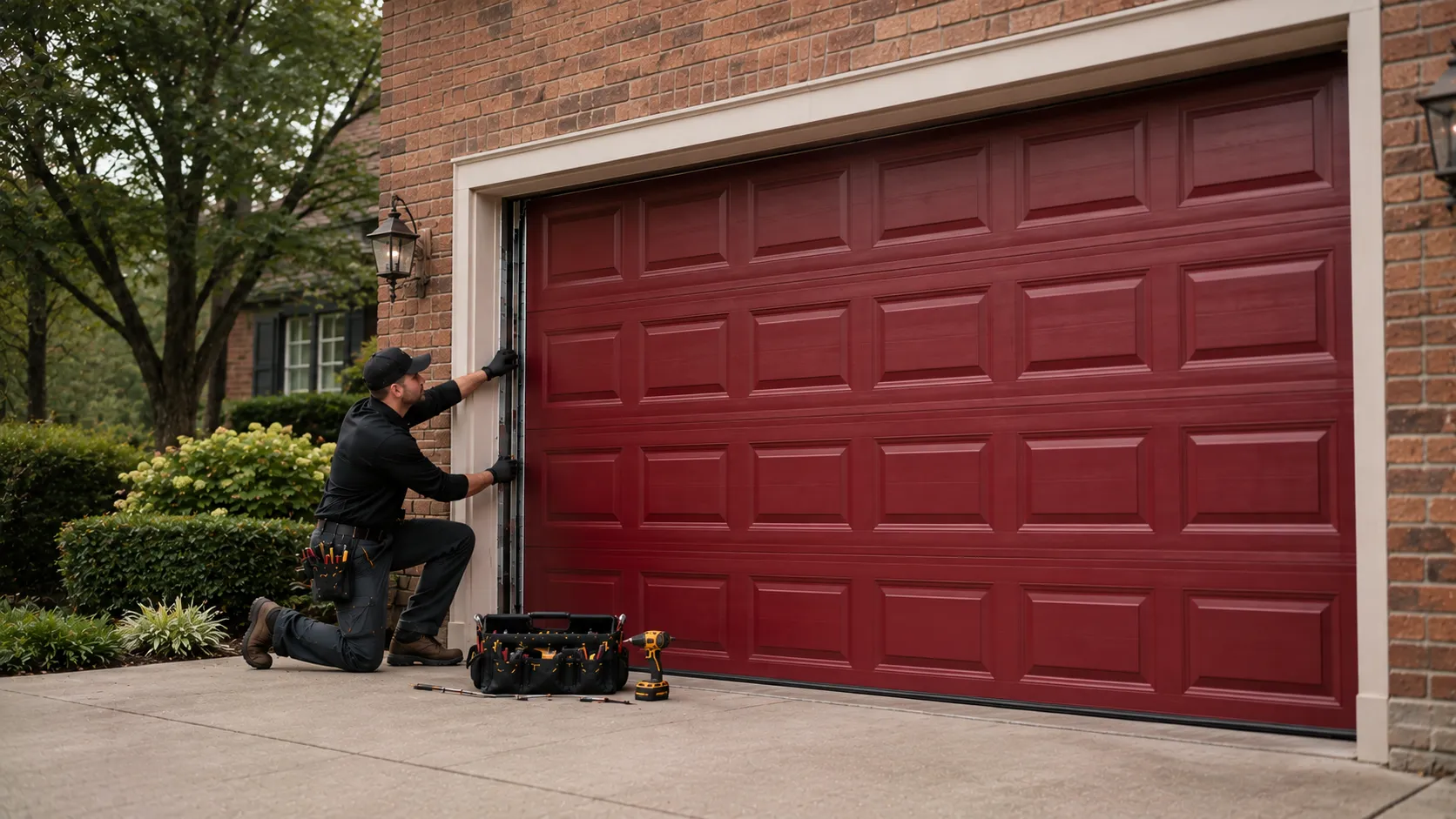
A technician tests the door under power and by hand and finds what actually failed.

Clear, up-front plan - Toms River garage door service
3

Clear, up-front plan

You get the fix that’s needed and what drives the cost - before any work starts.

Repaired & tested - Toms River garage door service
4

Repaired & tested

The repair is done, the door is set true and tested, and the work area left clean.

Next step

Serving Toms River, NJ - tell us what your door’s doing and we’ll take it from there.

How we work

What to expect

Diagnosis firstEvery visit starts by finding what actually failed - not a pre-written parts list.
The right part for the doorSprings and openers matched to the door’s weight and age, so the fix holds up.
Straight answersWhen a repair makes more sense than a replacement - or the reverse - you hear it plainly.
Clean, careful workTension released safely, hardware set true, the door tested under power before we leave.
Questions

Frequently asked

Straight answers about garage door repair in Toms River. Still unsure? Ask us directly.

Is my garage door likely original to the house if it was built in the 1960s or 70s?

It's common in this area. A large share of the housing stock across the communities we serve was built in that window, and plenty of garages still carry the original door and track. If yours hasn't been replaced, it's worth an inspection to see whether the hardware is original and what shape it's in.

Do I need an insulated door in this climate?

Given the cold winters here, an insulated door does more than an uninsulated one, especially if your garage shares a wall with living space. It won't fix every issue on its own, but on an older uninsulated door, it's one of the more noticeable upgrades for comfort and for keeping ice from forming as easily on cold nights.

Can you give me a price over the phone?

Not a firm one. Door replacement cost depends on your opening size, the condition of the existing track and header, and whether reframing is needed - all things we can only judge accurately by looking at the garage in person, not by matching a general estimate to your house.

My door is original and one spring just broke. Repair or replace?

Depends what we find. On a door from the 1960s-70s wave, matching hardware for a single-panel or single-spring repair can be hard to source, and if the rest of the door and track are aging out too, replacing the whole unit can end up simpler and more cost-effective than repeated one-off fixes.

Ready to get your garage door sorted?

Tell us what it’s doing and where you are in Toms River - we’ll take it from there.

Request a QuoteCall