Old Streets and New Ones
Point Pleasant sits about 8 miles from our Toms River base, close enough that we get out here regularly without treating it as an afterthought. The borough isn't one age of house - you've got blocks that went up in the 1960s next to newer construction filled in over the following decades, and the two don't behave the same way at the garage. A house built in 1968, which is close to the median year built for this stretch of town, usually still has its original jamb framing even if the door itself has been swapped out once or twice. That framing dictates what track and hinge setup will actually fit, and it's not always what a big-box installer assumes when they show up with a standard kit. We ask about the age of the house before we ask about the door, because the two are tied together here more than people expect. With roughly 7,890 households in Point Pleasant, there's enough of this older housing stock that we see the same handful of hardware mismatches over and over - not identical to what we run into in Toms River proper, but close cousins of it.
What We Do Not Do
We don't keep a depot or a crew stationed in Point Pleasant. Every job here means a truck coming from Toms River, so same-day service depends on the day's route, not a promise we can make blind over the phone. We also don't stock every torsion spring size for houses from the late 1960s - some of that hardware has to be ordered, and if your track or drum is a discontinued size, that adds a day or two before we can finish the job. If a door's frame has shifted enough that the opening itself is out of square, that's carpentry, not garage door work, and we'll say so rather than force a door into a bad opening. Honest as this sounds, it's the same reason we ask for the house's approximate age before quoting: guessing at a 1968 house's hardware from a phone call leads to wasted trips for everyone.
How That Shows Up in the Door
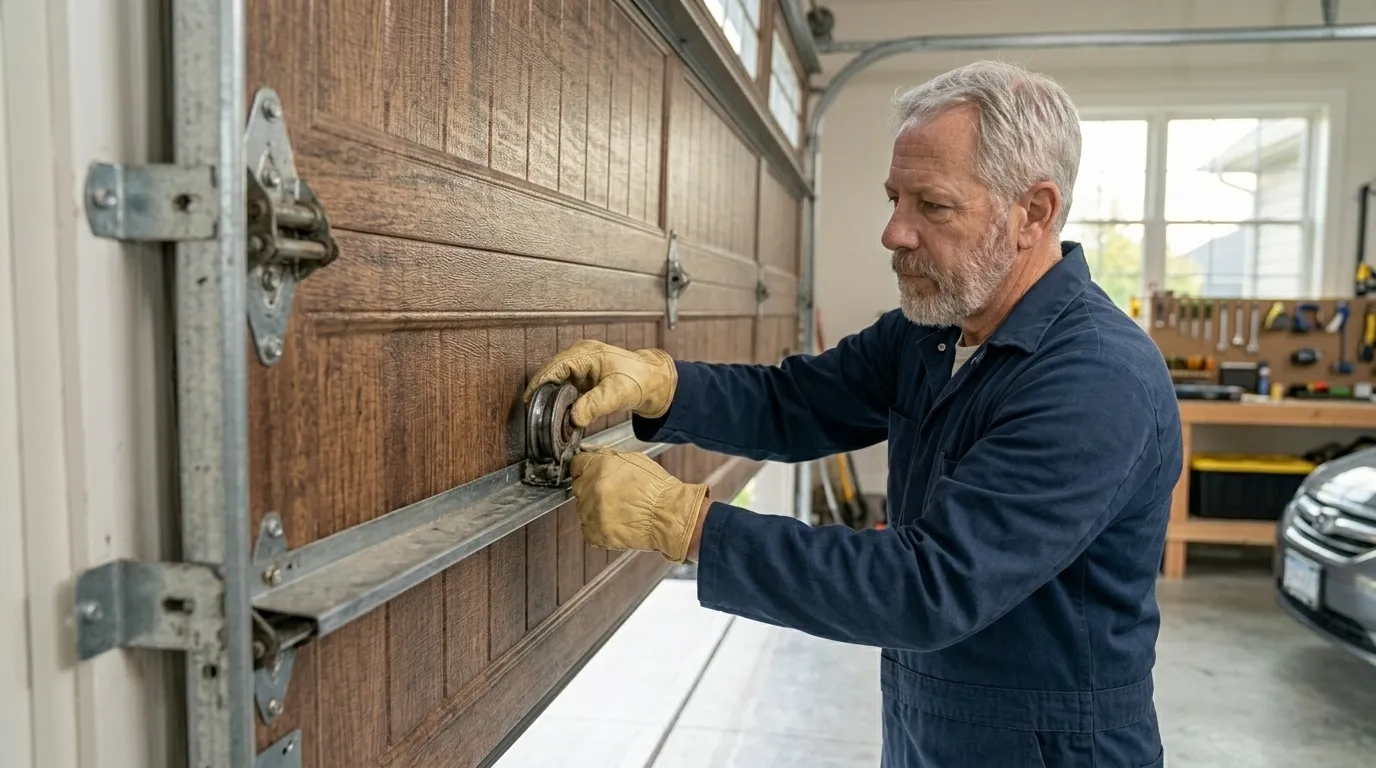
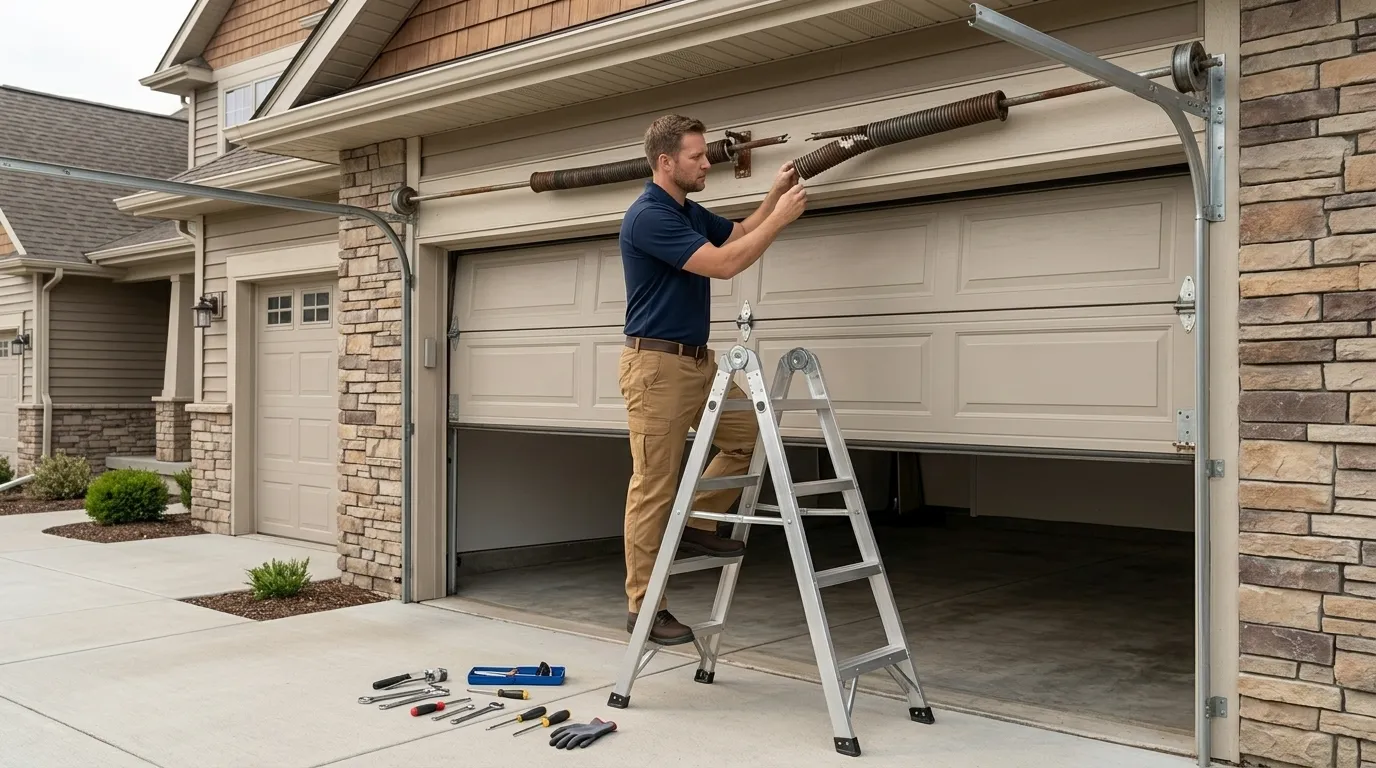
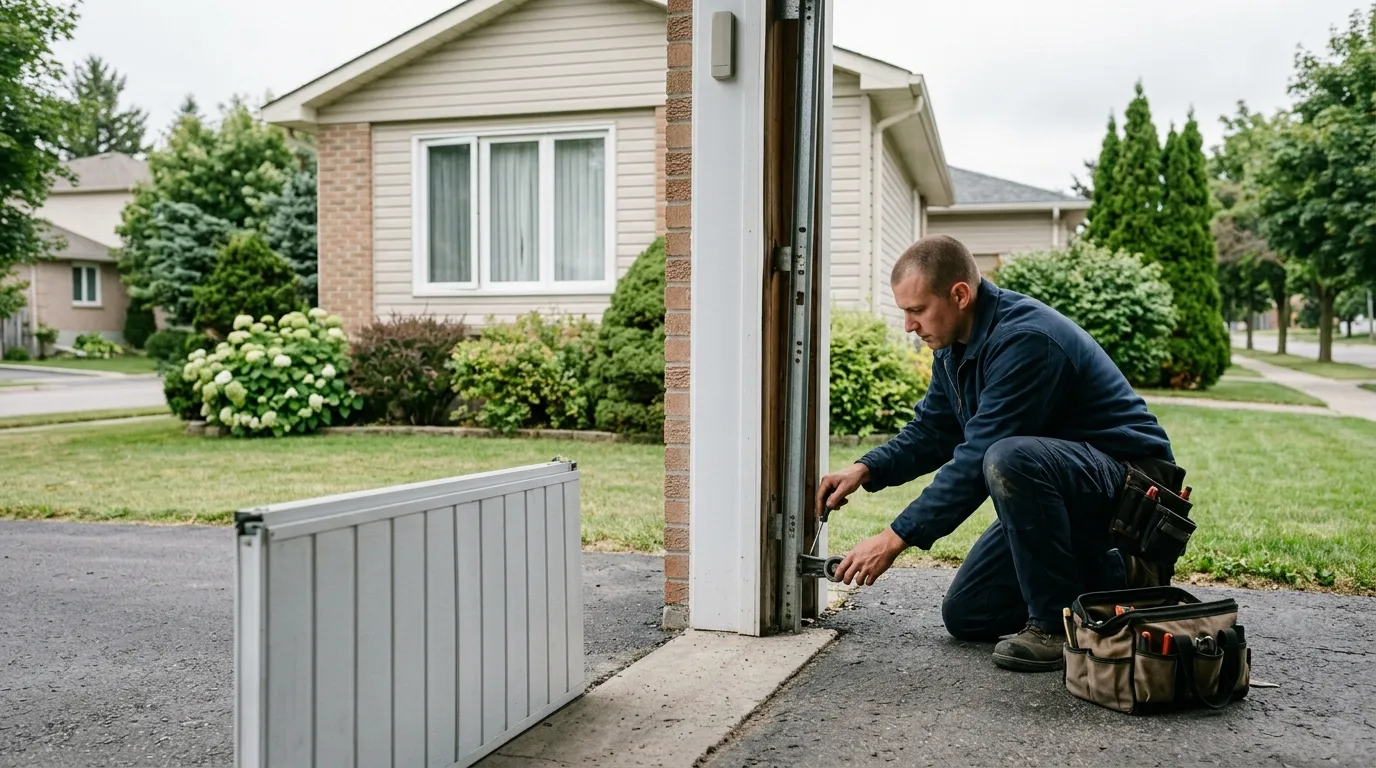
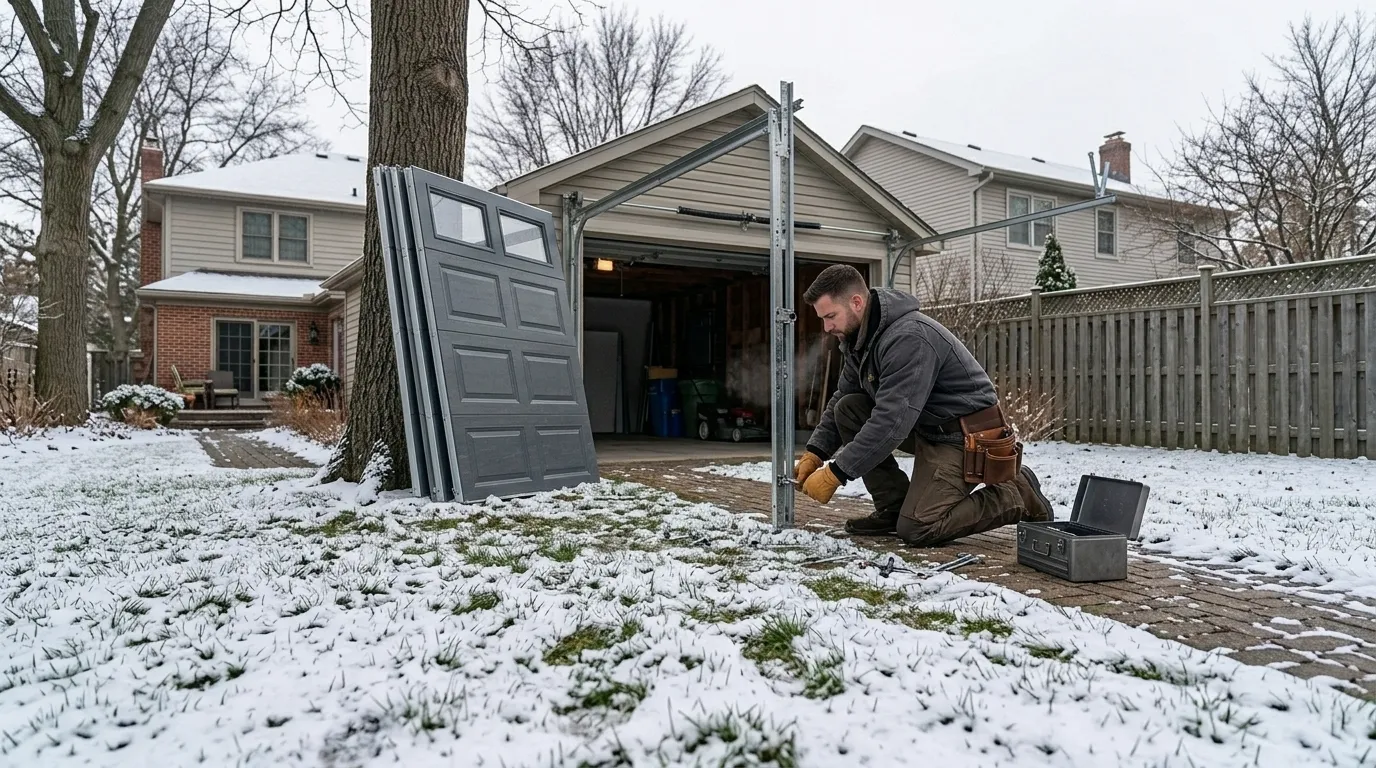
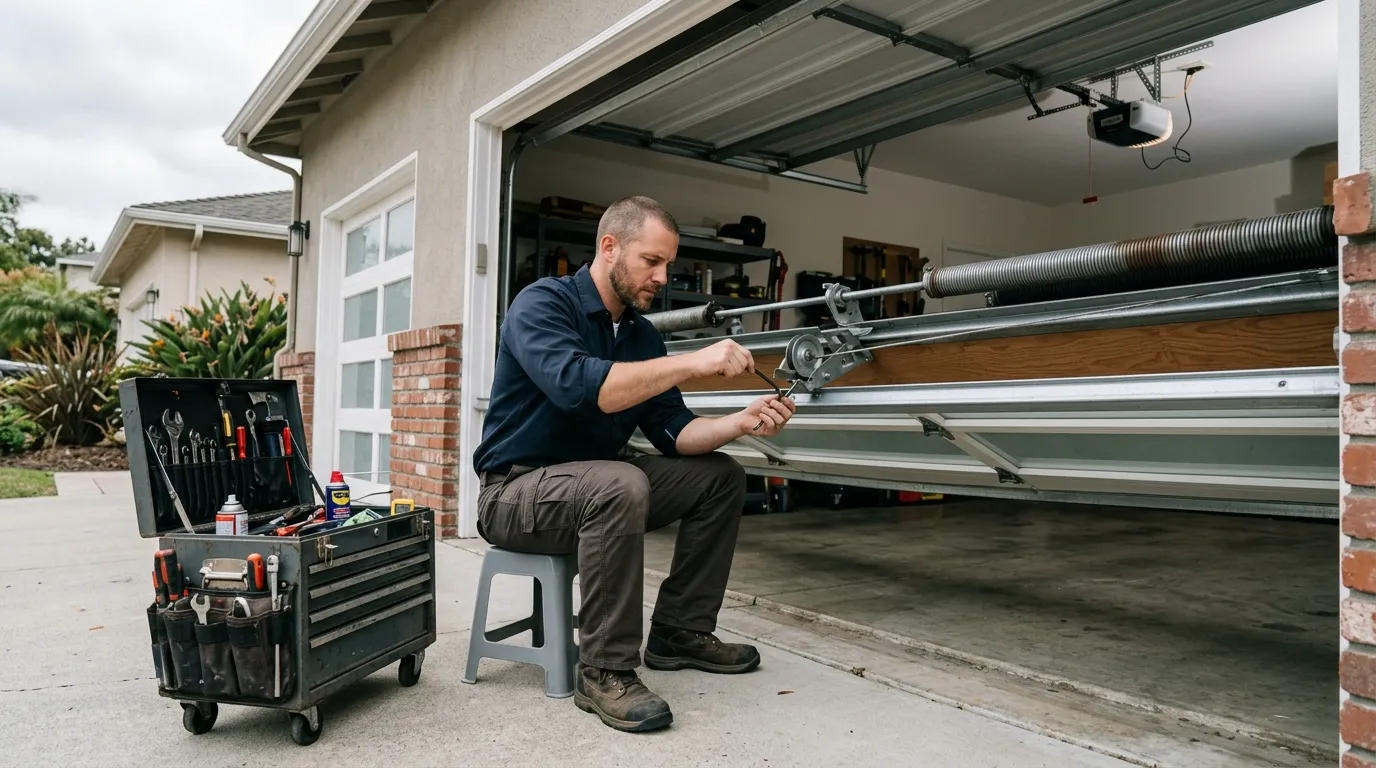
On a house from the late 1960s, the most common call we get is a torsion spring that's finally given out after decades of cycling, sometimes paired with rollers that were never replaced and have worn the track edges. Panels on doors from this era, especially wood or early steel, tend to sag at the bottom corner nearest the opener bracket long before the rest of the door shows wear - a sign of the original hardware carrying more load than it was built for. Given the region's cold, severe winter climate, expansion and contraction in metal track and door skins adds to that wear faster than it would somewhere milder. We size replacement springs and openers to the actual door and frame we find on site, not to a generic listing, because a 1968-era opening and a 2005-era opening in the same town can need genuinely different parts.