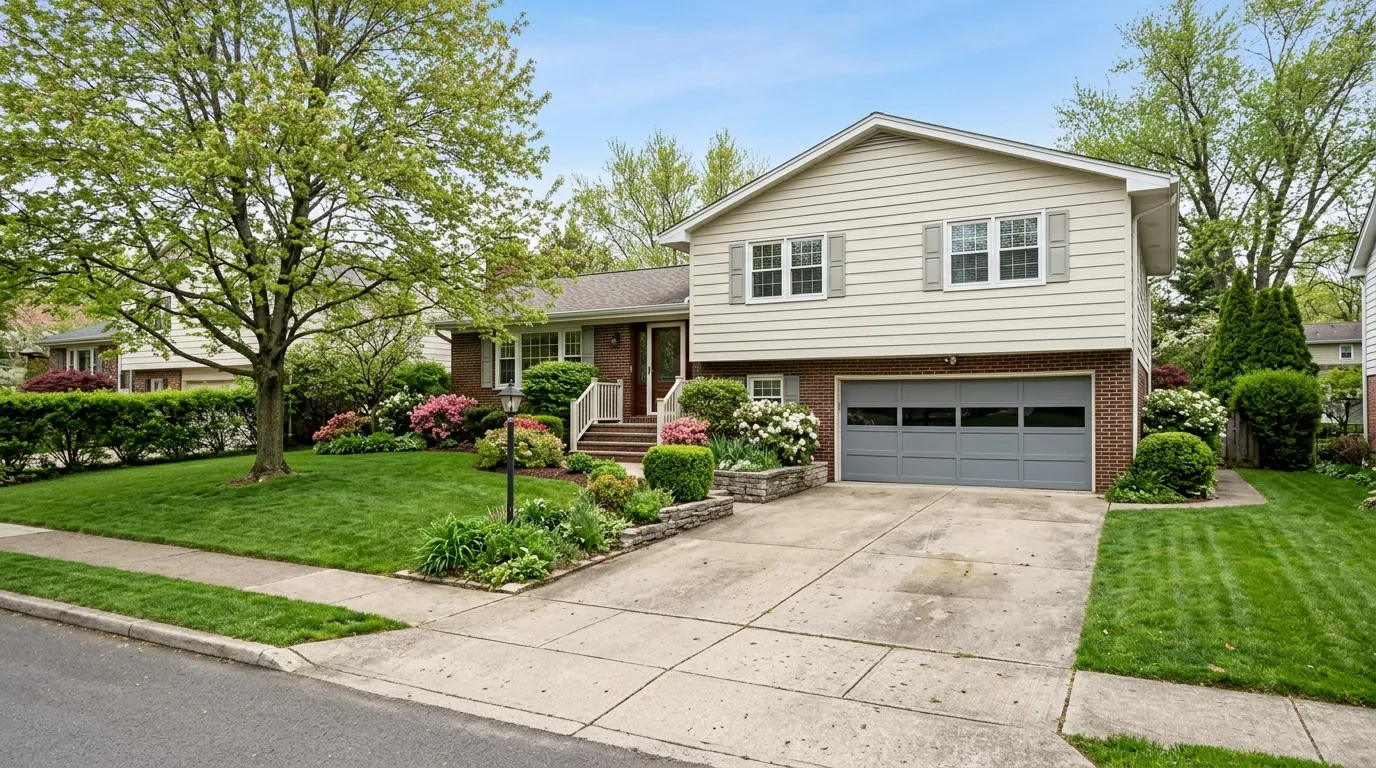
Old Streets and New Ones
Plumsted doesn't match the rest of our coverage area. Across the wider Toms River service territory the median house went up in 1972, with most stock from the 1960s and 70s. Plumsted's median build year runs closer to 1988 - a solid sixteen years newer. That gap matters more than it sounds. A house framed in the late 80s was built to a different code cycle, with different rough openings, different header spans, and openers that were more likely factory-installed rather than added on later by a previous owner. We're coming from Toms River, about 16 miles out, and when we get the call we're not walking into the same door we'd find on a 1968 ranch closer to the shop. The township has around 3,323 households, smaller than the denser pockets we cover, and a lot of that stock reflects a single building wave rather than decades of patchwork additions and swaps. That's the starting point for everything else on this page: newer doesn't mean better, it means different failure points.
What We Do Not Do
We don't keep a truck stationed in Plumsted. Every call here is a trip out from Toms River, roughly 16 miles, so we're not the outfit to call if you need someone standing in your driveway in twenty minutes on a Tuesday morning - we're honest about that up front rather than promising a response window we can't back. We also don't try to force a repair on a door that's cheaper to replace. If a section is more than a decade past its finish and the spring, rollers, and opener are all failing in the same visit, patching each one separately usually costs more over a year than swapping the door. We'll tell you that instead of running up a bill one part at a time.
How That Shows Up in the Door
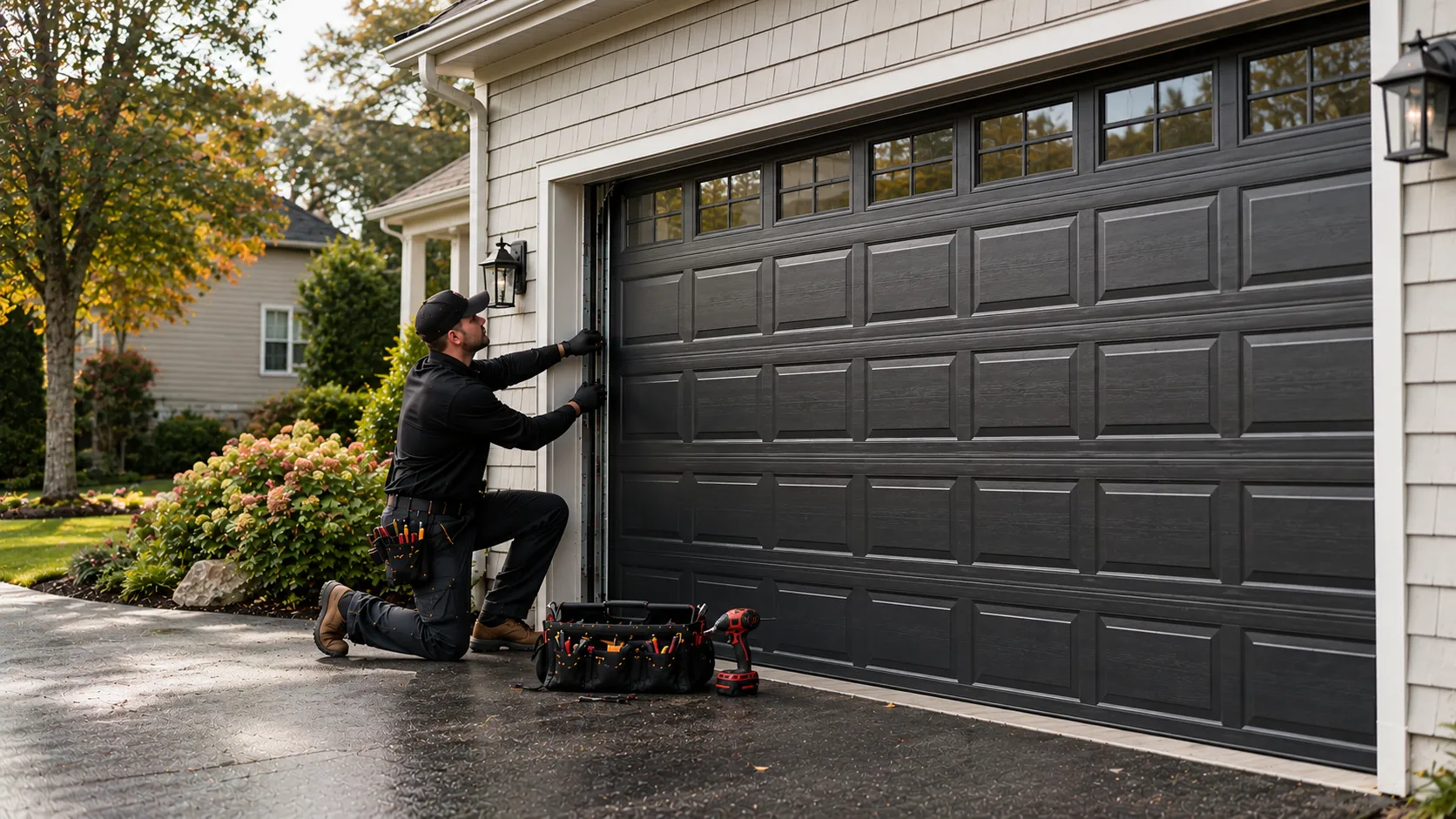
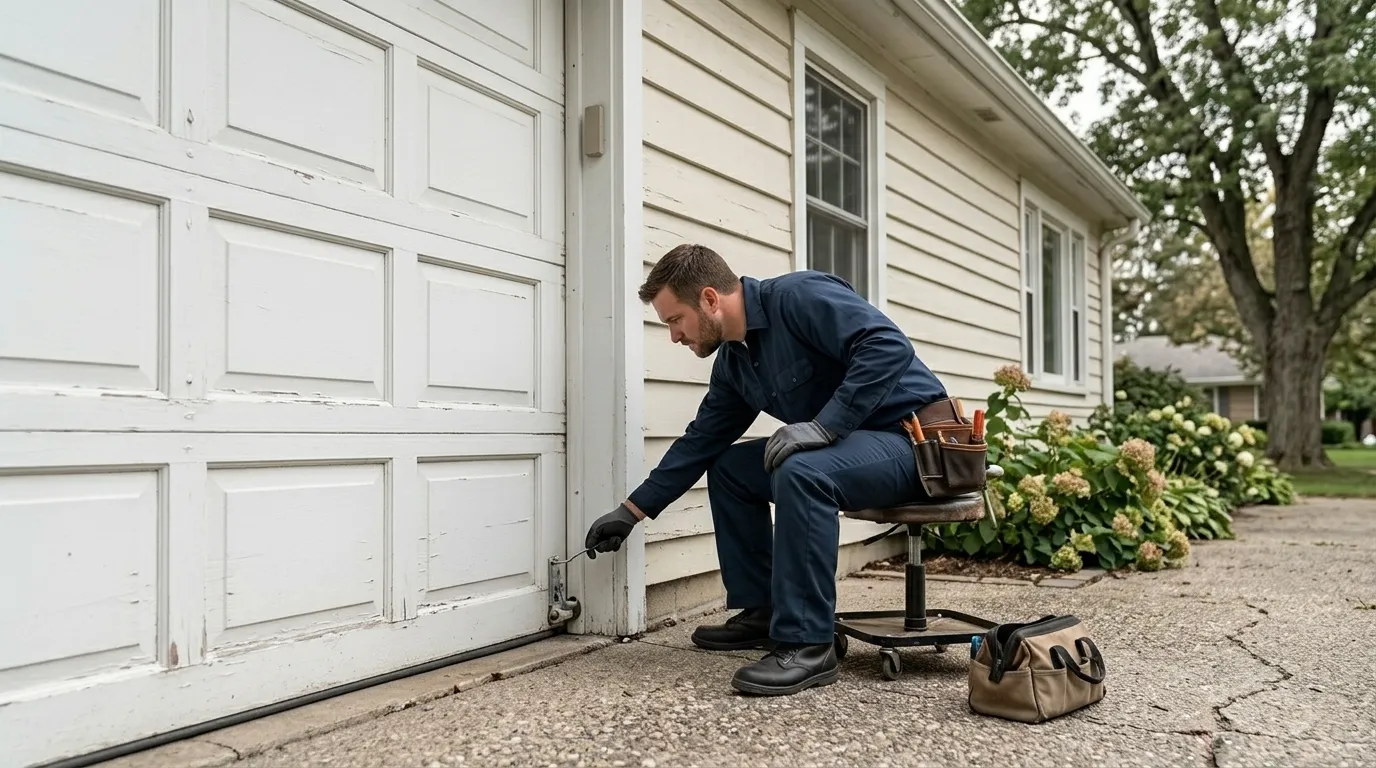
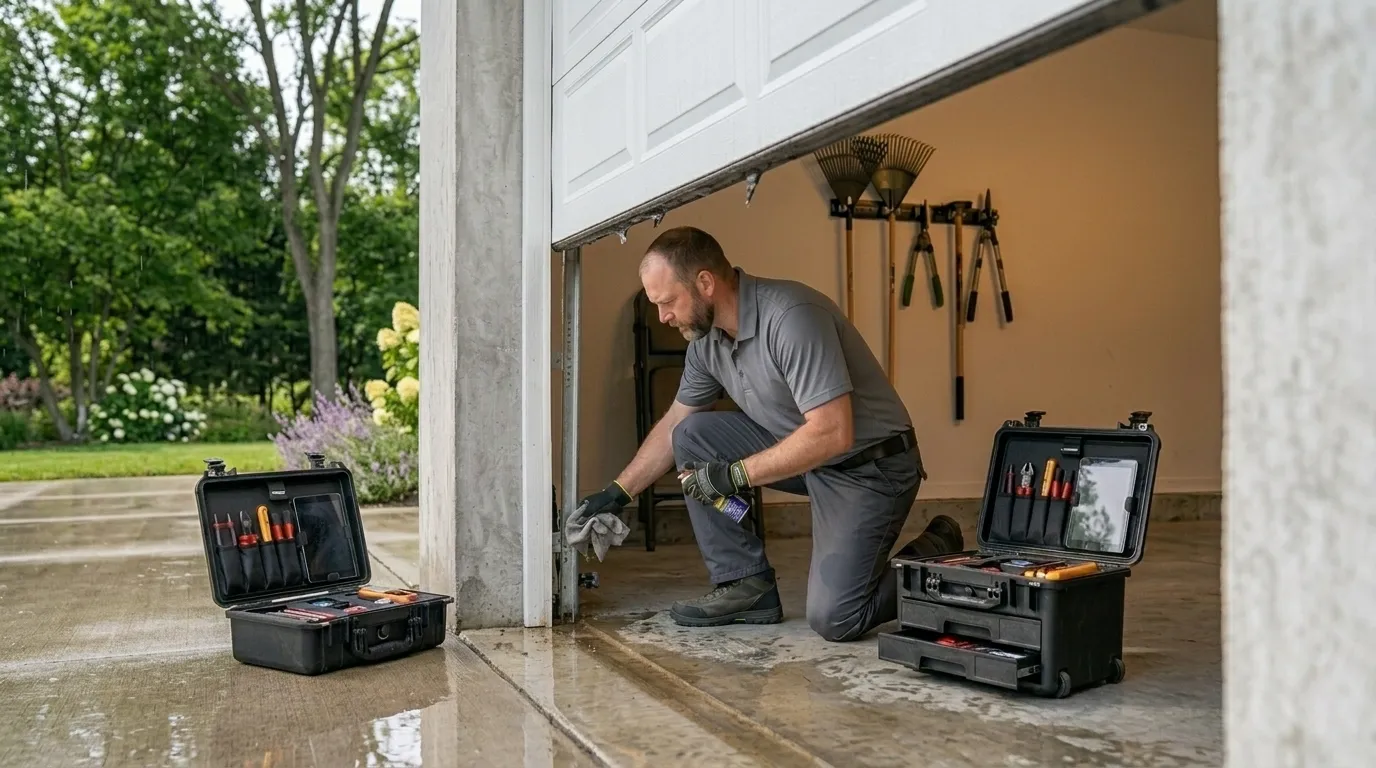
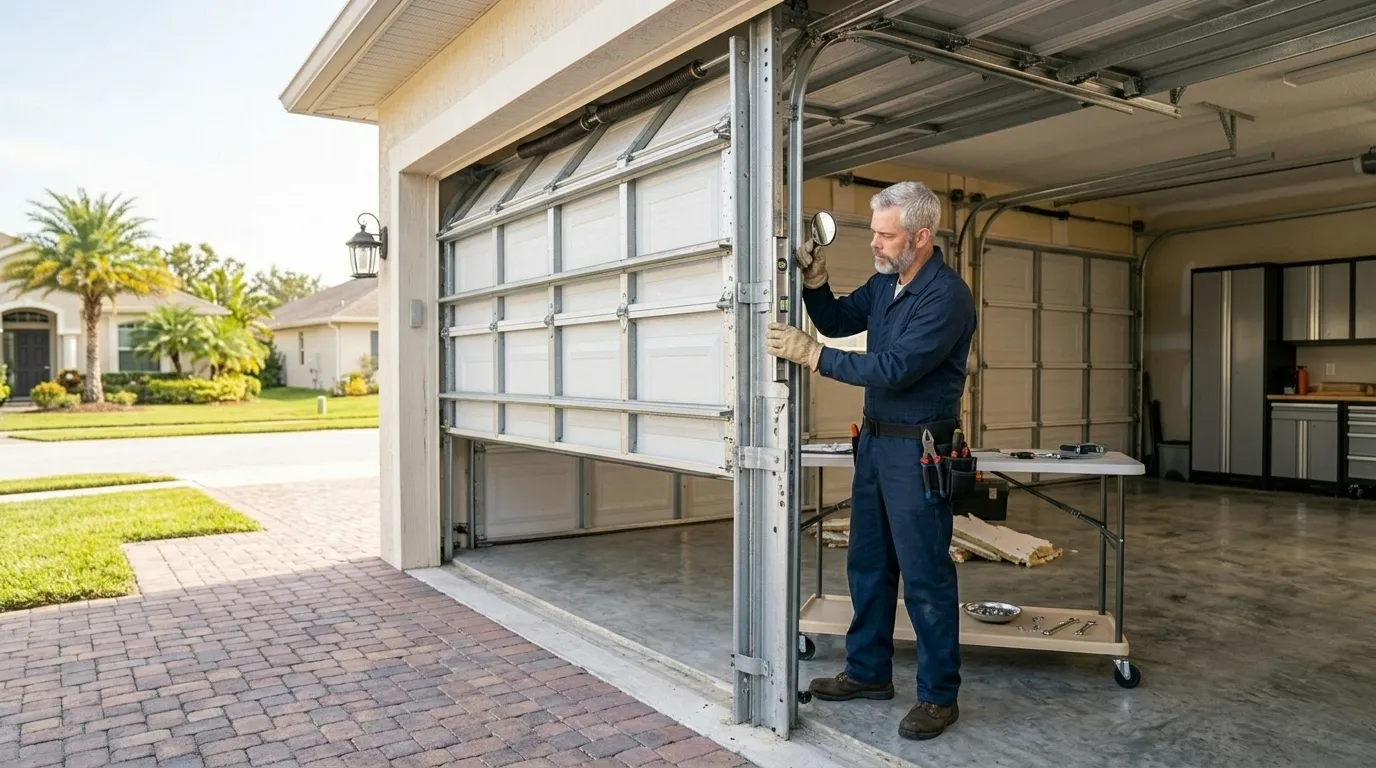
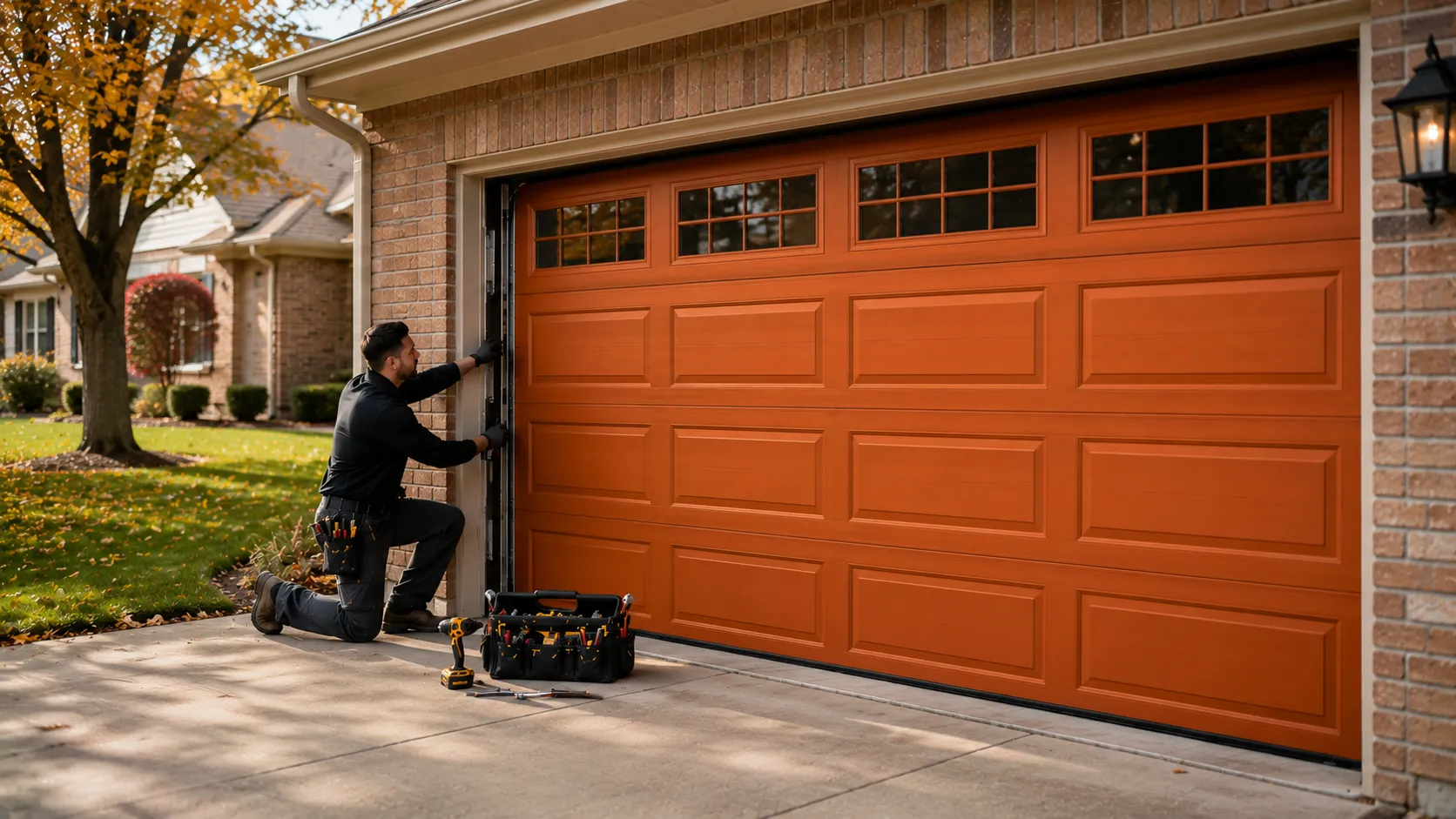
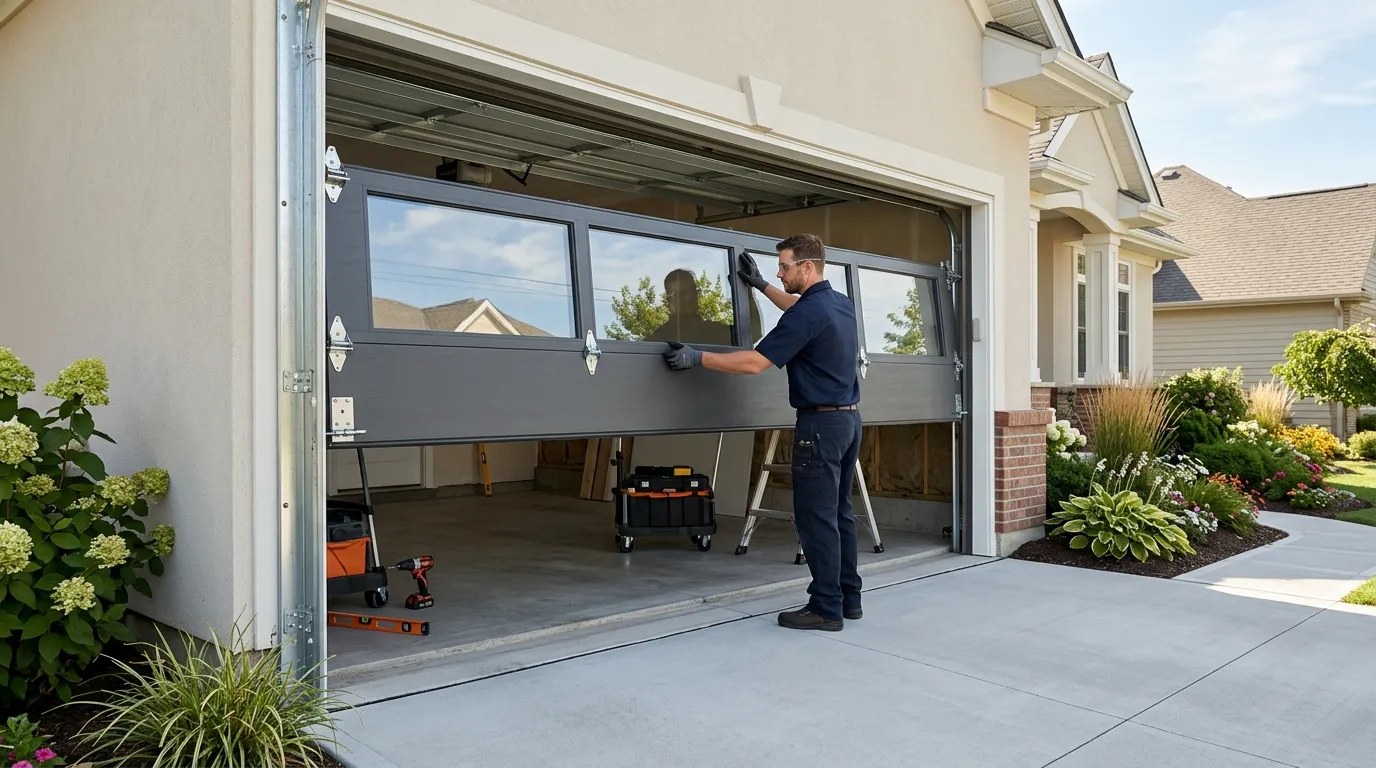
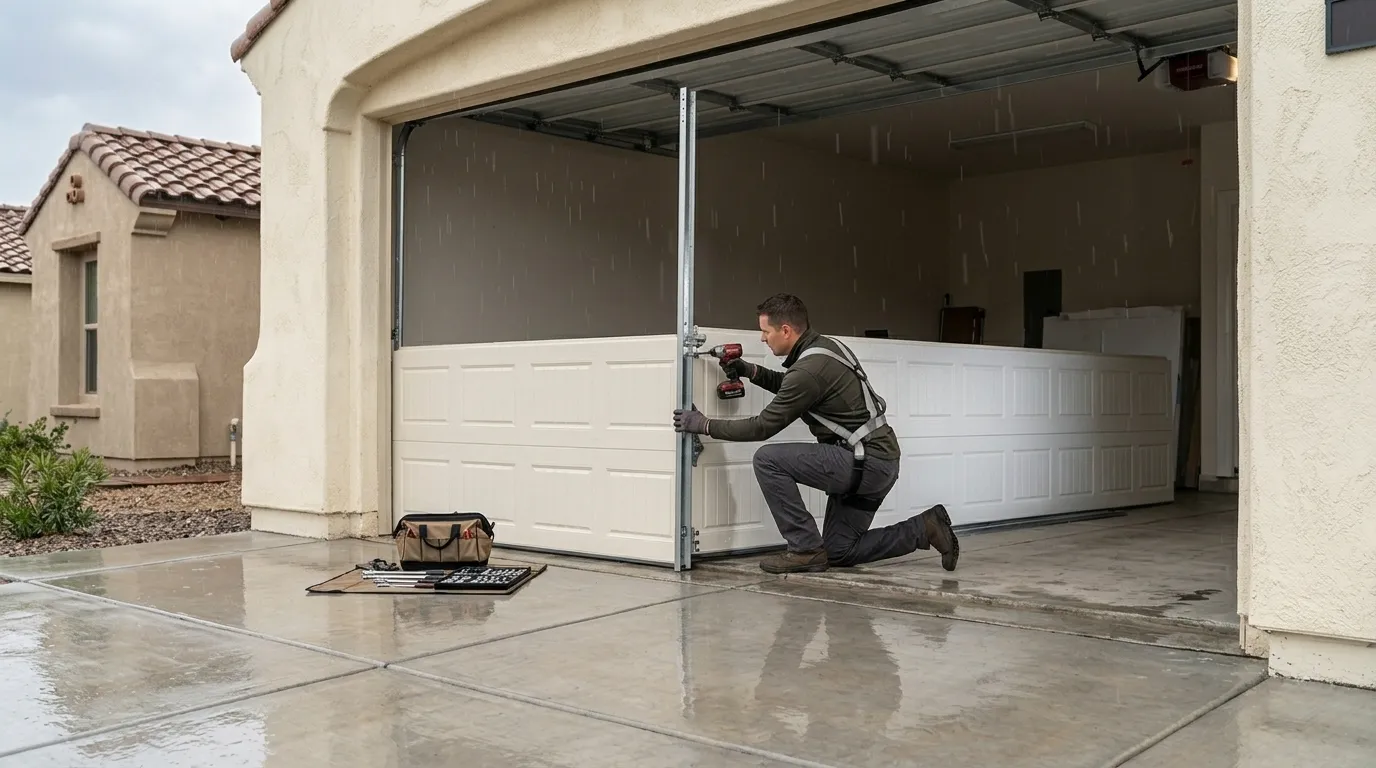
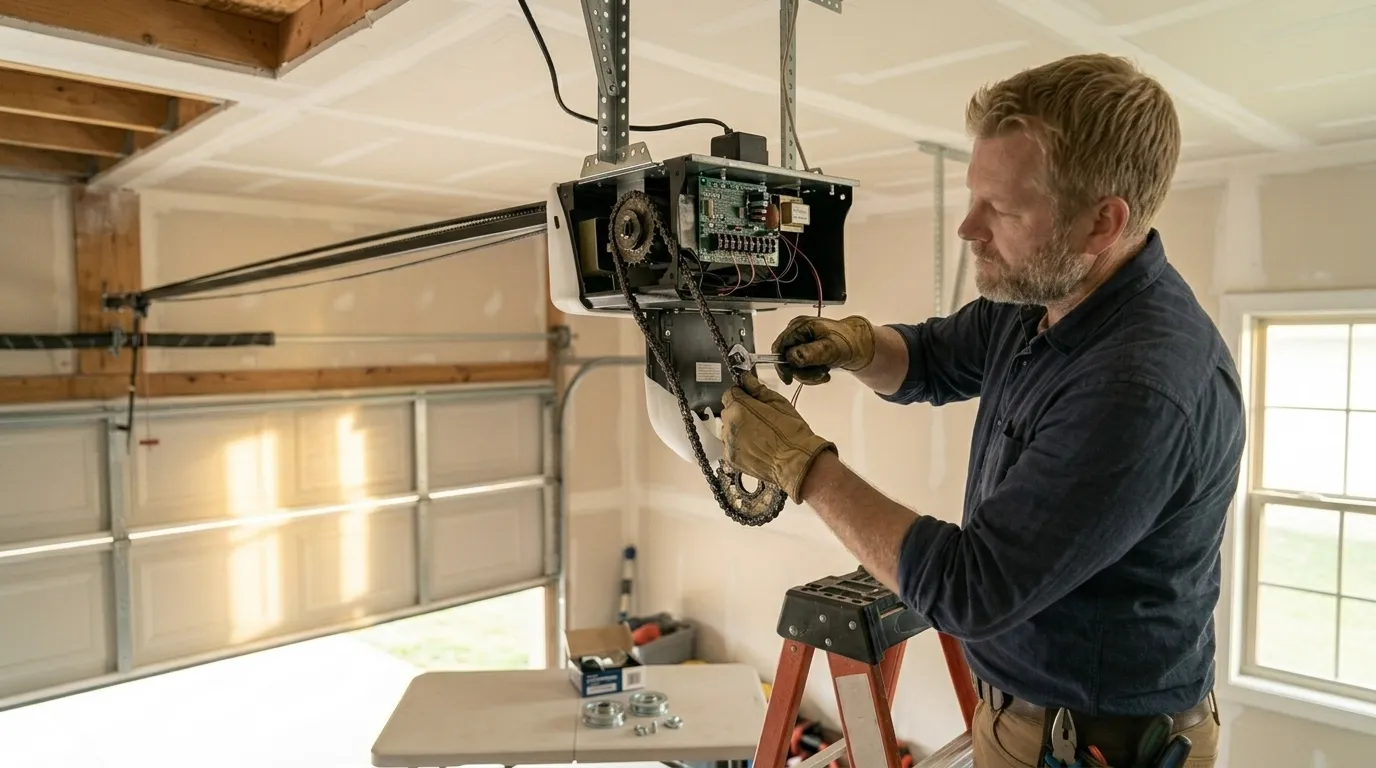
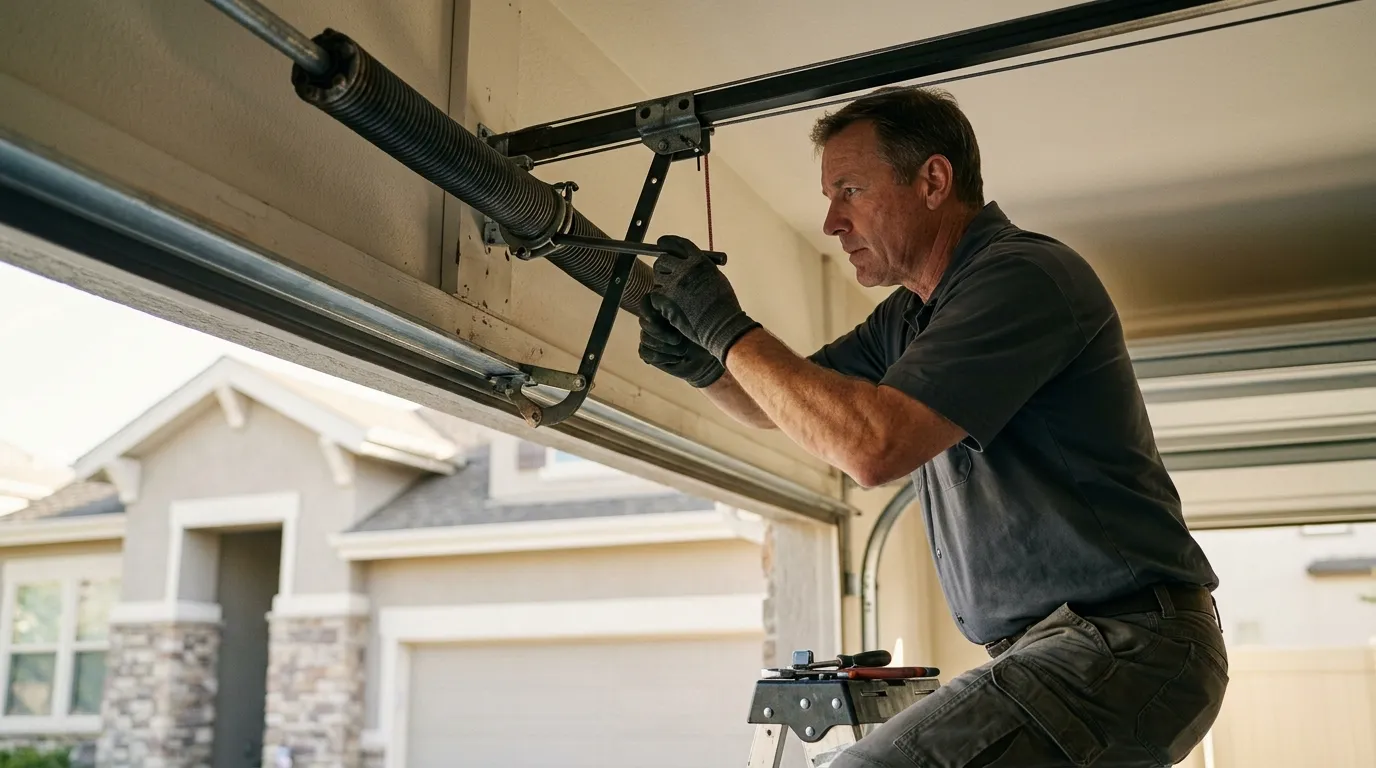
On a house built around 1988, the failures we actually see are center-mounted torsion springs that have simply worn out from age rather than from a botched side-mount job, chain-drive openers with stripped gears from being asked to lift more than 1/3 horsepower should, and factory rollers that were never upgraded to nylon and are now grinding in the track. Compare that to the older 1960s-70s stock across the rest of the coverage area, where side-mount hardware and one-piece doors are the norm and the fixes run different - different spring type, different track geometry, sometimes a door that isn't sectional at all. Because Plumsted's stock clusters around one build era instead of six decades of turnover, the parts we bring on the truck for a Plumsted call are more predictable than for most of the territory. That's a small edge, not a guarantee, and every door still gets checked before we assume anything.