Old Streets and New Ones
Neptune City's housing stock centers on 1957, which puts it a decade or so ahead of the broader service area's median build year of 1972 and well inside the region's overall 1938-2005 range. That matters more than it sounds like it should. A town built in one tight window ends up with one generation of garage hardware, not three or four layered on top of each other the way you see in places that filled in slowly over fifty years. With 2,139 households packed into a small footprint, Neptune City is a fraction of the 135,232 households across the wider area we cover - small enough that the housing here reads more like a single subdivision than a spread-out town. We don't have a shop in Neptune City. We run out of Toms River, 16 miles off, and that drive is part of how we plan the day rather than something we pretend isn't there. It means we schedule tighter and don't promise a same-hour arrival we can't back up.
What We Do Not Do
We don't stock every spring size and track width for a 1957 opening sight unseen - a lot of hardware from that build era isn't something a supplier keeps on the truck, and we'll tell you upfront if a part needs to be ordered rather than promise same-day when we can't back it. We don't do structural carpentry: if the header or jamb around the opening has rotted or shifted, that's a contractor's job before we touch the door. And because we run from Toms River and not from a location in Neptune City, we don't offer walk-in counter service or a response time faster than the actual drive. We'll give you a real window when you call, not a guess meant to sound good.
How That Shows Up in the Door
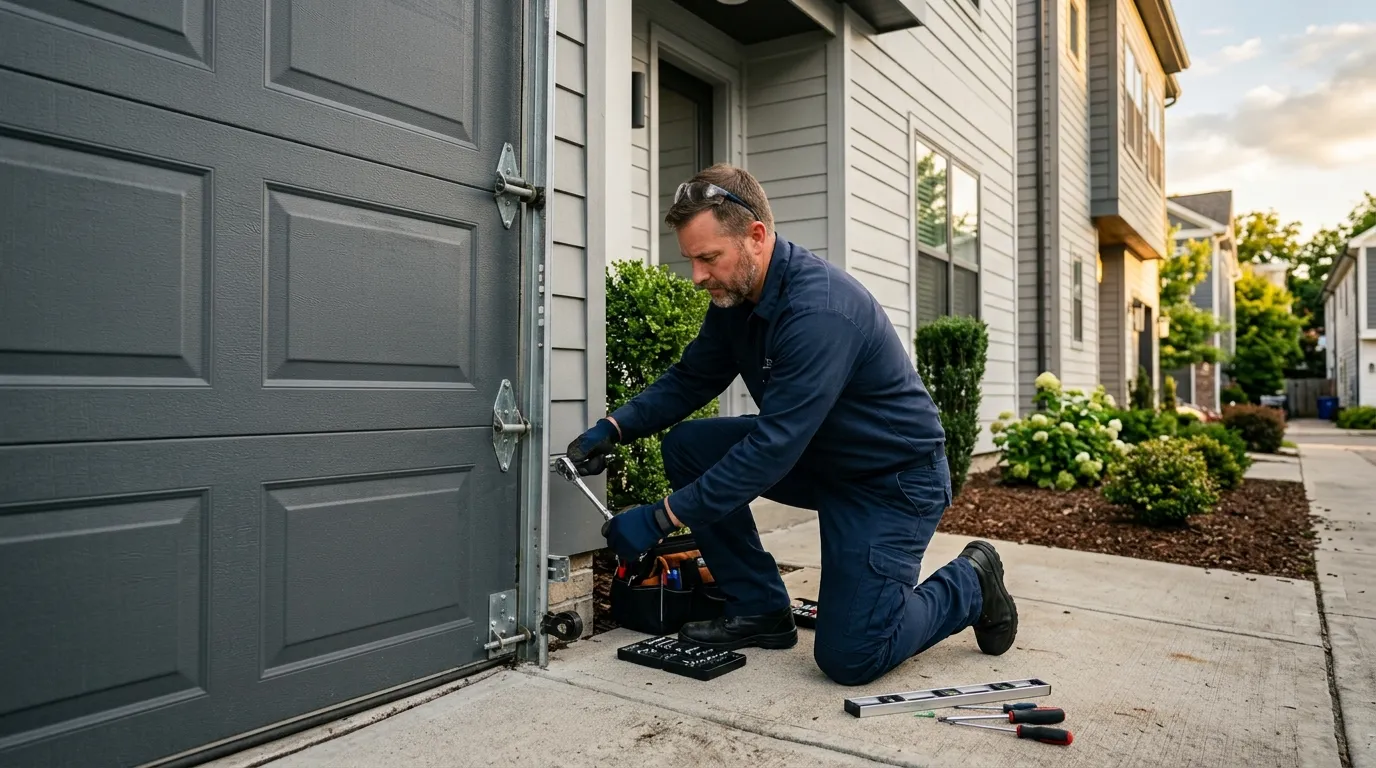
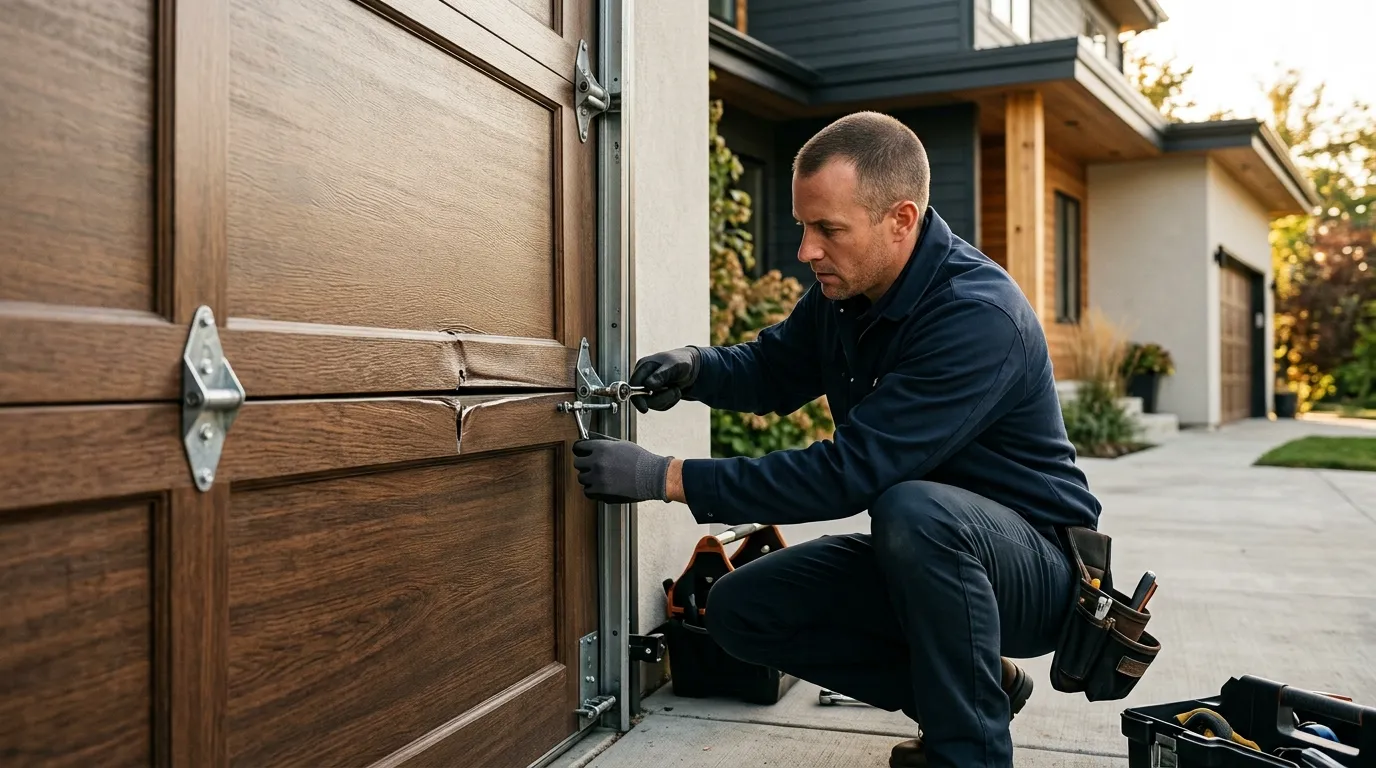
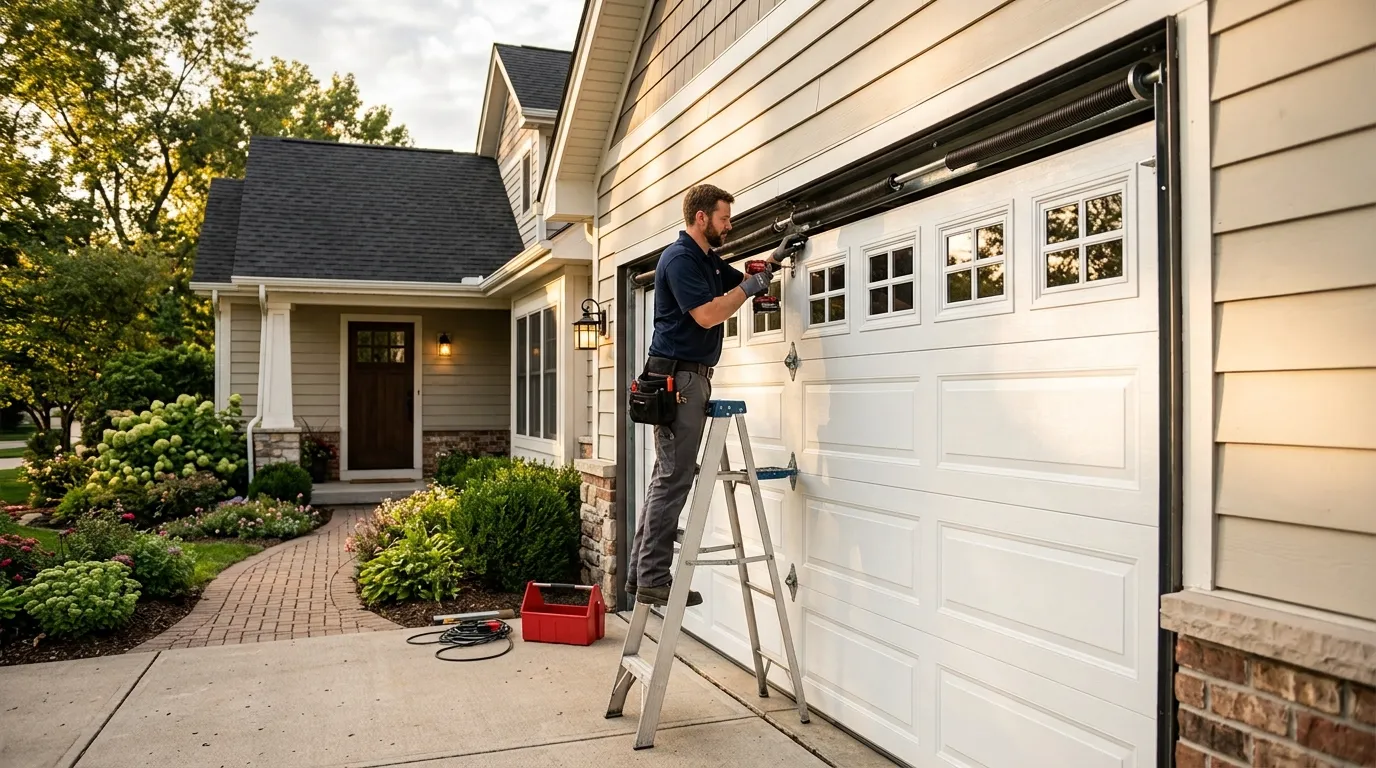
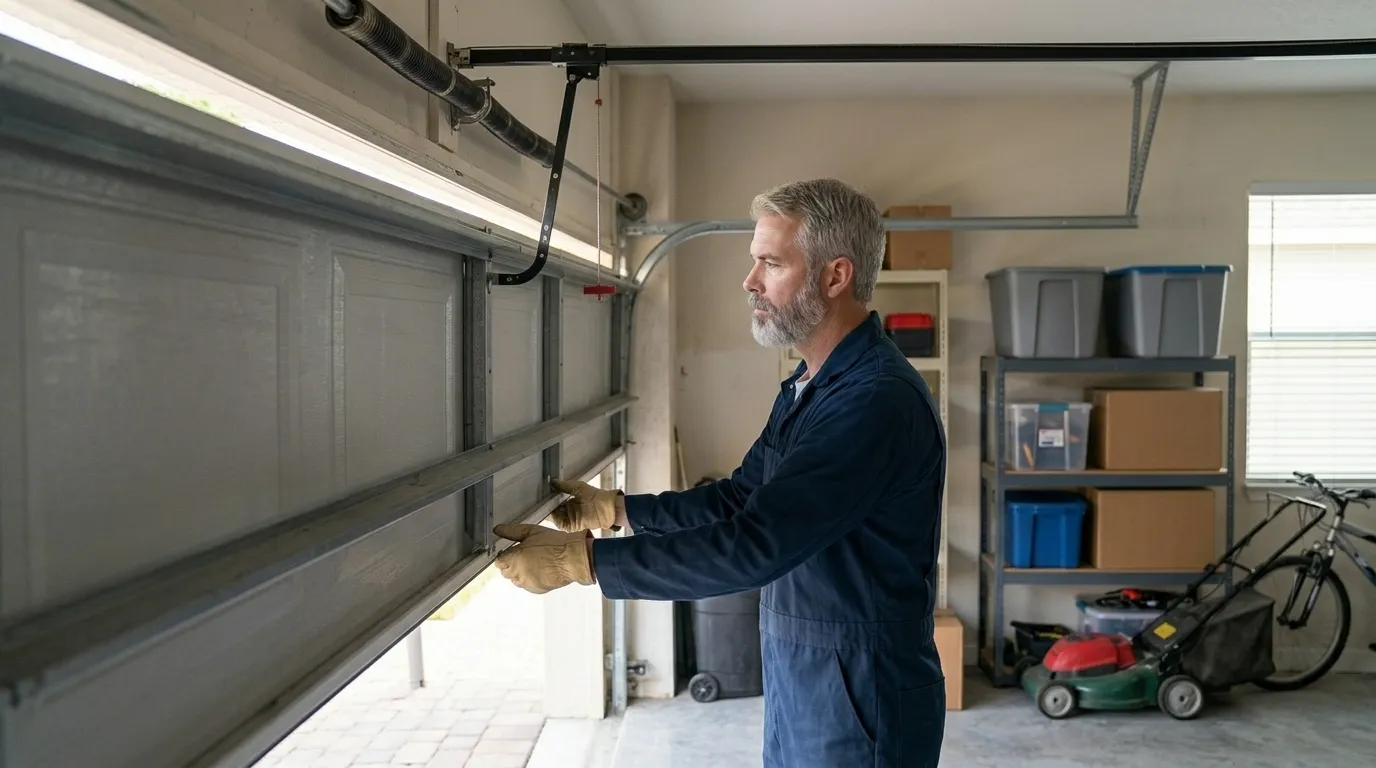
On a 1957-built single-car garage, the most common call is a snapped extension spring - those coiled springs along the horizontal track wear out on a shorter cycle than modern torsion springs and they're still what a lot of these openings run. Second most common: a track too narrow or an opening too low for a straightforward torsion conversion, which means custom hardware instead of an off-the-shelf kit. Cold snaps make brittle old cable and stiff rollers fail faster, and a steel panel from that era with fifty-some years of paint and rust doesn't always take a patch repair well - sometimes a single panel swap is cheaper and cleaner than trying to save the original. None of this is exotic work, but it's not the same job as fixing a door built in 2005, and we go in expecting the older hardware rather than being surprised by it.