Old Streets and New Ones
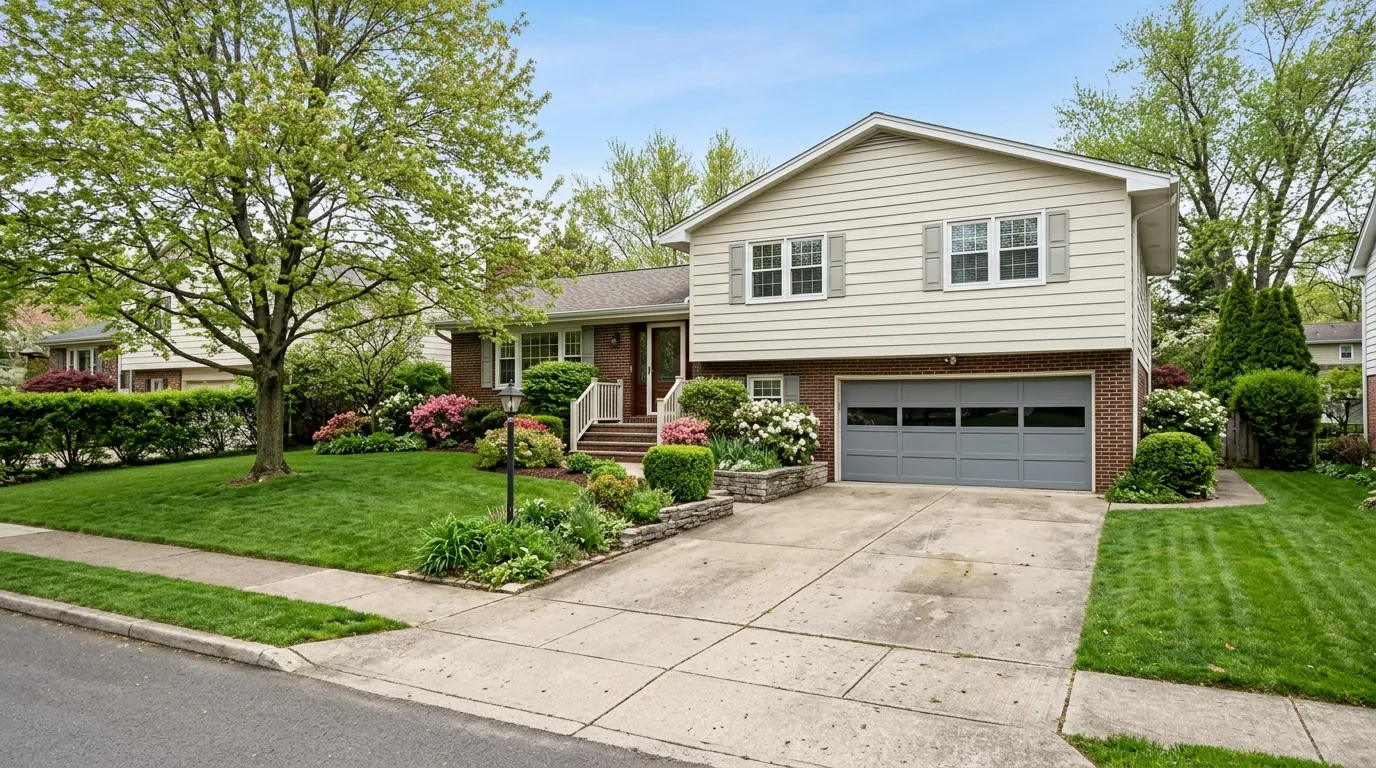
Farmingdale is one of the farther points on our map - about 14 miles out from our Toms River base, tucked up near the edge of the service area alongside Allenwood and Spring Lake Heights. It's a small town by household count, only 582 of them, which means we're not driving past three jobs a week here the way we might closer to the shop. That's worth saying plainly: we come out when you call, but we're not around the corner. The upside is that a town this size doesn't have the churn you see in bigger developments. A lot of the same families have been on the same lots for decades, and the doors on those garages have had the same amount of time to wear out. When a spring finally lets go here, it's usually because it's been carrying the same door since Nixon was in office, not because a contractor cut corners on a new build last year.
What We Do Not Do
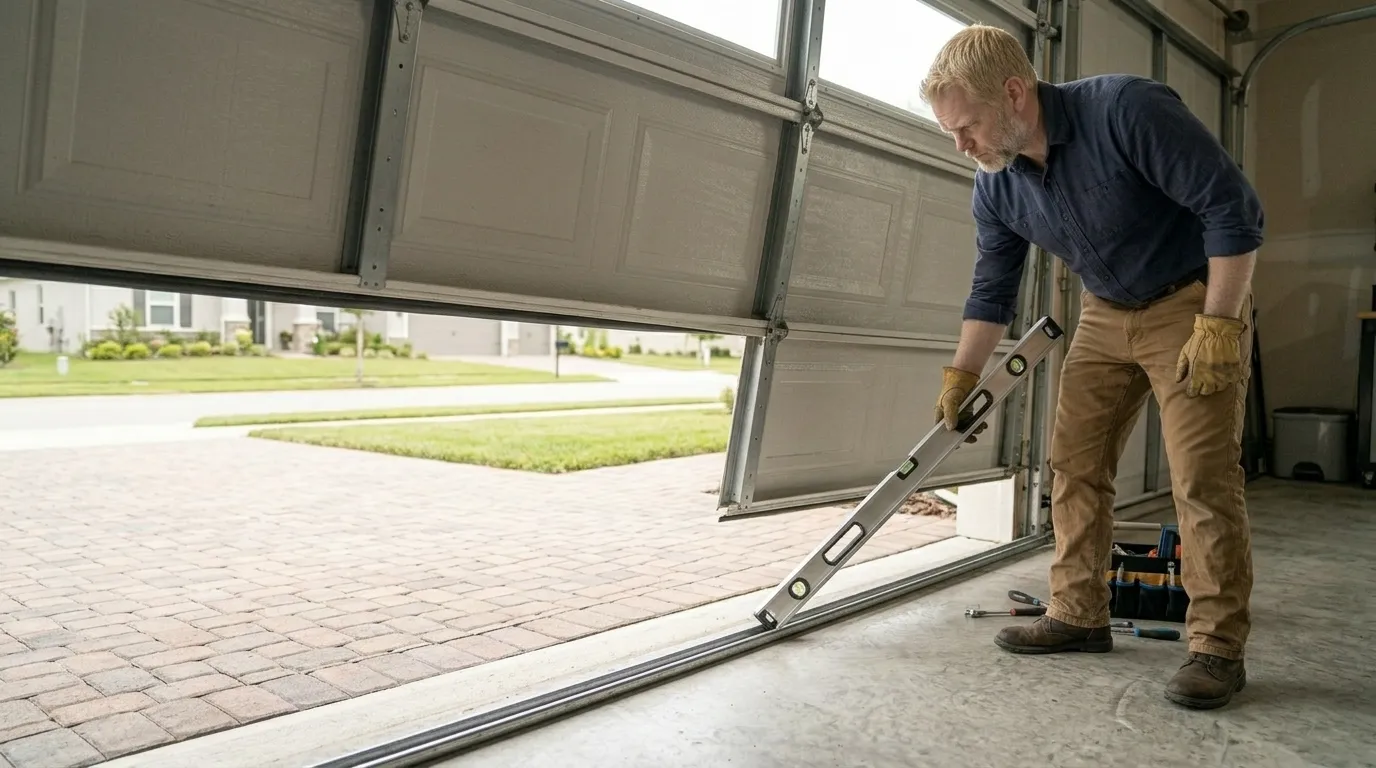
We're honest that Farmingdale isn't a town we're stationed in - we run out of Toms River, 14 miles away, and that's the truth for every call out here, not just the slow ones. We don't pretend to have a local depot or a truck idling nearby. If you need a same-day fix on a Saturday afternoon in an active storm, we'll tell you where you stand before you commit rather than promise something we can't back up from that distance. We also don't try to rebuild a door that's cheaper to replace outright - if the track is bent past true or the panels are rusted through at the bottom, we'll say so instead of billing you for patchwork that fails again in a year. And we don't stock every obsolete torsion spring size on the truck; some of the older 1960s and 70s hardware in this area takes a day or two to source.
How That Shows Up in the Door
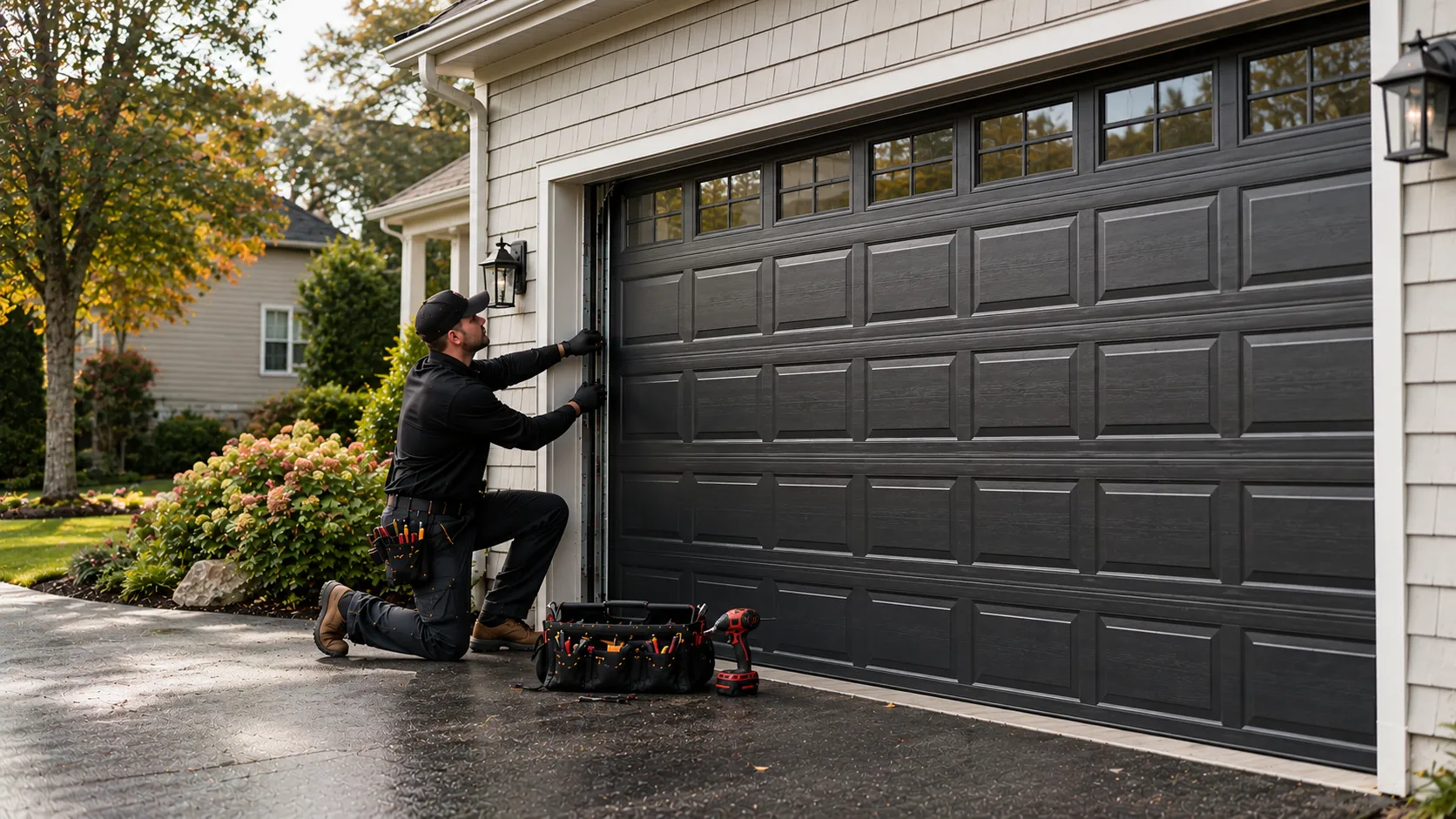
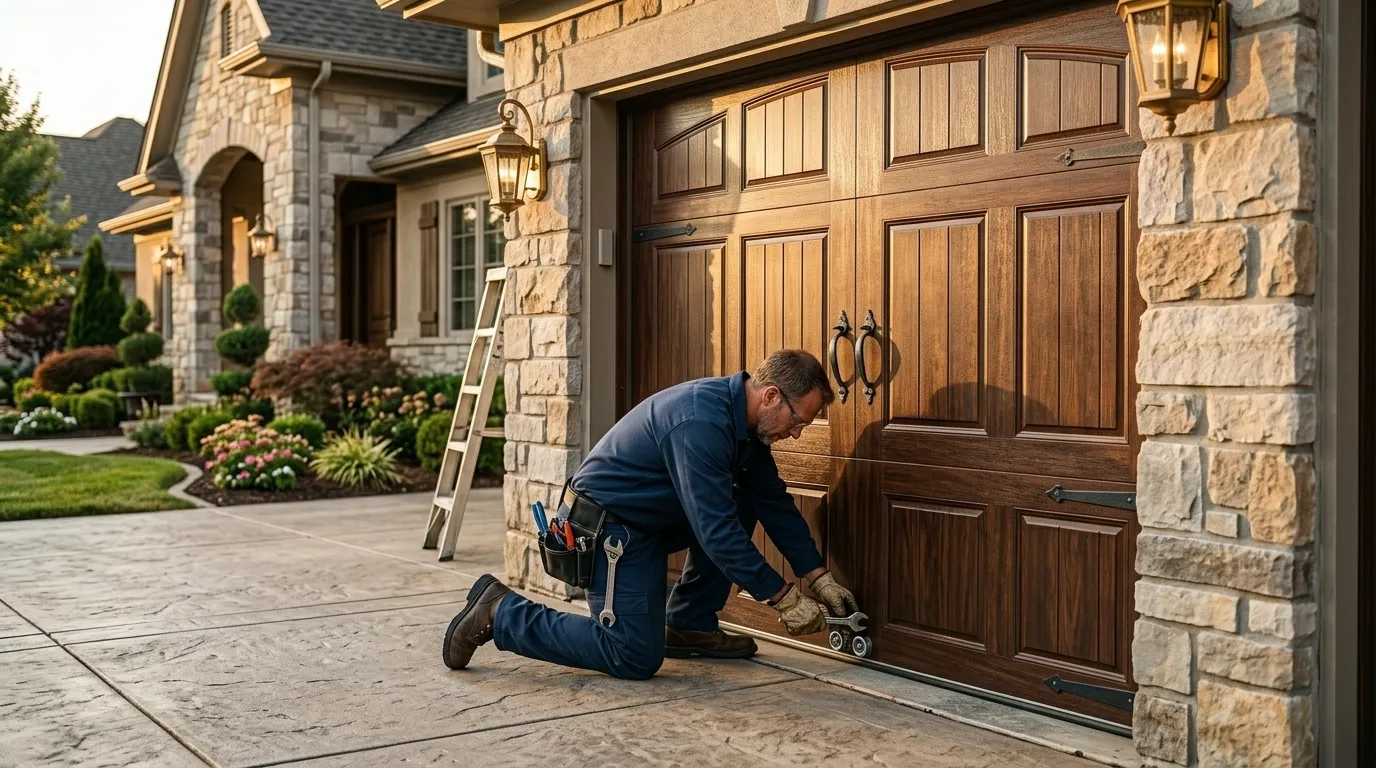
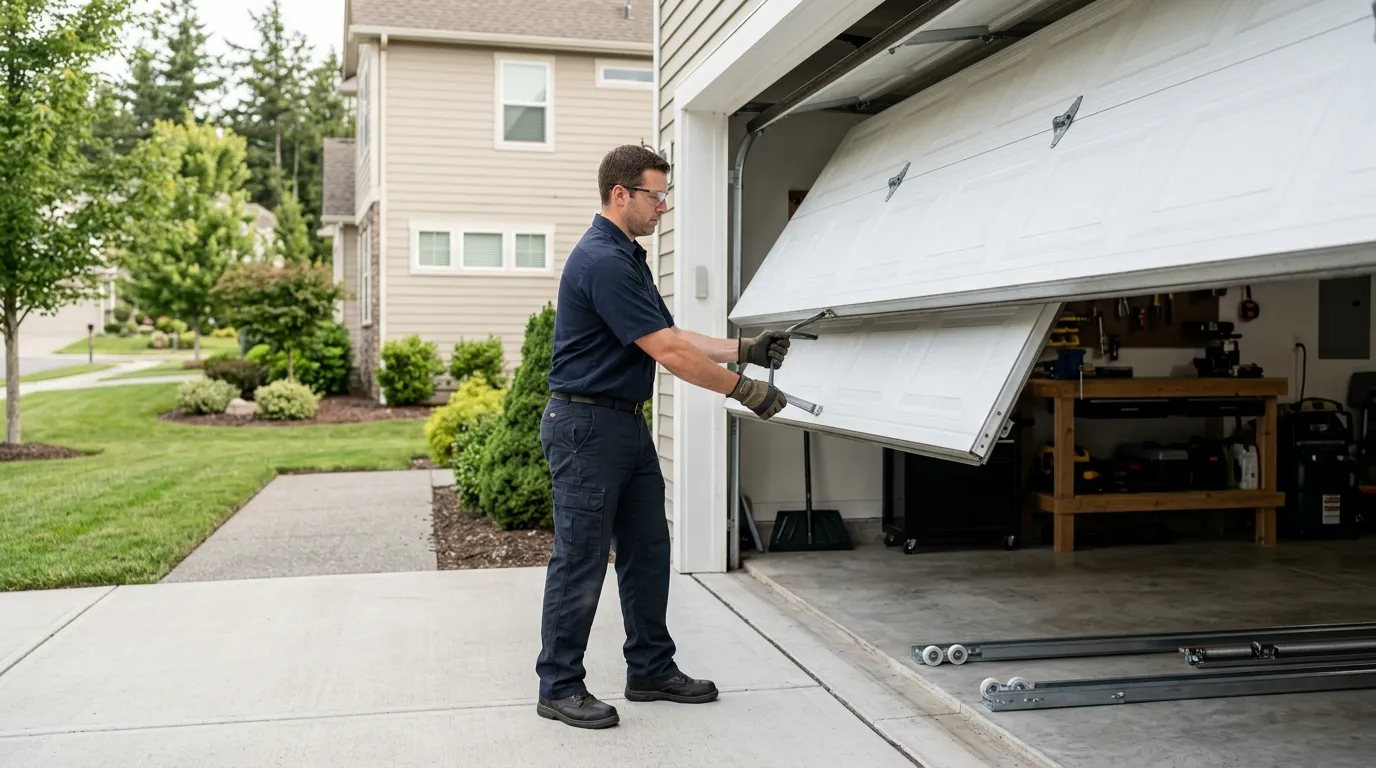
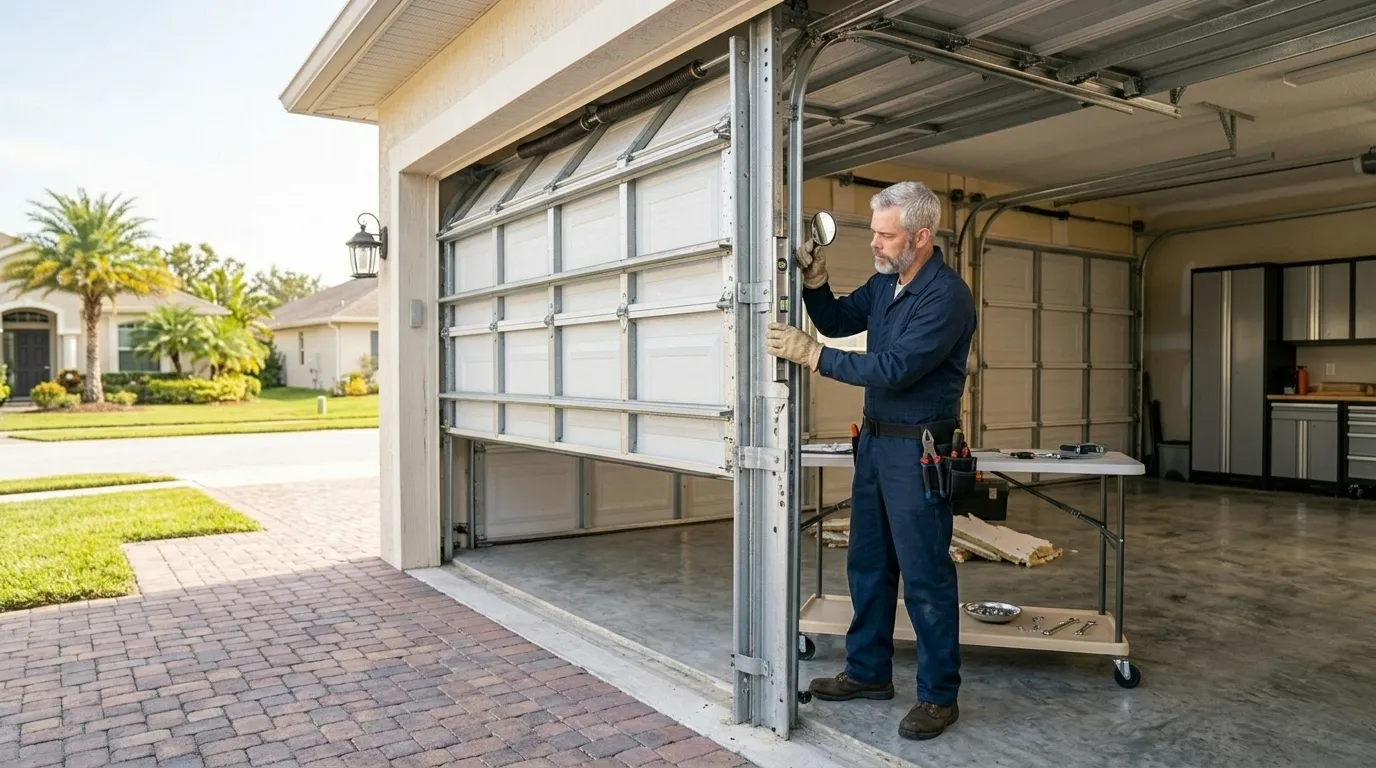
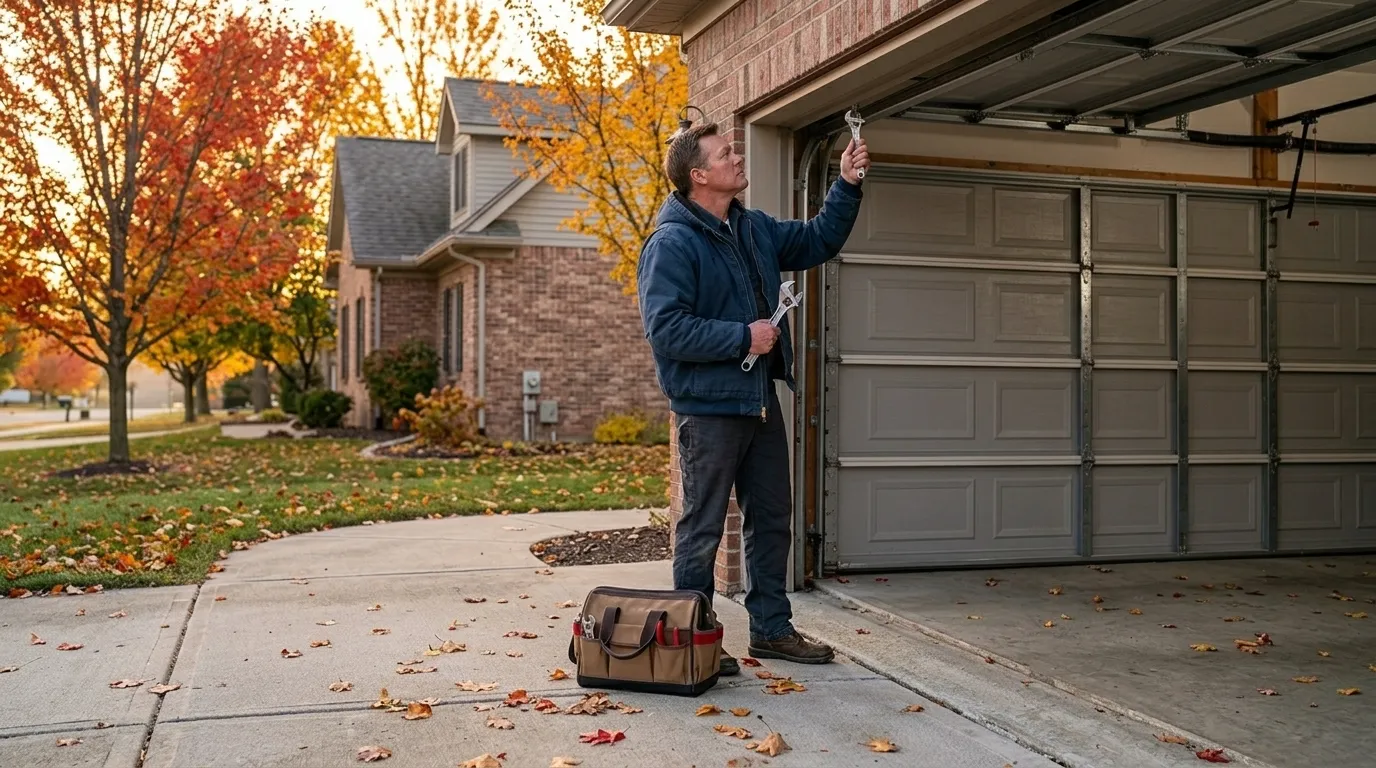
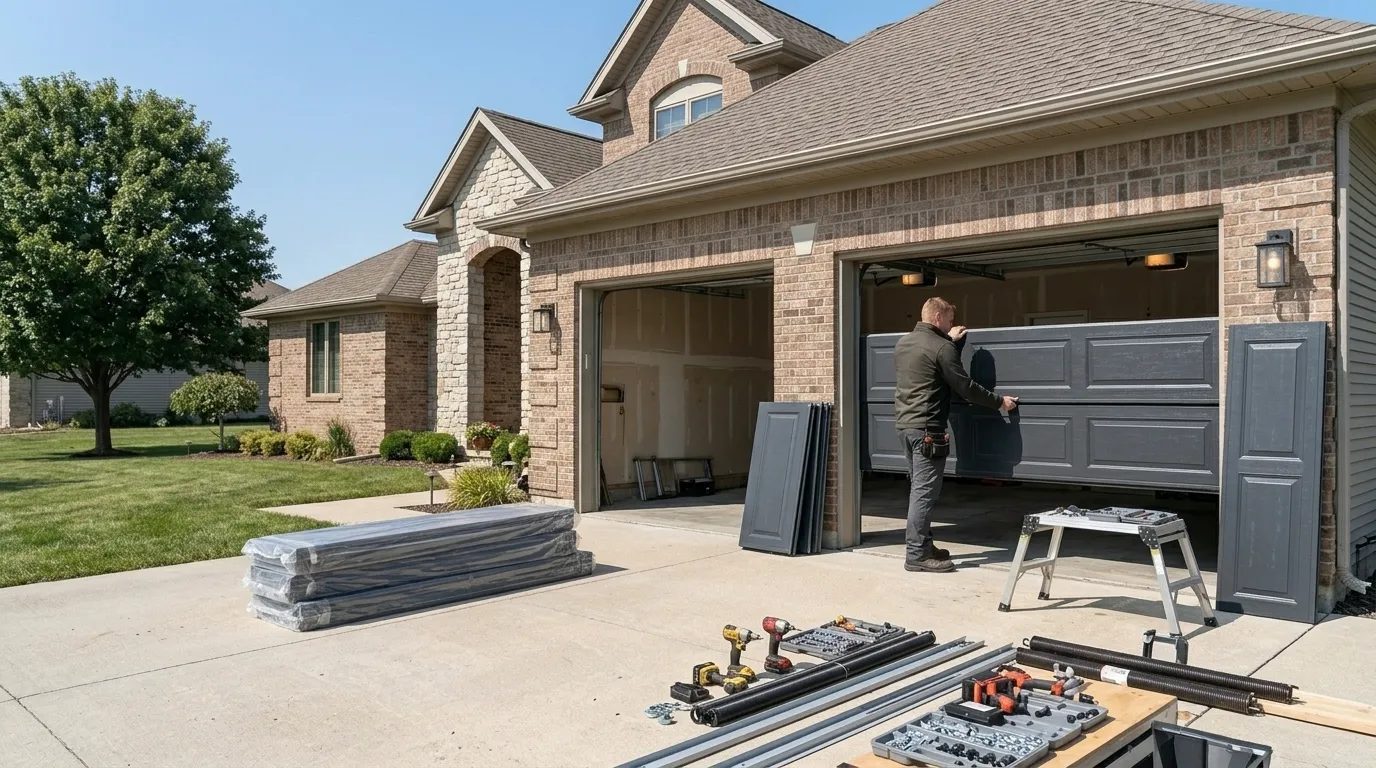
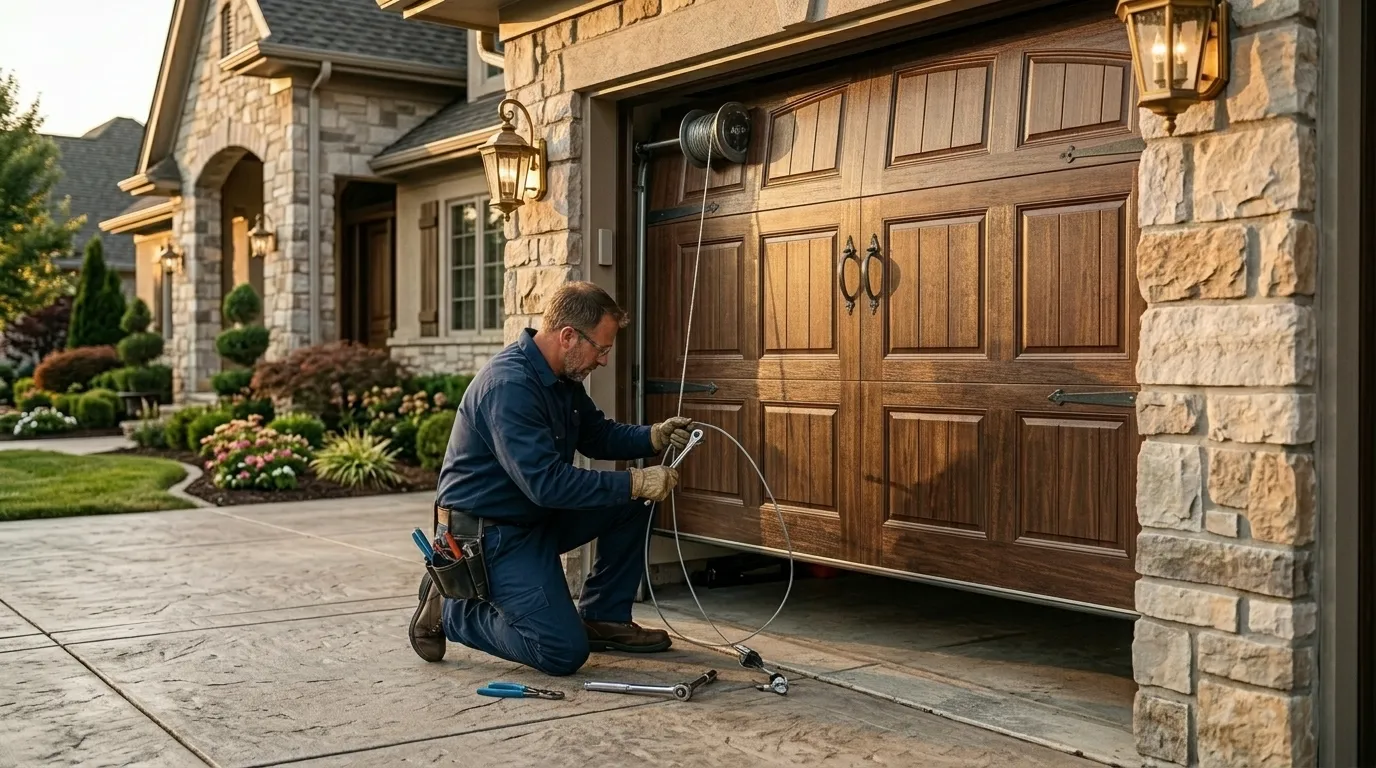
Given the age of the housing stock, the calls we get from Farmingdale tend to be predictable: torsion springs that have simply outlived their cycle count, rollers that have gone from steel to plastic somewhere along the way and are now cracking, and openers that are the second or third unit on an original 1970s-era door and track. This region sits in a cold, severe climate band, and on a house this age the weatherstripping and bottom seal are usually long gone, which lets the cold track right into the garage and stiffens up the grease on the rollers faster than it would on a newer door. We don't see much call for cosmetic upgrades out here - most jobs are function first: get the door moving smoothly and quietly again on the hardware that's already there, or replace it outright when the frame or track can't be trusted anymore.