
Old Streets and New Ones
Belmar's median house went up in 1959. That's more than a decade ahead of the 1972 median across the wider Toms River Garage Door Pros service area, and it matters more than it sounds like it should. A door built for a 1959 opening isn't sized the same as one built for a house from the 1970s or later, and the hardware bolted to those old jambs wasn't designed with today's openers in mind. We come out from Toms River, 15 miles up the road, and the difference shows the second we pull into a Belmar driveway versus one in a newer pocket of the coverage area. Framing is narrower in places, headroom is tighter, and the track runs that worked fine on a manual door in 1959 sometimes fight a modern opener bracket. None of that is a problem you can't live with. It just means the fix that works two towns over doesn't always drop in here without adjustment, and we'd rather tell you that up front than surprise you with an extra trip charge once we're already inside the garage.
What We Do Not Do
We don't keep a depot in Belmar. Every job here means a truck coming the 15 miles from Toms River, so we're not the outfit to call for a same-hour emergency the way a shop based in town might be. We also don't stock replacement panels for every original 1959-era door size - some of those openings are narrower than what current stock doors come in, and if your door is one of them, we may need to special-order a panel rather than swap one off the truck. And we won't tell you a repair makes sense when it doesn't. If the door and track are original to a 1959 build and the spring, rollers, and hinges are all worn out at once, replacing the whole unit is usually cheaper over time than patching it piece by piece. We'll say so rather than string together three separate service calls.
How That Shows Up in the Door
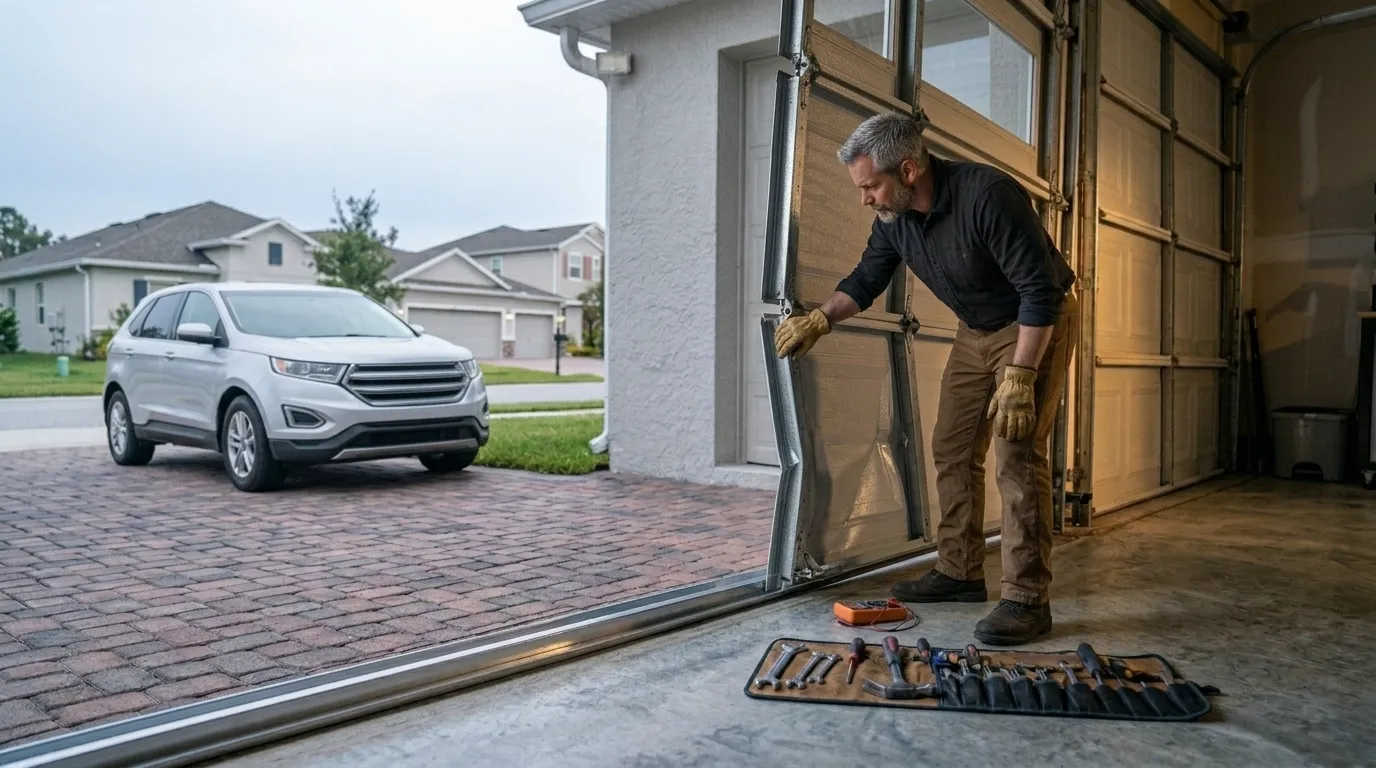
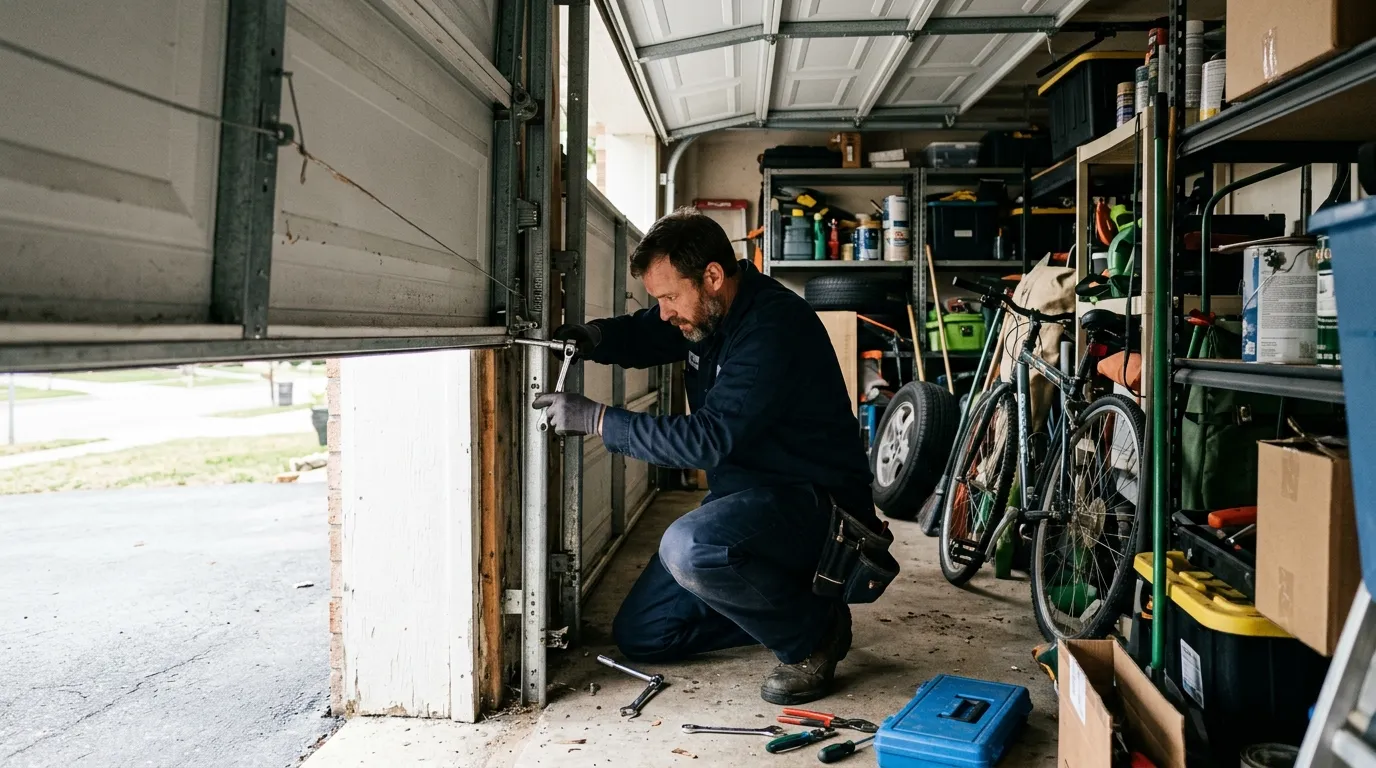
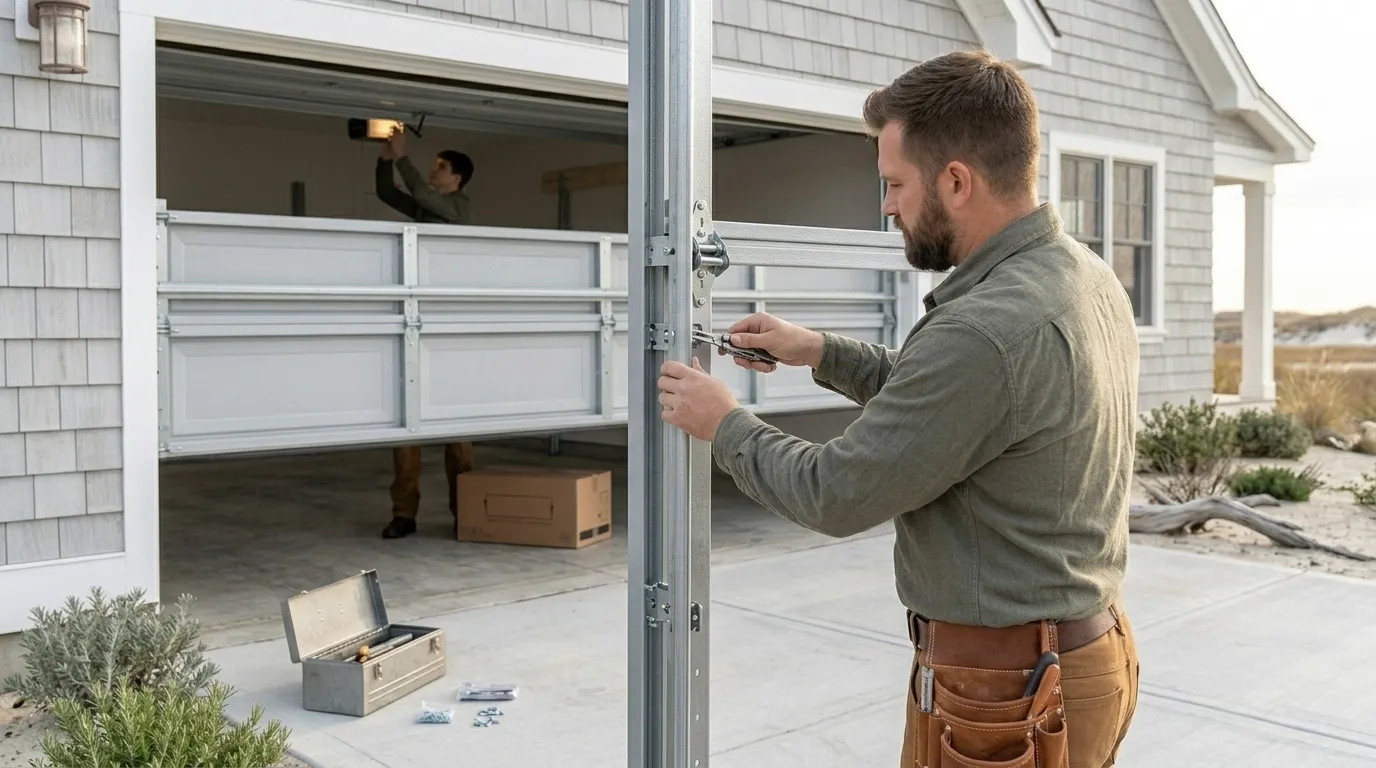
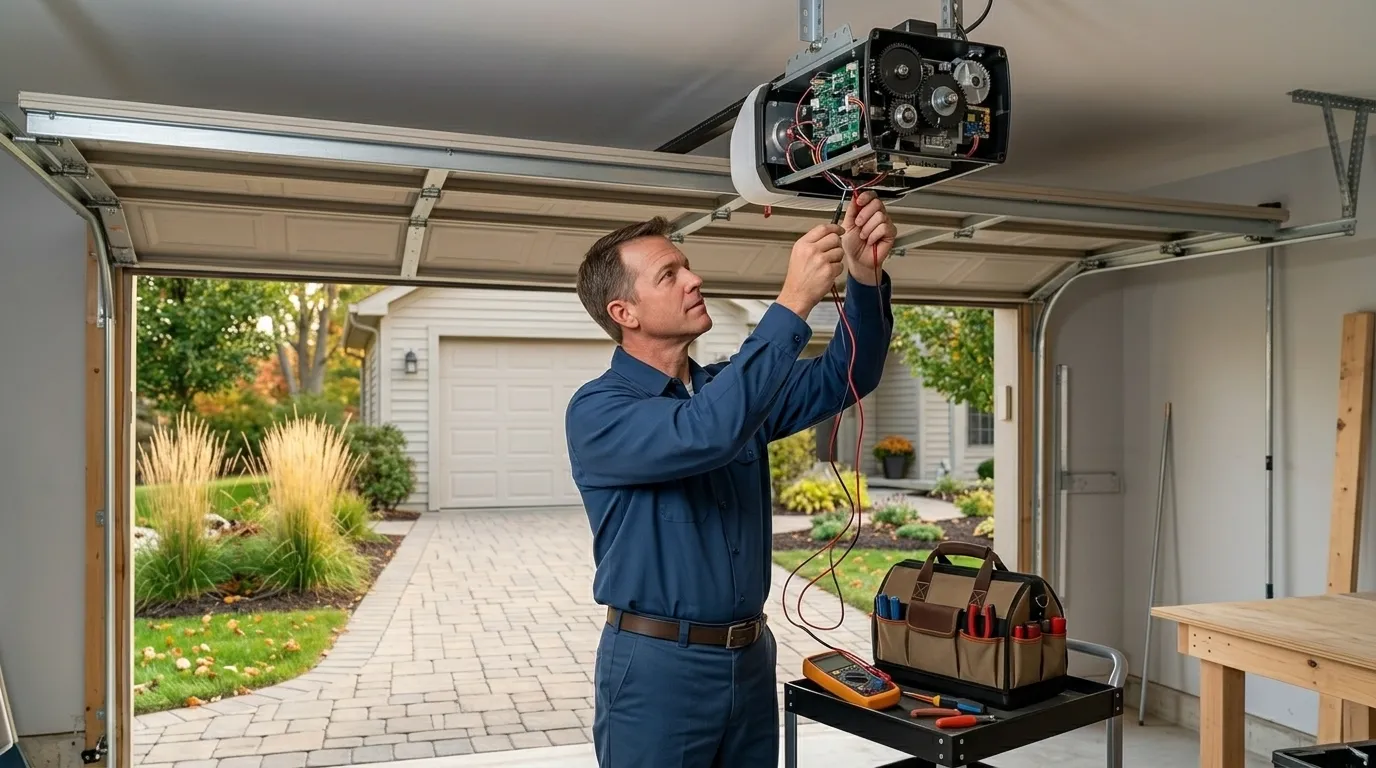
On the older Belmar garages, the extension springs mounted alongside the track are the part that gives out first - they were standard for single-car doors built around 1959, and decades of cold-severe winters take a toll on the coils and the pulleys they run through. We see stretched or snapped extension springs here more than the torsion failures that dominate newer construction elsewhere in the service area. Track alignment is the other recurring issue: original framing settles over sixty-plus years, and a track that was square in 1959 often isn't square now, which shows up as a door that binds partway through its travel or rollers that wear unevenly on one side. Openers added later frequently weren't matched to the original spring tension, so we also find units straining against hardware that's fighting them the whole way up. None of this is unusual for a house this age - it's just a different repair list than you'd get in a garage built in 1985, and it's worth knowing which list applies to yours.