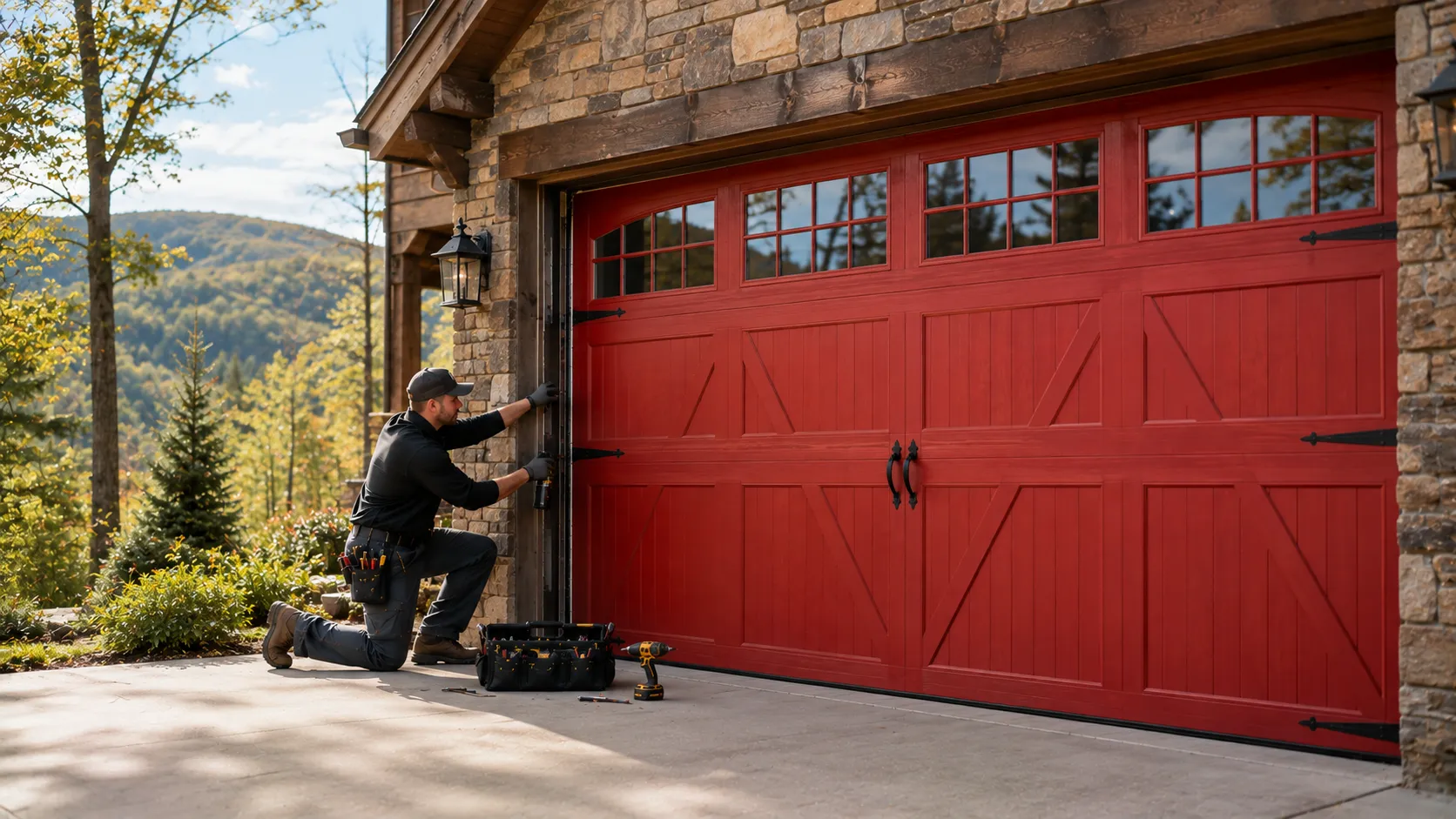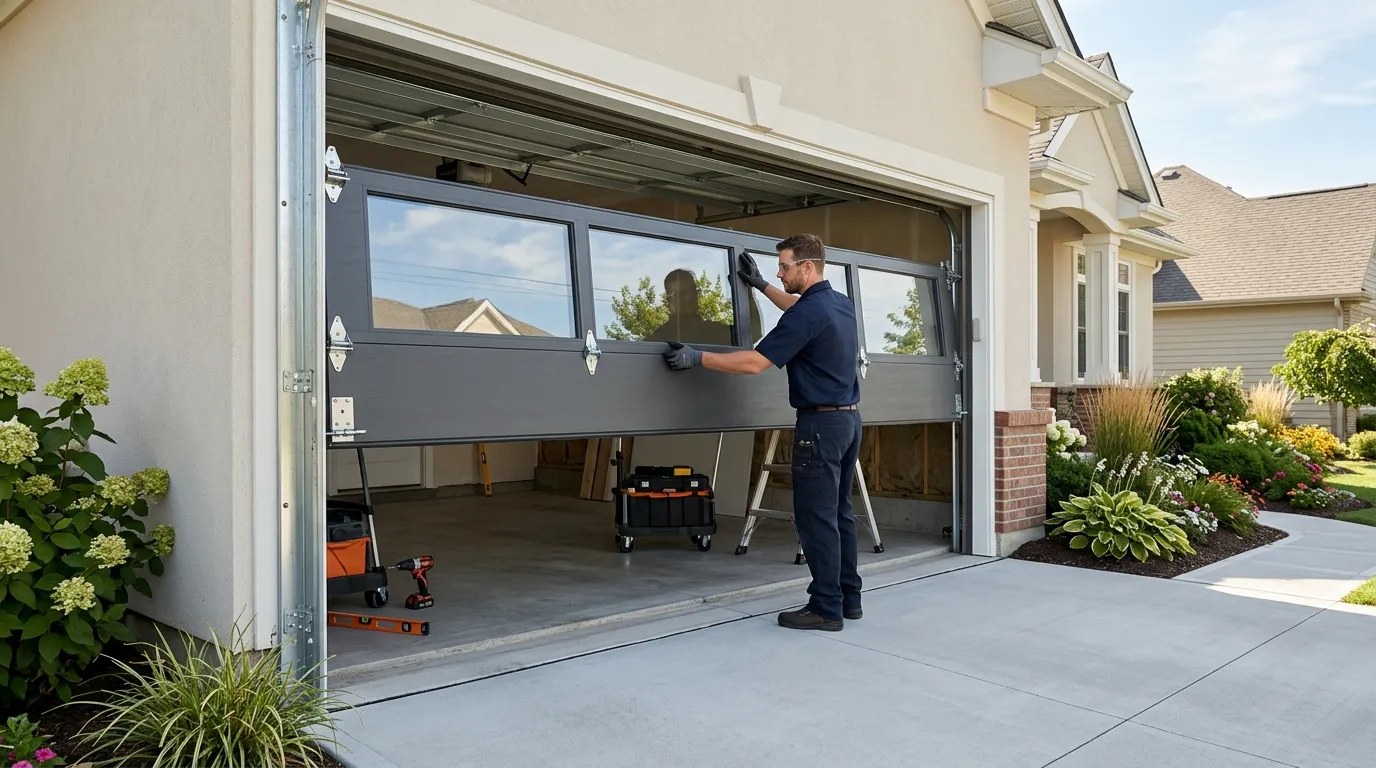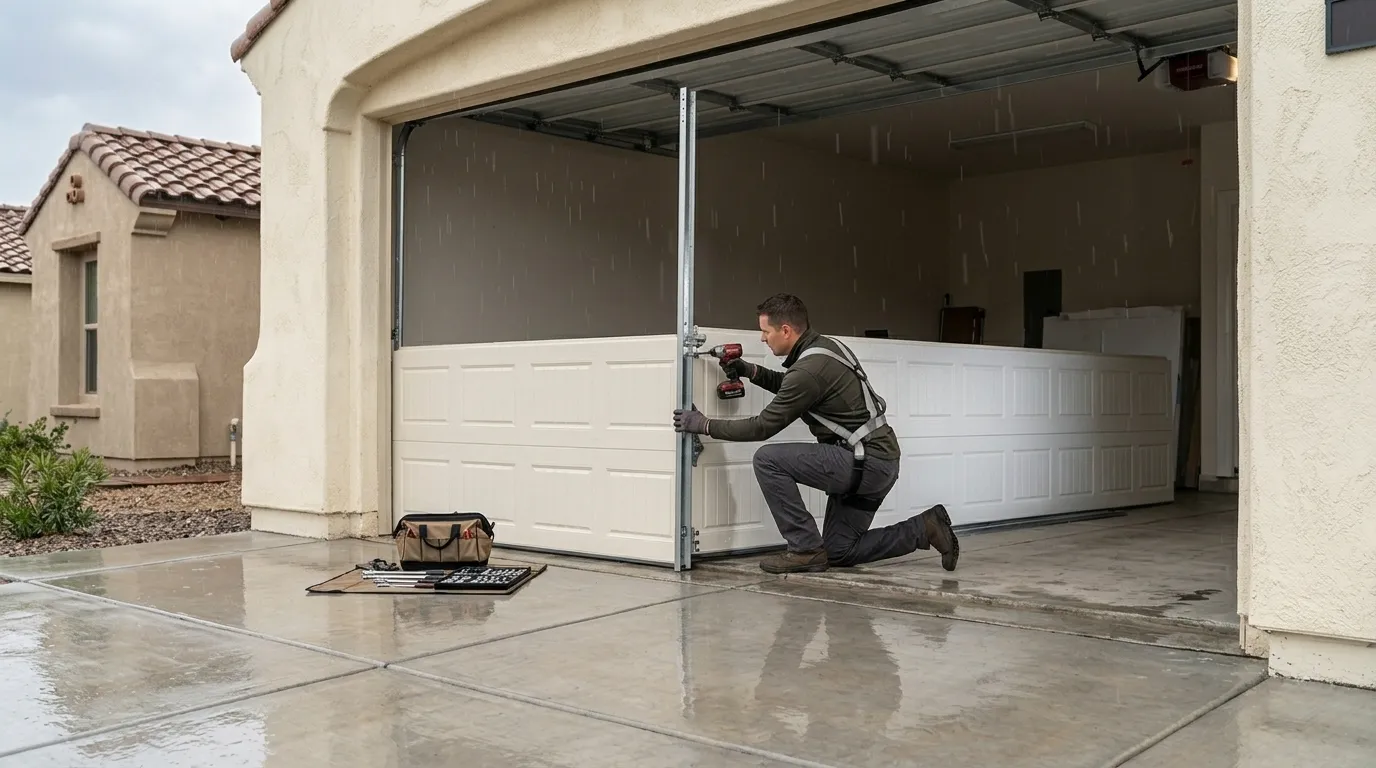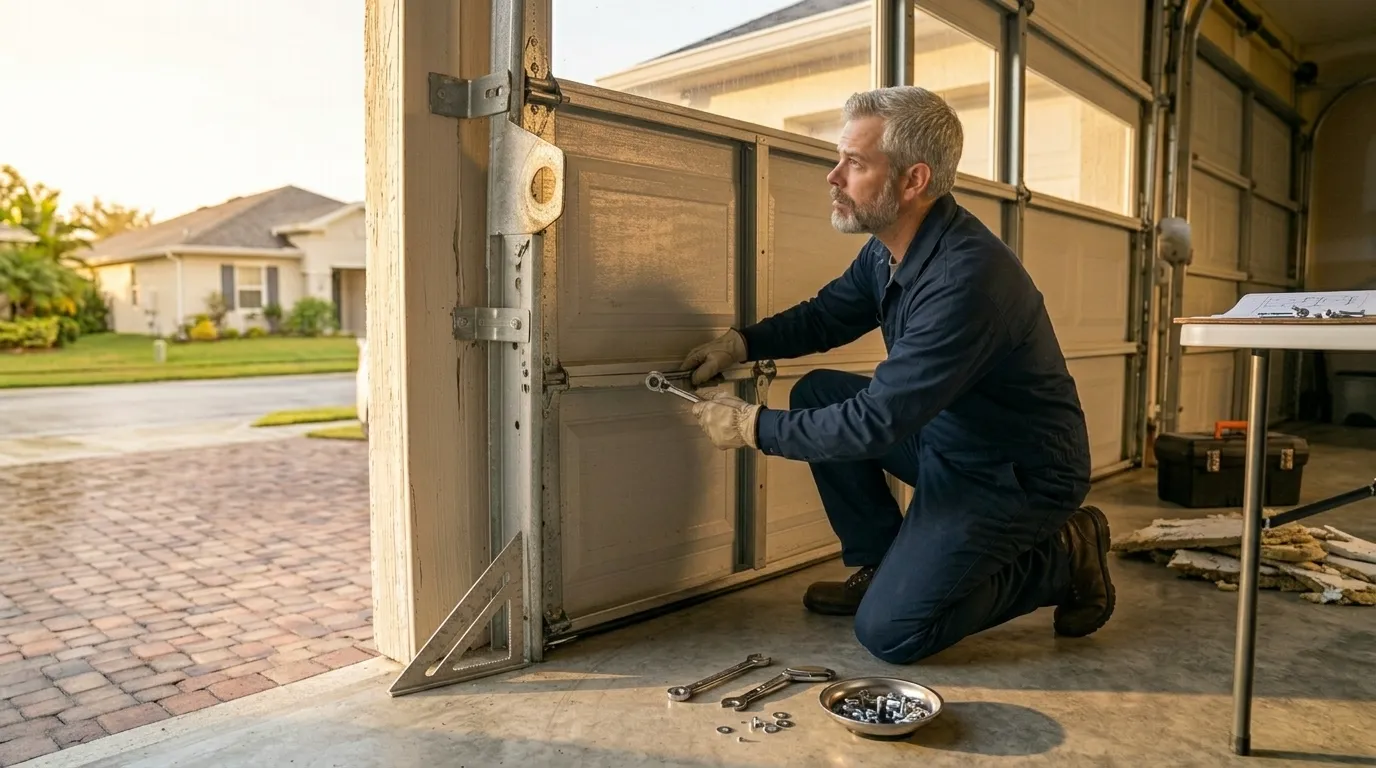

Old Streets and New Ones
Beachwood sits about 5 miles from our shop in Toms River, close enough that a morning call doesn't turn into an afternoon wait. The town itself is a mix of older lots near the water and blocks that filled in later, but the housing stock leans heavily toward one era: most of what's standing went up around 1976, which puts it a few years past the broader service area's median build year of 1972. That gap matters more than it sounds. A house built in 1976 usually has a different opener mount, a different track gauge, and different spring sizing than the 1960s builds you'll find a few miles inland. When we get a call from Beachwood, we're usually looking at a door and opener combination that came in a specific window, not the full spread of ages you'd see closer to the older parts of Toms River. That's the first thing we check before we quote anything, because guessing the era wrong means showing up with the wrong spring.
What We Do Not Do
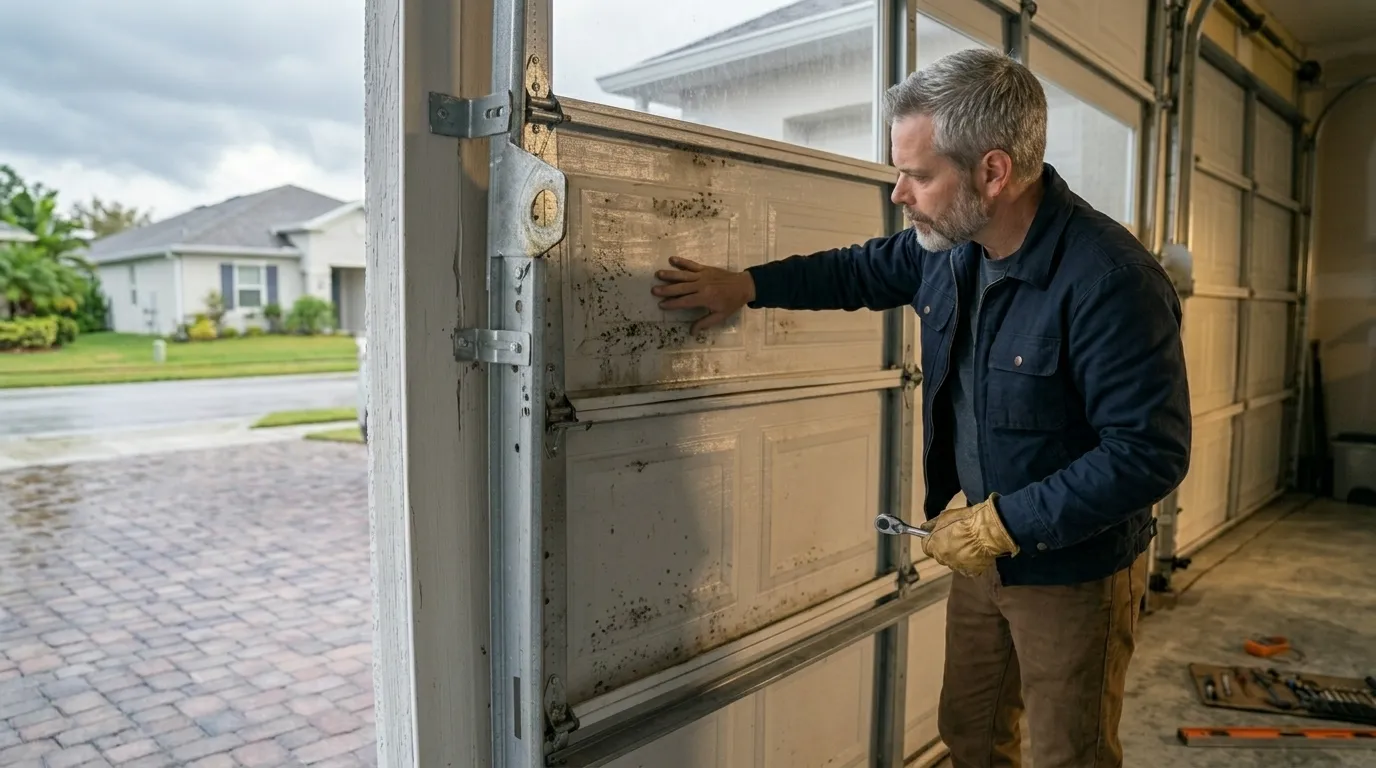
We don't keep a crew or a depot in Beachwood. Every job here is a truck coming from Toms River, about 5 miles up the road, which is close but not instant, especially at peak drive times. We also don't try to force a repair on a door that's past the point of being worth it. If a 1976-era door has a bent track, a rusted-through bottom panel, and an opener that's already failing, patching one part while the rest is on borrowed time isn't a favor to you, it's a second bill waiting to happen. In cold-climate winters, a door frame that's shifted with age can bind in ways that no amount of lubricant fixes. We'll tell you straight when replacement beats another repair, even if that's not the answer you called for.
How That Shows Up in the Door
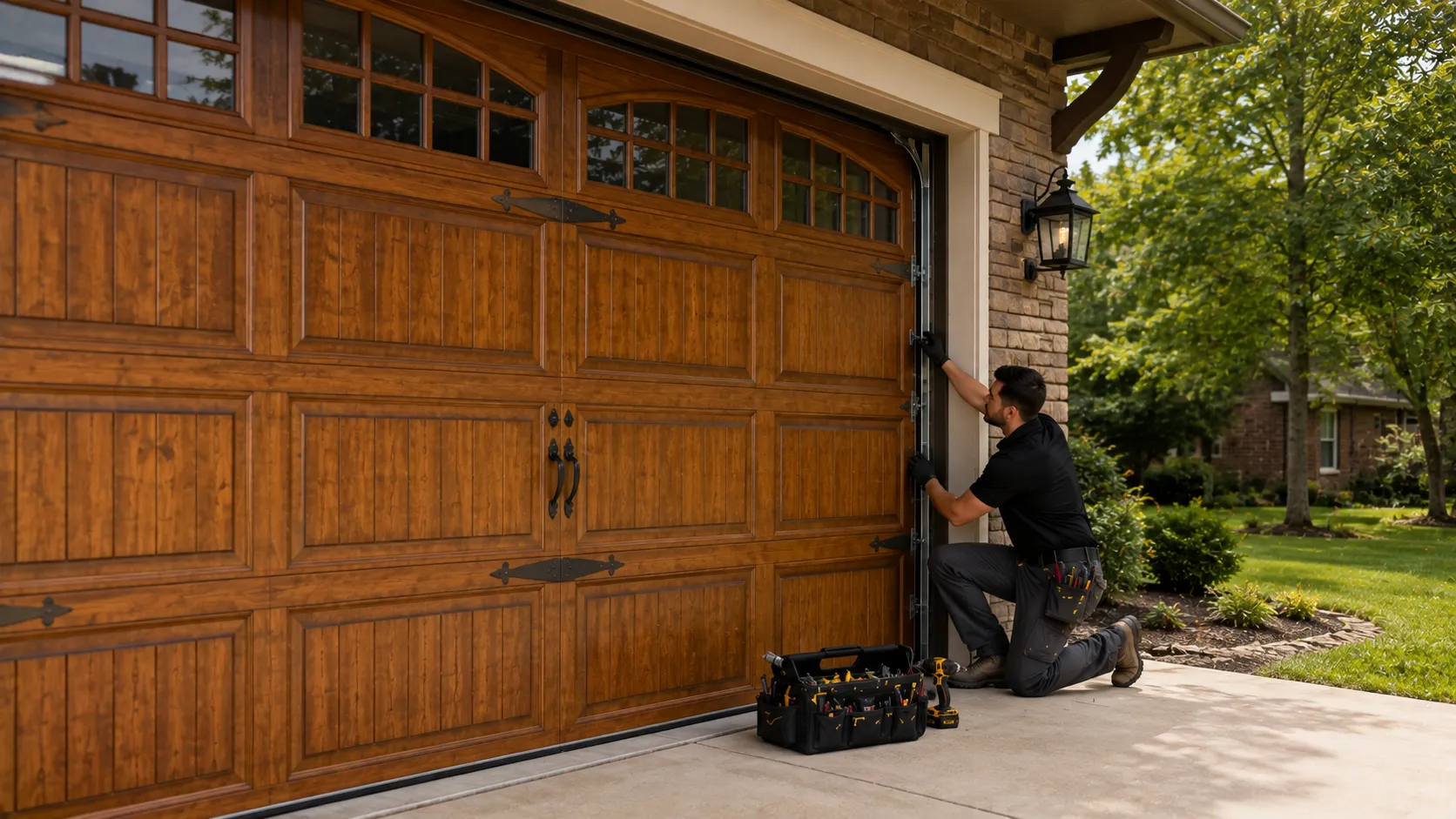
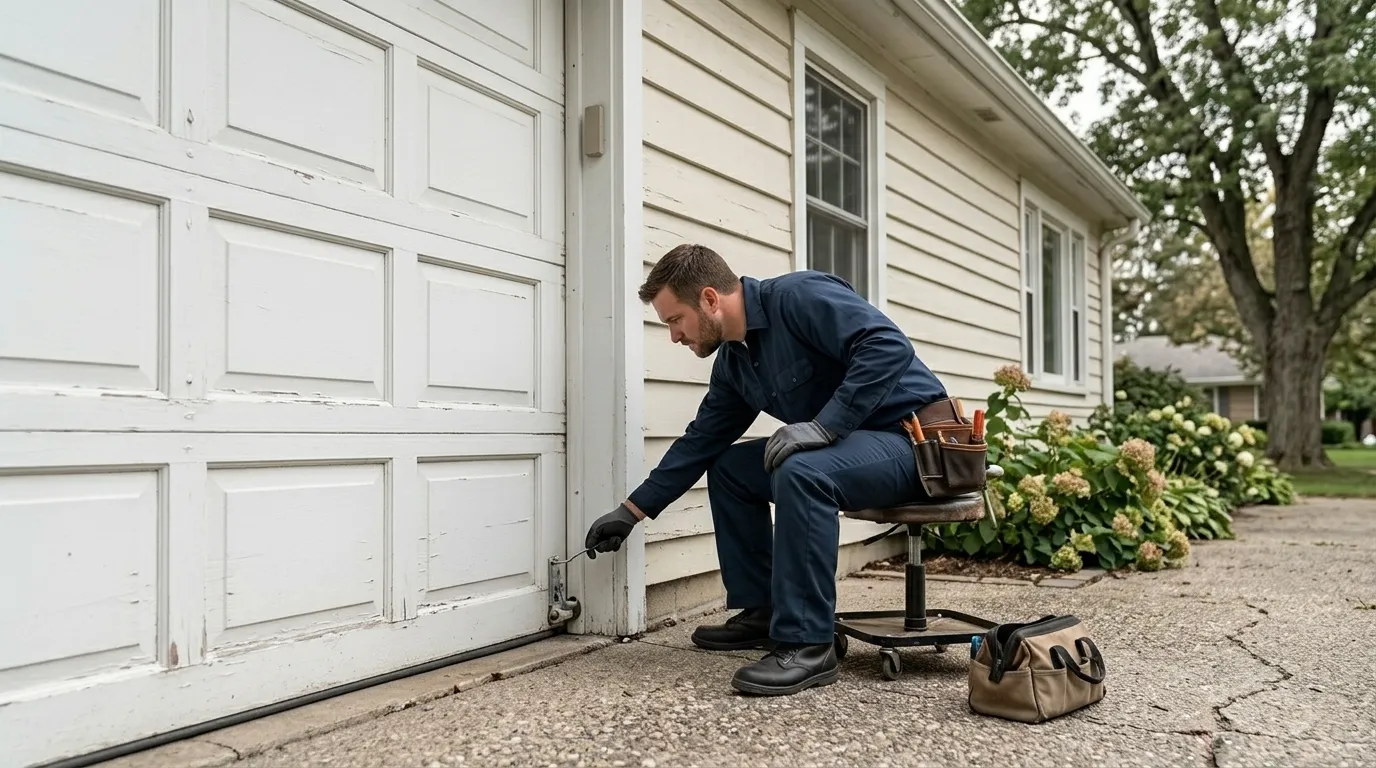
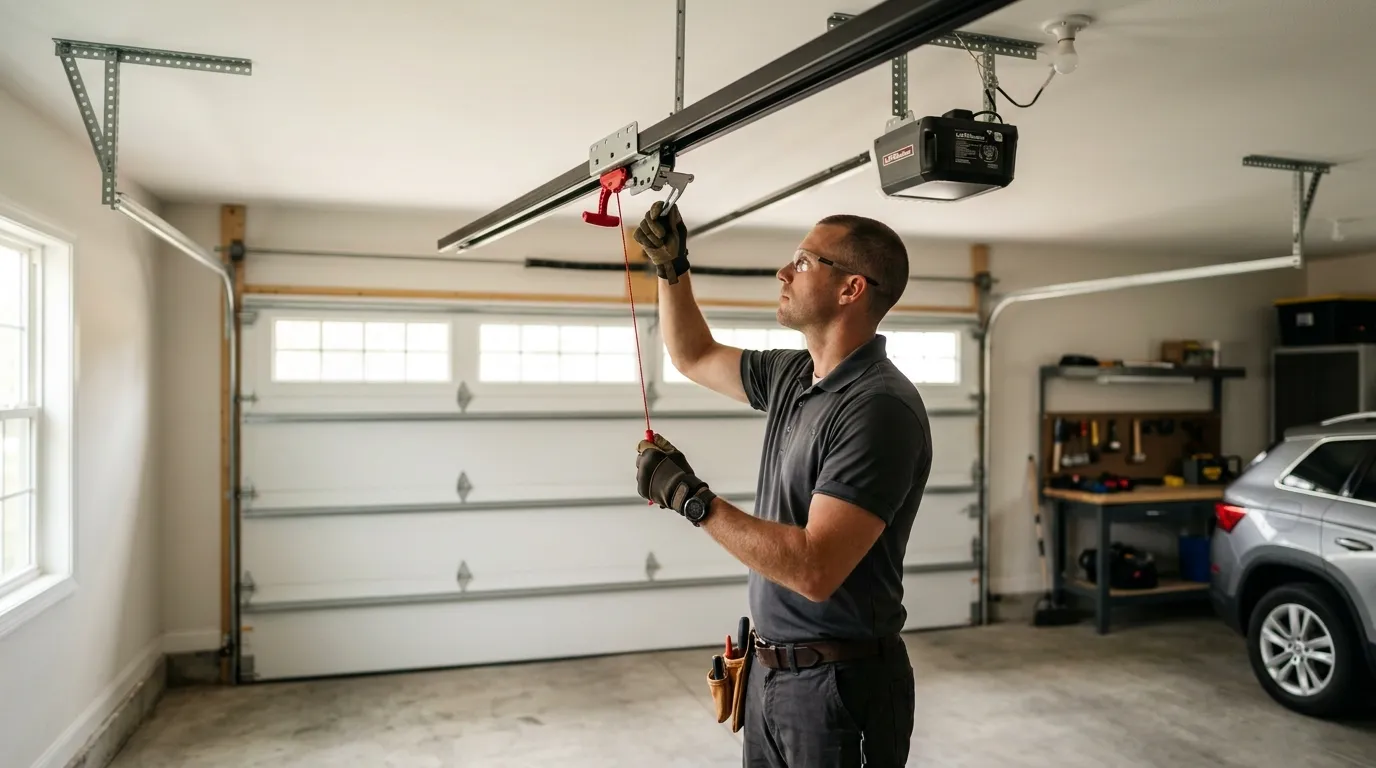
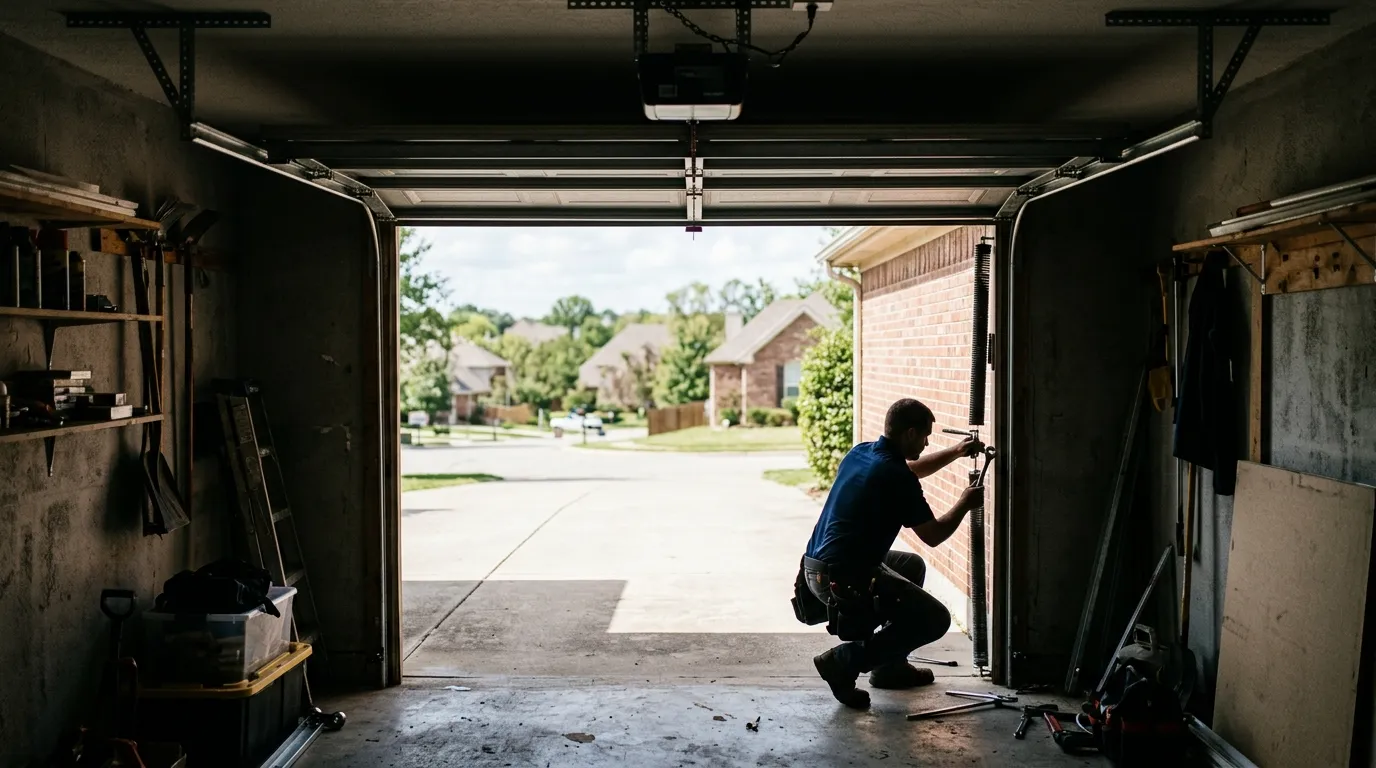
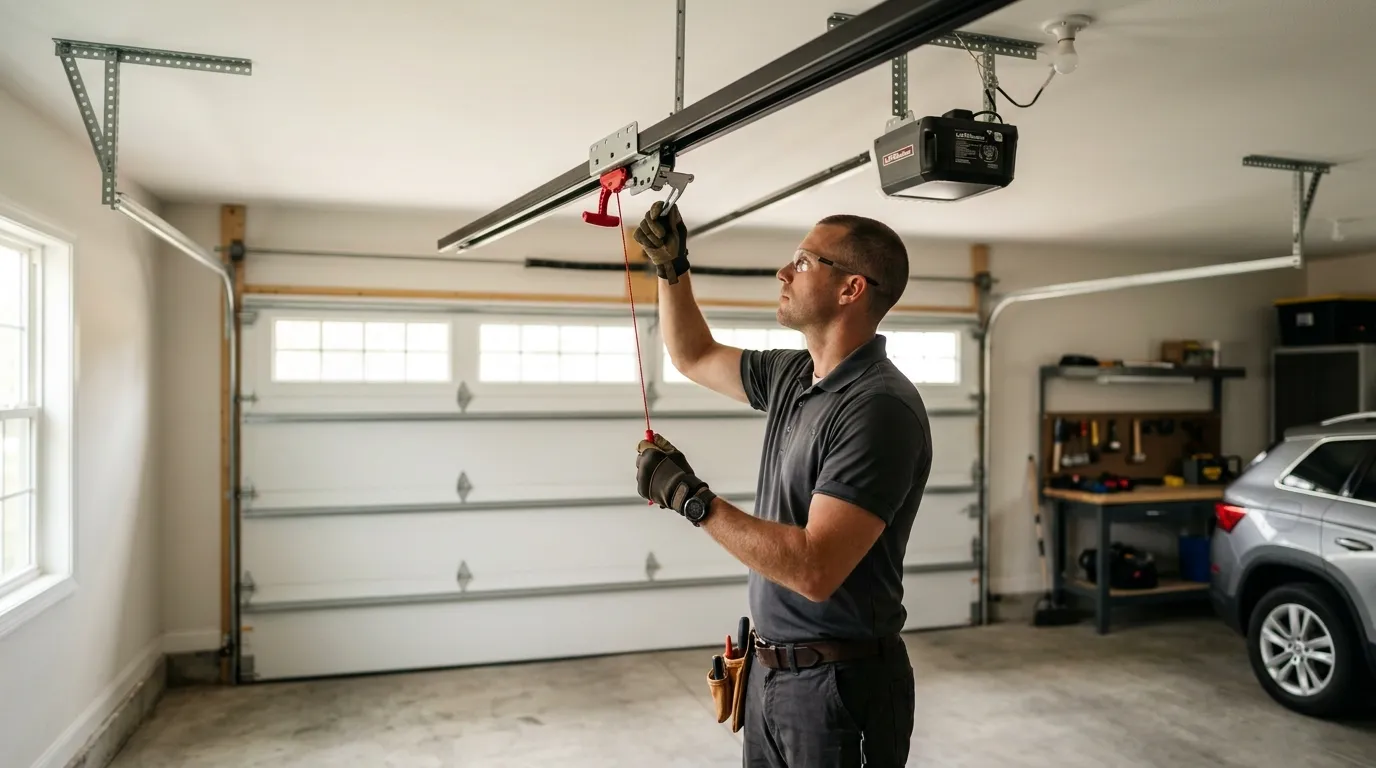
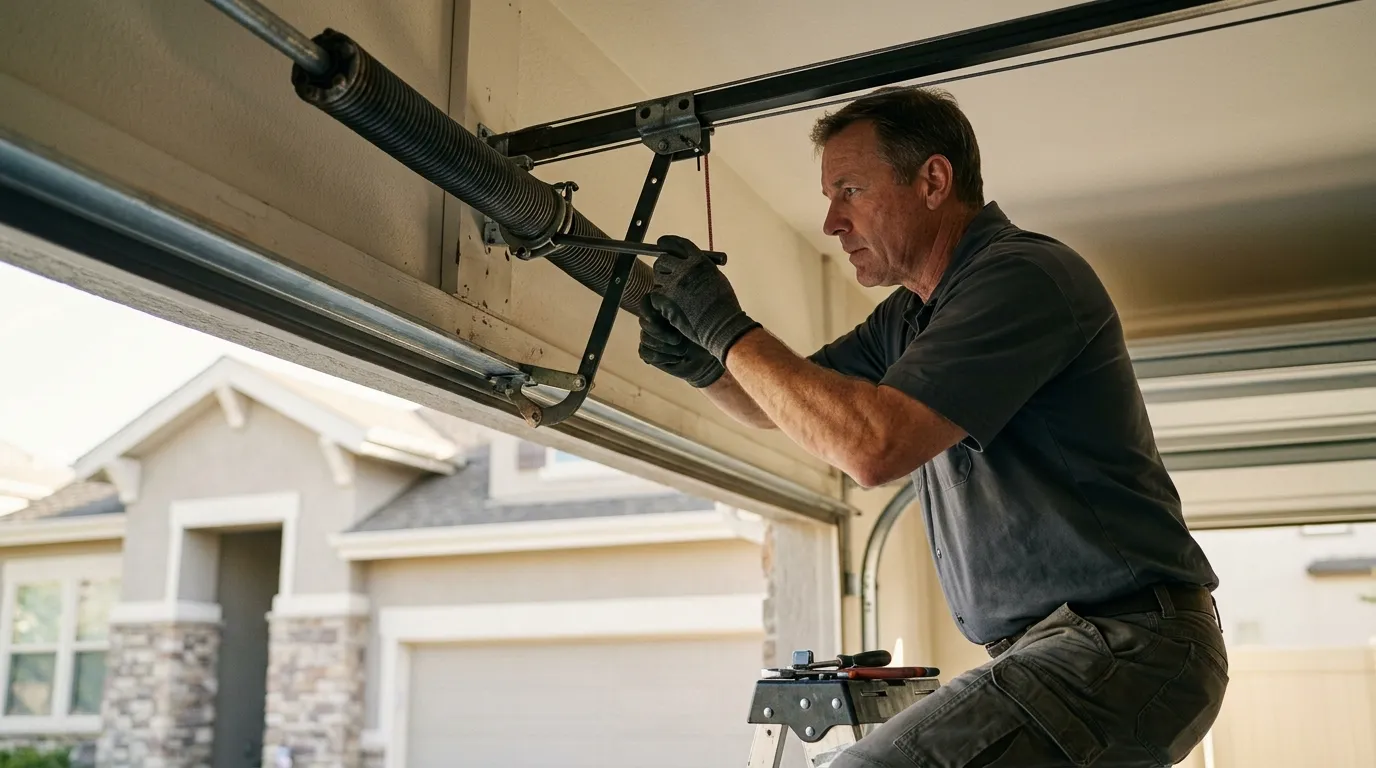
In practice, the age concentration in Beachwood means we see the same handful of failures over and over: torsion springs that have simply outlived their rated cycles, rollers worn oval instead of round, and center hinges stretched loose from decades of use. Cold weather makes all of it worse. This area sits in a severe cold climate band, and steel contracts enough in a hard freeze that a door already tight on its track can start binding or jumping the track entirely. A door hanging on 1976 hardware doesn't have much give left when that happens. If your opener is original to the house, it's likely a single-speed chain unit with a capacitor that's long past its rated life, which is often the actual cause of a door that stutters instead of a spring problem people assume it is. We can usually diagnose which one it is from a short description before we ever open the truck.