Old Streets and New Ones
Avon-by-the-Sea's housing skews older than most of what we see across the rest of the coverage area. The median build year here lands around 1948, a full generation ahead of the 1972 median that shows up when you average in the newer inland developments. That gap matters more than it sounds. A garage built in the late 1940s was framed for a single-car door, often with a low header and shallow ceiling clearance, long before torsion springs and standard 7-foot openings became the norm. Some of these openings have been widened or reframed over the decades, and some haven't. When we get a call from this stretch of shore town, we come expecting an older opening, not a cookie-cutter 16-by-7. That changes what we bring on the truck, and it's part of why a phone estimate here is less reliable than one for a house built in 1995. With only 878 households in Avon-by-the-Sea itself, this isn't a place with rows of identical garages - it's a mix of original construction and piecemeal upgrades, house by house.
What We Do Not Do
We're straight about this: Toms River Garage Door Pros runs out of Toms River, roughly sixteen miles away. There's no depot or drop box in Avon-by-the-Sea, so this isn't a walk-in stop or a same-day guarantee - a job here means a truck making the drive, same as any call in this stretch of the shore. We also don't try to force a modern 7-foot double door into a shallow 1940s single-car opening without reframing the header first; if the structure won't support it safely, we'll say so rather than jam a door in that will bind or sag. And if a spring or cable setup on an older house has been jury-rigged more than once, we'd rather quote a full hardware replacement than patch it again.
How That Shows Up in the Door
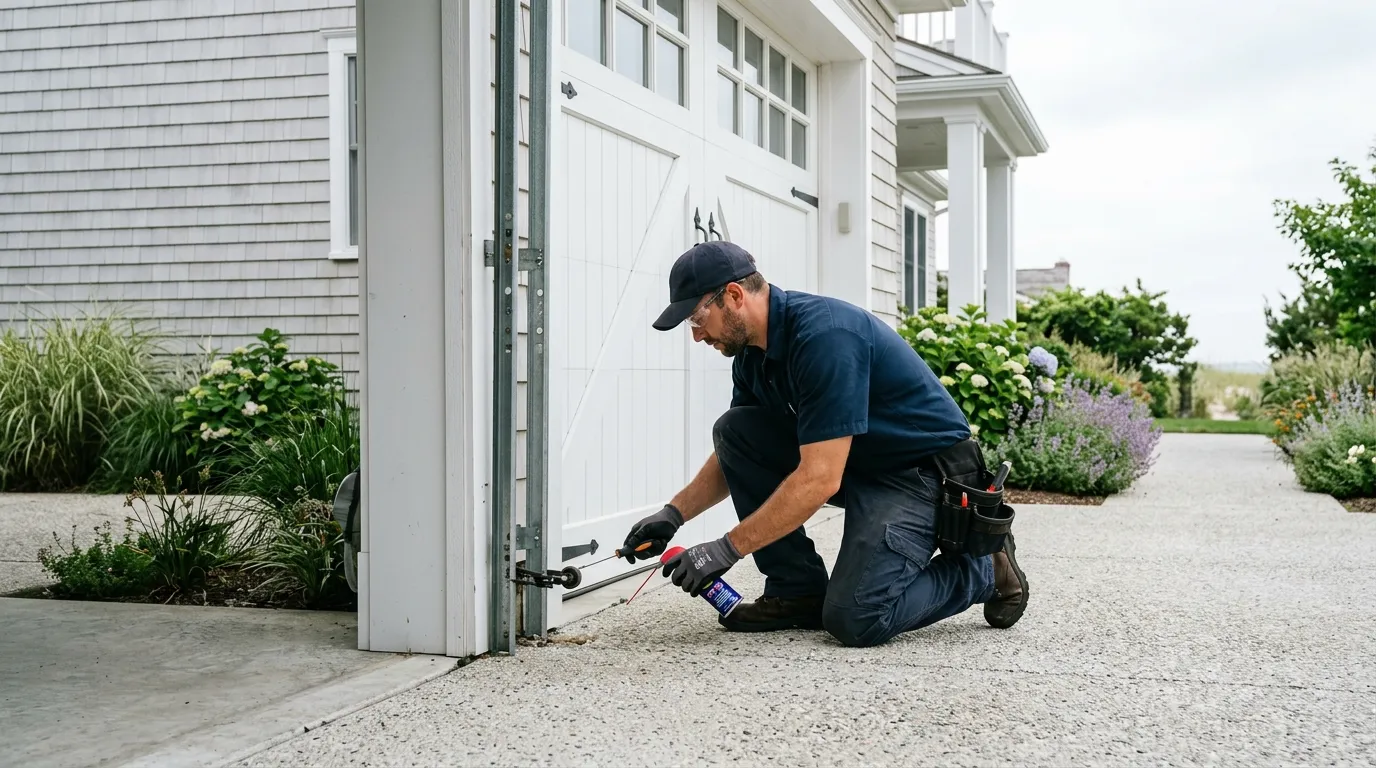
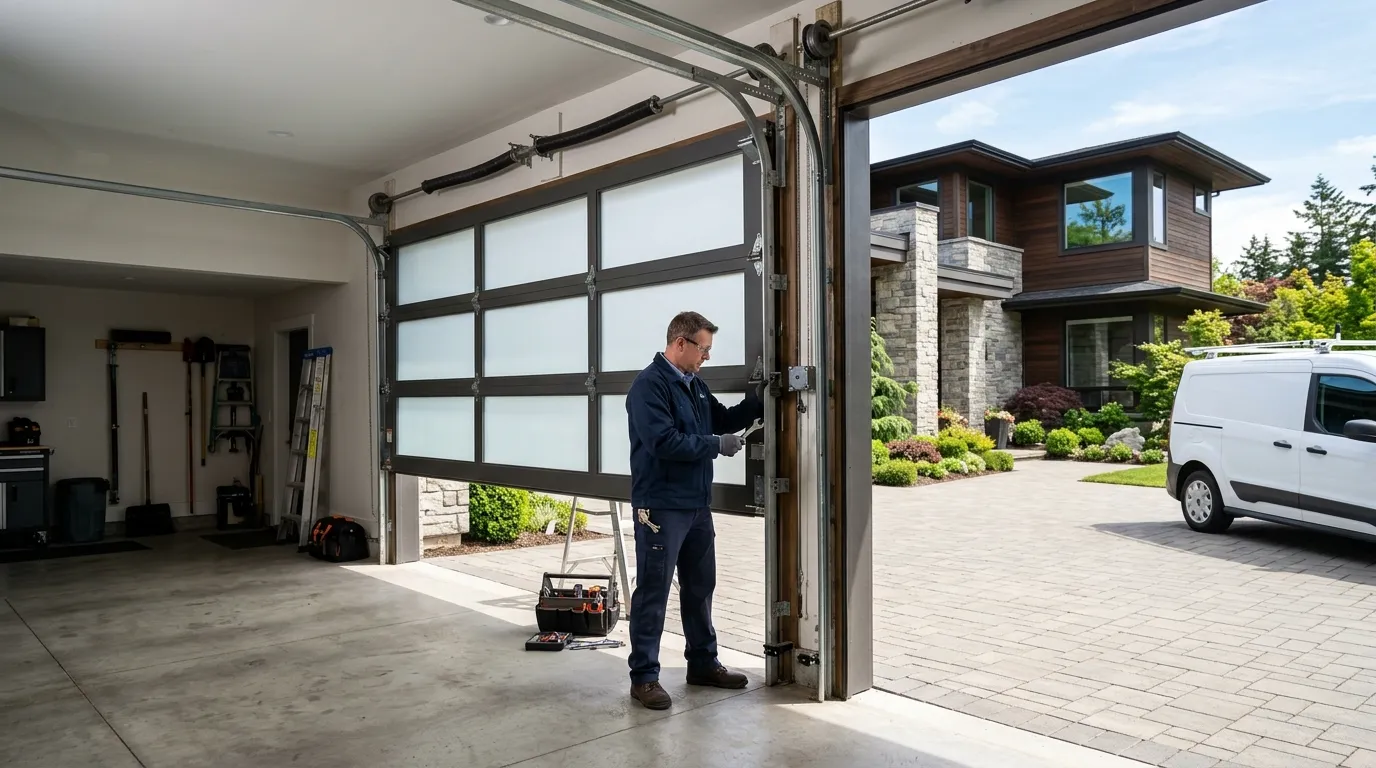
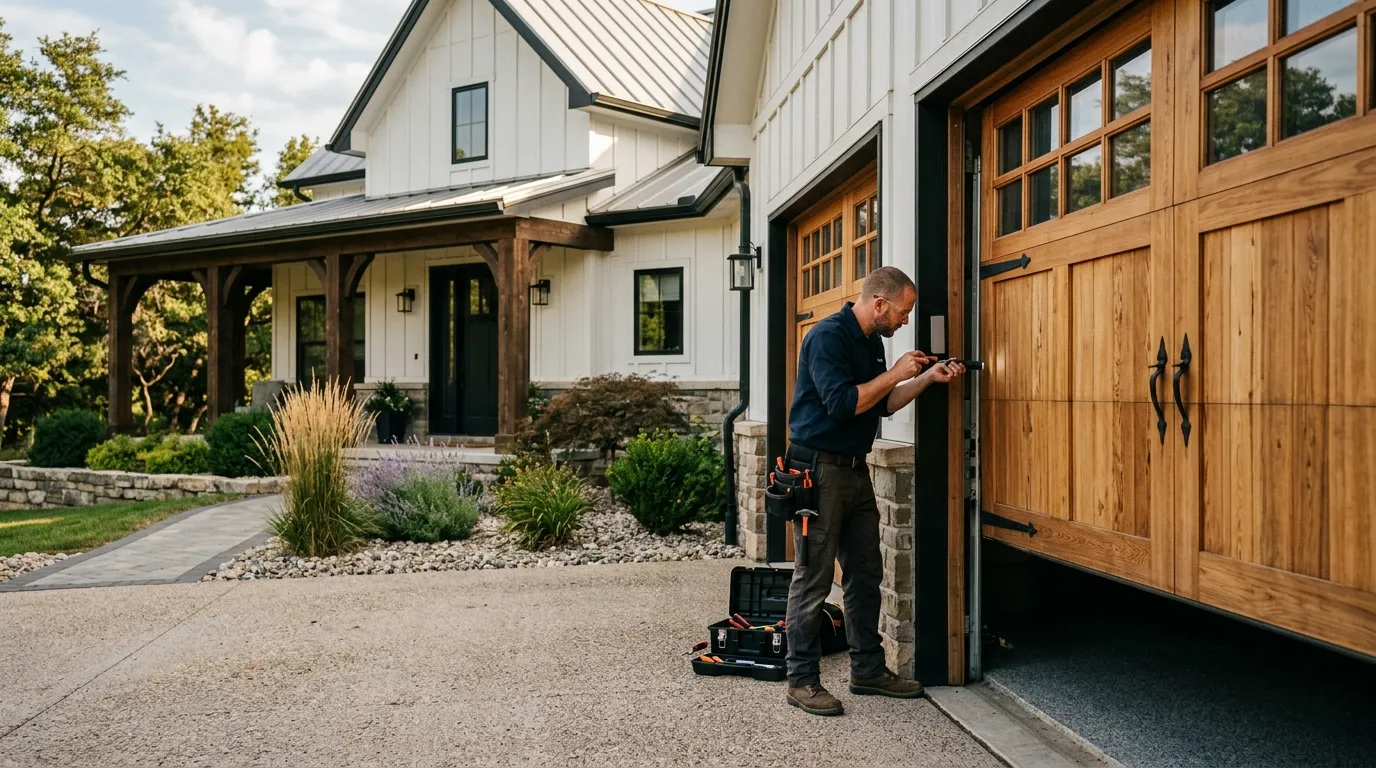
Severe cold-band winters here put steel sectional doors under more spring fatigue than the older wood carriage doors they often replaced, because steel contracts harder in a hard freeze and puts extra load on torsion hardware that wasn't sized for it. On a house with a 1948-era opening, that usually means a heavier door hung on original or near-original track, working harder each winter than the springs were rated for. We check torsion balance and roller condition on these older setups more closely than we would on a newer build, because the failure point tends to be the same: a spring that's been overworked for a decade finally lets go on the coldest morning of the year. That's the call we get most from this part of the coverage area - not a broken panel, but a spring that gave out.