
Where This Job Goes Sideways
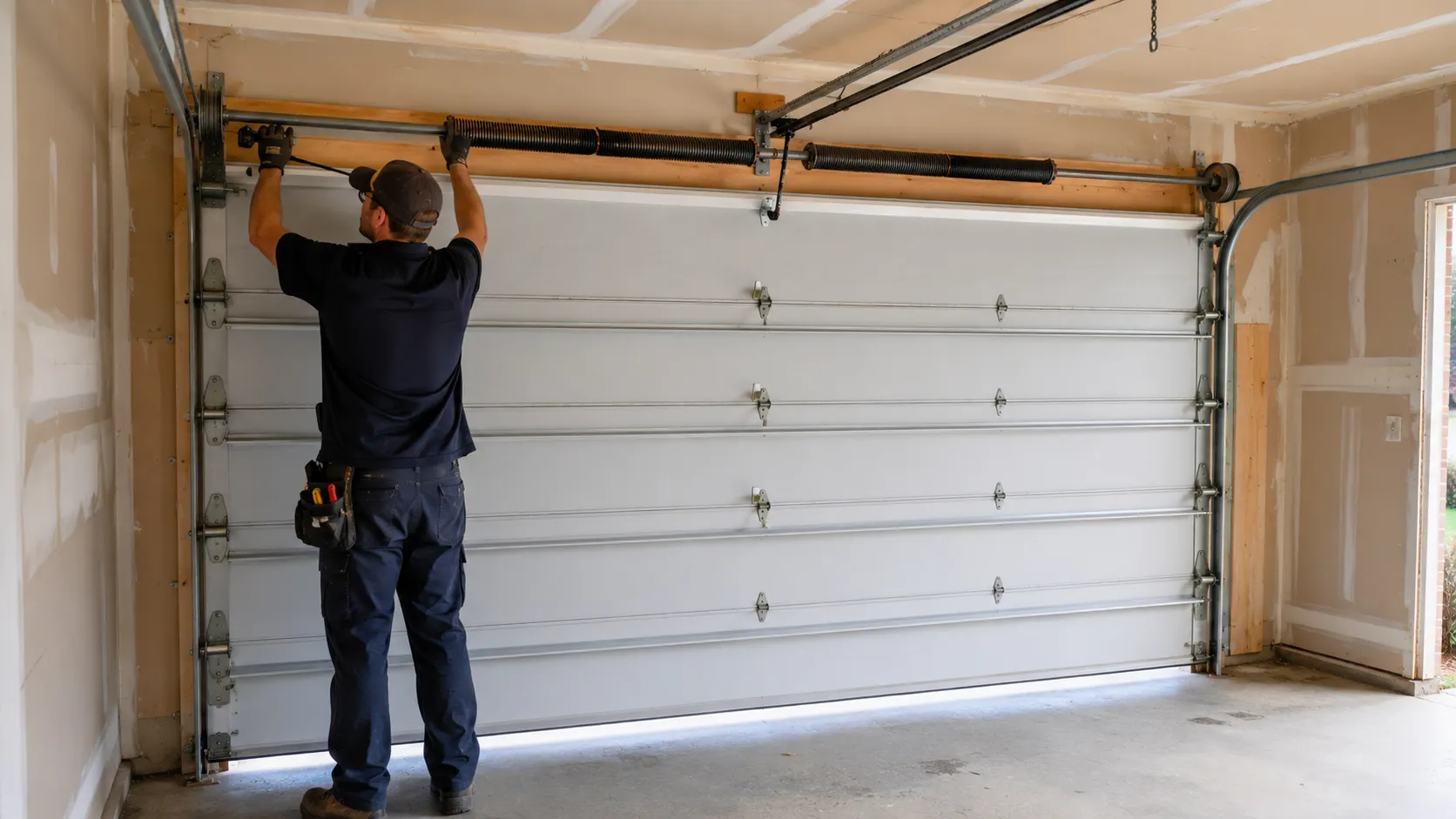
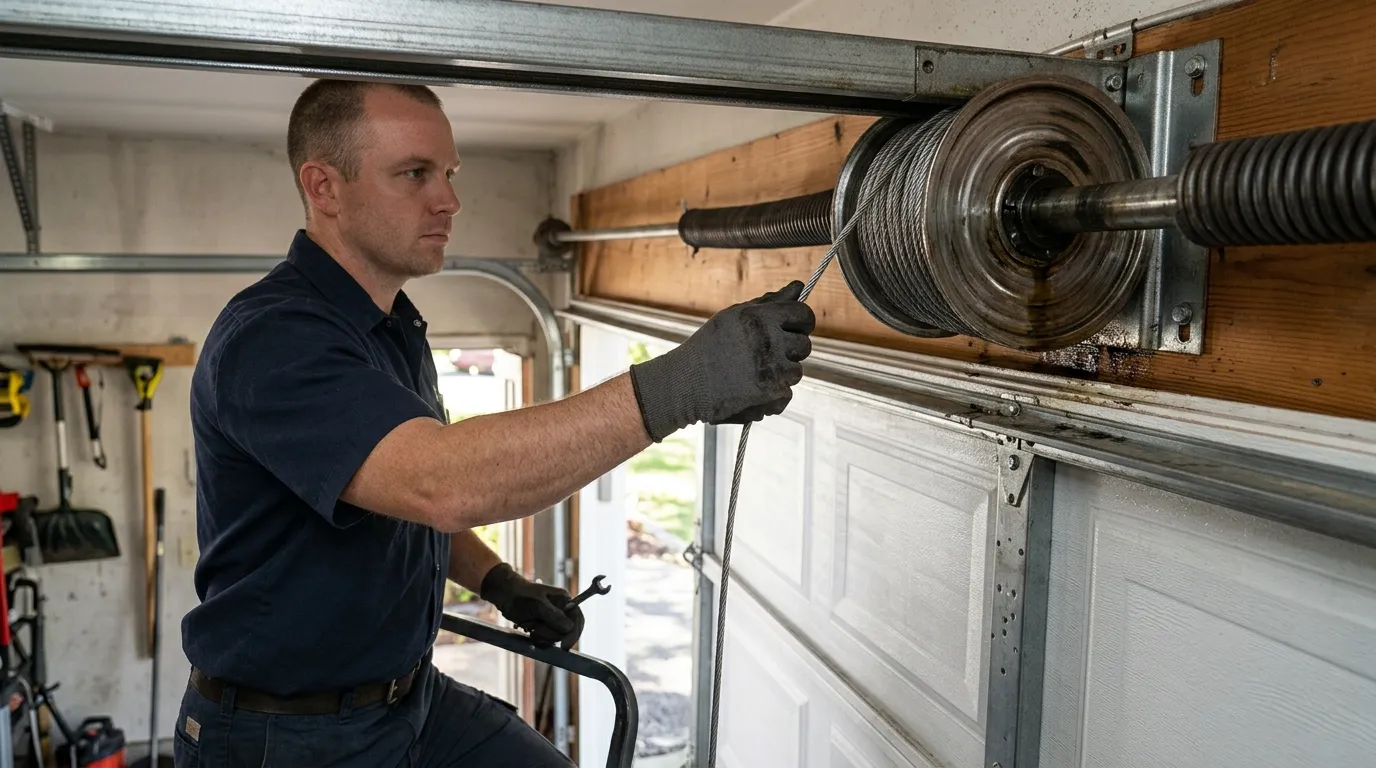
Pine Lake Park's typical house went up around 1981, which puts it a decade or so newer than the median across the wider Toms River service area, where the build year centers closer to 1972. That gap matters more than it sounds like it should. A door installed in the early '80s is more likely to already be running torsion hardware over the opening rather than the older side-mounted extension setups you still find on the pre-1972 stock nearby. Torsion springs fail differently - usually a clean snap on one side, the door binding hard in the track, sometimes a loud bang that gets described as the door "exploding." Extension springs, more common on the older houses a few miles off, tend to stretch and sag before they give out, which is a slower, quieter failure.
What doesn't change with build year is the winter load. This is a cold-climate area with real seasonal cold, and cold makes steel brittle and lubricant thick - both push an already-fatigued spring toward the point of failure faster. If your door's been getting harder to lift by hand over the last few weeks, that's usually the spring losing tension before it goes all the way, not a sign to wait it out.
How Long It Takes
A straightforward torsion spring swap on a single door is usually the shortest job on the truck - most of the time goes into matching wire size and wind direction correctly, not the swap itself. Double doors with two torsion springs take a bit longer since both usually get replaced together even if only one broke, because the surviving one is close behind it in fatigue.
Extension spring jobs, more common on Pine Lake Park's older neighbors but still around on some of the area's houses, can take longer if the pulleys or safety cables need attention too - those parts age alongside the springs and often get overlooked until they're inspected in person. We won't quote a firm number here since we haven't seen your door, but neither job is an all-day affair once the right spring is on the truck.
Can You Do This Yourself
We'll say it plainly: don't. A wound torsion spring holds enough stored force to break fingers or worse if the winding bars slip, and that risk doesn't care how careful you are or how many videos you've watched. This is one of the few repairs in this business where the injury risk outweighs the money saved, full stop.
Where a homeowner can genuinely help is diagnosis before the call. If the door won't budge and you see a visible gap in the coil above the door, that's a torsion spring, snapped clean. If the door feels heavy but the coil looks intact, check the tracks along the sides for a stretched or hanging spring - that's your extension side. Either way, leave the opener alone once you've made that call; running the opener against a broken spring is what turns a spring job into a spring-and-opener job.