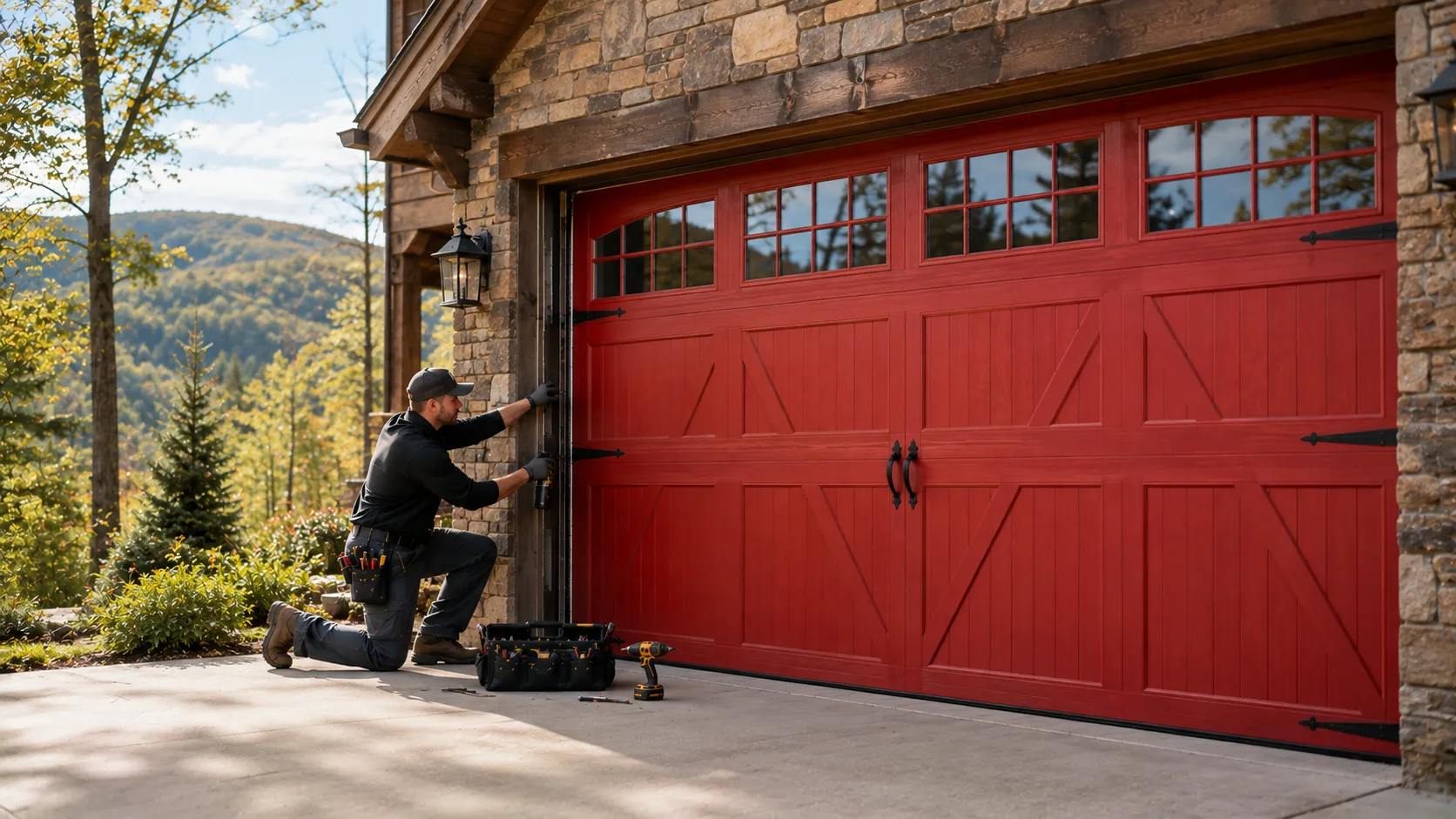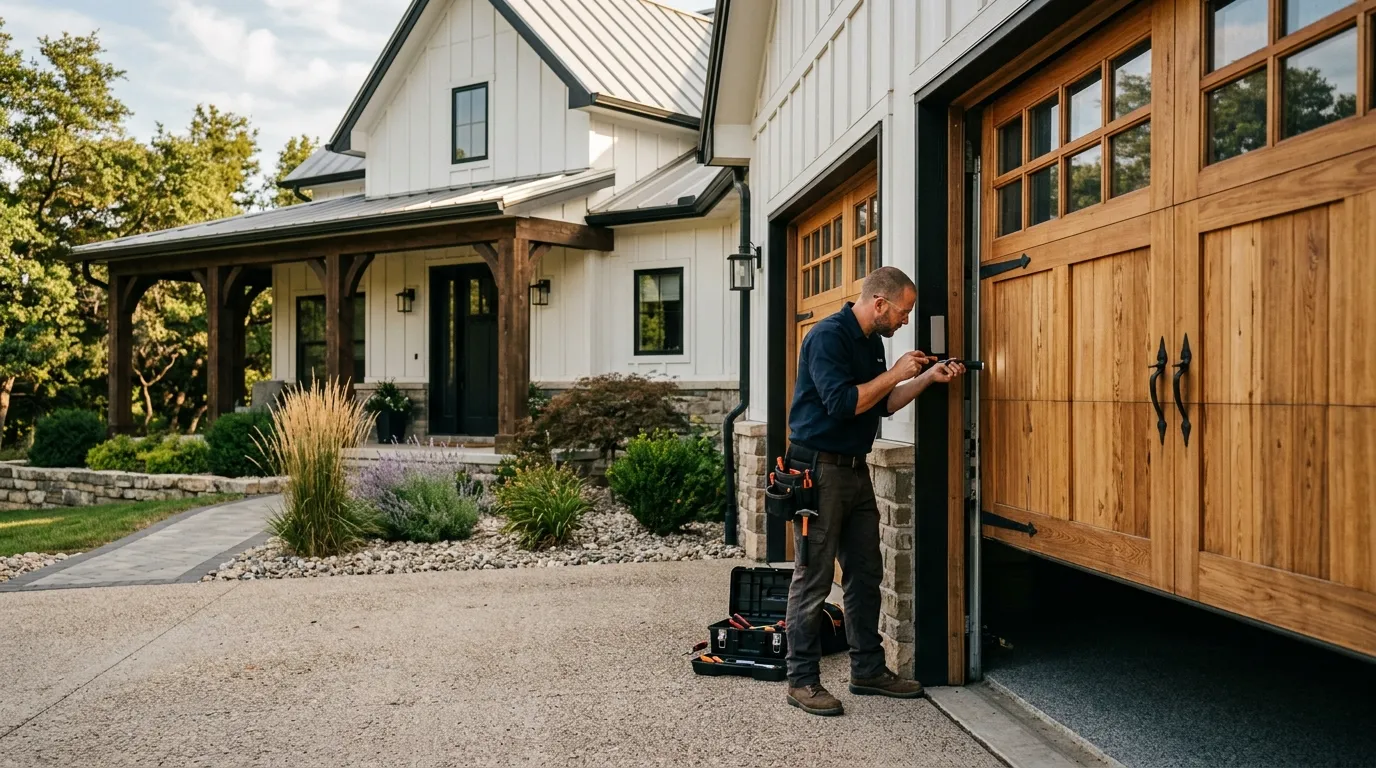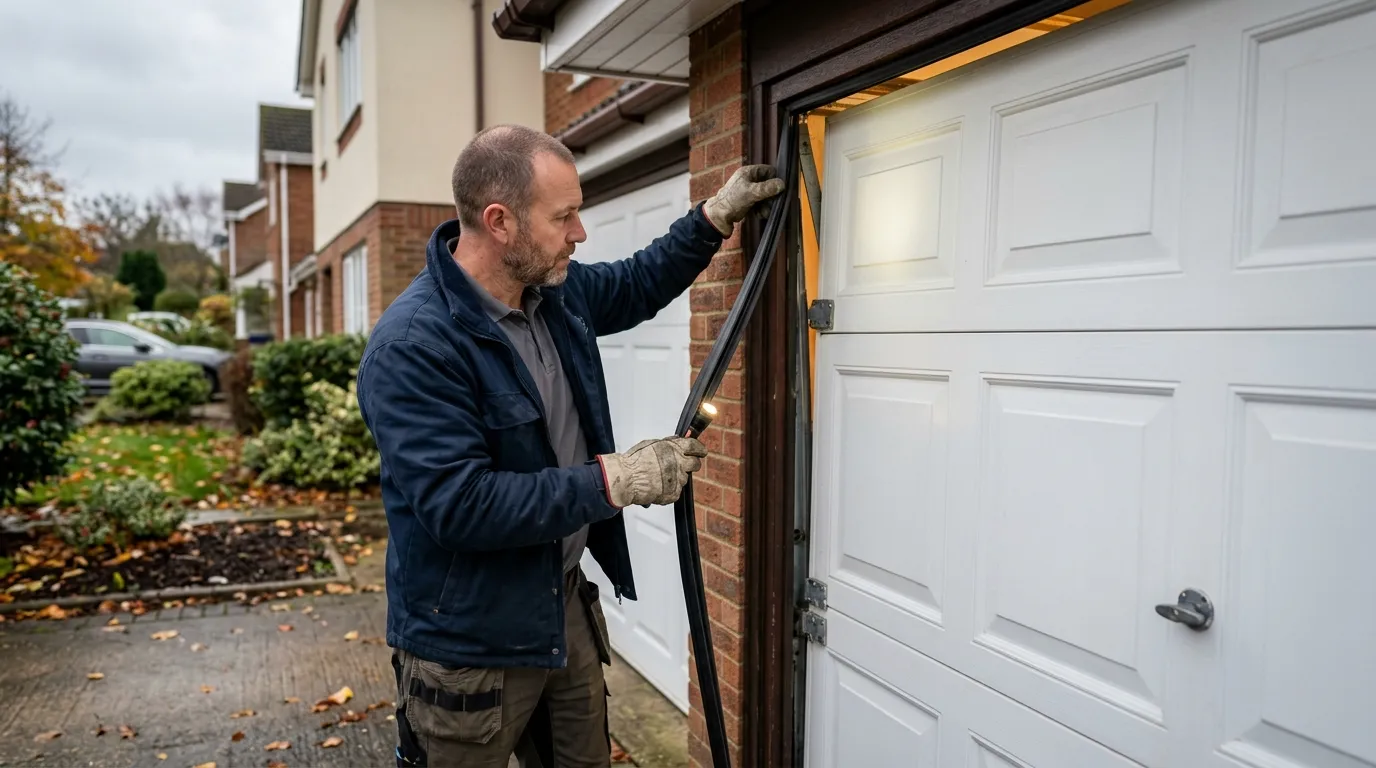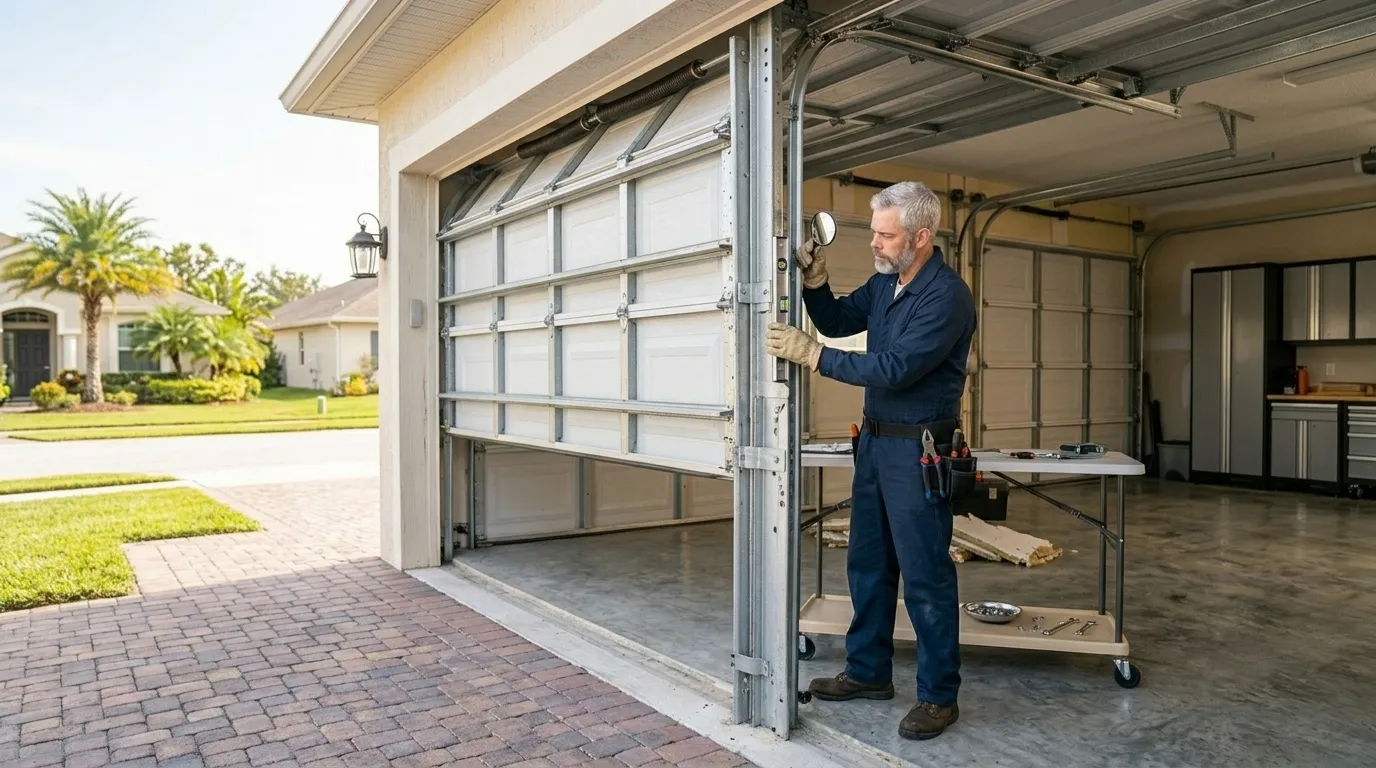
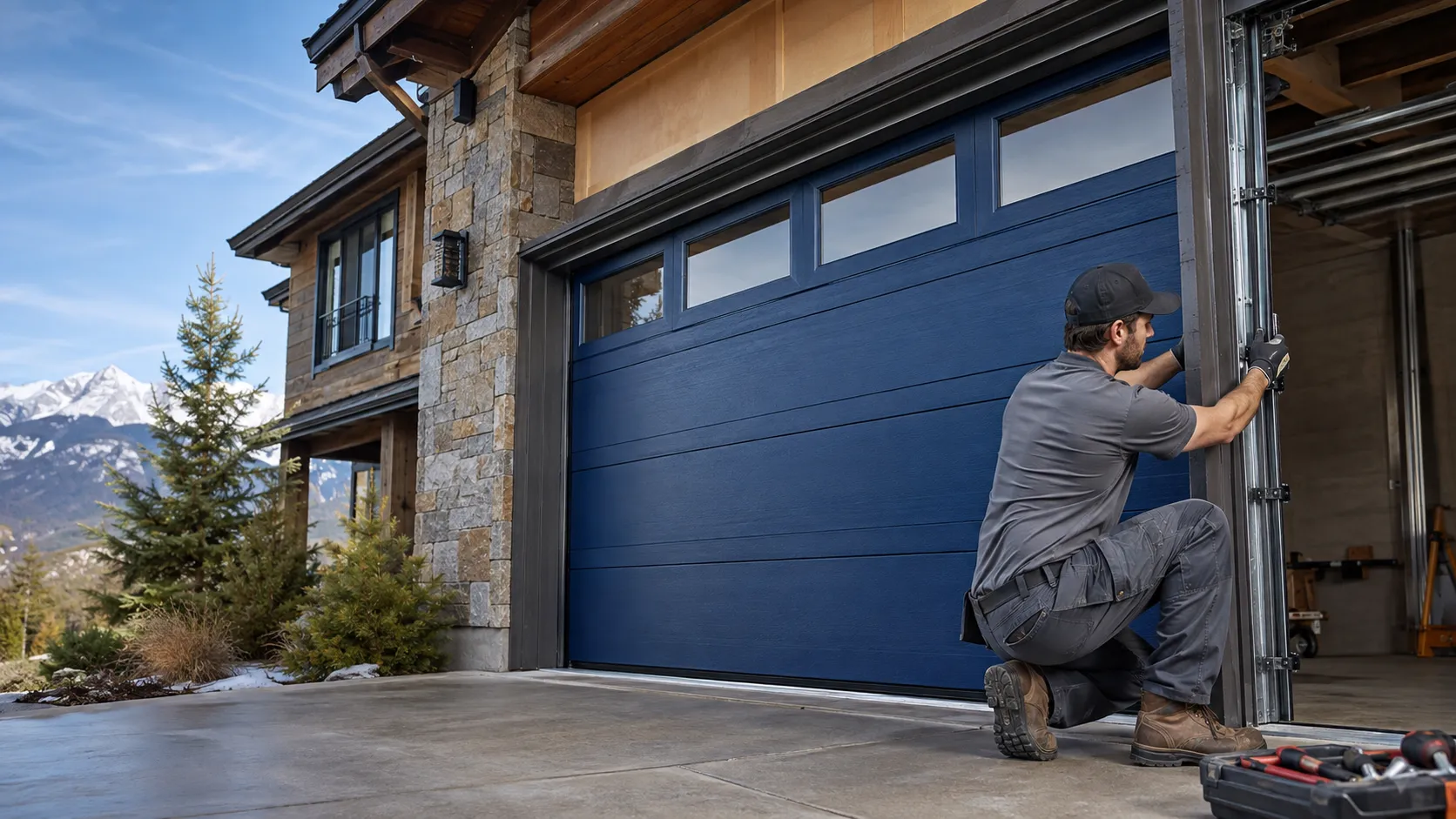
Where This Job Goes Sideways
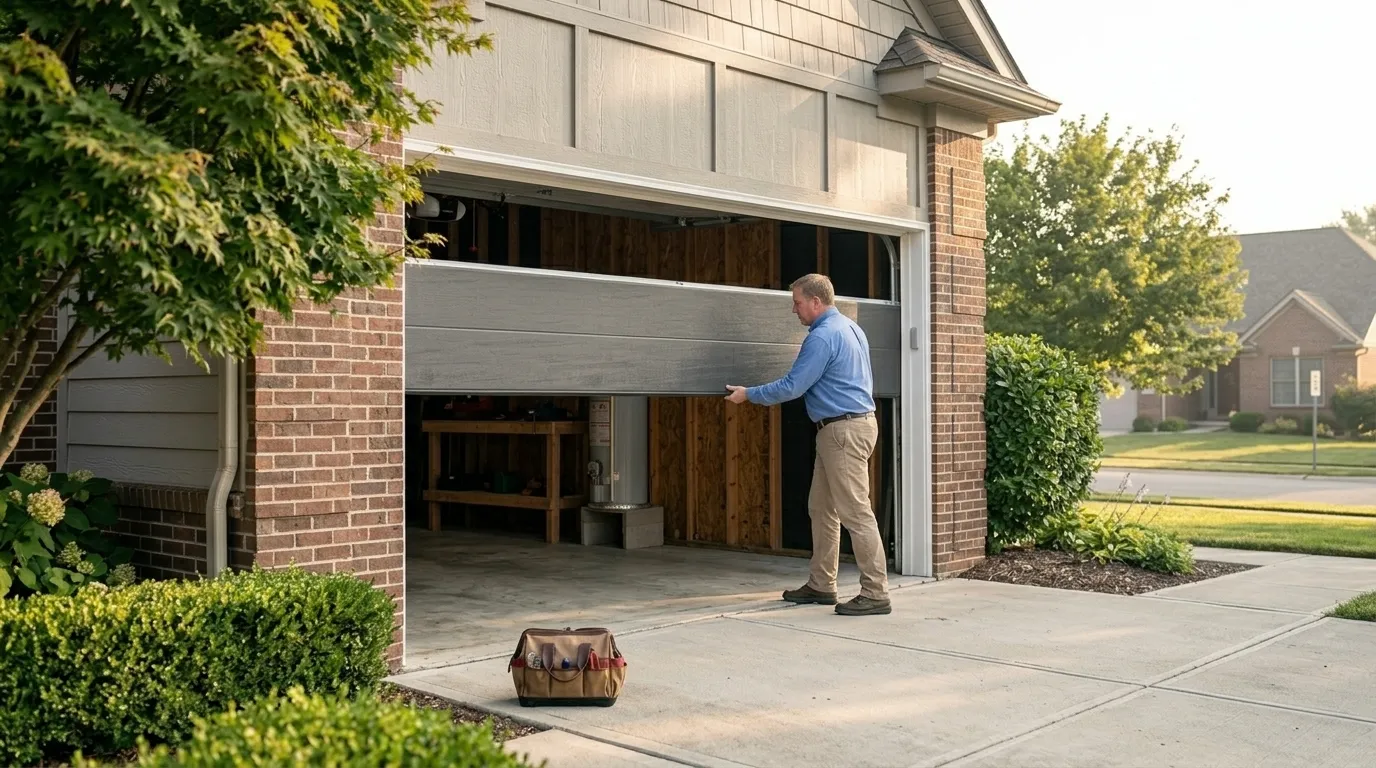
Pine Lake Park's homes carry a median build year of 1981, a decade or so newer than a lot of what we see closer to Toms River proper, where the wider service area's median sits around 1972. That gap matters more than it sounds like it should. A house built in 1981 almost never has its original garage door anymore, but it very often still has the original opener chain drive, the original torsion spring, or the original steel track that came with it - because nobody replaces a part that still limps along, they just live with the noise until it stops moving entirely.
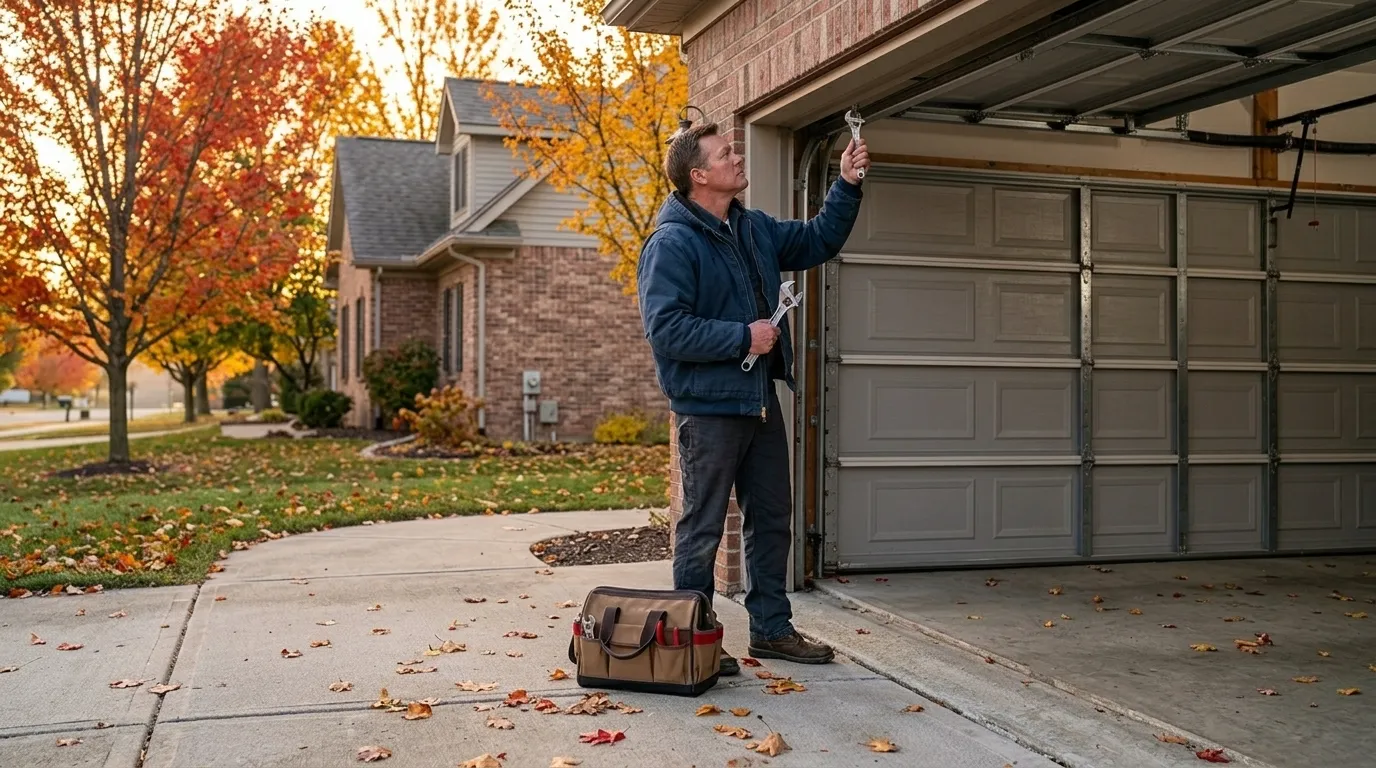
That's the call we get from this stretch: a spring that finally lets go on original hardware, or a chain drive opener from the Reagan era grinding its gears down to nothing. The other wrinkle is the cold. This part of New Jersey sits in a climate band the federal data marks as cold and severe, and a 40-year-old spring that's already fatigued handles a hard freeze a lot worse than a new one. We're not guessing about your specific door - we don't have a street-level read on Pine Lake Park - but the math on what's original versus replaced tends to run the same for houses built in that window.
We don't stock every obsolete drive gear or bracket from a door that old. Sometimes the honest answer is that the part isn't worth chasing down and a full opener swap costs less than the repair.
How Long It Takes
Most single spring replacements and opener swaps on a house from this era run inside a couple hours once the truck is on site, whether the hardware is original 1981 stock or a mid-life replacement somebody already put in. Torsion spring jobs are usually the fastest thing we do - the labor is in the setup and the safety cable, not the swap itself.
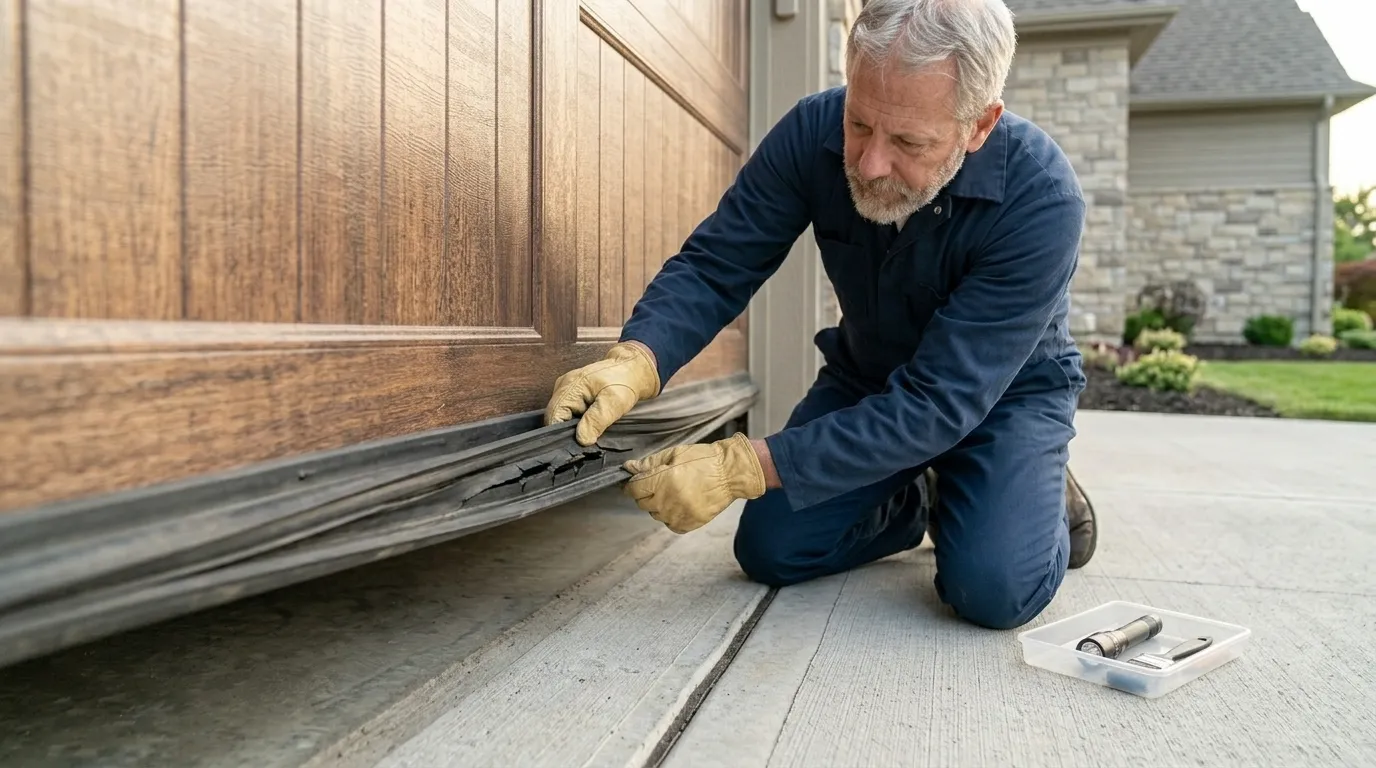
Where it stretches out is track and drum work, or anything where the original bracket has rusted into the framing after four decades of cold-severe winters cycling condensation through the garage. That's not common, but it's not rare either on hardware this old. If we get into a job and find the header bracket needs reinforcing, not just the spring, we'll say so before we keep going rather than run the clock on a fix that doesn't hold.
We don't carry every gauge of replacement track in the truck for older openings, so a job that turns out to need a nonstandard size may need a second trip. That's the honest limitation, not a sales pitch for a bigger job than you asked for.
Can You Do This Yourself
A torsion spring under load can put someone in the hospital, and that's true whether the spring is new or 40 years old - if anything, an original 1981 spring is worse, because the wire has fatigued in ways you can't see by looking at it. That one's not a DIY job, full stop.
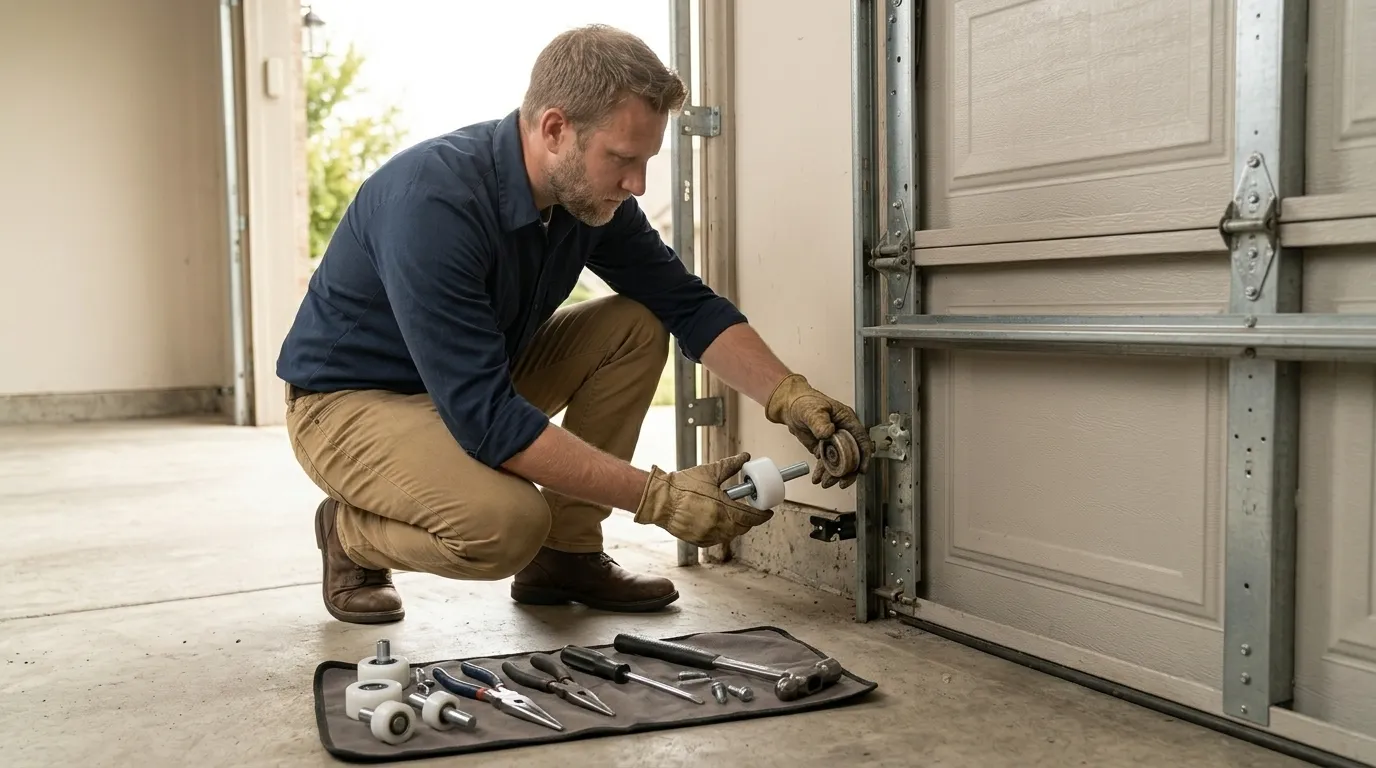
What you can reasonably do yourself: check whether the opener's photo-eye sensors are aligned and clean, lubricate rollers and hinges with a garage-door-rated lubricant (not WD-40, which washes out grease), and tighten loose lag bolts on the track brackets if you can reach them safely from a stable ladder. None of that requires touching the spring or the cable drums.
If your house is on the older end for Pine Lake Park - built closer to that 1981 median or earlier - and you've never had the spring replaced, treat any sudden stiffness or loud bang as a sign to call, not to force the door open manually. A spring that's about to fail rarely gives much warning, and prying at it yourself is how a routine repair becomes an ER visit.