Can You Do This Yourself
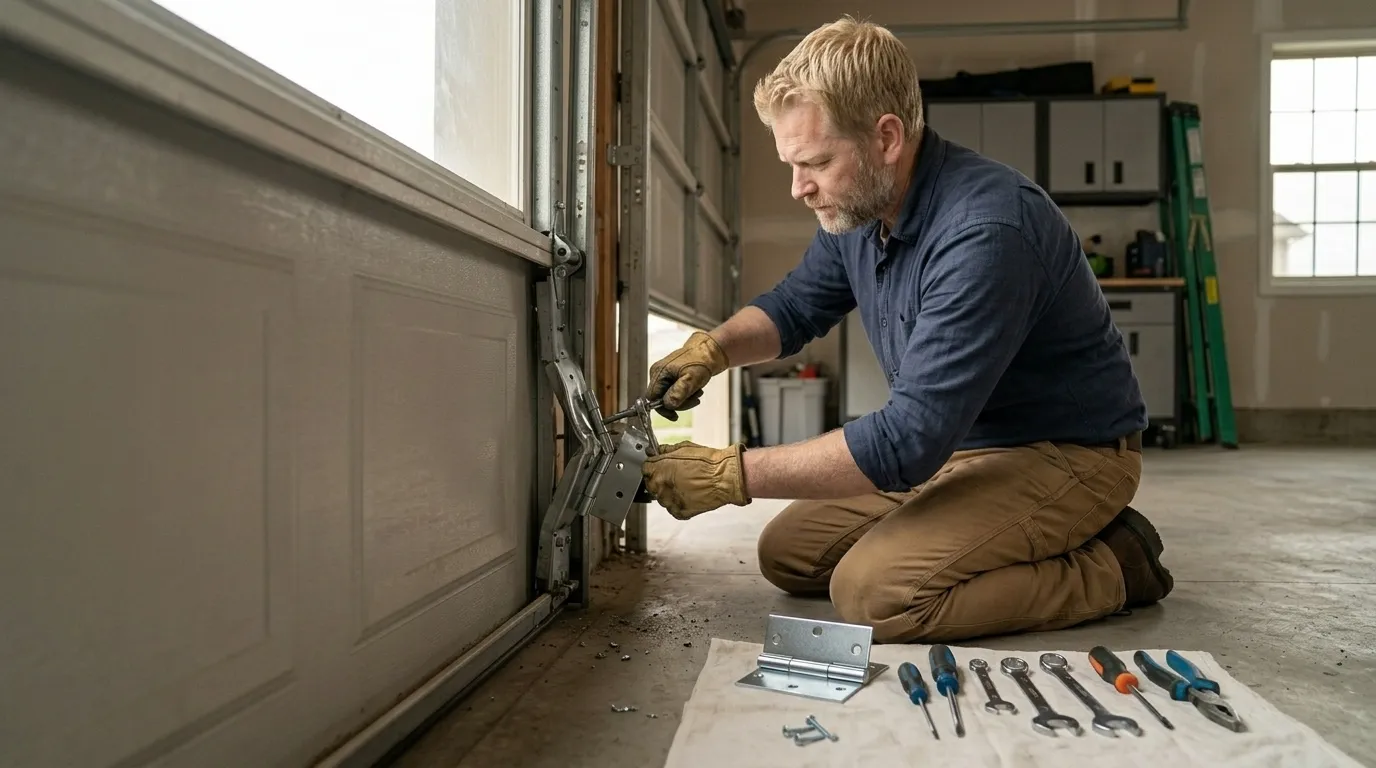
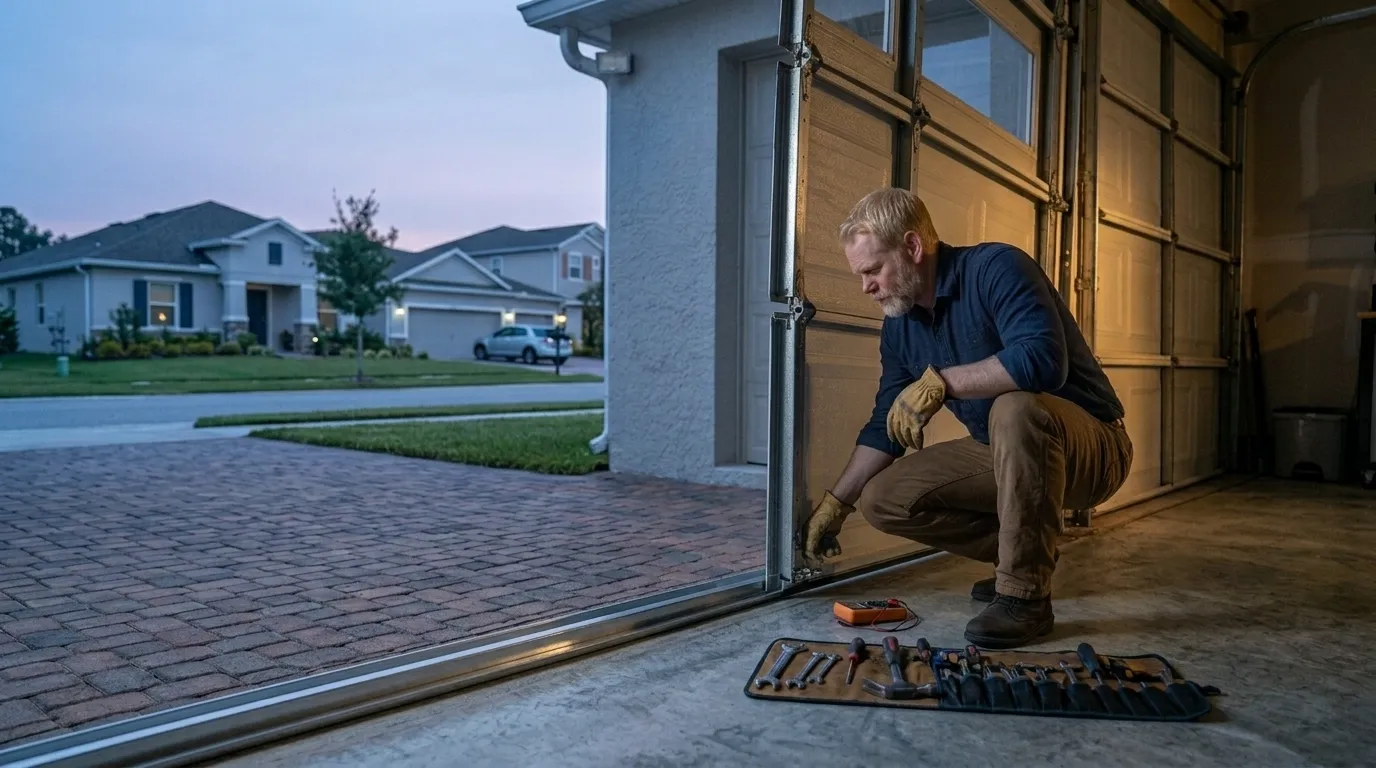
If you've got a single dented panel on a steel sectional door and the door still tracks straight, you can sometimes order a matching panel and swap it yourself with a socket set and a Saturday. That's the honest answer. Where it gets hard is matching the panel. A lot of houses in this area went up between 1938 and 2005, with most of the stock dating to the 1960s and '70s, and doors from that era were often replaced once already by a prior owner - so the panel profile on your door may not match anything a current manufacturer stocks off the shelf.
If the dent is on a lower panel and the door is a wood or fiberglass model from an older build, skip the DIY route. Wood panels swell and split with age, and once one panel is compromised, the fasteners holding the hinges to the next panel are usually stressed too. You'll pull one screw and find three more that won't hold.
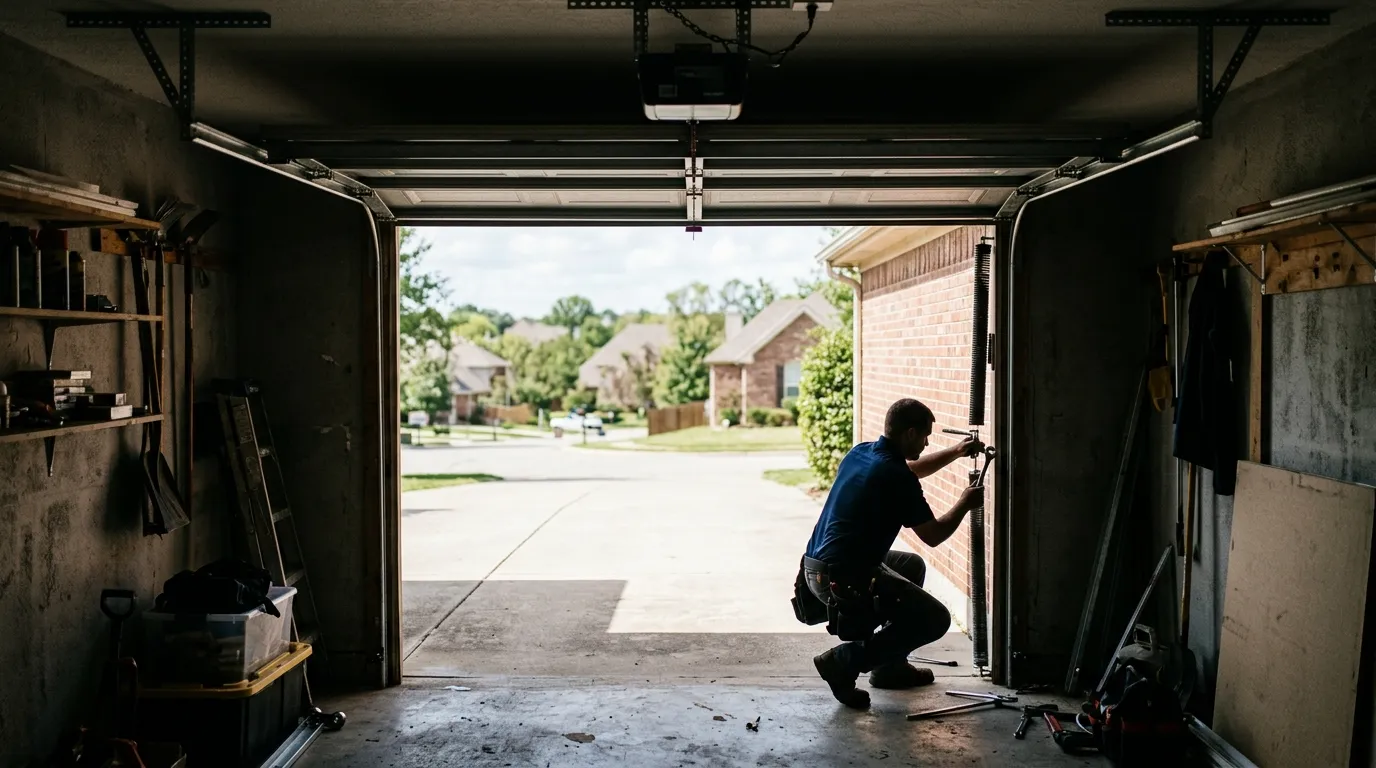
The other reason to call rather than order a part yourself: on a torsion-spring door, taking the section apart changes the balance temporarily, and a door that's out of balance on a track that's already worn from decades of Toms River winters can come off the rollers. That's not a DIY afternoon, that's a trip to urgent care.
What the Fix Involves
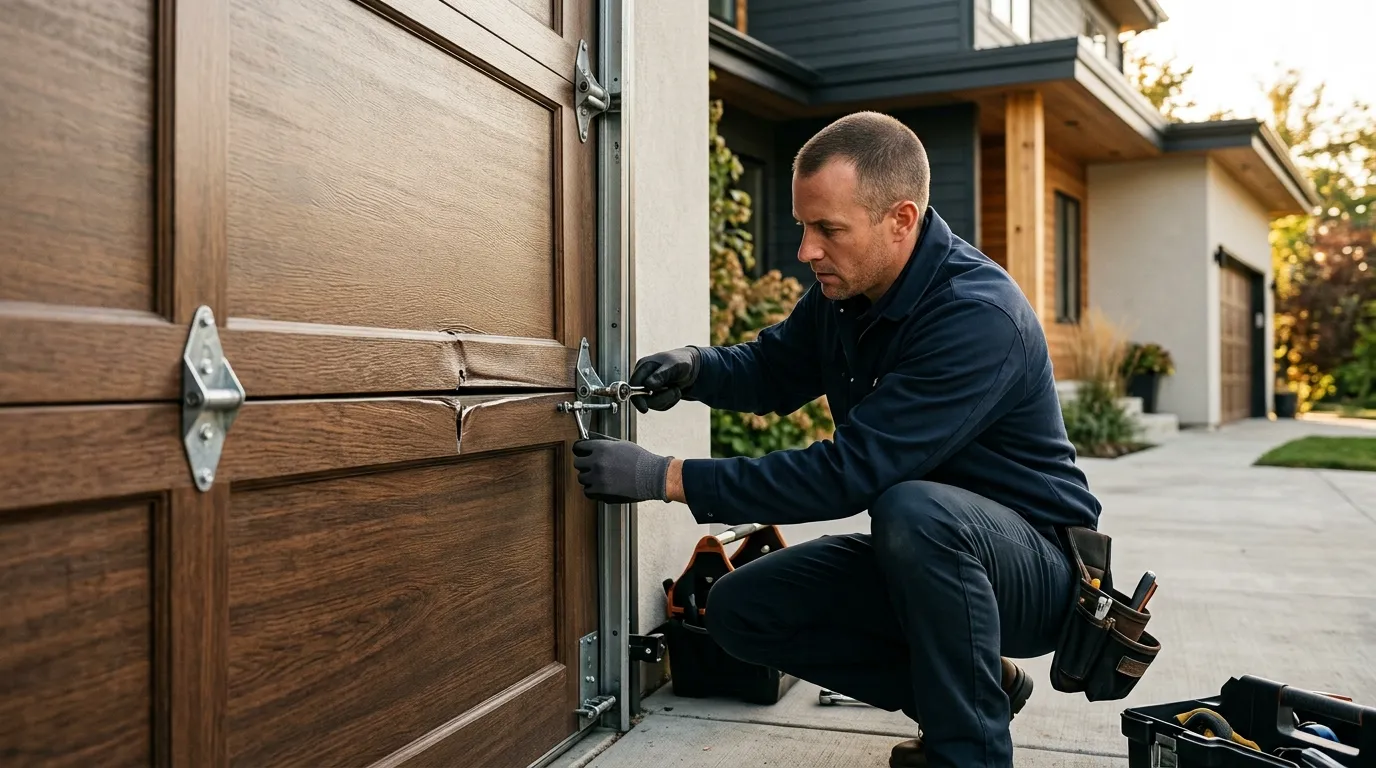
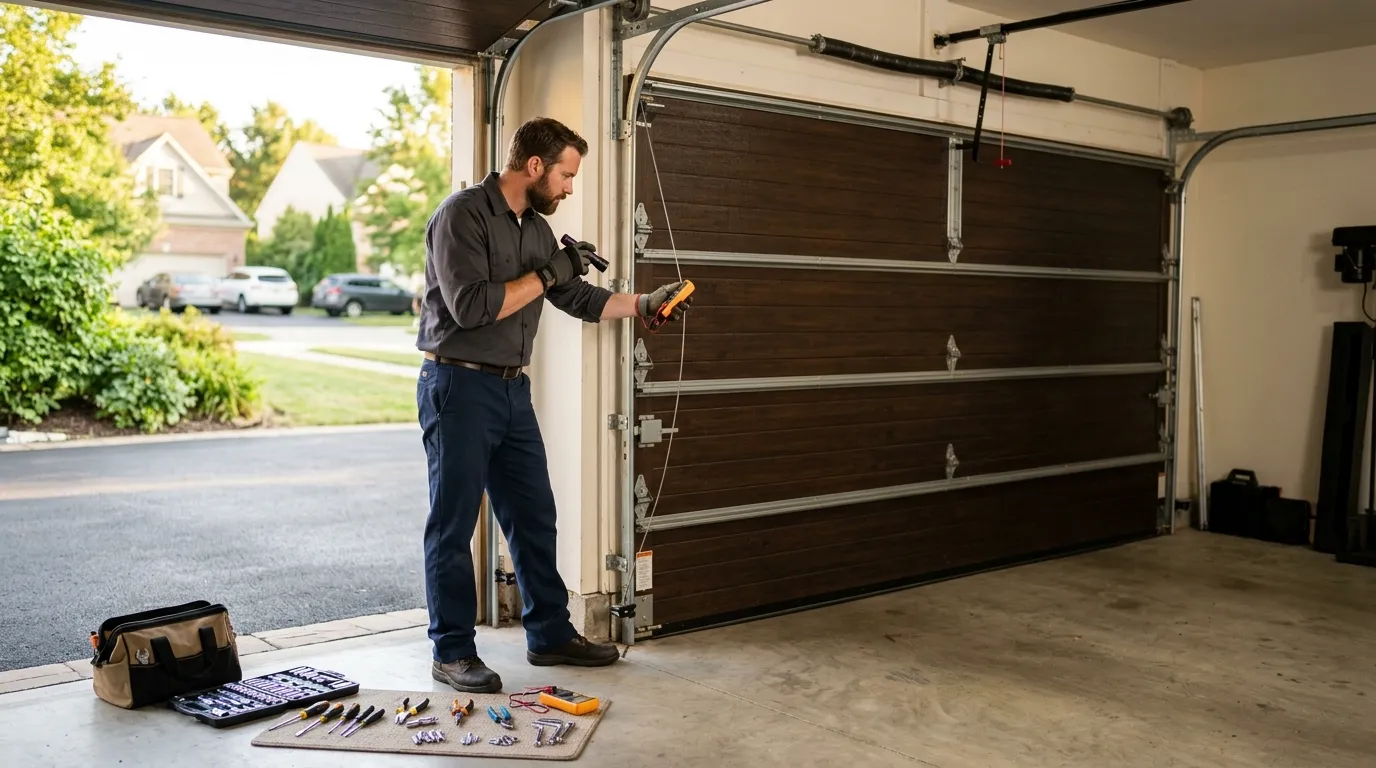
A single-panel swap starts with matching the door - brand, panel height, and window layout if it has one. On a house built in the median era for this area, around 1972, the original door may be long gone, but the replacement installed since then is usually a standard steel sectional, which makes sourcing easier than it sounds.
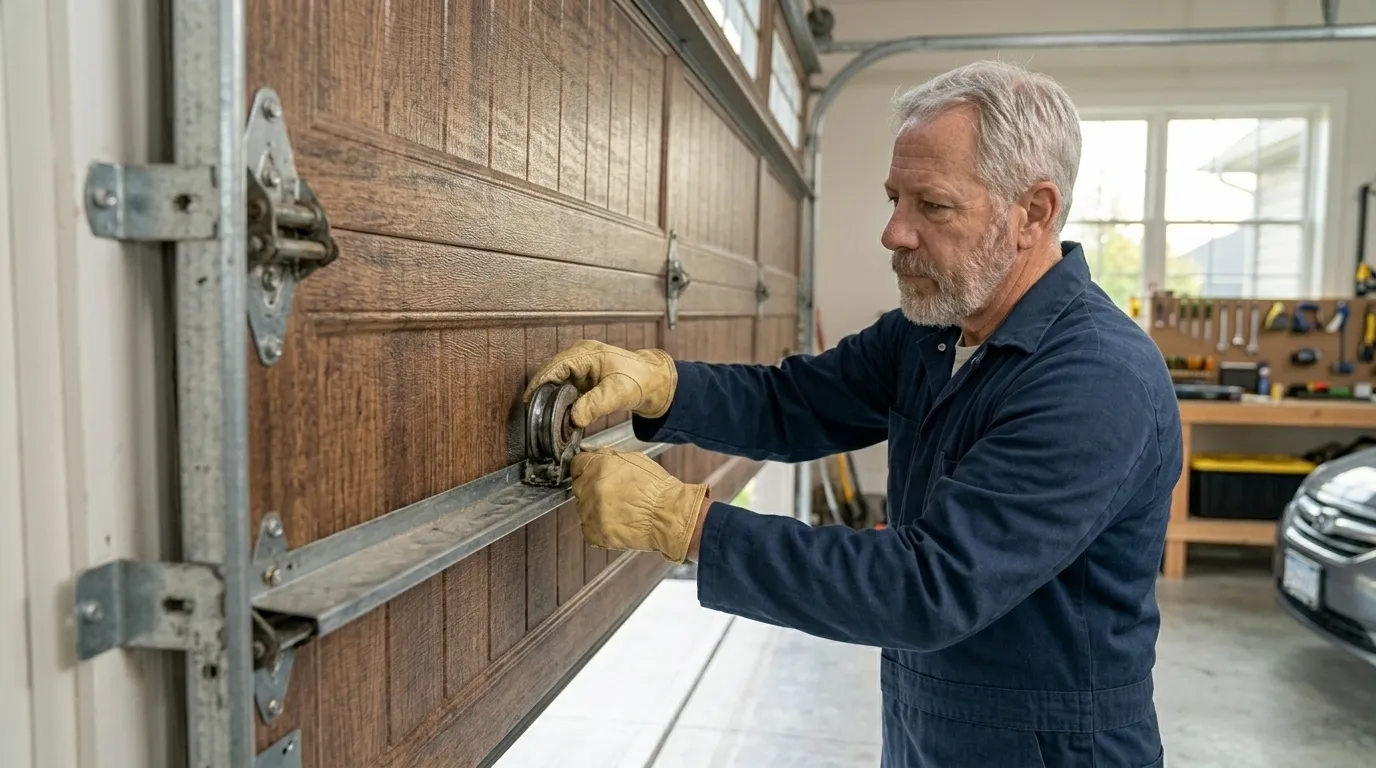
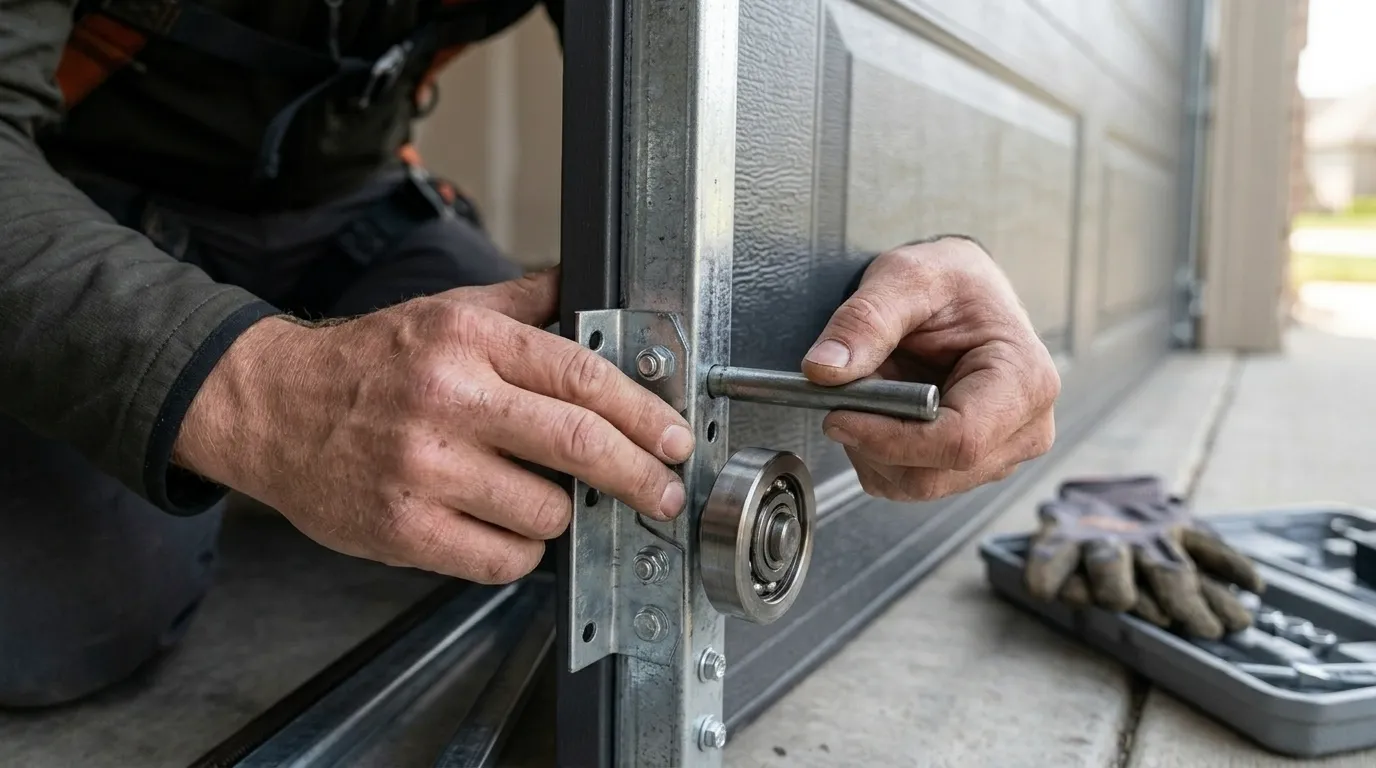
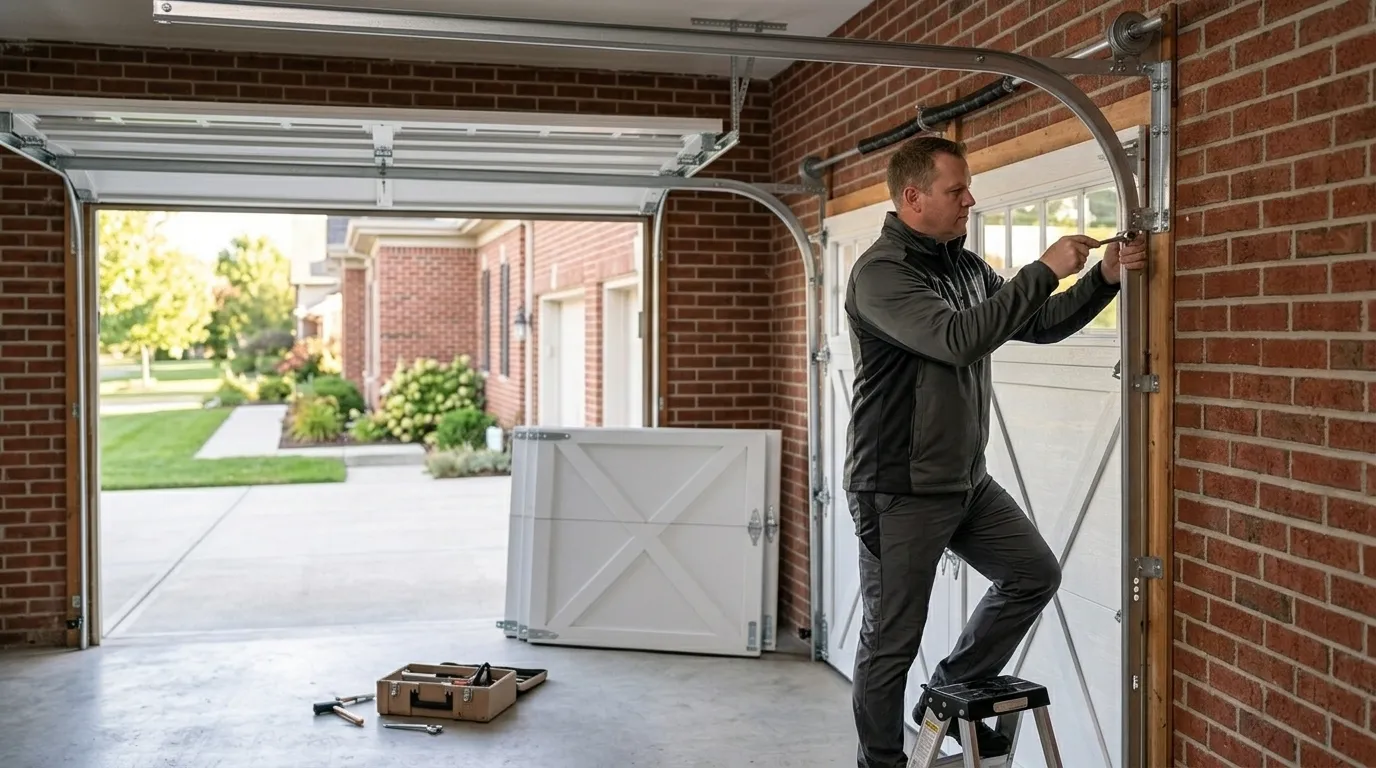
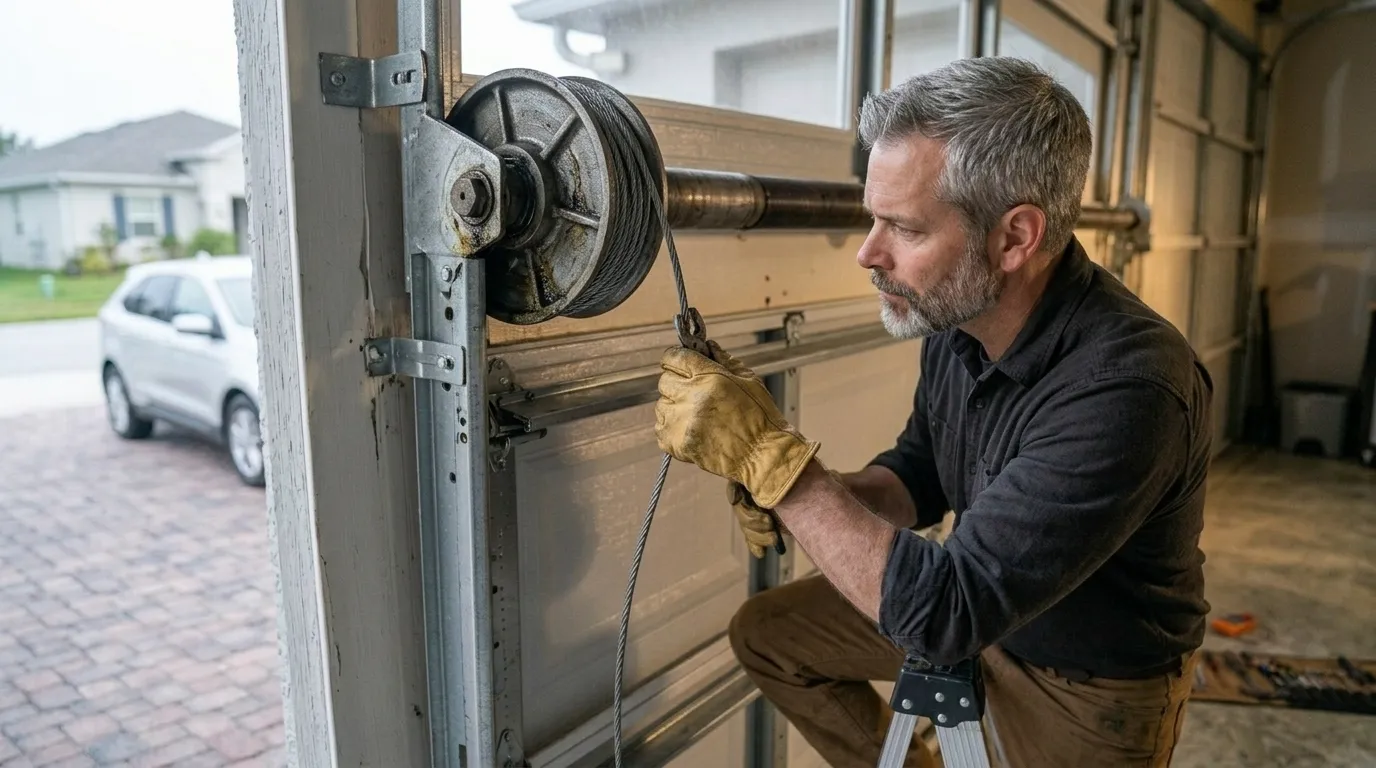
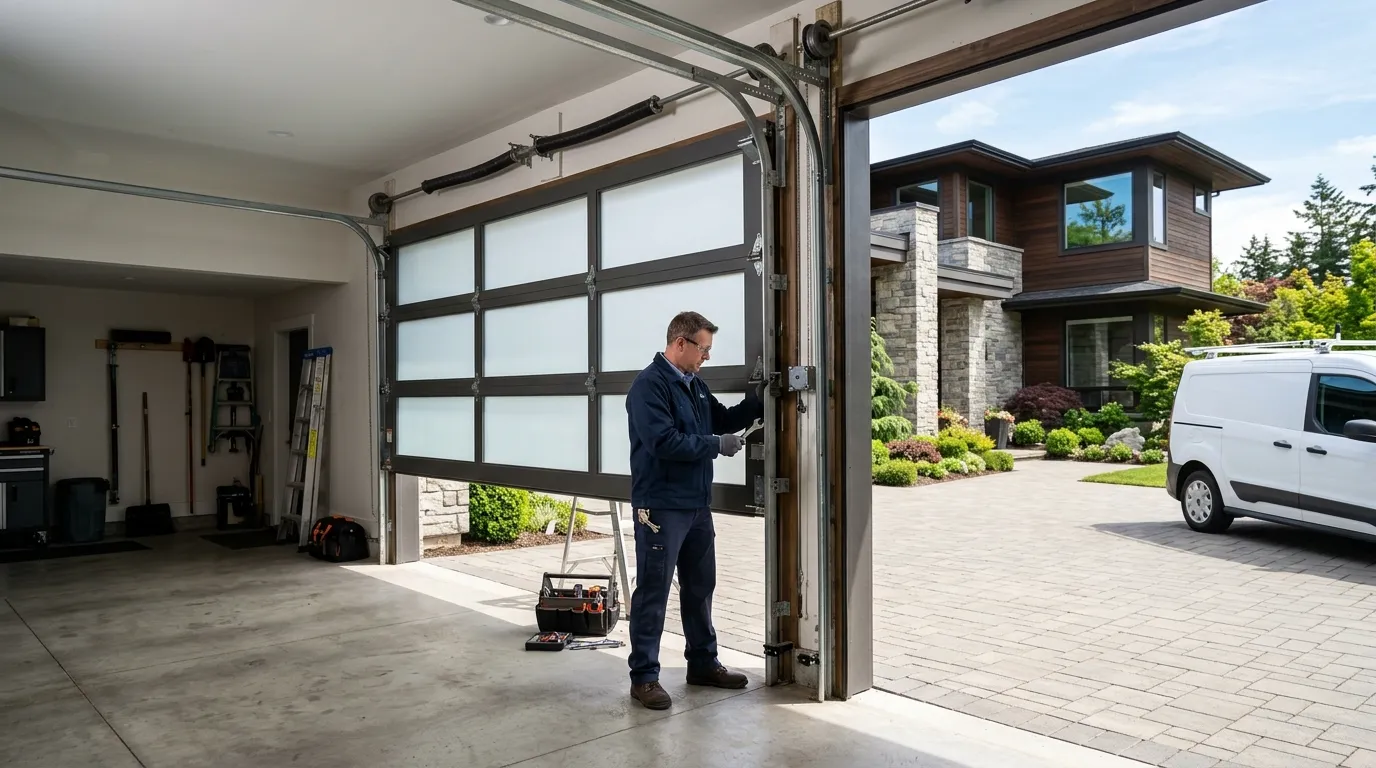
We disconnect the opener, release spring tension safely, and unbolt the hinges holding the damaged section to the panels above and below it. The new panel goes in, hinges get retorqued, and we check the door's balance before reconnecting the opener - because a panel swap changes the door's weight distribution even if the new panel weighs the same as the old one.
If more than one panel is damaged, or the hinges have torn through the steel skin on adjacent panels, we'll tell you straight when a full door replacement costs about the same as patching a door that's going to keep failing. That's the limitation worth knowing up front: on a door old enough that its panel style is discontinued, sometimes there's no matching panel to order at any price, and replacement is the only real fix.
What Causes It Around Here
Toms River's housing stock runs from 1938 to 2005, but most of what's on the ground dates to the 1960s and '70s across the 46 named sections that make up this area - Holiday City, and the rest. Doors installed on those houses have had 50-plus years of exposure to a cold, severe climate: repeated freeze-thaw cycles that work steel seams loose, expand rust along panel bottoms, and stress hinge fasteners every time a door swings through a temperature swing overnight.
Homes built or renovated more recently tend to have steel doors with better rust protection at the seams, but even those aren't immune - a bottom panel sitting a few inches above grade still catches road salt spray and slush kicked up by tires every winter. With 84,621 owner-occupied houses across this service area and a median household income of $97,037, most owners here are maintaining a house long enough to see a door through two or three panel failures before the whole unit gets replaced. That's the pattern we see on service calls: not one dramatic impact, but years of small seasonal stress finally giving out on the weakest panel.