Where This Job Goes Sideways
Pine Lake Park is a compact pocket, about 2,991 households, which means we're not chasing dozens of housing eras here the way we do in bigger stretches of the service area. Most of what's on the ground went up around 1981, a good decade after the 1960s-70s wave that covers a lot of the neighborhoods nearby. That later build date matters for opener work: you're less likely to be fighting the exposed pull-chain trolleys and undersized half-horsepower units that show up in the older 1960s stock. What you do run into more often here is aging chain-drive openers original to the house, now decades past their working life, paired with steel rail systems that have gone dry from years without lubrication. Winters in this part of New Jersey fall into the severe cold band, and cold makes old grease seize and gears bind, which is usually what turns a slow-closing door into a dead opener on the coldest morning of the year. When we swap the unit, we're also checking whether the header bracket and wiring still match what a modern opener expects, since a house from 1981 wasn't wired for a smart opener's power and sensor needs.
How Long It Takes
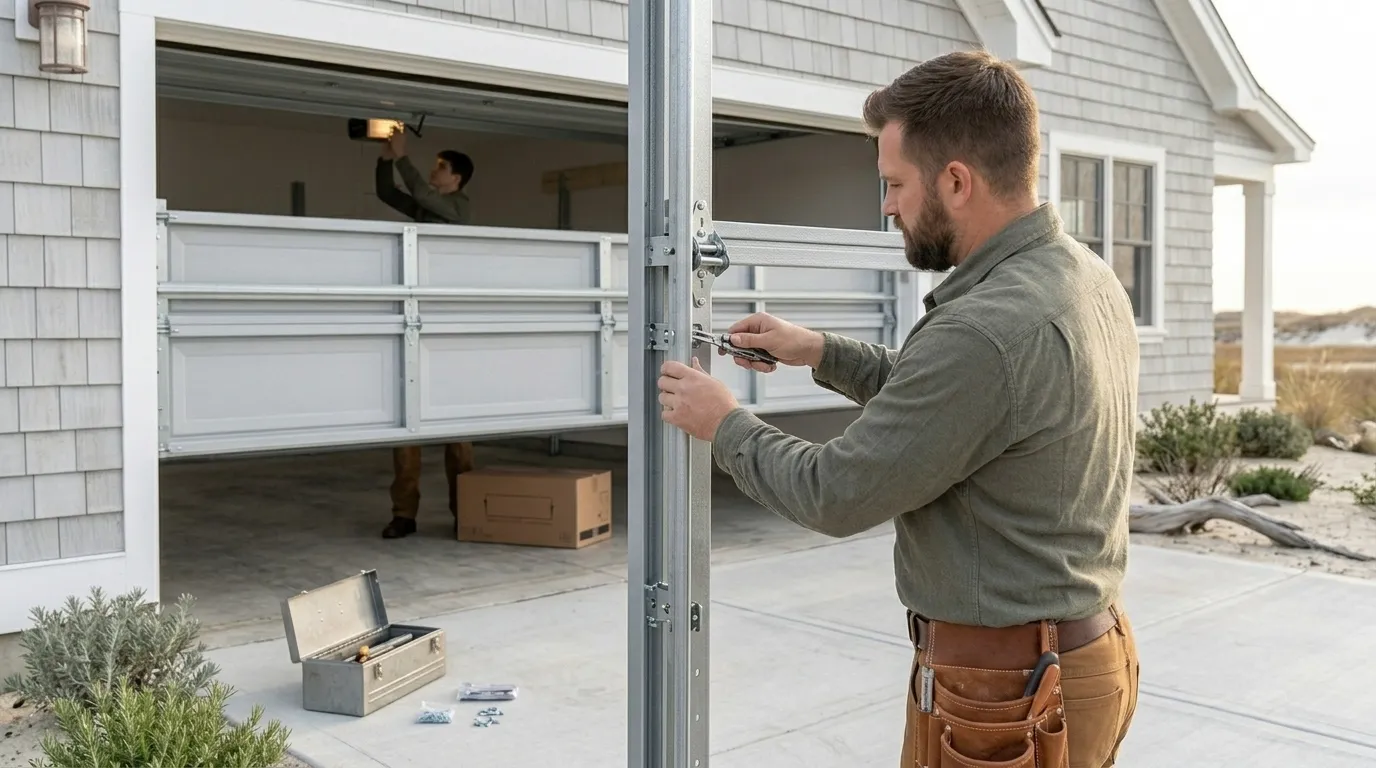
Most straightforward opener swaps - same mounting points, same door weight, no rewiring - go faster than a full install where we're adding a new outlet, changing the rail length, or dealing with a header bracket that needs reinforcing. We're not going to hand you a fixed hour count here, because the honest answer depends on what's already on your ceiling. A house built in 1981 usually has a standard 7-foot header height and a simple joist layout, which helps, but if the previous owner added drywall or a finished ceiling around the opener, that adds time nobody can quote over the phone. What we will say: we look at the setup in person before we commit to a number, and if the job runs longer than expected because of something we find once the old unit is down, we tell you before we keep going, not after.
Can You Do This Yourself
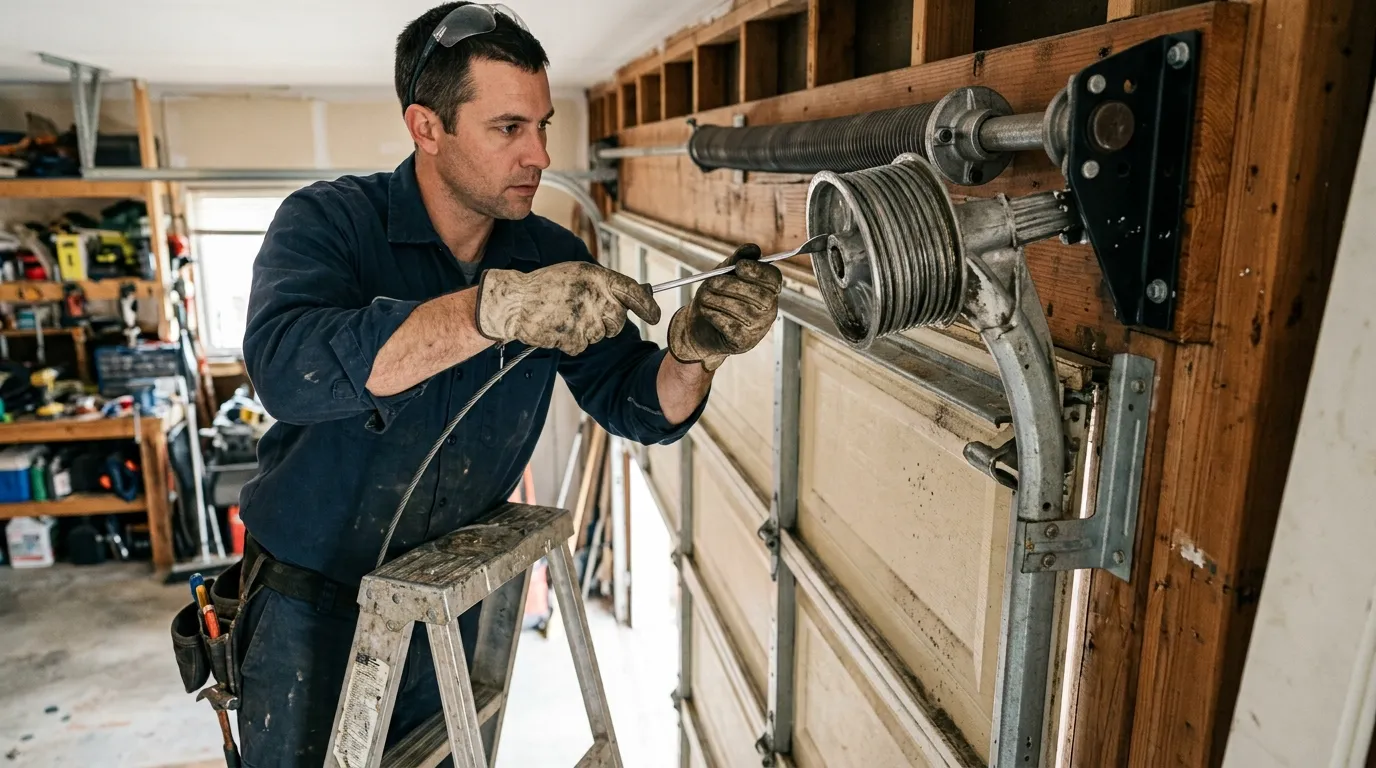
A basic opener swap - same bracket points, same door, no spring work - is within reach for someone comfortable on a ladder with a drill and a level. Where we'd stop you: the torsion spring and cable side of the door is not a DIY zone, full stop, and if your existing opener is tangled into an old safety sensor setup with bent brackets or missing eyes, get that looked at by someone who does this daily before you power up a new unit. We also won't pretend every job is a same-day fix - if the header bracket is cracked or the rail is bent from age, that's a repair on top of the install, and we'd rather tell you that up front than have the new opener fail in six months because it was mounted to bad hardware. If you're set on doing it yourself, at minimum have someone check the balance of the door before the new opener ever gets bolted on.