Can You Do This Yourself
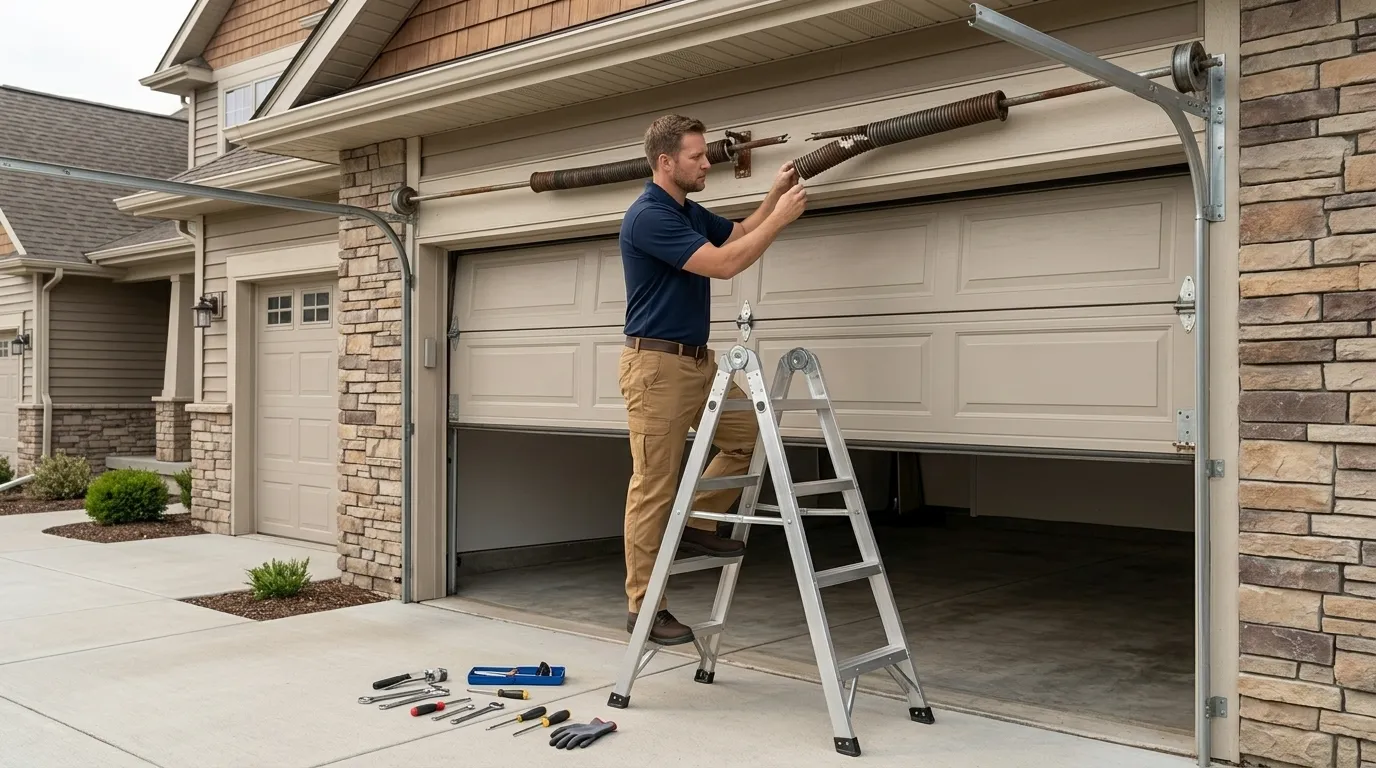
A torsion spring is wound under enough tension to break a bone or worse if it lets go while you're working on it. That's not an exaggeration - it's the reason we own winding bars and you probably don't. If your door has one spring mounted above the opening on a shaft, or two on a double door, that's a torsion setup, and this isn't a project for a Saturday afternoon with a socket wrench.
Extension springs, the kind that stretch along the horizontal tracks, are a bit more forgiving but still store enough force to launch a broken cable across a garage. We're not going to pretend there's a safe shortcut here.
What you can do yourself: check whether the door is actually spring-related before you call anyone. If the door feels like dead weight when you lift it by hand with the opener disconnected, or if you see a visible gap in a coil above the door, that's a spring problem. If the door moves but jerks, bangs, or drifts sideways, that might be a track or cable issue instead, and it's worth mentioning what you saw when you call - it saves a diagnostic trip.
Our honest limitation: we don't walk homeowners through winding a torsion spring over the phone, and we won't send a spring home with a customer to install themselves. Some jobs just need a second set of trained hands and the right bar.
What the Fix Involves
We start by matching the spring to the door - wire size, coil diameter, and wind direction all have to be right, or the door won't balance and the new spring will wear out fast. Guessing at spring size from a hardware store chart is one of the more common ways a DIY spring job goes wrong.
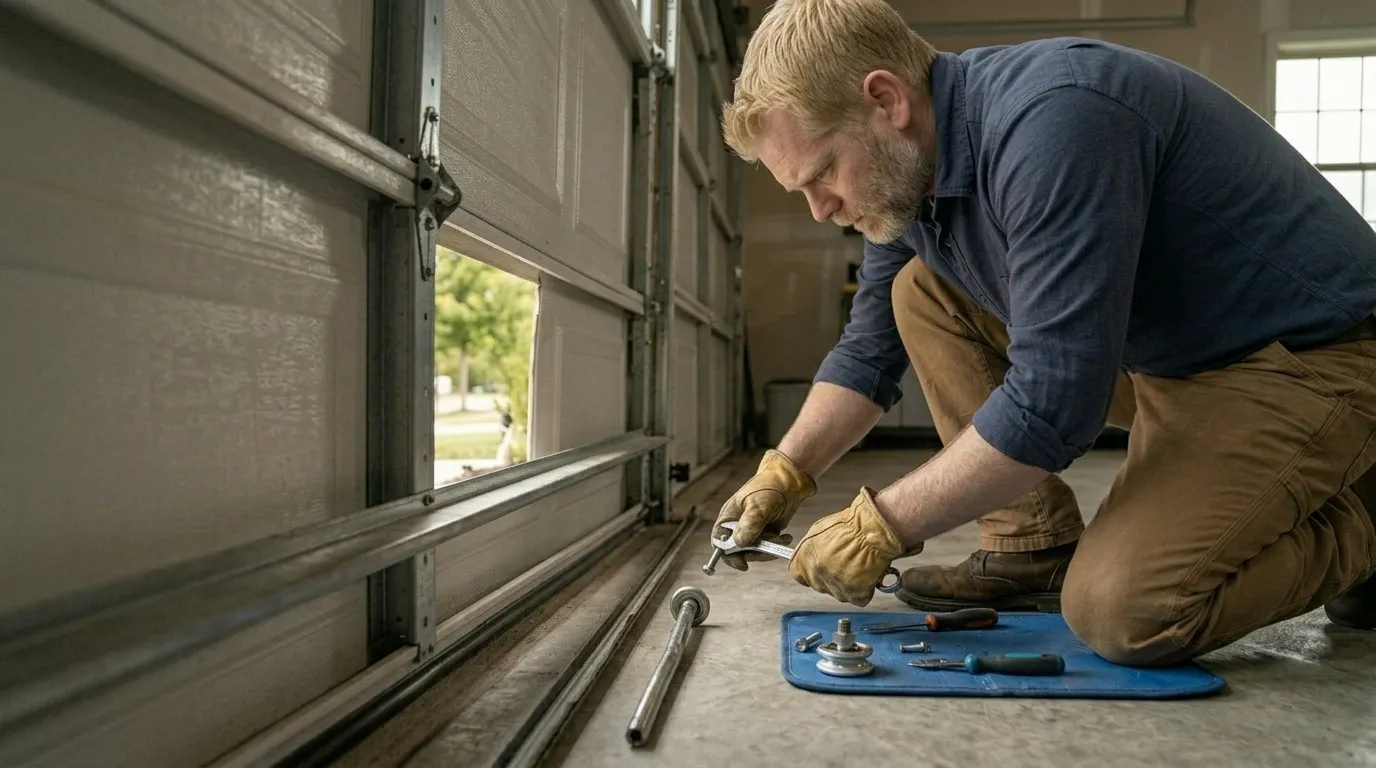
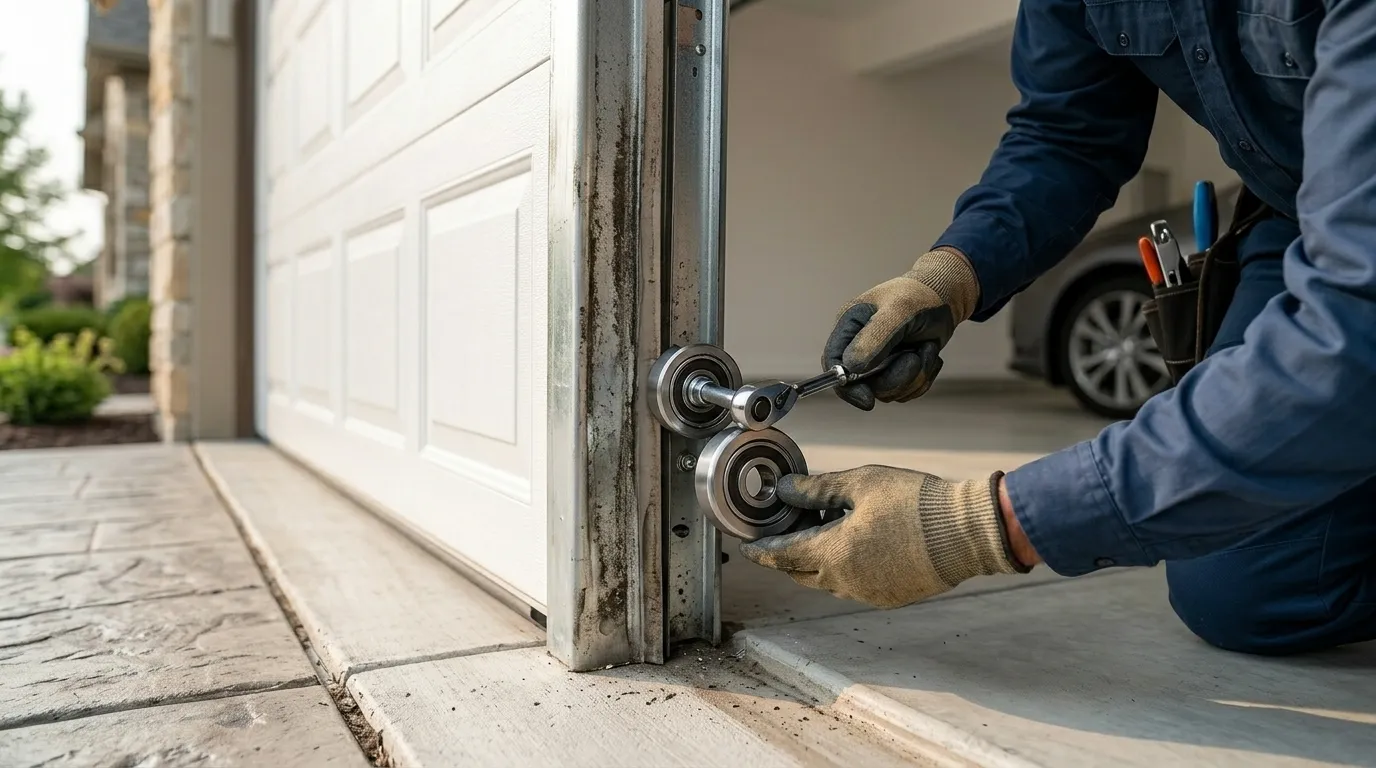
On a torsion system, we release the old spring's tension safely, pull the shaft, swap the spring, and rewind it to the turn count that matches your door's weight and height. We check the cables and bottom brackets while we're in there, since a spring that failed under strain can take a cable with it.
Once the new spring is on, we test the door's balance - it should hold at any point when you let go of it by hand, without drifting up or dropping down. If it doesn't balance, the door will keep straining the opener motor no matter how new the spring is, so that check isn't optional.
We don't stock every spring size on the truck for every job type, which means some less common wire gauges need a short lead time to get in - we'll tell you upfront if yours is one of them rather than sending a mismatched spring just to finish same-day.
What Causes It Around Here
Housing in the Toms River service area was built mostly between 1938 and 2005, with the typical home going up around 1972, and a lot of that stock across the area's 46 named neighborhoods and towns dates specifically to the 1960s and 70s. Doors and hardware from that era were built to a lower cycle-life standard than what's sold today, and thirty and forty year old torsion springs are well past the point where failure is a surprise rather than the expected outcome.
The area also sits in a climate band rated cold and severe by federal data, and steel spring wire behaves differently across a hard winter than it does in a mild one. Repeated freeze-thaw cycles and the contraction of metal in cold temperatures add stress to a spring that's already tired from age, which is why we see a jump in spring failures in winter months compared to summer.
Put those two things together - original 1960s-70s hardware still on the door, paired with winters that put real strain on aging steel - and you get a service area where spring replacement is one of the most requested repairs, not an occasional call. It's not that Toms River doors are built worse; it's that a lot of them are simply old enough, and the winters here are hard enough, that this is the part that gives out first.