Can You Do This Yourself
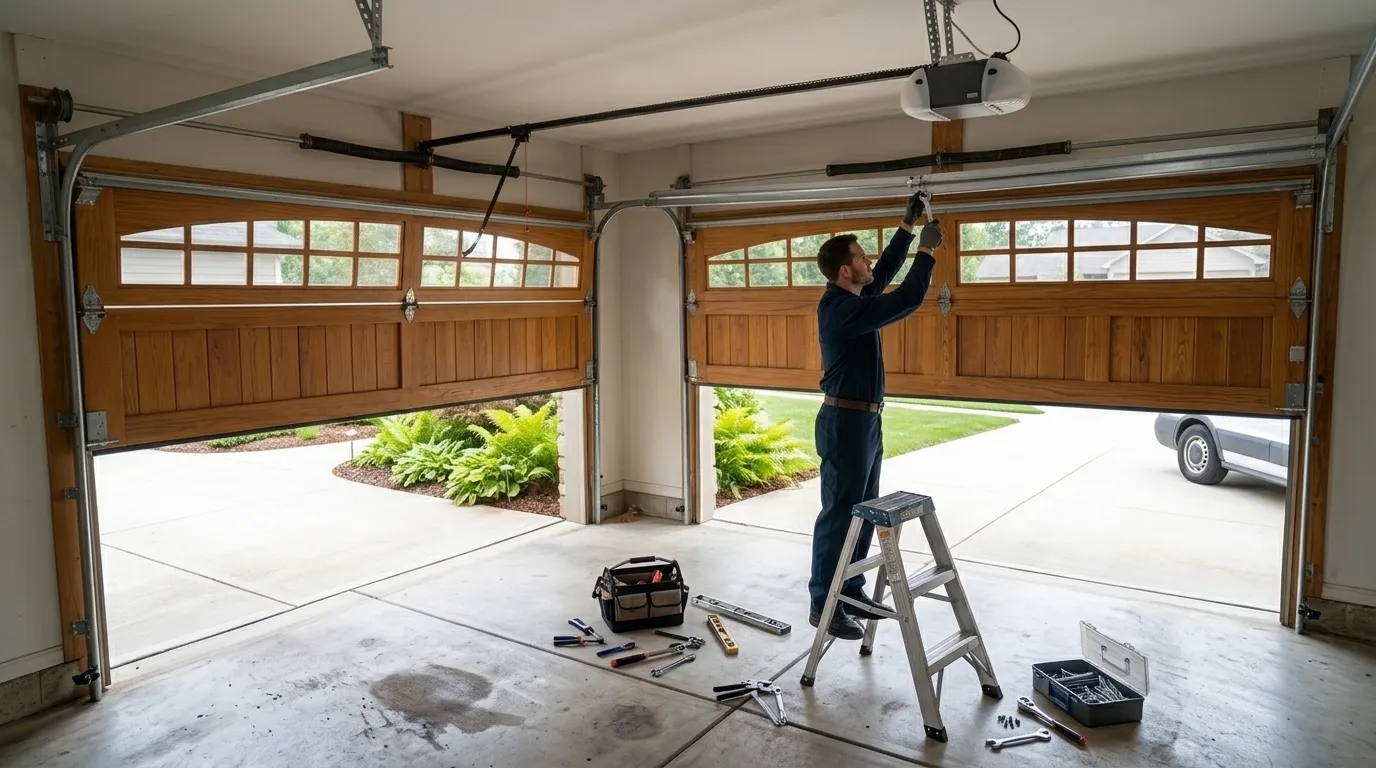
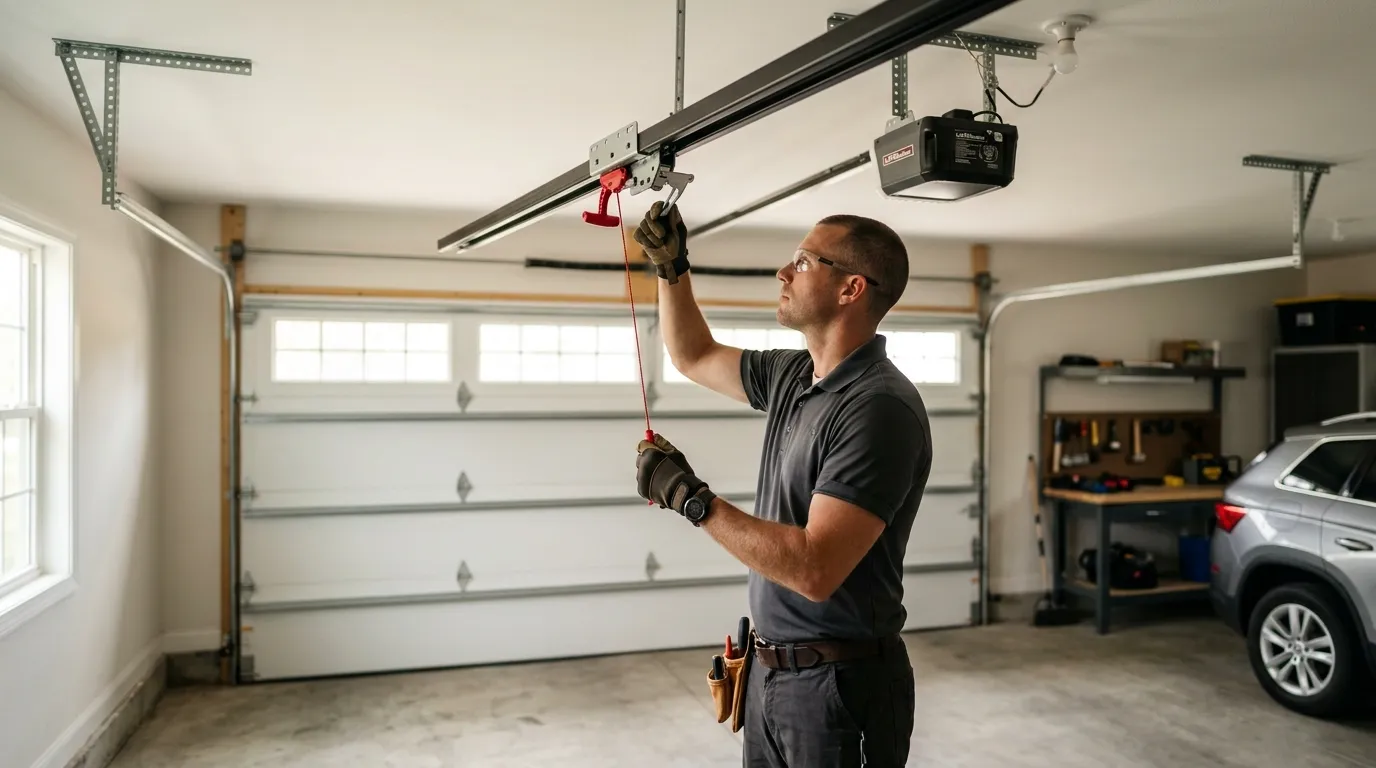
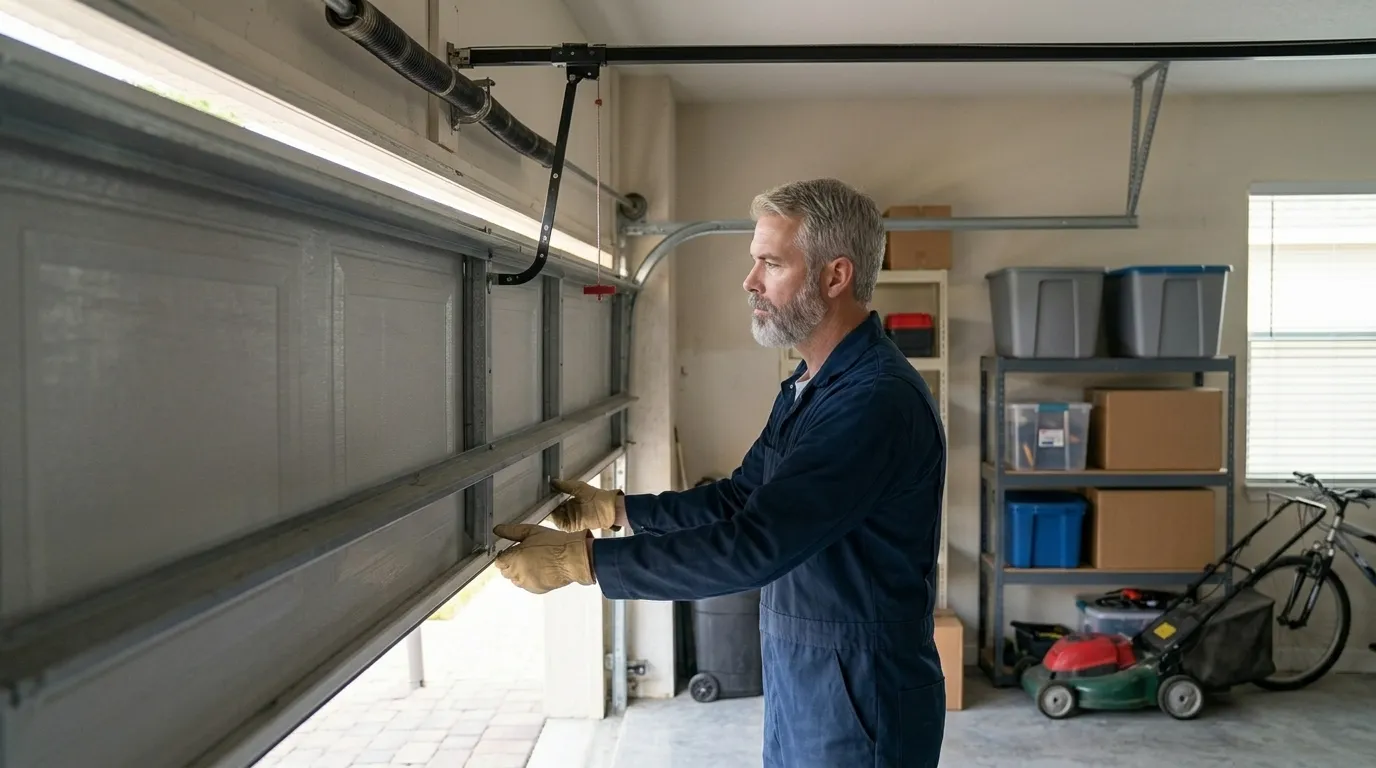
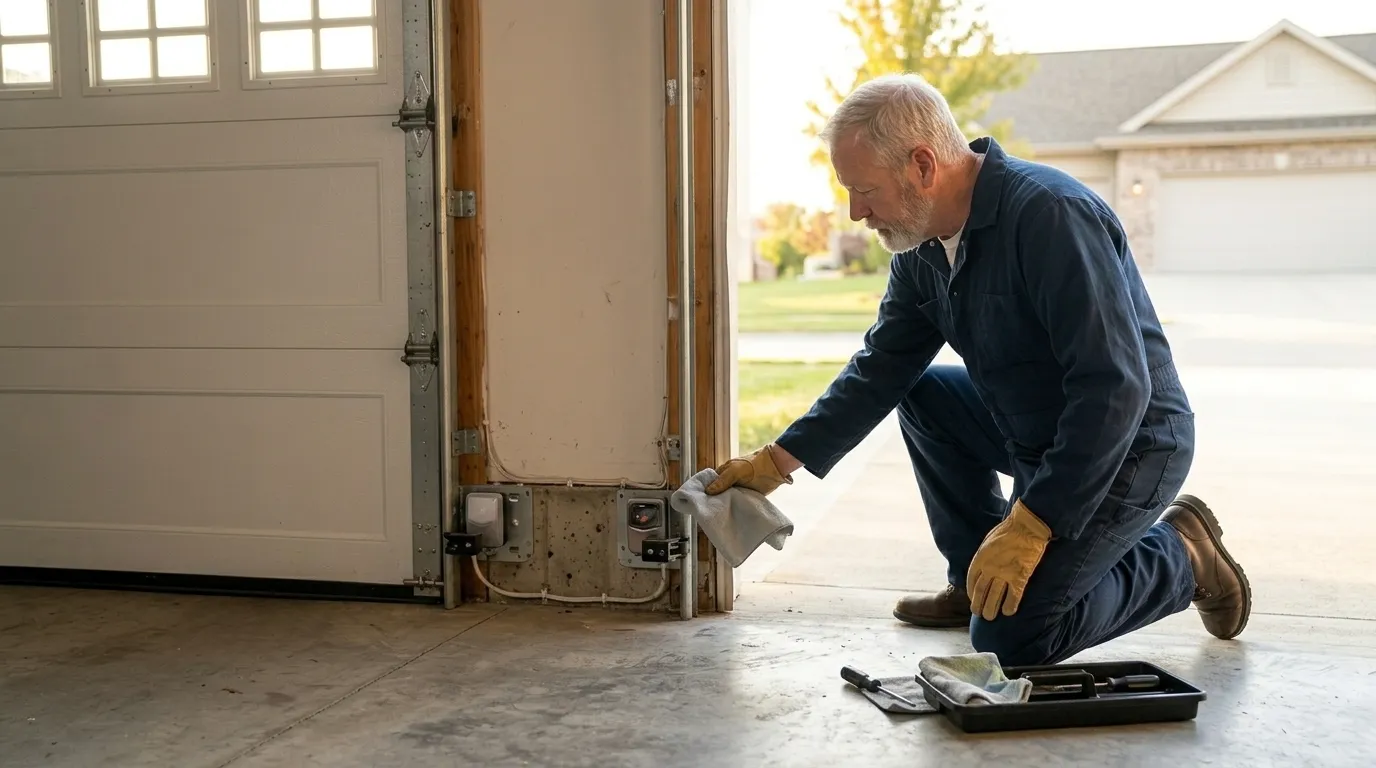
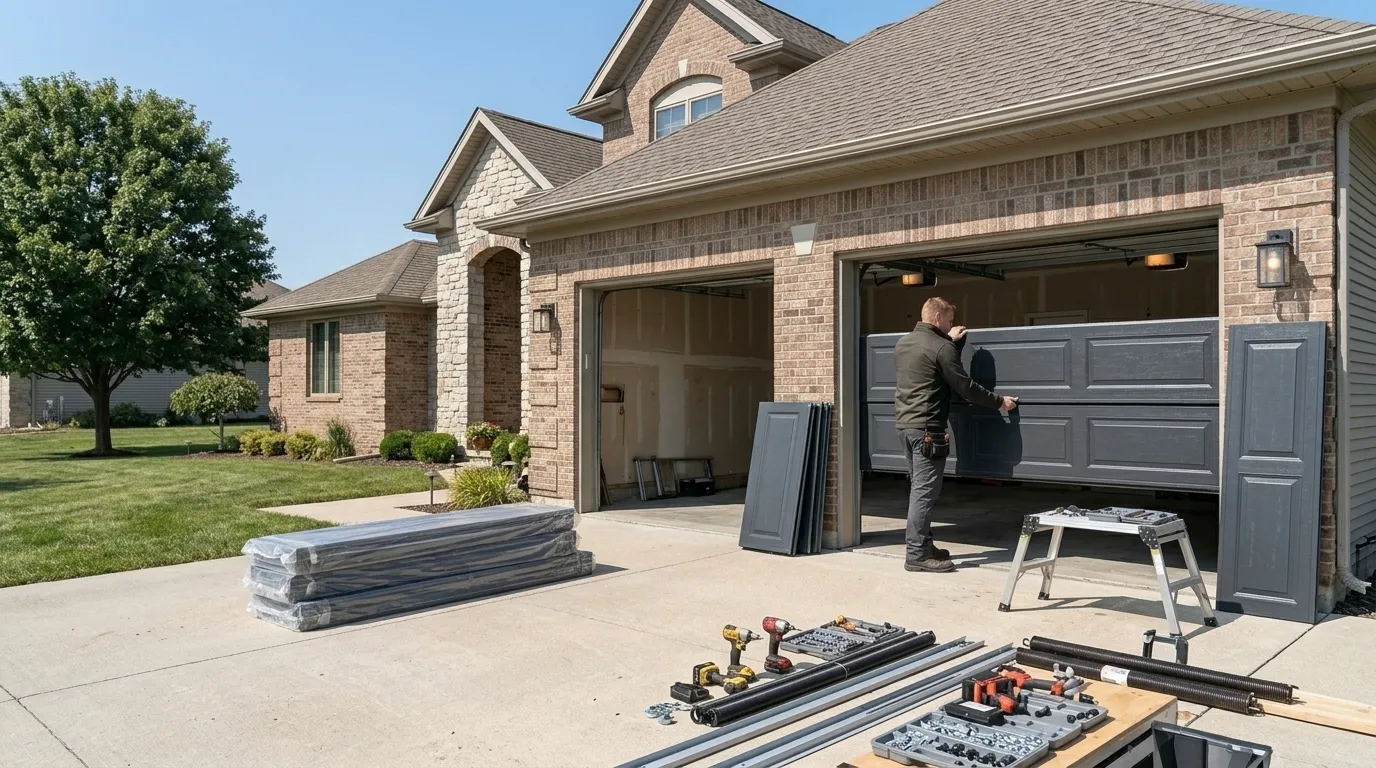
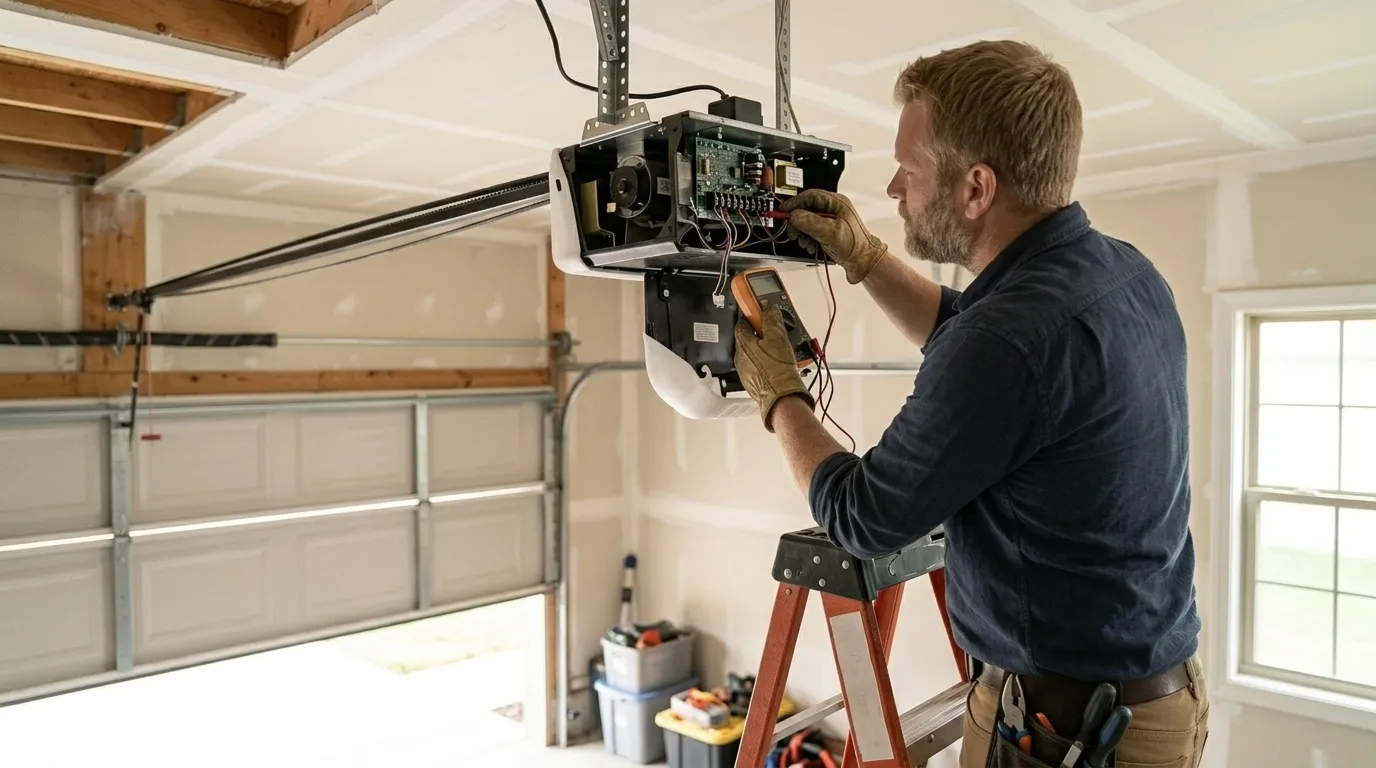
A garage door that won't move is usually a spring, cable, or opener problem, and none of those are safe DIY jobs. A torsion spring under load can put someone in the ER, and a door that drops on a bent track can crush a hand fast. If the door is off its rollers, a cable has snapped, or the spring has let go with that loud bang homeowners describe, stop trying to force it open or closed by hand. You can safely check a few things yourself first: is the opener plugged in, has a breaker tripped, is the manual release cord pulled (which disconnects the opener from the door), and is anything blocking the photo-eye sensors near the floor. Those account for a real share of the panic calls we get. But once you're looking at a bent track, a loose cable, or a spring coil that's separated, that's a call, not a project. Around here, with housing stock running from the late 1930s through the mid-2000s, a lot of homes still have original hardware that wasn't built for a DIY fix - the parts and tension specs are different from what's on the shelf at a hardware store today.
What the Fix Involves
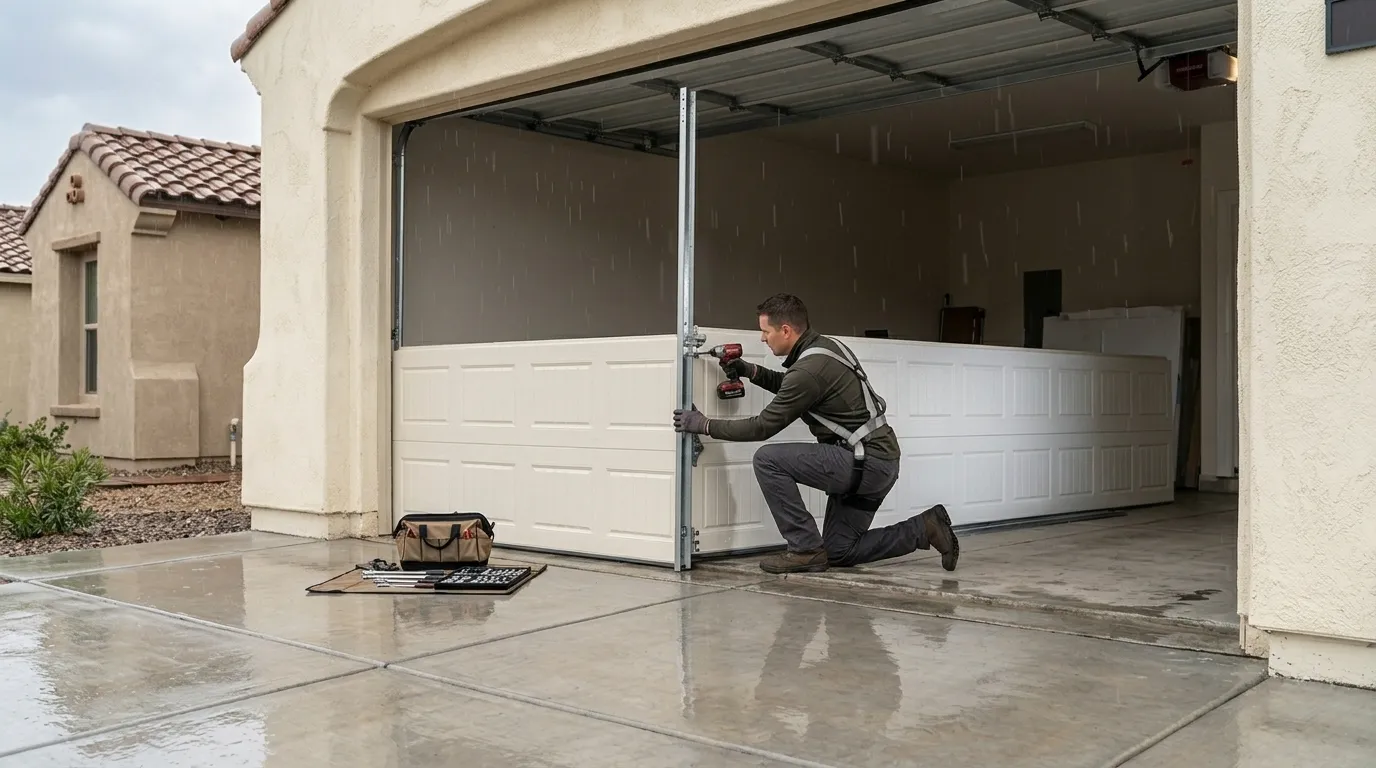
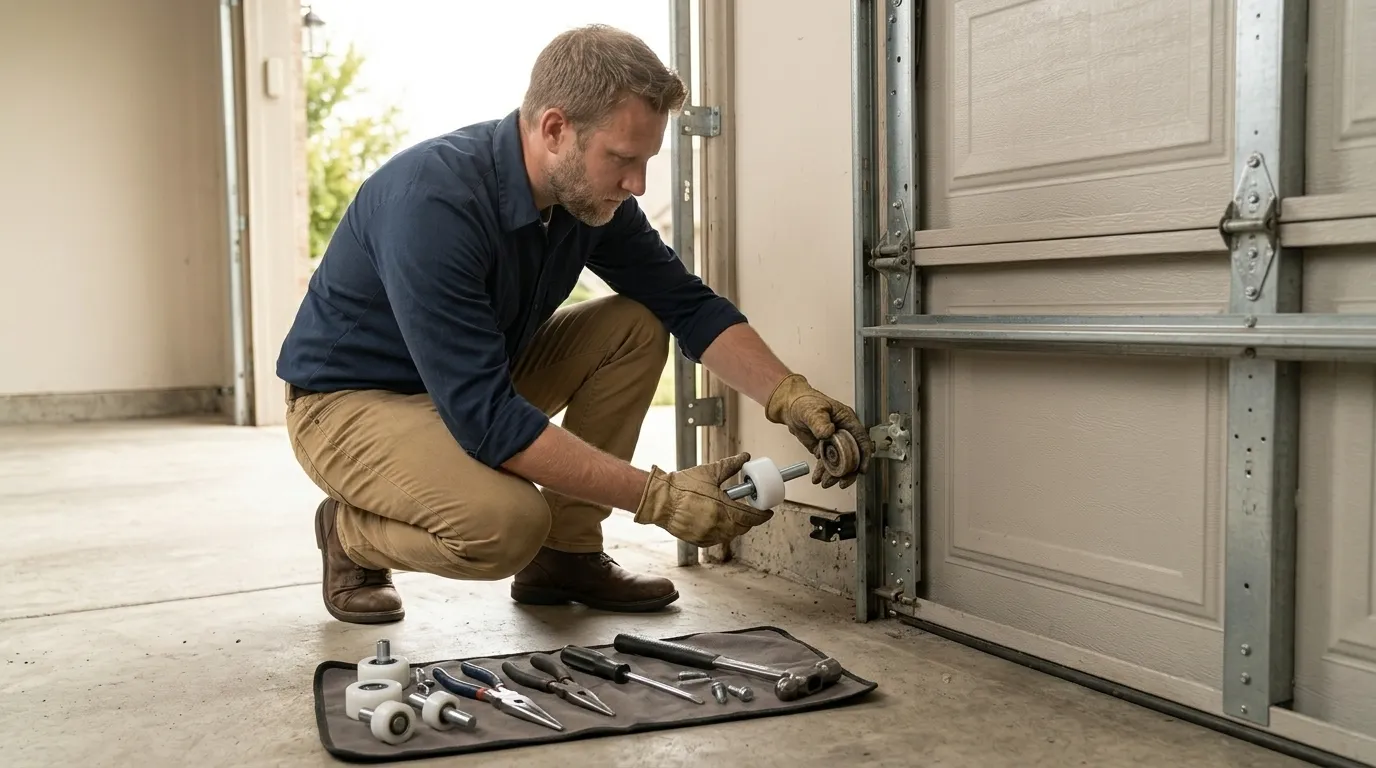
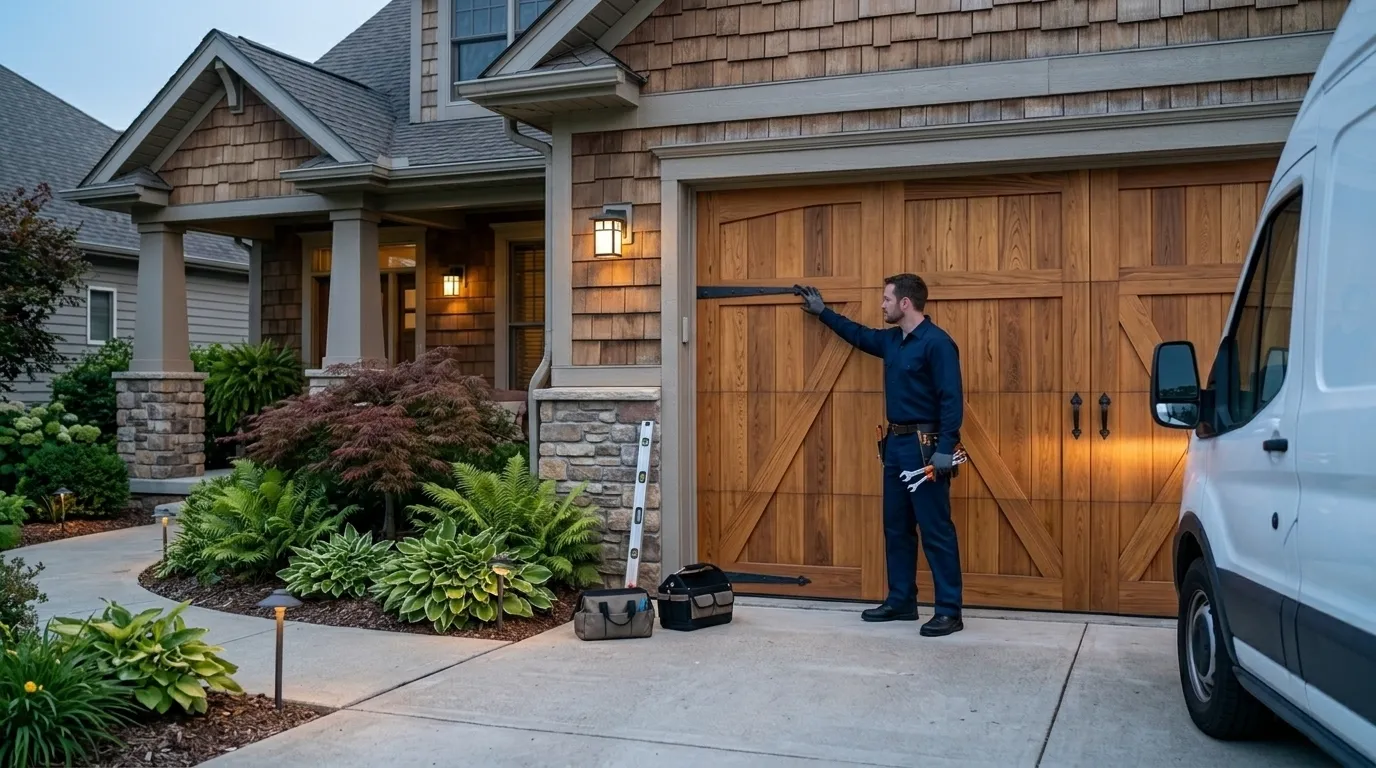
A snapped torsion spring gets replaced in pairs when the door has two springs of matching age and wear - replacing one and leaving a 20-year-old spring on the other side just moves the failure date up. We match spring wire size and wind to the door's weight and track length, not a generic size, because a mismatched spring either won't lift the door or will slam it. A bent track gets straightened or swapped depending on how far the metal has deformed; sometimes it's a 20-minute fix, sometimes the track is bent enough that patching it just invites a repeat call. Cable replacement is usually done alongside spring work since both parts see the same stress and wear together. One honest limit: if a door is old enough that the track, hinges, and springs are all near end of life at once, we'll tell you that a full door replacement is the better money than another round of patch repairs - we'd rather say that up front than have you pay for parts twice. Not every emergency call ends in a repair; sometimes it ends in a straight answer about when fixing stops making sense.
What Causes It Around Here
Housing in this service area was mostly built between 1938 and 2005, with the bulk of it going up in the 1960s and 70s - that's roughly fifty to sixty years of daily door cycles on original or first-replacement hardware. Springs are rated by cycle count, and a door that's been opened and closed twice a day for five decades is well past what most torsion springs were built to handle, even if it looks fine from the driveway. Add a cold-weather climate with real winter severity, and you get metal fatigue that shows up as sudden failure rather than a slow warning - the spring doesn't creak first, it just goes. That combination, older housing stock plus hard winters, is why emergency calls cluster in the coldest stretches rather than spreading evenly through the year. It's also why this isn't a problem unique to one street or one subdivision; it shows up across the whole area, from the 1960s ranches to later builds that used similar hardware standards through the 1980s and 90s before code and manufacturing caught up.