Can You Do This Yourself
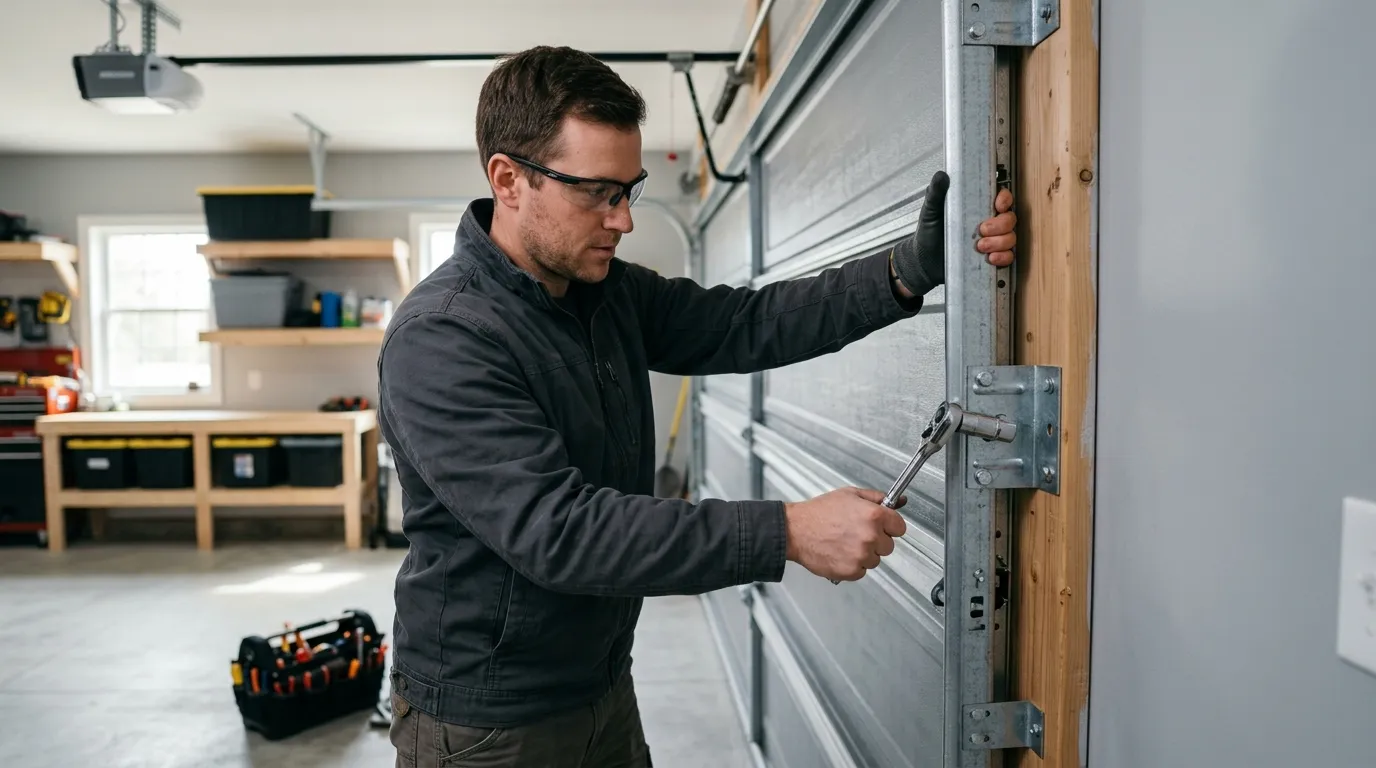
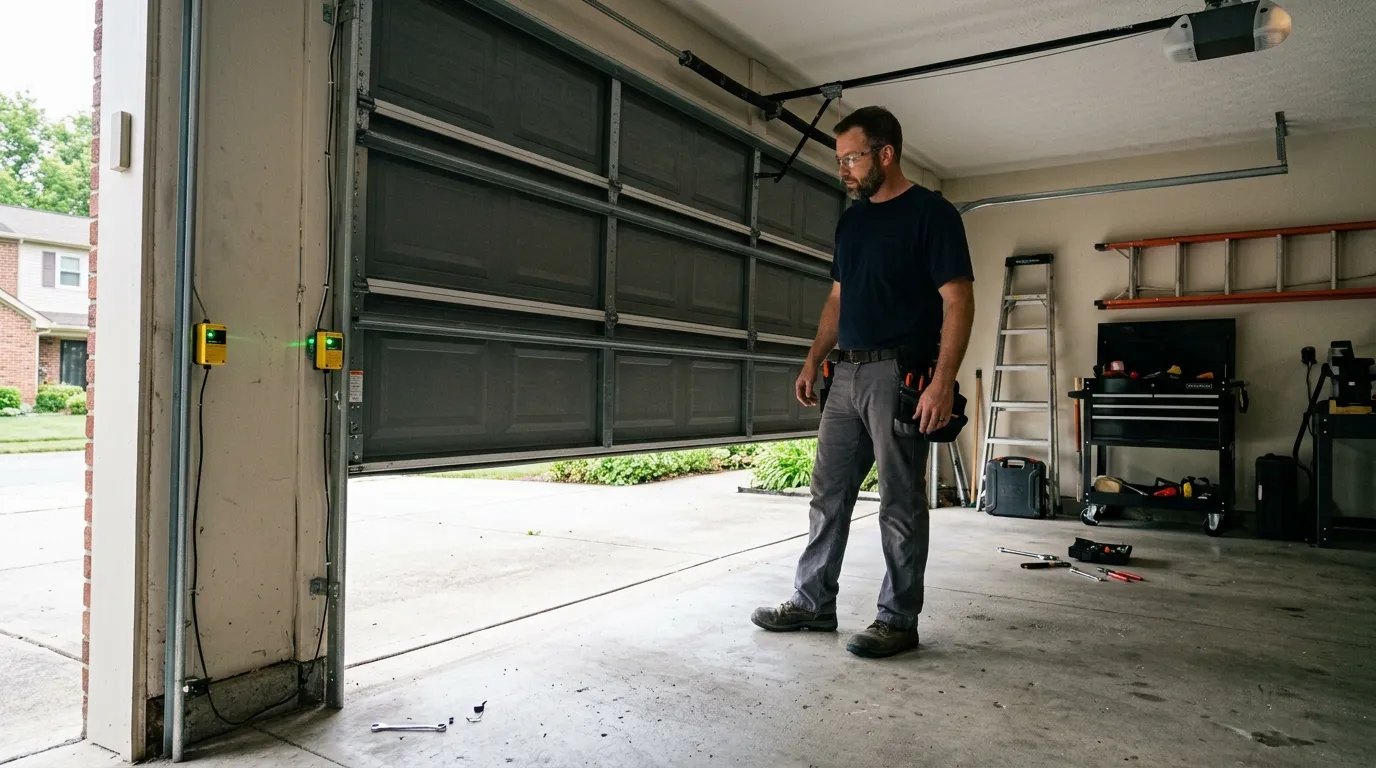
A basic opener swap on a newer door with clean rail and standard bracket spacing is within reach for a handy homeowner with a weekend and a helper. The trouble starts when the house dates back toward the 1972 median build year common across this area. Older door leaves weren't engineered for today's opener specs, so the header bracket, the top fixture, and the track alignment often need rework before the new unit will lift straight instead of racking sideways. You also need to get the force settings and the auto-reverse sensors right, since those are safety systems, not adjustments to eyeball. If your panel is original to a house built decades ago, or the track has been re-hung more than once, we'd rather look at it first than have you find out mid-install that the header isn't square. Renting a lift and a drill isn't the hard part - getting the geometry right on a door that's outlived two or three openers already usually is.
What the Fix Involves
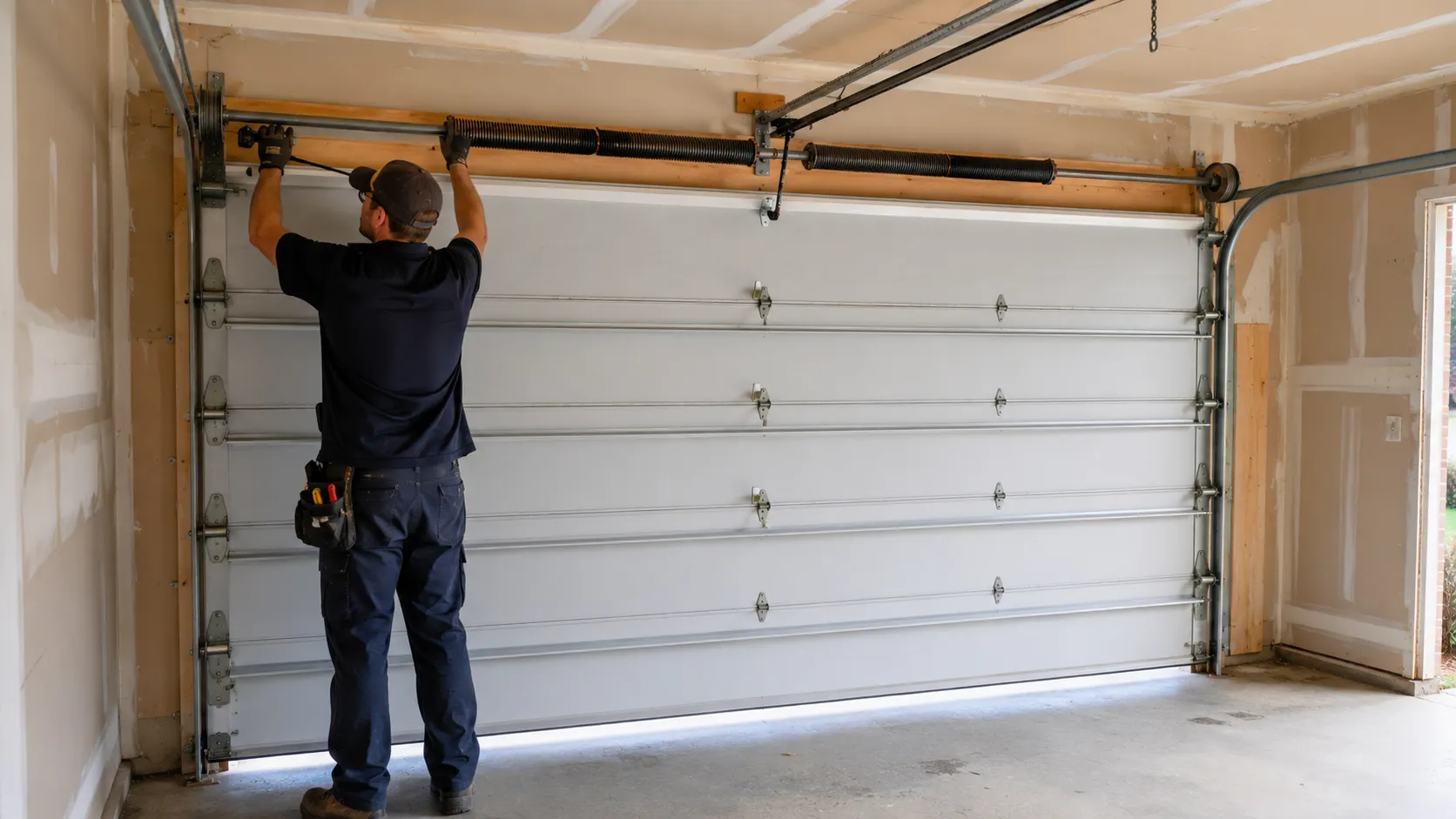
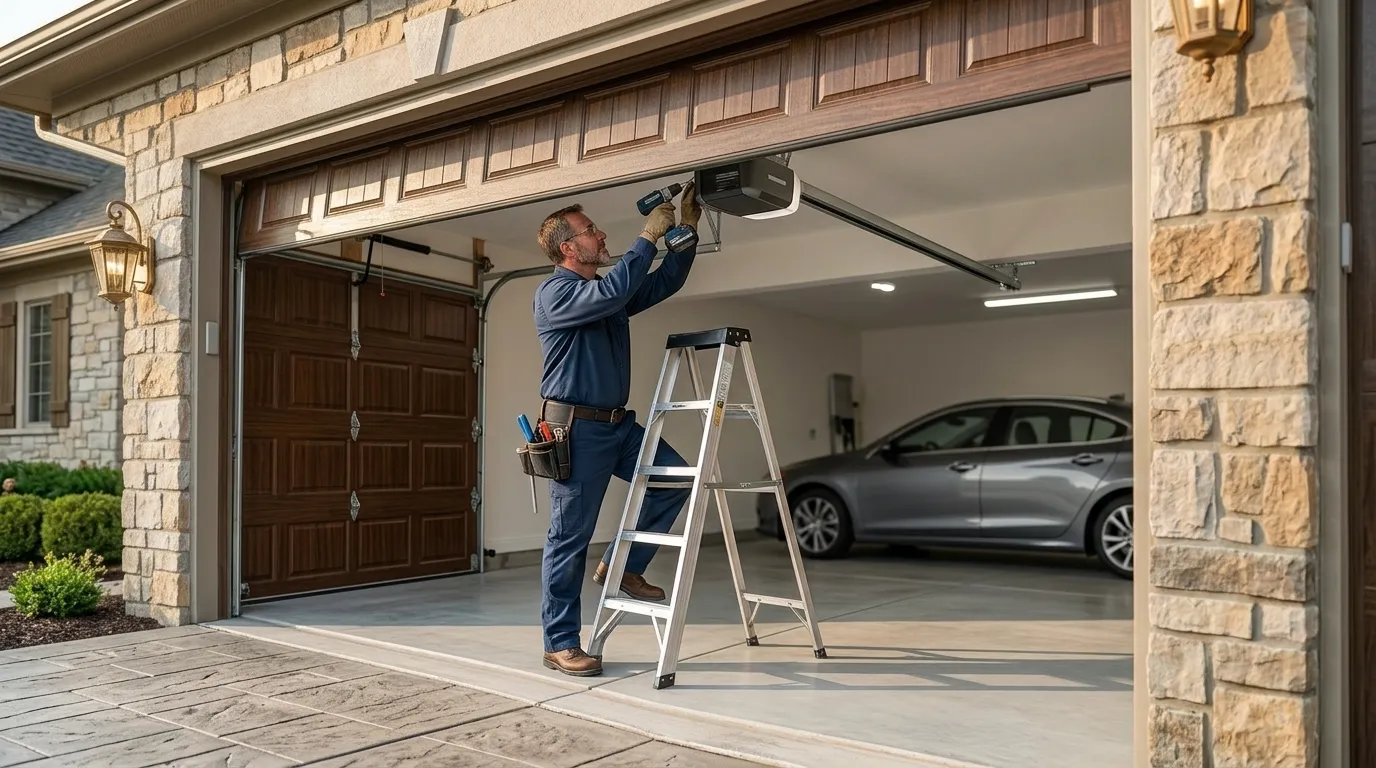
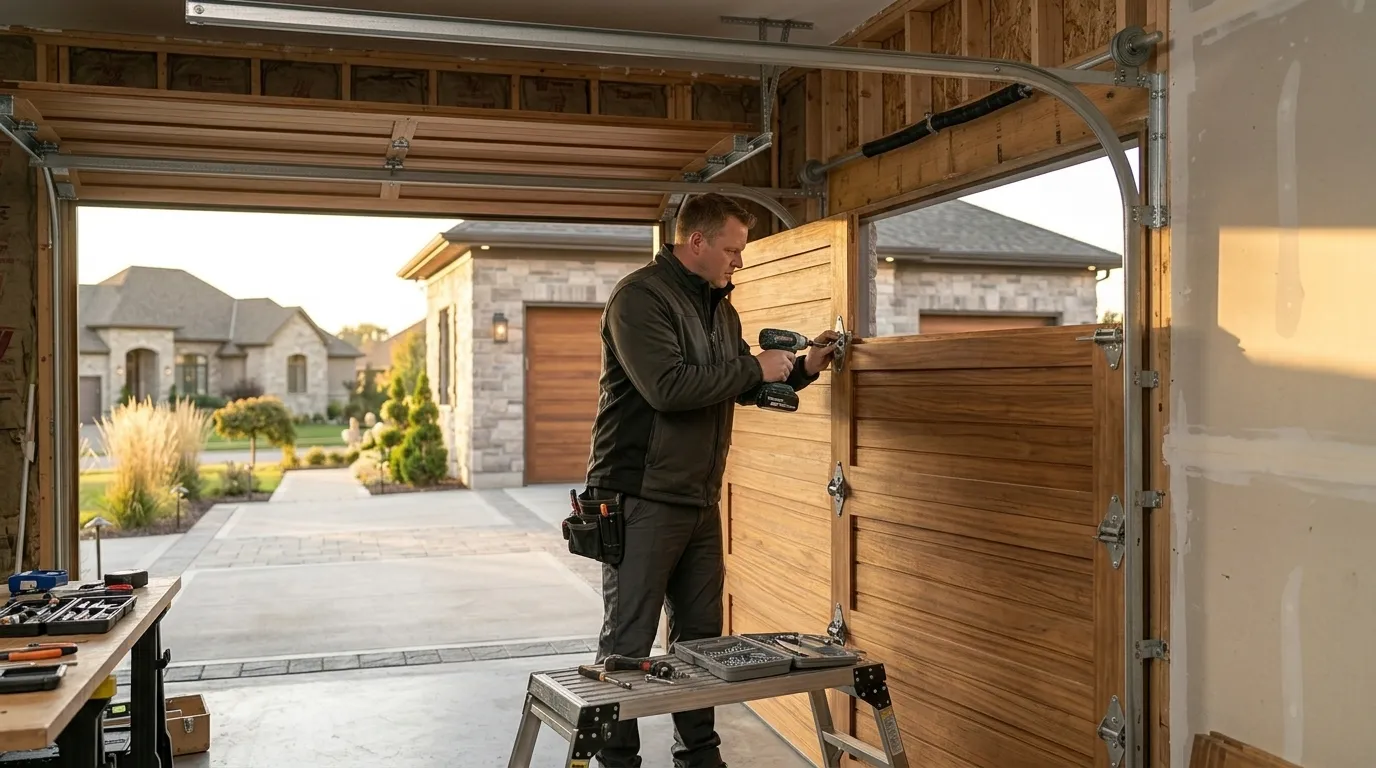
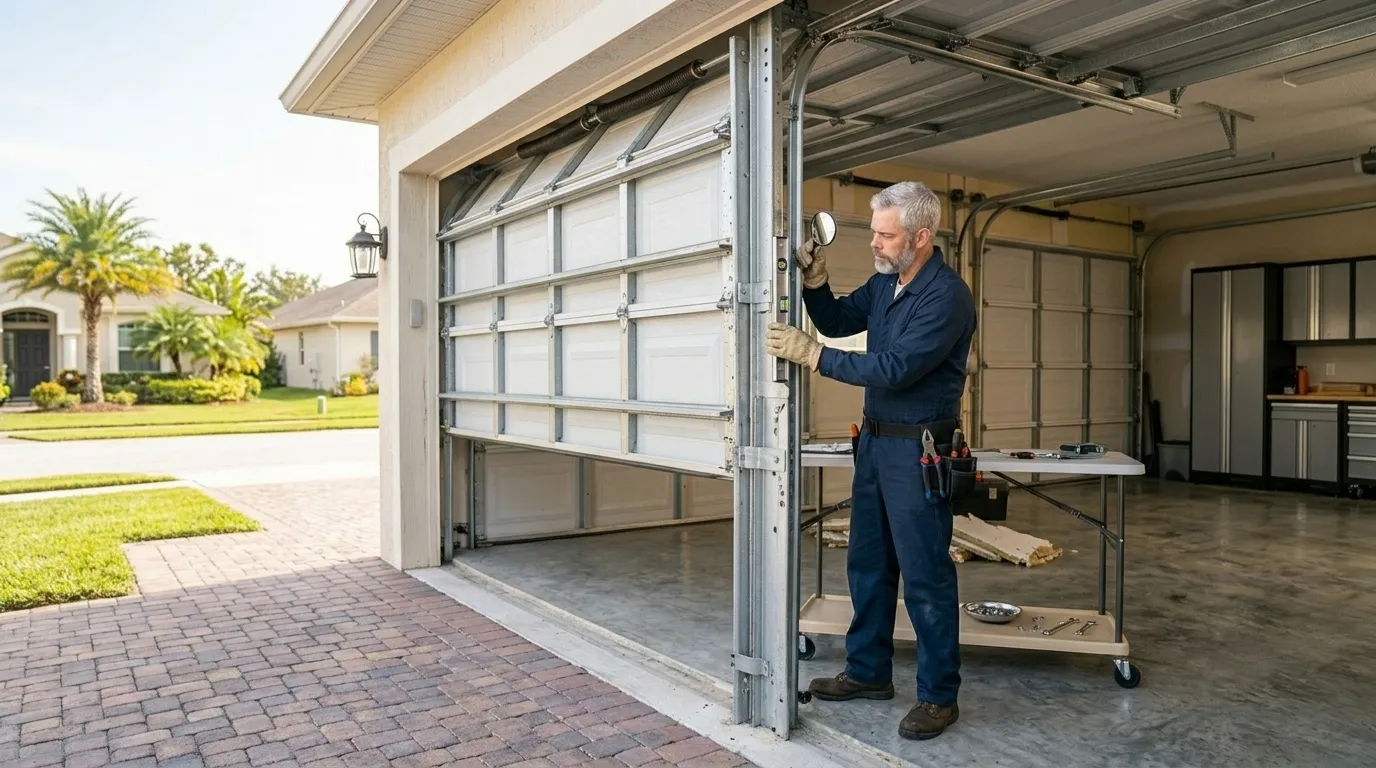
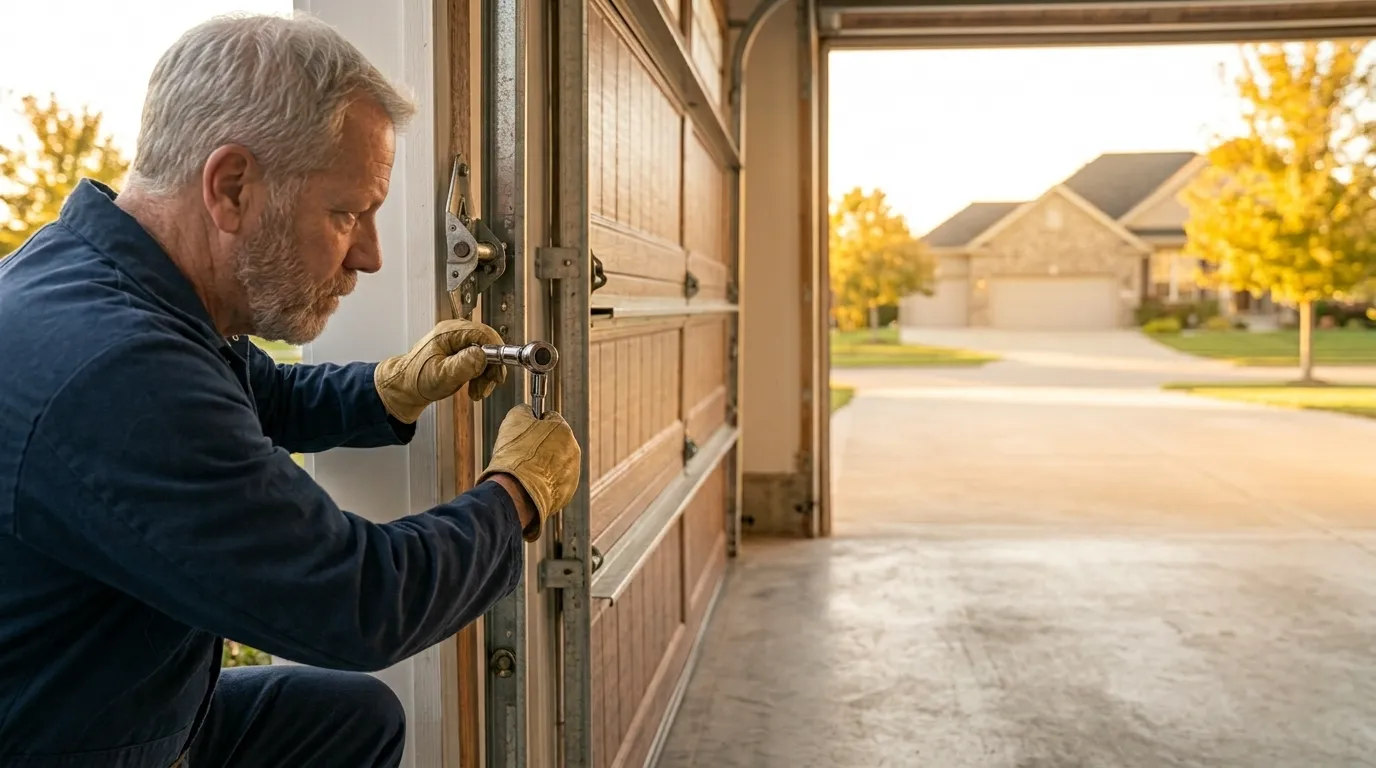
A proper installation starts with checking the door itself - spring tension, roller condition, track alignment - because a new opener bolted to a door that's out of balance will just fail again within a year or two. From there it's mounting the rail and motor unit, wiring in the wall control and safety sensors, and setting travel limits and force settings to match the door's actual weight, not a factory default. In this climate band, we favor drive systems and lift motors rated for cold-weather torque rather than units built for milder regions, since a motor undersized for winter drag burns out early. We also test the battery backup circuit where the unit has one, since power blips during storms are when you actually need the door to open. One honest limit: if the door leaf itself is warped, undersized, or missing structural reinforcement for a heavier opener, we'll say so before we mount anything - an opener install on a door that can't support it just moves the failure point, it doesn't fix it.
What Causes It Around Here
Housing across this service area runs from 1938 to 2005, with the bulk of it built through the 1960s and 70s across the 46 named communities we cover, around out. That means a lot of original or first-replacement openers and doors sized to specs that predate current safety standards, especially auto-reverse and rolling-code security. Layer on a cold climate band with real winter severity, and you get grease that stiffens, metal that contracts, and force sensors that trip more in January than in July on the exact same door. With 84,621 owner-occupied houses among 135,232 households in the area, most of the openers we're replacing are original equipment on houses that have had one or two owners since the 1970s - the opener simply outlasted its expected service life. At a median household income of $97,037, most homeowners here are choosing Wi-Fi-enabled units with battery backup over bare chain-drive replacements, which changes what the install actually involves.