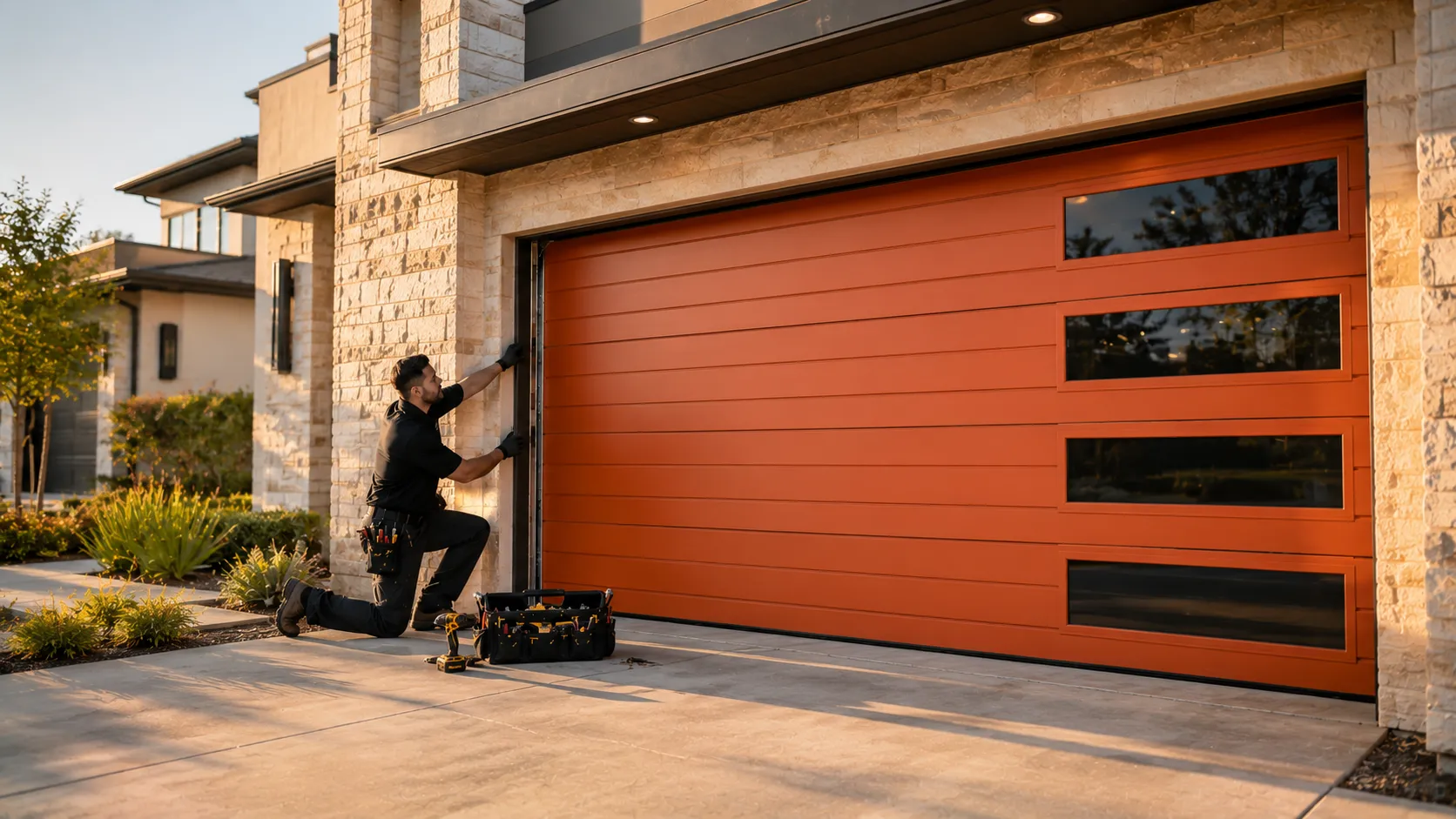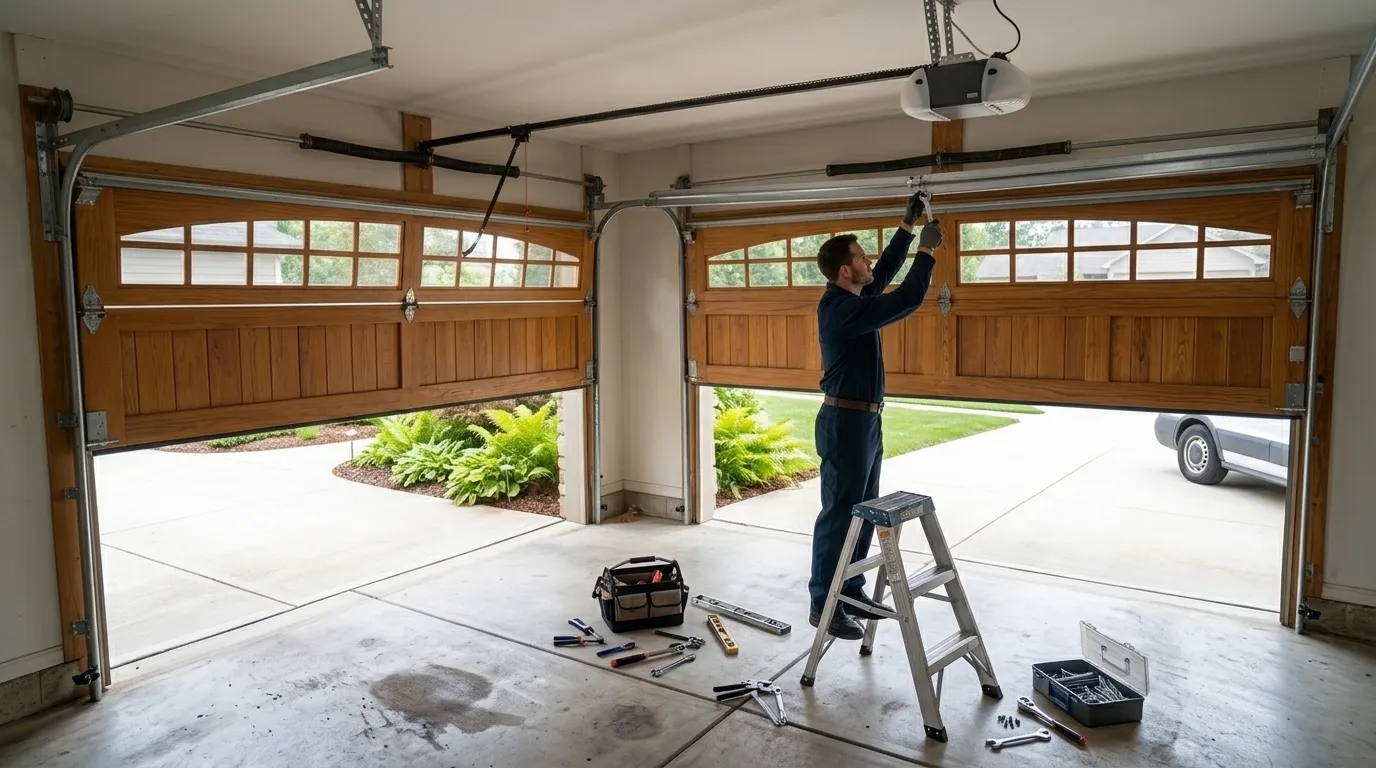
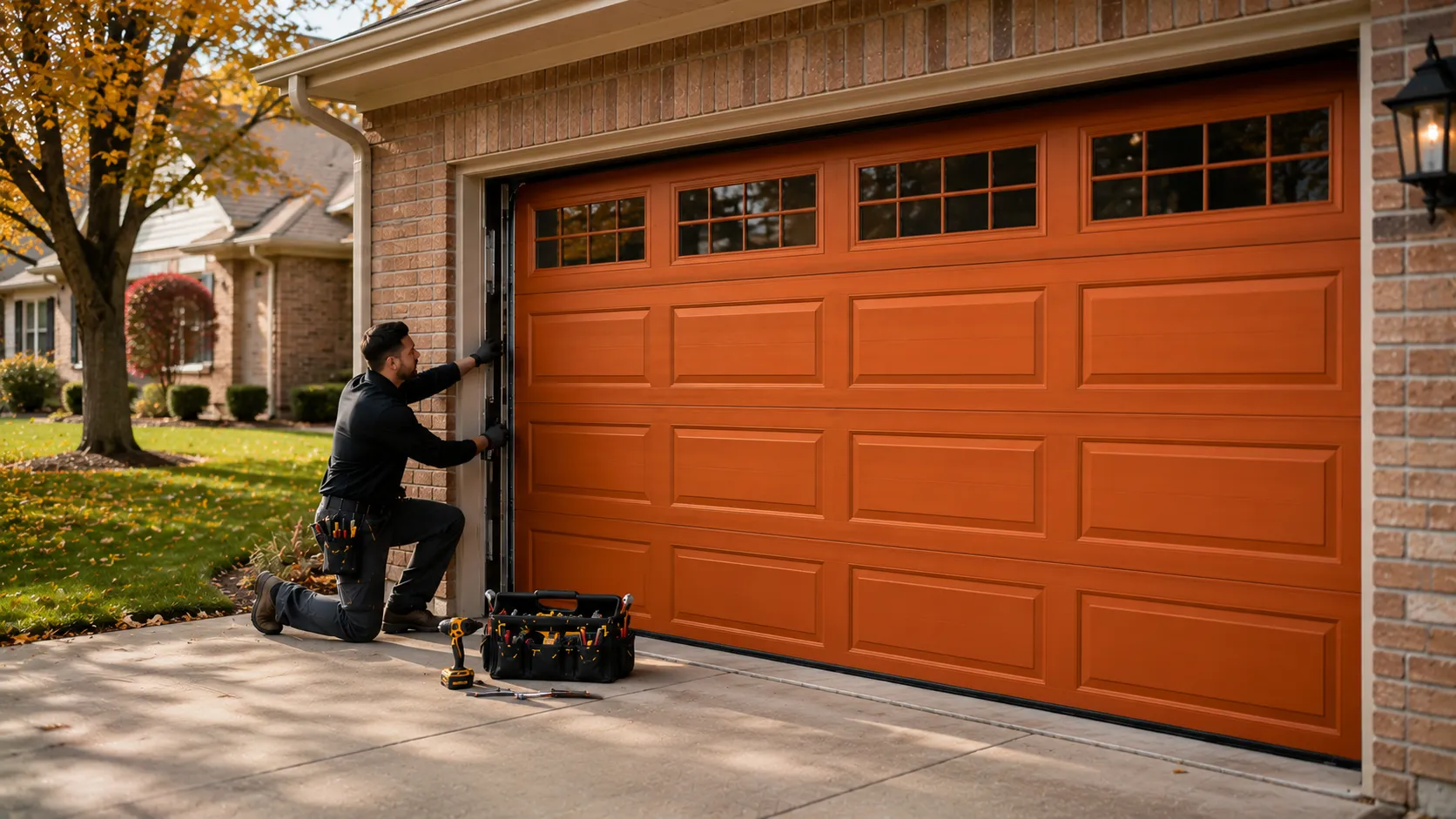
Where This Job Goes Sideways
Most houses in Beachwood went up around 1976, right at the tail end of the build window we see across this whole stretch of the shore - 1938 through 2005, median year 1972. That puts Beachwood a little later than a lot of the surrounding towns, but the hardware story is the same: whatever spring, cable drum, and track came with the house is often still hanging in the garage. Nobody swaps a torsion spring on a schedule. It gets replaced when it breaks, and in a lot of Beachwood garages it hasn't broken yet.
That's not a compliment to the spring. It's forty-plus years of wound steel doing its job under load, in a climate that puts it through a real winter every year. The failure, when it comes, tends to be sudden - a bang, a door that won't lift, sometimes a cable that's already frayed most of the way through and finally lets go. We don't get many slow, gradual failures out here. We get springs and cables that were fine on Tuesday and gone on Wednesday.
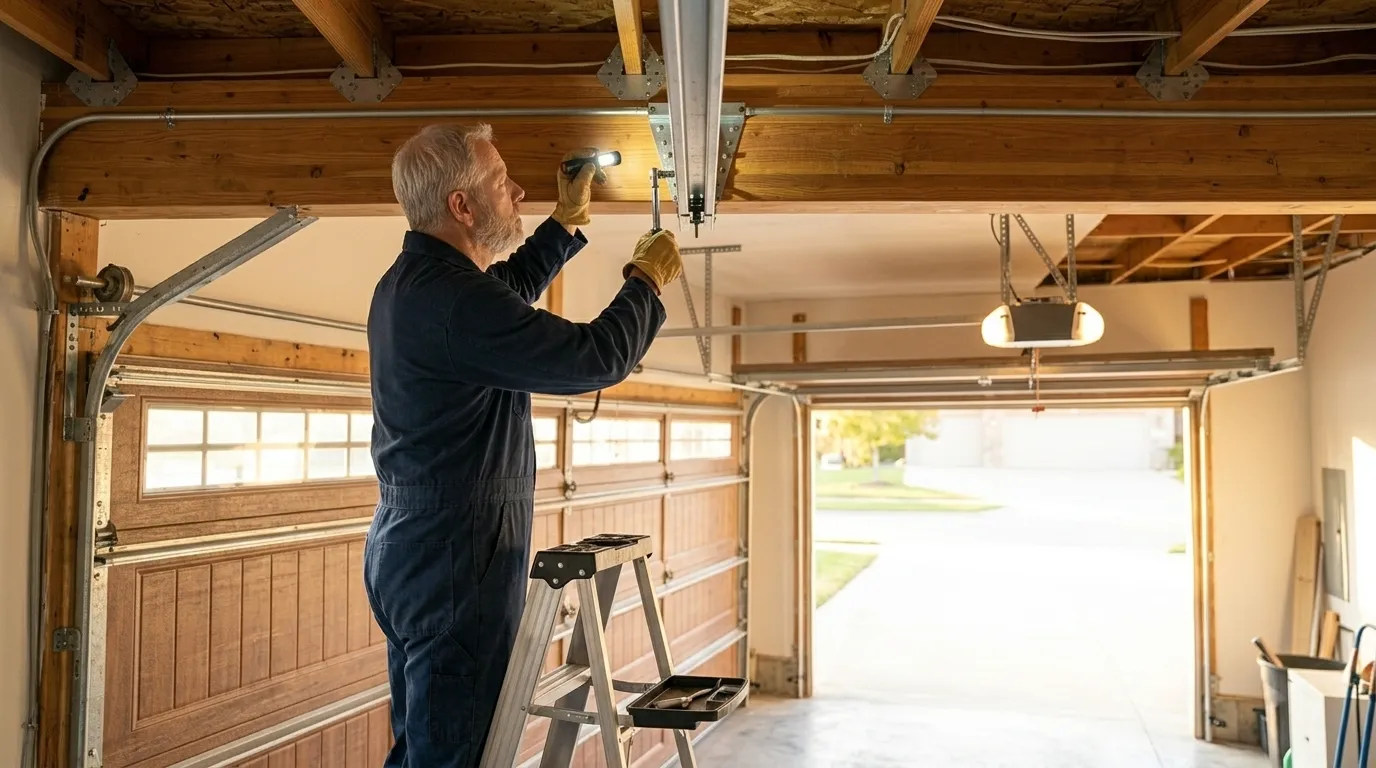
The other original part worth flagging is the opener, if the house still has its first one. Anything installed before 1993 predates the federal safety-reversing sensor requirement, and we still find these units in service.
Parts We Carry
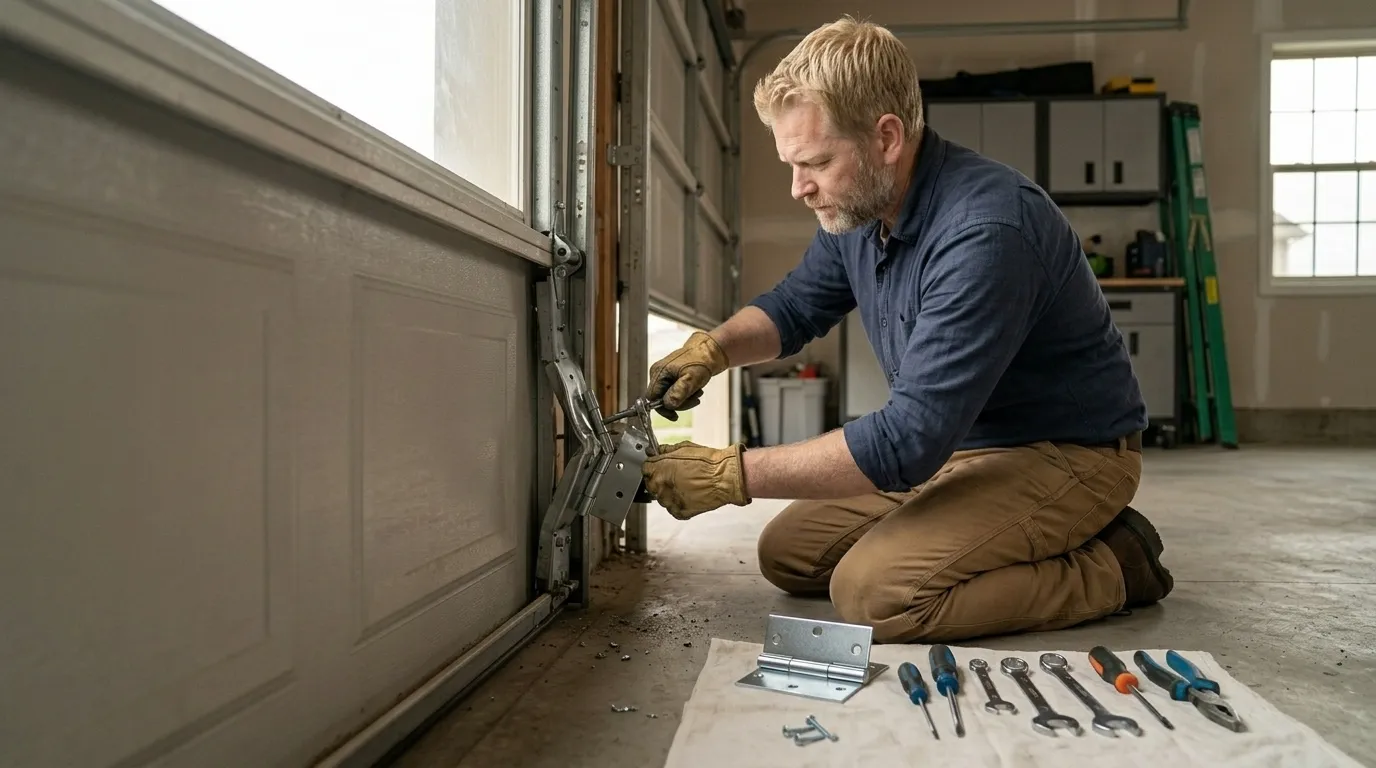
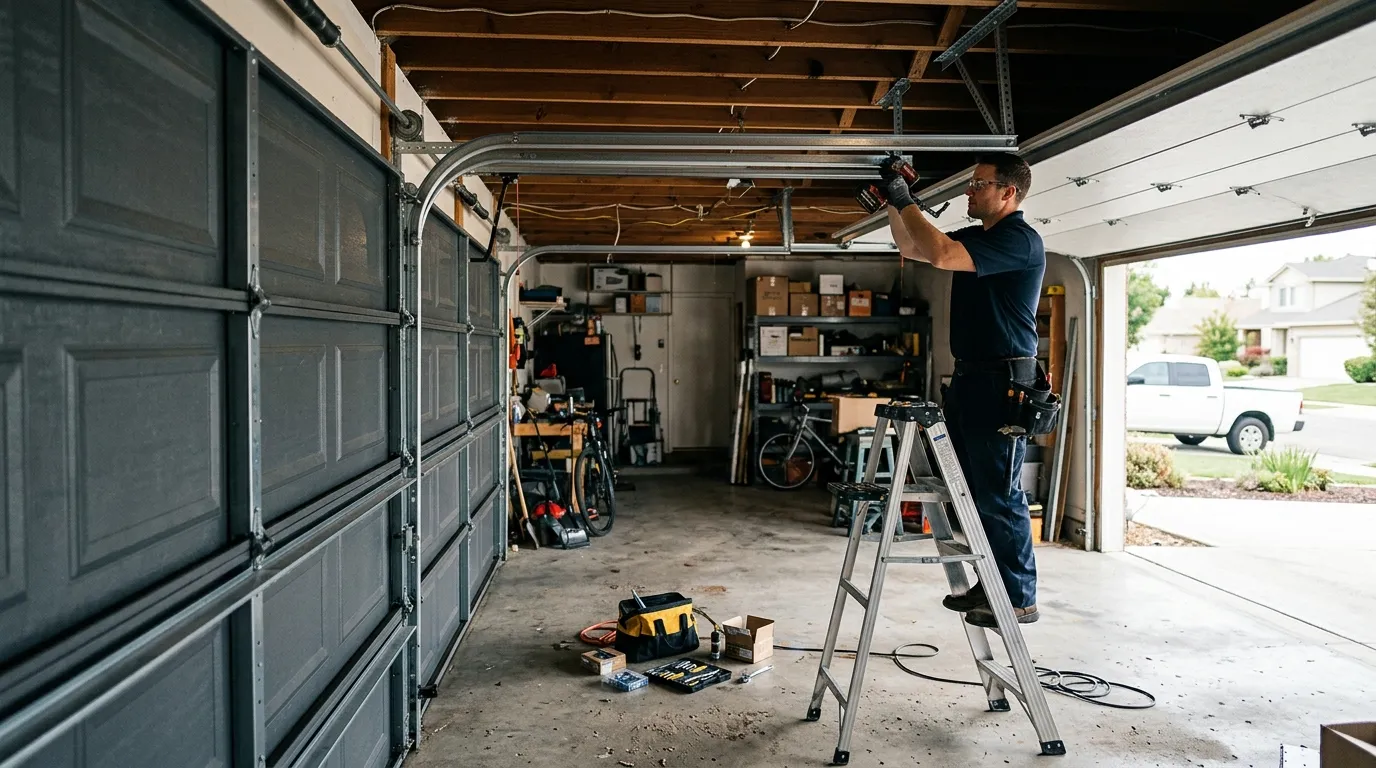
We stock the parts that fail most often on the hardware ages we actually run into out here: torsion springs in common residential sizes, lift cables, bottom brackets, rollers, and standard safety sensor kits for openers. For a house with hardware from the 1976 build era, that covers the large majority of calls without a special order.
Where we don't carry stock is oversized or custom door widths, and older opener models where the manufacturer has moved on to a different drive system. If your door is a nonstandard width or the opener is a model we can't get parts for anymore, we'll tell you that on the visit rather than stringing out a repair that won't hold. Sometimes the honest answer is that replacement costs less over time than chasing parts for a unit nobody makes anymore.
With median household income in Beachwood running around $102,043 - higher than the $97,037 average across the wider service area - we do see more owners choose a full insulated steel door replacement over a patch repair when the springs and the panels are both showing their age at once. That's a household decision, not something we push, but it's worth knowing the option exists before you commit to a repair on a door that's due for retirement anyway.
Can You Do This Yourself
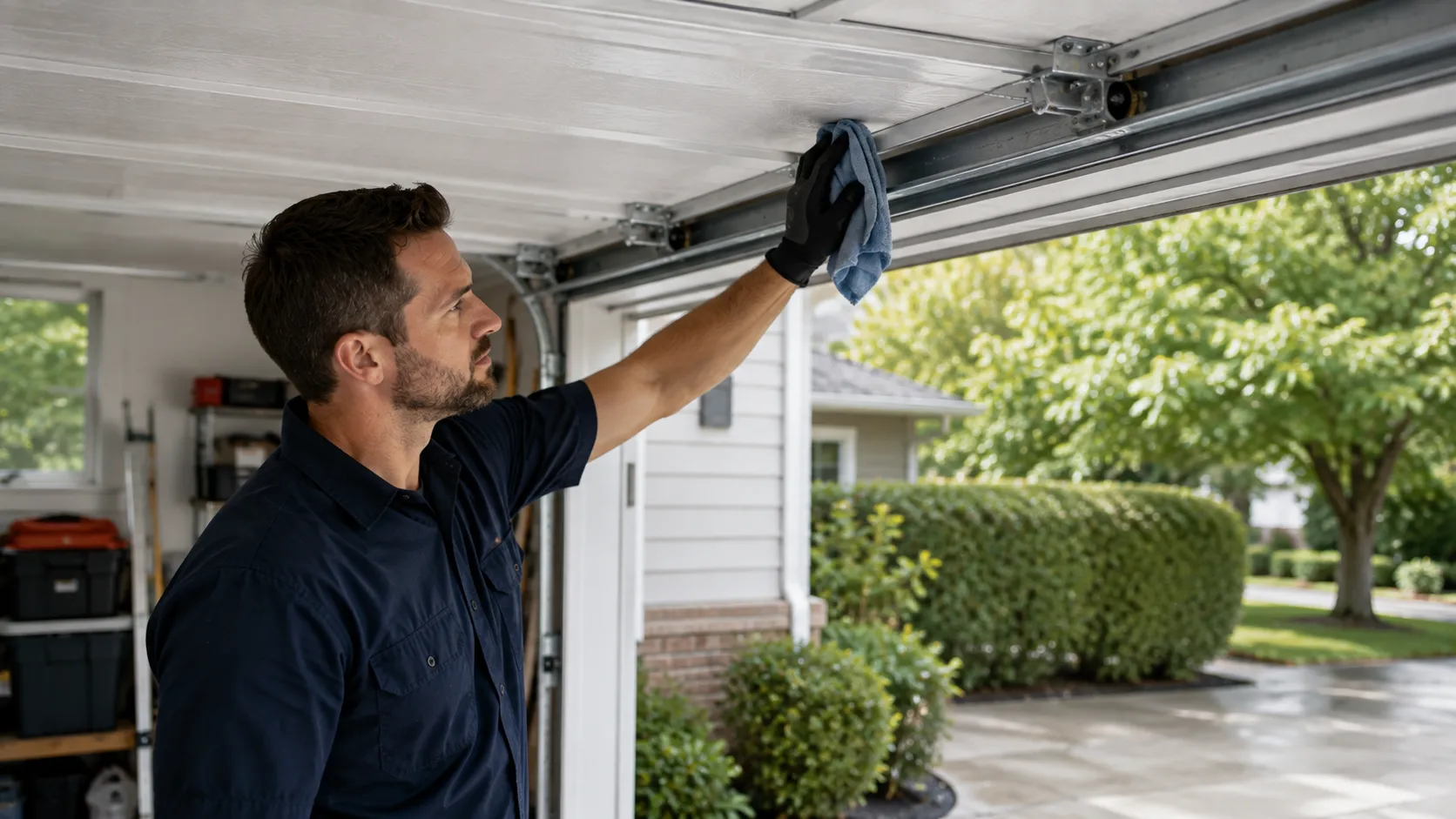
Replacing rollers, tightening loose hardware, lubricating the track, and swapping a worn weatherstrip at the bottom of the door are all reasonable DIY jobs if you're comfortable on a ladder. None of that involves stored tension, and none of it will hurt you if you get it wrong - it just won't work as well.
Torsion springs are a different category. They're wound under enough force to break a wrist or worse if the winding bar slips, and on a door from the mid-1970s the spring, drum, and cable are often original and more brittle than they look. We don't recommend this as a homeowner job, full stop - not because it's complicated to explain, but because the margin for error is small and the tools for doing it safely aren't things most garages have lying around.
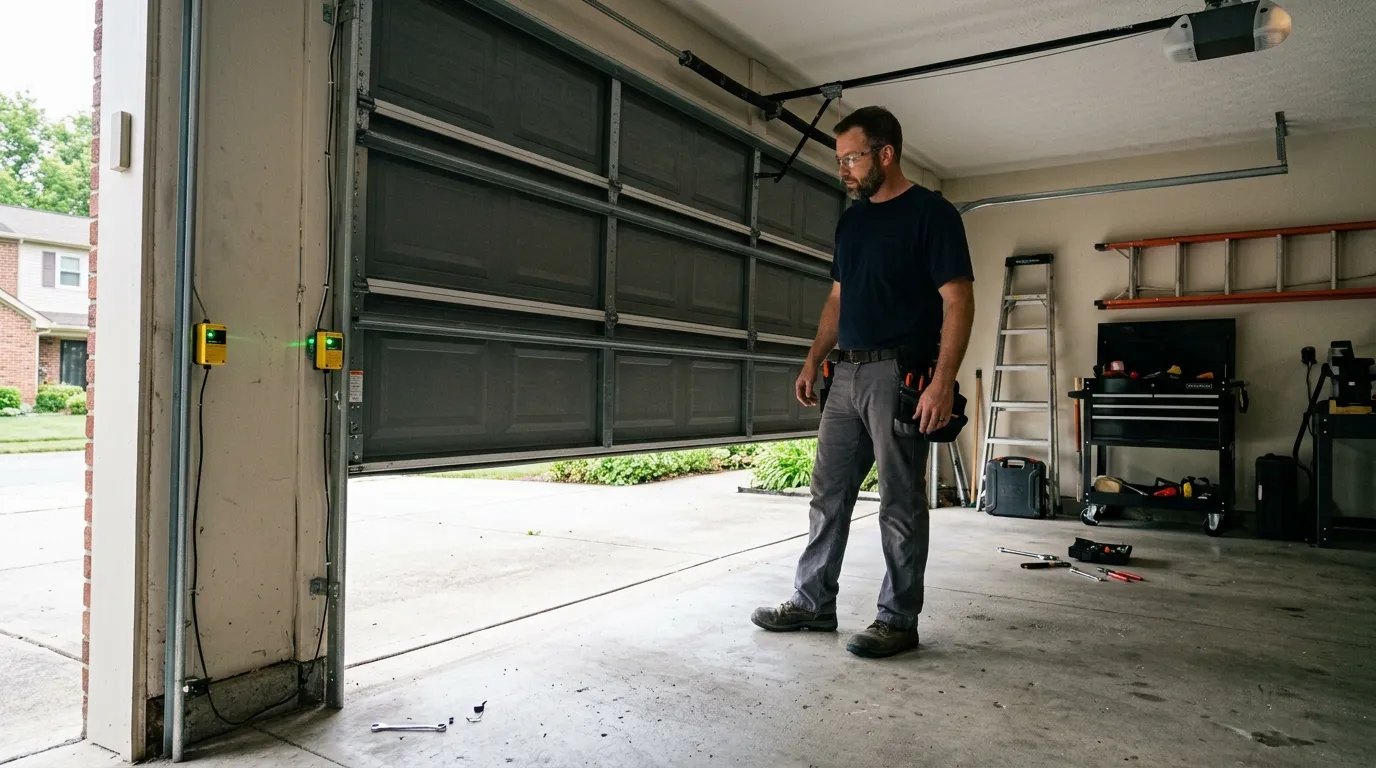
Opener sensor alignment is worth trying yourself first: two sensors, a few inches off the floor, facing each other. If the light on one is blinking instead of solid, that's usually the whole problem, and a five-minute adjustment fixes it. If that doesn't solve it, or the door won't move at all, that's a call, not a project.