Getting It Booked In
South Toms River sits about 4 miles from our Toms River shop, and most of the homes we get called to here went up around 1966 - tighter and older than the spread-out newer streets you find elsewhere in the service area. That matters for panel work because a lot of these garages still have the door that came with the house. Nobody swapped it out during a kitchen remodel or a siding job; it just sat there for close to 60 years doing its job until one panel finally gave out. When you call, tell us the approximate age of the house if you know it - that alone tells us whether we're looking at a steel sectional with hardware nobody stocks anymore, or something closer to current stock. We travel from Toms River for every job here, so there's no local branch to swing by; scheduling runs through the same dispatch as the rest of the area.
What You Are Seeing
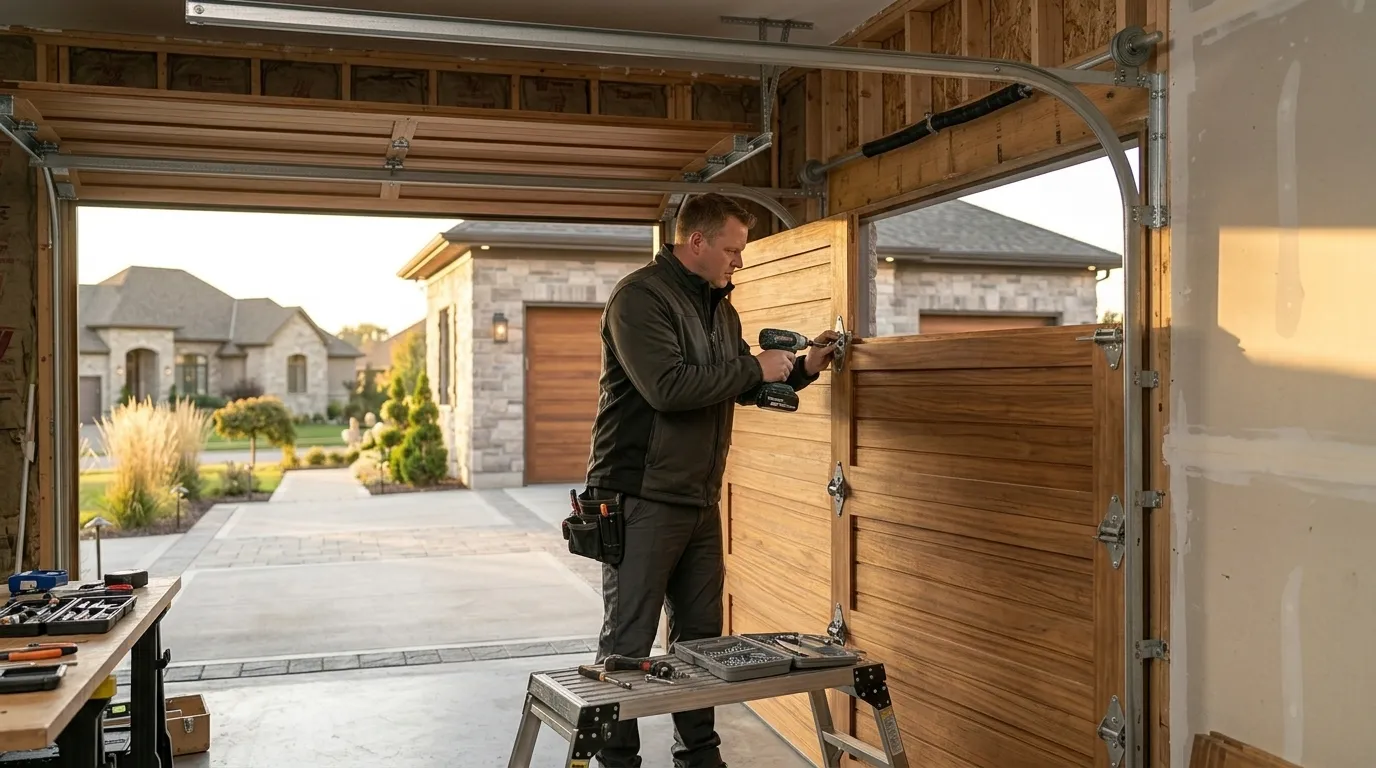
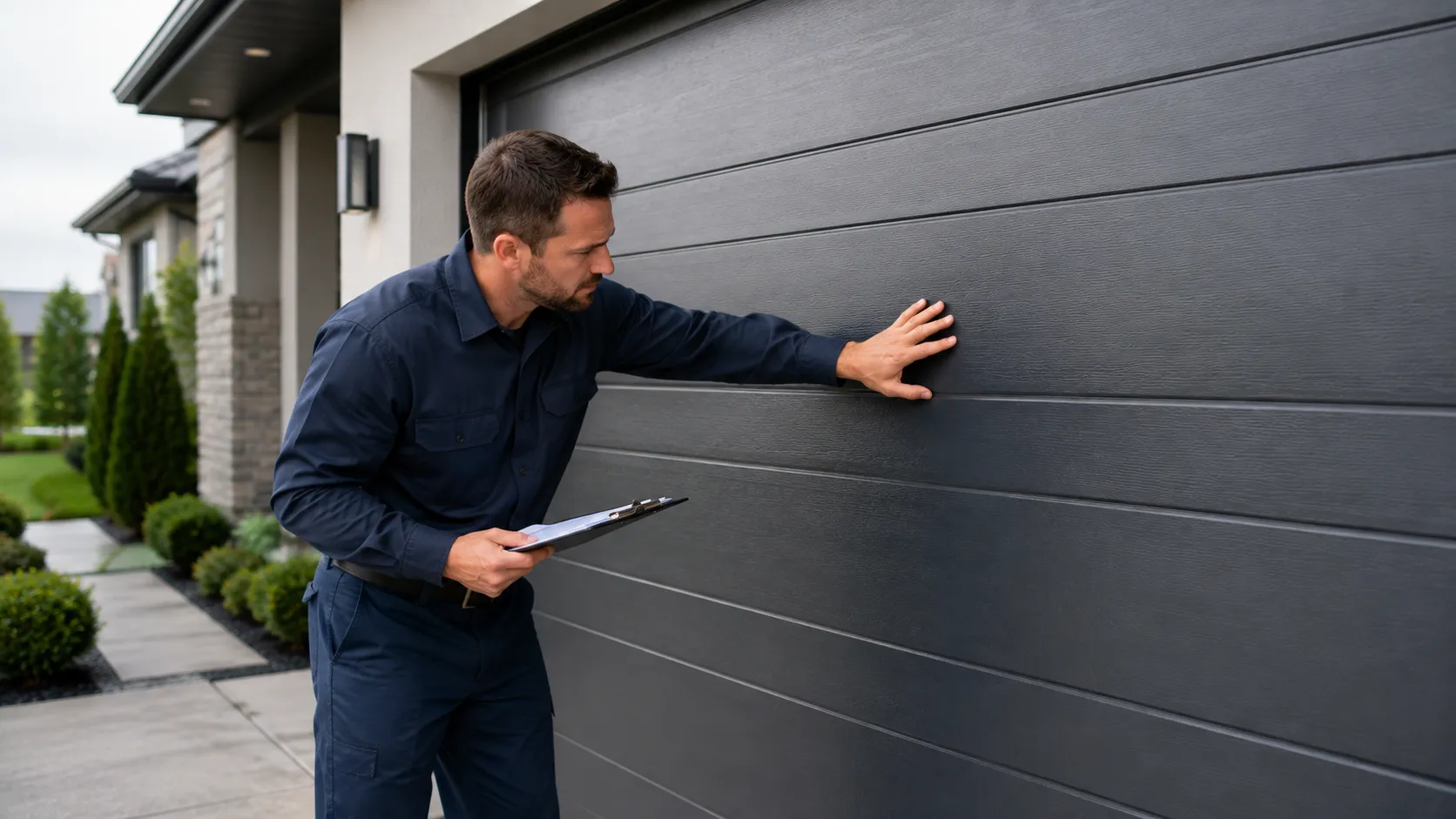
The usual call here is a single dented or caved-in panel, sometimes with the seam pulling away from the panel next to it. On older steel doors from the 1960s, you'll also see surface rust starting at the bottom panel edge where water sits after rain, since the galvanizing on doors from that era wasn't what it is now. If a panel is cracked rather than dented, check whether the door still opens smoothly - a cracked panel near a hinge point can bind the track, and that's a bigger job than swapping the panel alone.
What Causes It Around Here
With housing in South Toms River mostly dating to the mid-1960s, a good share of these doors are still running the original torsion spring and drum hardware from the build year - hardware that was never designed to be serviced this many decades in. When a panel finally fails, it's often because the door's alignment has drifted slightly over the years and something - a car, a stuck roller, a gust during a storm - caught it off-center instead of square. New Jersey's cold-and-severe climate band means that steel these doors are made from goes through repeated freeze-thaw cycling every winter, and older galvanized panels handle that worse than newer coated stock. A neighborhood built in a tight window, like this one, tends to have several houses hit the same failure point around the same years.
Where This Job Goes Sideways
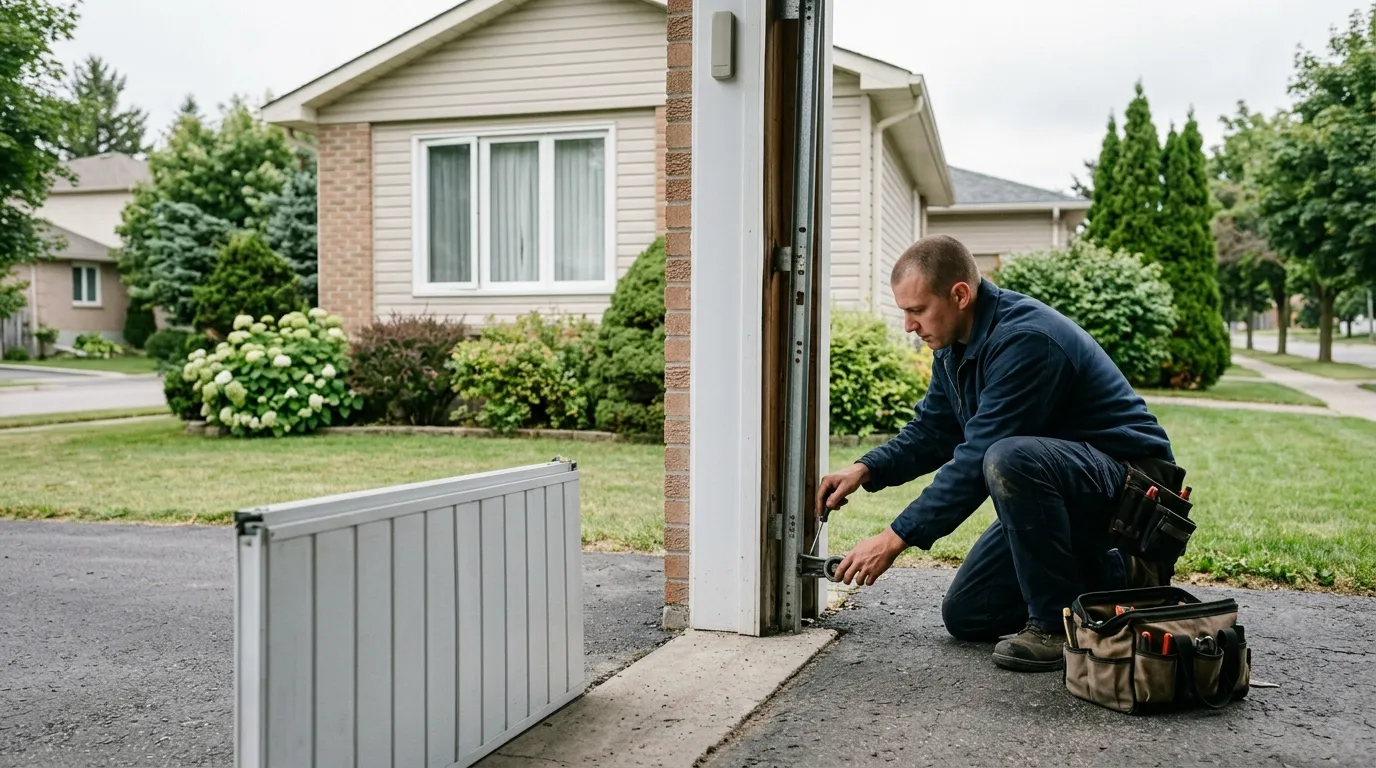
The job gets complicated when the dent isn't just cosmetic - if the impact bent the track or knocked the roller stem out of the channel, replacing the panel alone won't fix why the door isn't running true. It also goes sideways when a homeowner wants an exact color and texture match on a door that's faded unevenly for 50-plus years; new steel simply won't age to match old steel, and we'll say so rather than promise otherwise. And if the original panel width doesn't match anything currently manufactured, sourcing becomes the real cost driver, not labor.