Getting It Booked In
South Toms River sits about 4 miles from our shop in Toms River, and that's the drive we make when a call comes in from here. We don't have a branch or a drop box in South Toms River - we run the truck out from Toms River, same as we do for the rest of the towns in this stretch of Ocean County. When you call, tell us it's a stuck door, a snapped cable, or a door that won't close, and tell us the age of the house if you know it. That one detail changes which parts we bring. A door that won't budge on a house built in the 1960s is very often a different fault than the same symptom on a house built in the 1990s, and knowing which one we're driving to means less time standing in your driveway while we go back to the truck for the right torsion bar or the right length of cable.
We ask about the make of the opener too, if you can see it. Chamberlain, Genie, LiftMaster - the logic boards differ enough that having the right control board on the truck the first time beats a second trip.
What You Are Seeing
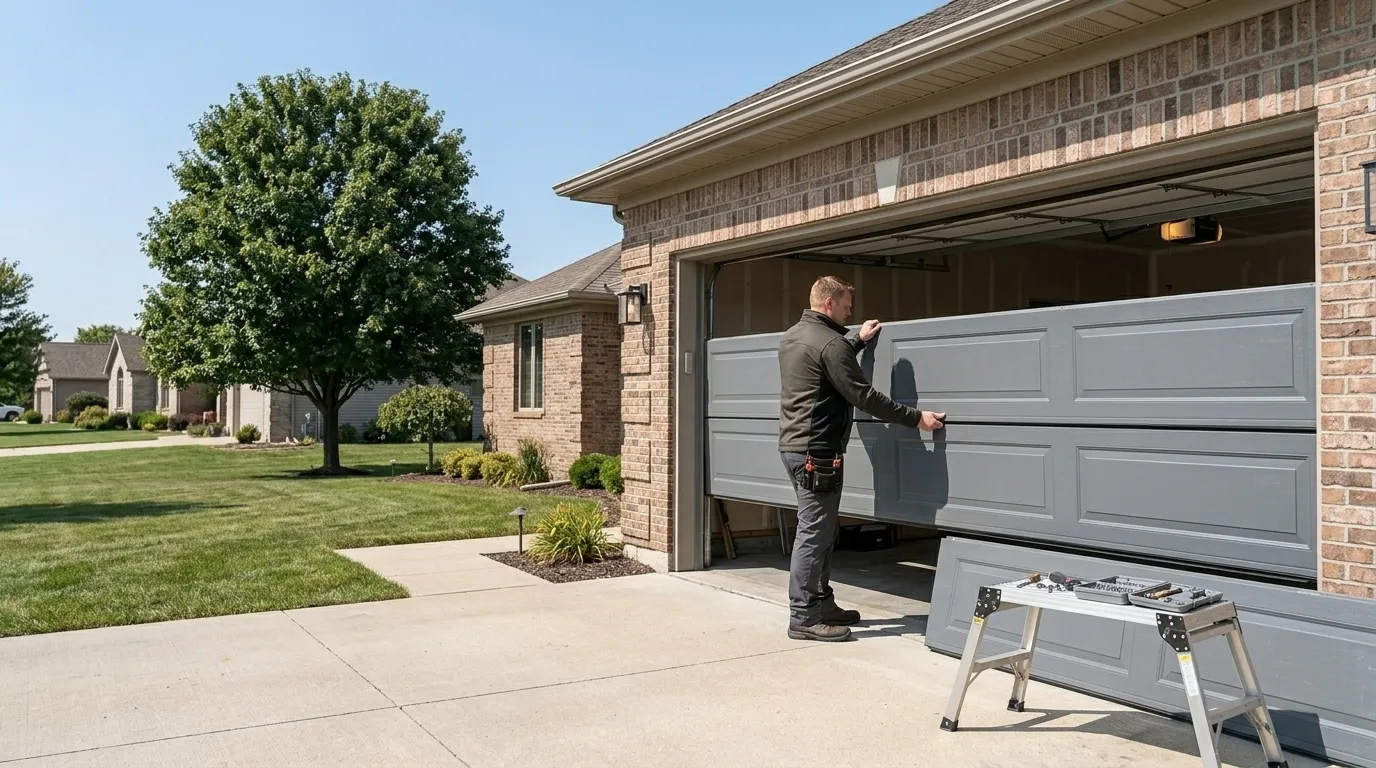
The call we get most from this part of the county is a door that's stuck halfway, either up or down, with a loud bang right before it stopped moving - that's a torsion spring letting go. Second most common is a door that opens fine on the opener but the opener strains and clicks, which usually means a spring has weakened rather than fully snapped, and the opener's been fighting the door's full weight for weeks before it gave up.
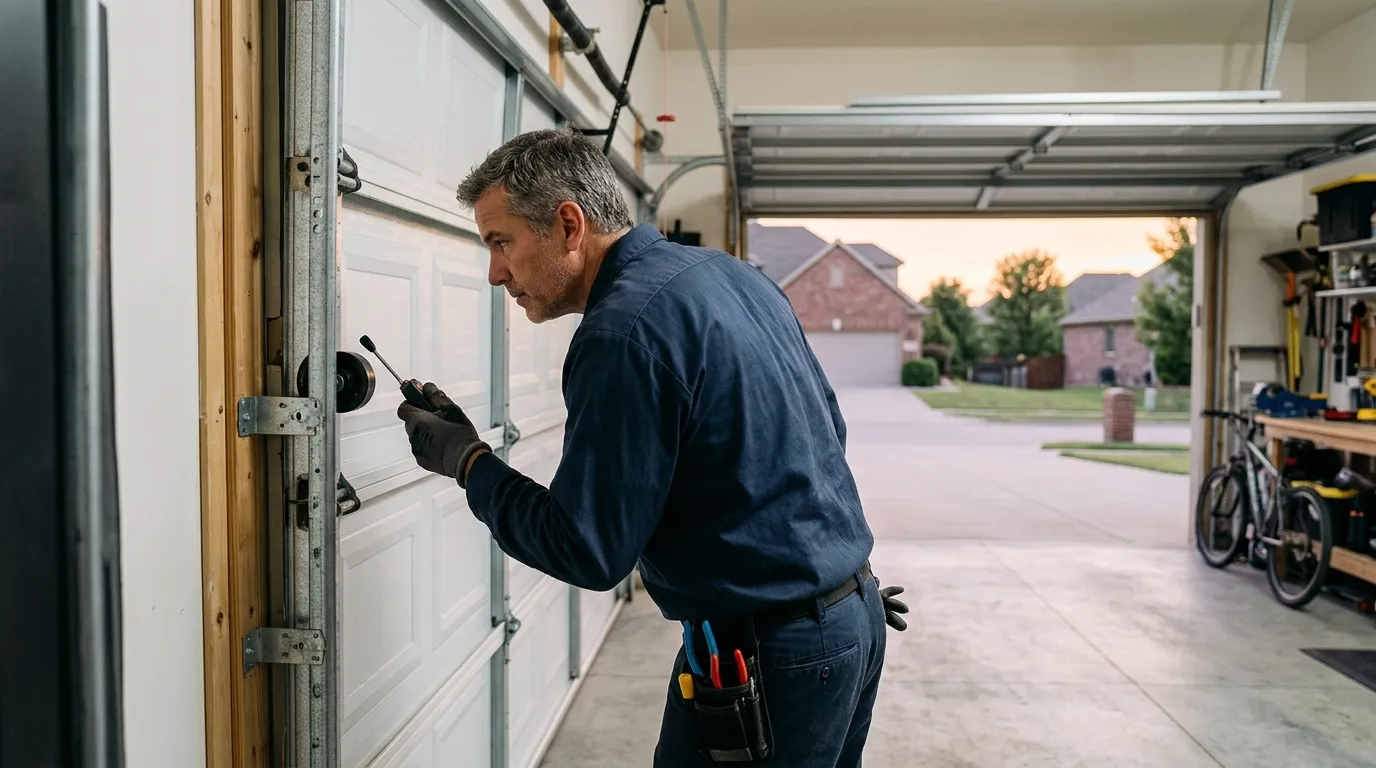
A door that drifts down on its own after you close it, or won't stay up when you disconnect the opener and lift by hand, points to the same spring problem before it becomes a full break. If you're hearing a scrape or a grind on the way up, that's usually a roller in a track section that's gone out of alignment, not the spring at all - worth mentioning on the call so we bring the right tools.
What Causes It Around Here
With 1,066 households in South Toms River and a housing stock that leans older than the wider service area's, the springs and cables we're replacing here have often been on the door since it was built or since a mid-life replacement decades back. Original hardware from a 1966 build has had close to sixty years of open-close cycles, and torsion springs are rated by cycle count, not by calendar year - a spring rated for 10,000 cycles doesn't care that it's 2024, it cares that it's been wound and unwound ten thousand times.
The climate band this area sits in is classed as cold and severe, and a garage that isn't heated sees the steel in springs and cables contract in winter, which is when a spring near the end of its life is most likely to actually let go. We see more emergency calls in the cold months for that reason, not because the door is used more, but because cold steel is less forgiving of a spring that was already fatigued.
Where This Job Goes Sideways
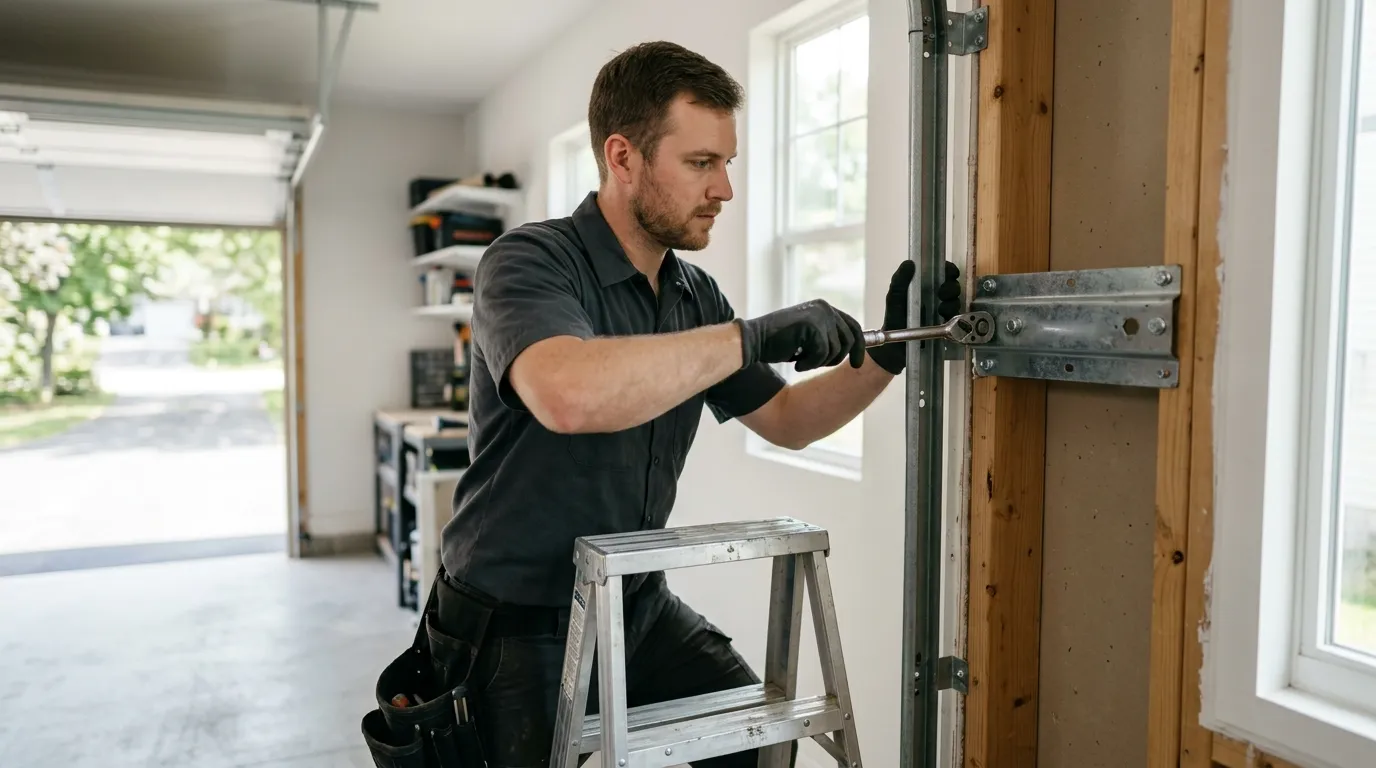
The job goes long when the spring failure has been ignored for weeks and the door's been forced open and closed by hand or by an opener straining against dead weight - that usually means the cables and drums have taken damage too, so what looked like a one-part fix turns into three. It also goes sideways when a homeowner has already had someone attempt a spring swap with the wrong size spring; mismatched springs on an older 1960s-era header bracket can put uneven load on the bracket itself, and we have to fix the bracket before we can trust a new spring to it.
Honest limitation: if the opener's motor housing or main gear is stripped rather than just the spring or cable, we're not rebuilding that unit on site - a replacement opener is the straight answer there, and we'll tell you that up front instead of charging you for a repair that won't hold.