Getting It Booked In
South Toms River isn't where the trucks are parked - we come out of Toms River, about 4 miles up the road, so there's no separate branch or drop-off point here, just a call and a truck heading over. When you book, tell us the year the house was built if you know it. A door installed when this block went up in the mid-1960s is a different animal than one put in during a 2005 remodel, and knowing which one you've got before the truck rolls saves a second trip for the right torsion spring or the right size of track bracket. We don't quote a same-day promise over the phone because we haven't seen the door yet - what we can tell you is which parts are common for houses of this age around here, and whether that's likely your problem before anyone shows up. If your opener is newer than the door itself, which happens a lot in this stretch of the county, say that too. It changes what we bring.
What You Are Seeing
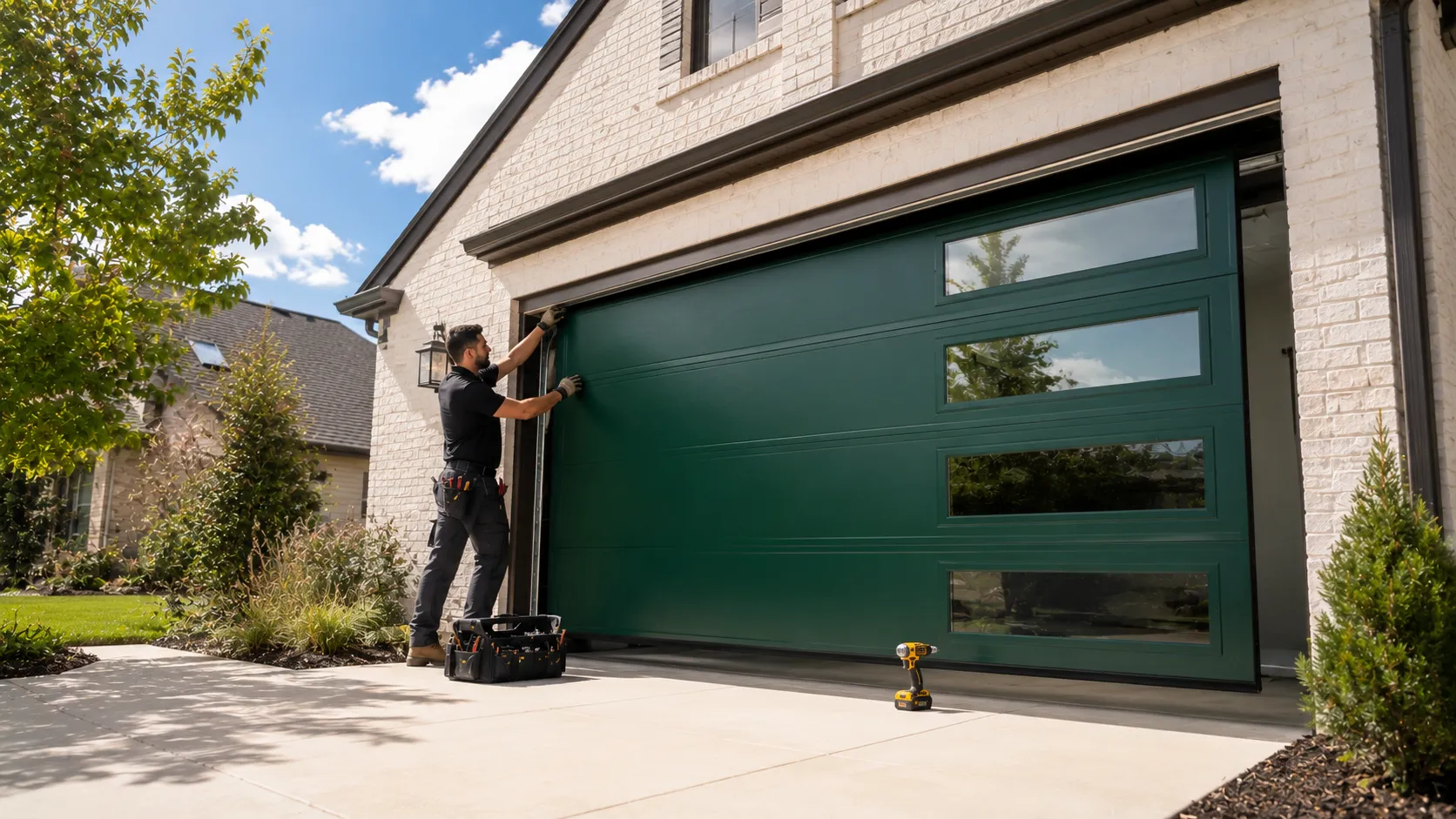
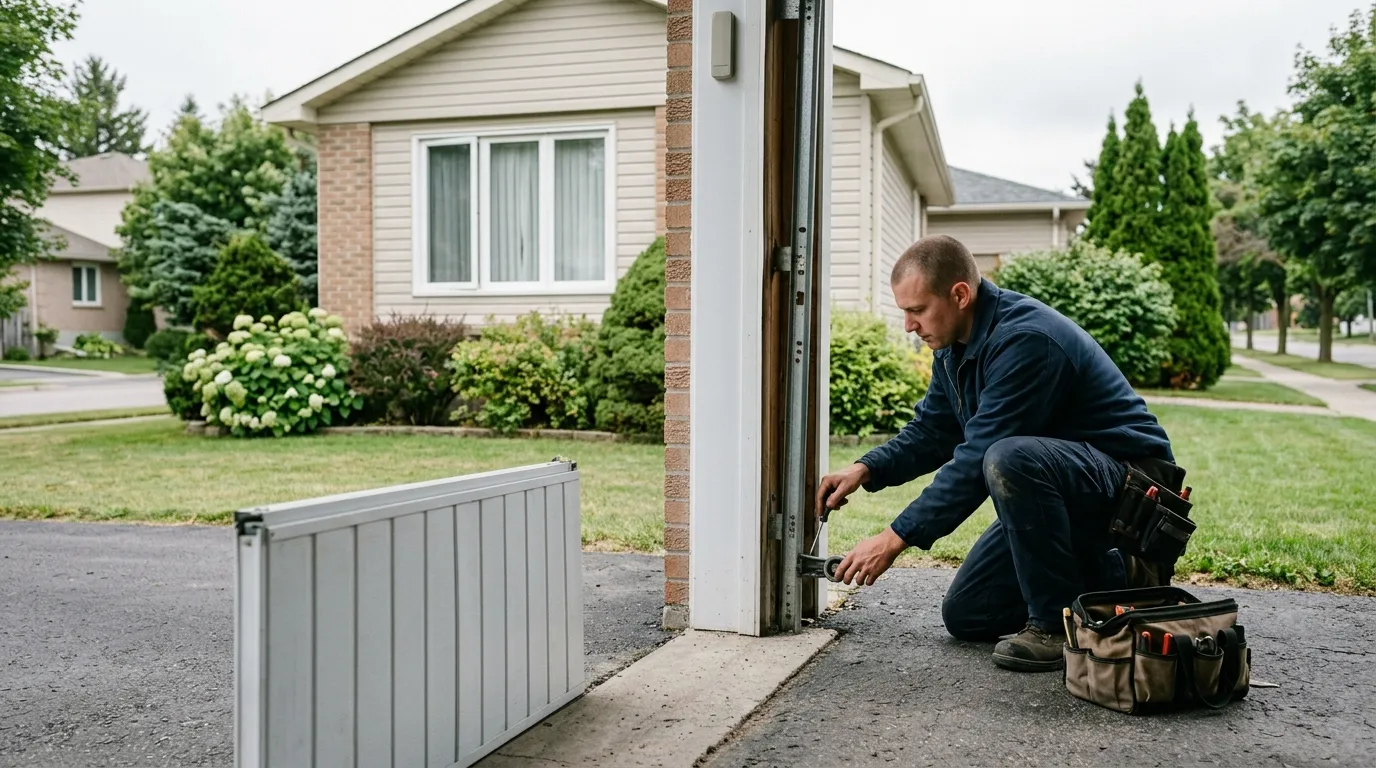
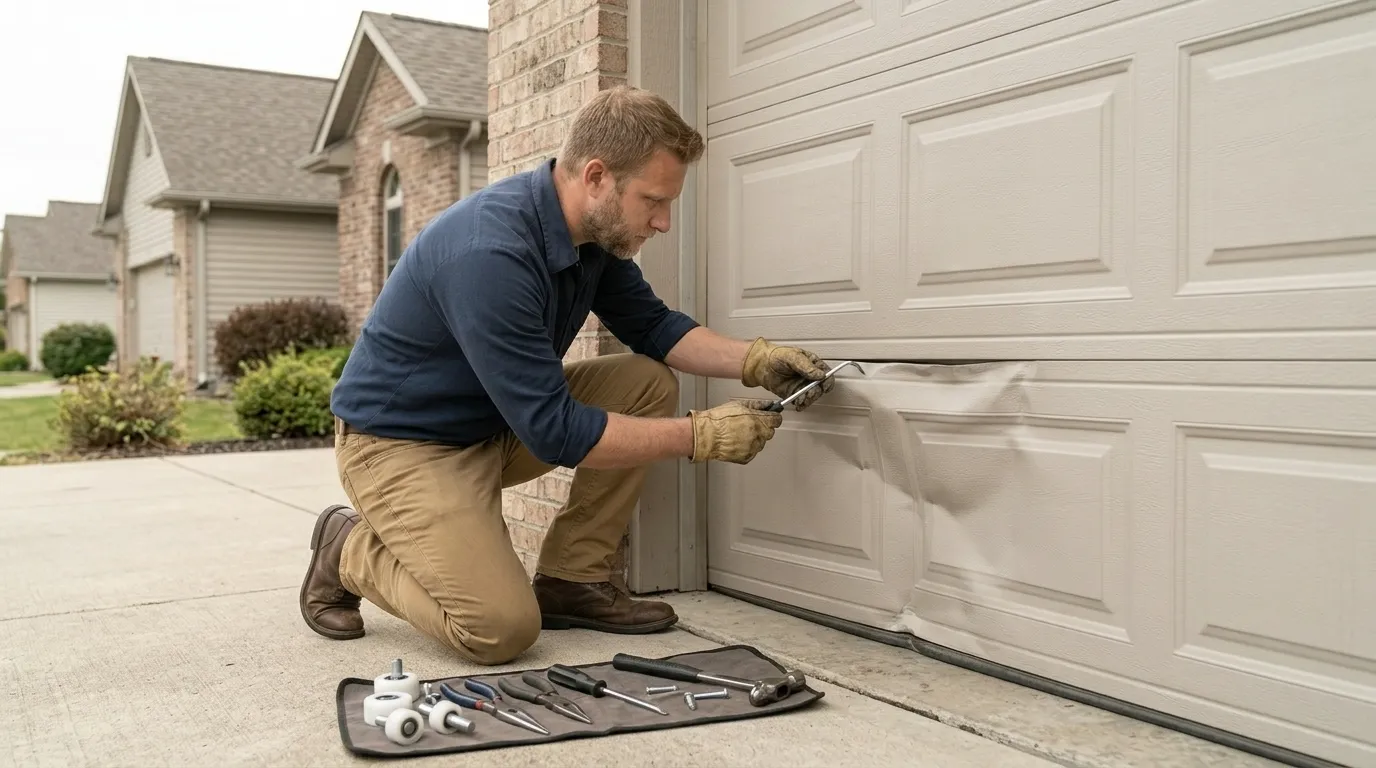
The door that won't stay up, or drops the last foot on its own, is almost always a spring that's lost tension or snapped clean - on a house from the 1960s wave, that spring has usually done thirty-plus years past a normal service life without anyone touching it. A door that shudders and bangs partway through its travel points at a bent track or a roller that's worn oval instead of round, which is common where the original galvanized track has taken decades of coastal air. If the opener runs but the door doesn't move, or moves an inch and stops, that's the drive mechanism disconnecting from a door that's grown too heavy to lift - often because the spring already failed and nobody noticed until the opener started straining. Grinding on the way up usually means a roller has seized in its bracket rather than turning, and it will keep chewing at the track edge until it's replaced. None of these are exotic; they're what thirty to sixty year old hardware does.
What Causes It Around Here
South Toms River's housing sits at a median build year of 1966, right in the middle of the 1960s-70s construction wave that shaped most of this part of the county, and that era's hardware simply wasn't built to last past its warranty decades. The bigger factor is the climate band this whole area falls into - classed cold and severe - which puts steel springs and track through a harder freeze-thaw cycle each winter than a milder region would see, and that cycle is what fatigues a torsion spring years before it looks worn from the outside. Add in the number of owner-occupied houses across this service area, over 84,000 of them, mostly from the same construction era, and you get a predictable pattern: original hardware failing in roughly the same window across whole streets, not randomly. Median household income here runs to $101,466, a bit above the wider area's $97,037, which we mention only because it tends to mean owners replace a failed spring system properly rather than patch it and wait for the next failure.
Where This Job Goes Sideways
The honest limitation: if the panels on an original 1960s-era door have started to rust through at the bottom section, or the steel has separated from the frame in more than one spot, we'll tell you replacement is the better call rather than sinking a new spring and new rollers into a door that's structurally on its way out. Repairing a spring on a door whose panels won't hold their shape just moves the next failure a few months down the road, and you pay for it twice. It also goes sideways when a track has been bent from an impact rather than worn from age - that's a different repair, sometimes a different price, and we won't know which one it is until the door's open in front of us. And if the opener has been replaced more recently than the door itself, which is common on these older houses, matching the new opener's force settings to an old, heavier door is its own adjustment - skip that step and you're back to a door that reverses on its own or won't fully close.