What It Costs
We don't post a flat number here because panel replacement swings hard on what's actually on the house. A single dented section on a 1990s-built door in Holiday Heights is one job; matching a full run of panels on an obsolete steel profile is another. What we can tell you is that homes in this pocket, with a median build year around 1990, mostly carry factory steel sections in widths that are getting harder to source new, which pushes some jobs toward a full door swap instead of a patch. We'll price it after we see the door and know whether we're matching an existing panel or replacing the run. If the section is one of a kind and the manufacturer's stopped making it, we'll say so instead of quoting a number we can't hit.
Where This Job Goes Sideways
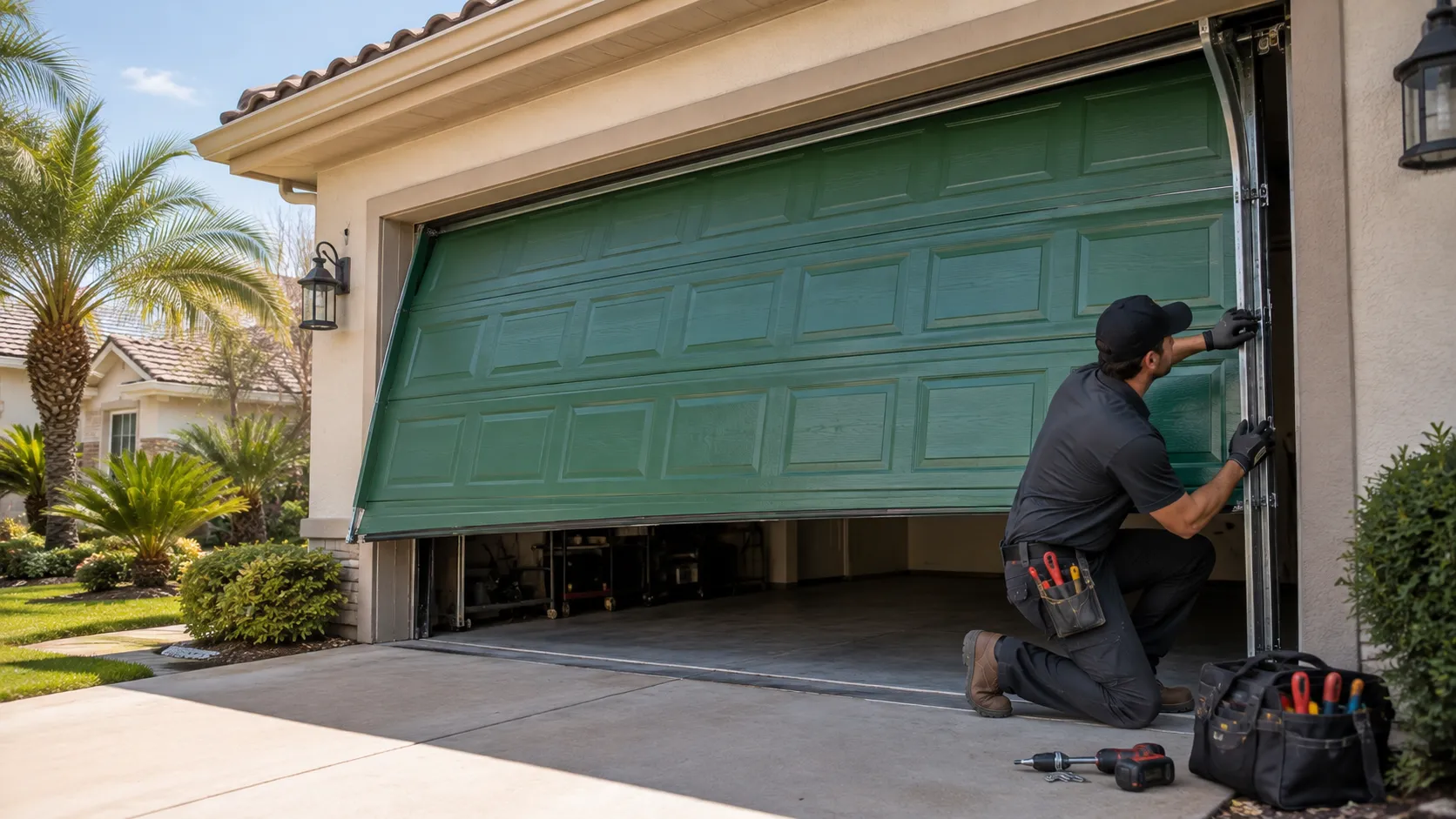
The trouble starts when a homeowner wants to replace one bent panel on a door that's original to a 1990-built house. Steel panel profiles from that period aren't standard across the industry the way current lines are, and a section that doesn't match in rib spacing or color will sit on the door looking like exactly what it is: a patch. We've seen jobs where the only path to a clean match is buying out a discontinued run, if one exists, or accepting that the fix will be visible. The other place it goes sideways is when a dent is written off as cosmetic and it's actually bent the track alignment too. Swap the panel without checking the track and you've got a door that closes crooked inside a week. We check both before we quote either.
Parts We Carry
We stock the panel hardware that fails most on doors from this build era: hinges, end brackets, and roller sets sized for the steel gauge common to 1990s residential doors. What we don't keep on the truck is a matched replacement panel for every discontinued profile out there, because there are too many of them and most manufacturers have moved on to different tooling since then. When we can source the exact section, we order it in rather than pretend we carry it. When we can't, we tell you the two honest options: a close-but-not-identical panel, or a full door. We'd rather lose a sale than sell you a mismatch and let you find out on the driveway.
What Causes It Around Here
Two things drive most of the panel calls we get out of Holiday Heights. First is age: a door installed when the house went up, around 1990, is now over three decades old, and steel from that period corrodes at seams and dents more permanently than newer coated stock. Second is the cold-severe winters this part of New Jersey gets, which stress dented or rusted steel through repeated freeze and thaw far more than a one-time impact does. We drive out from Toms River, about 5 miles away, for these calls, and the pattern holds across the smaller communities in that stretch: houses built in the same window tend to fail the same way, at the same age, for the same reason.