What It Costs
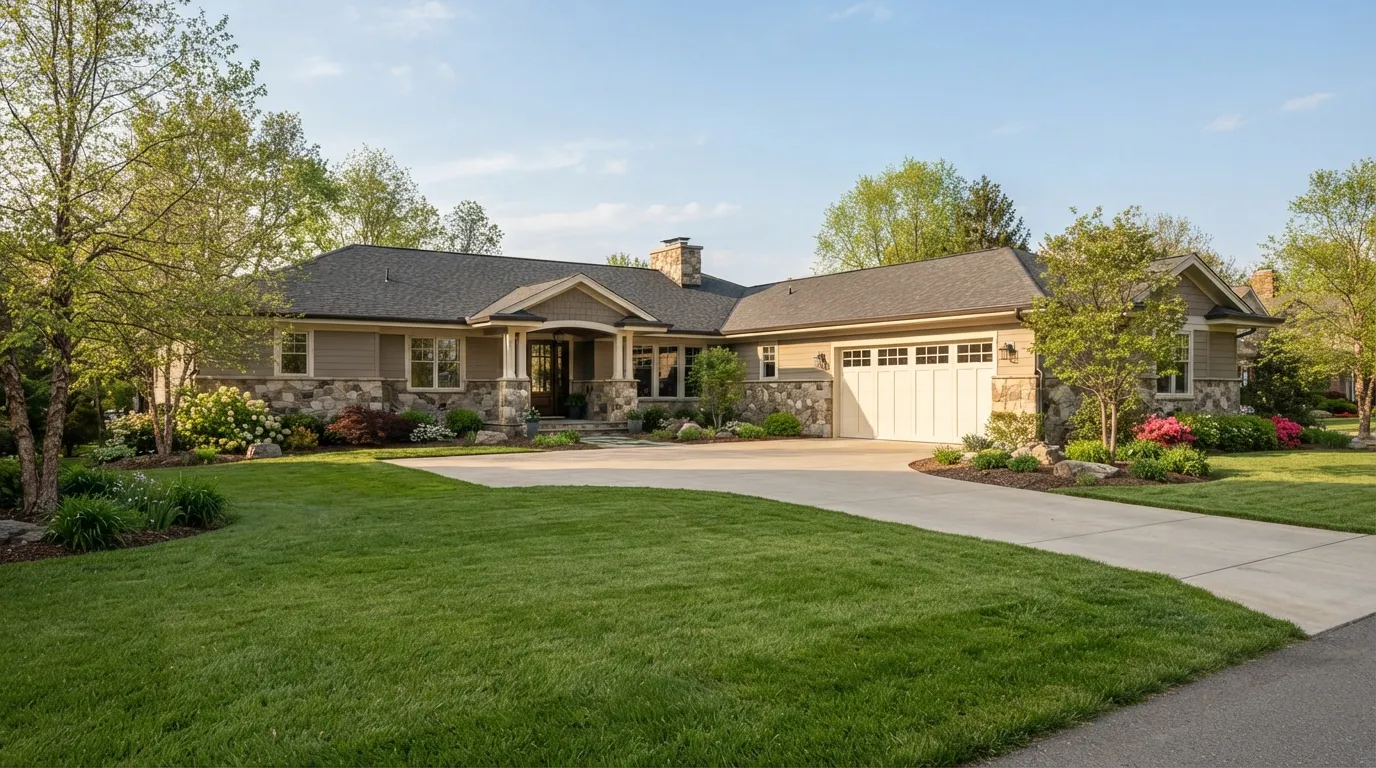
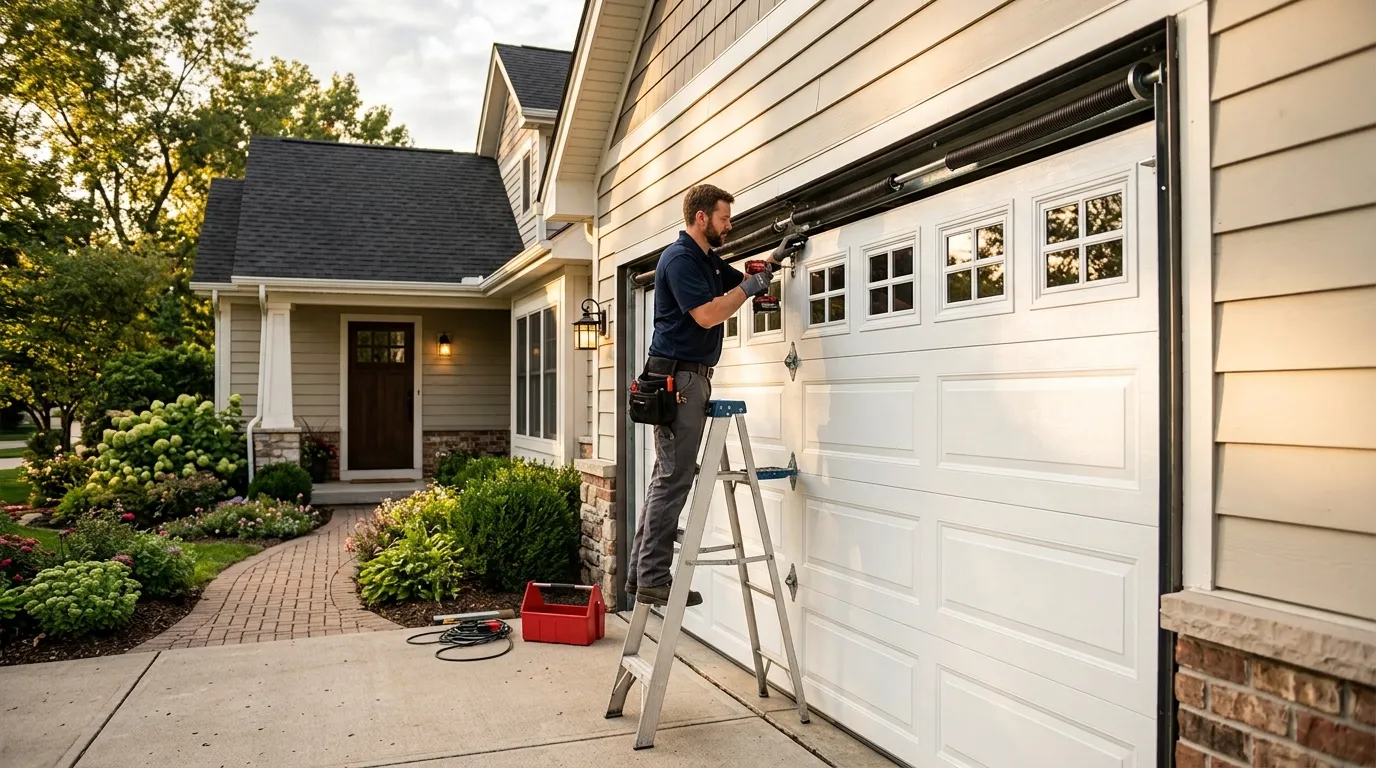
We don't quote a price without seeing the door, and we won't pretend Holiday Heights is any different from the rest of the area we drive to - every job here starts with a truck coming from Toms River, five miles up the road. What we can tell you is what drives the number: a broken torsion spring on a standard 1990s-era steel sectional door is a different job than a bent track or a burnt-out opener circuit board, and the parts stock we carry off the truck covers most of what these doors need without a special order. Homes here were mostly built around 1990, which means single-layer or lightly insulated steel doors on standard torsion hardware - not the older wood or one-piece doors you'd find in neighborhoods built decades earlier. That keeps most repairs in the ordinary range because the parts are still common, not obsolete. What pushes a job higher is usually the opener, not the door itself - if the logic board is dead alongside a spring failure, you're paying for two repairs instead of one. We'll tell you straight if a fix isn't worth it against a full door swap before we start, not after.
Where This Job Goes Sideways
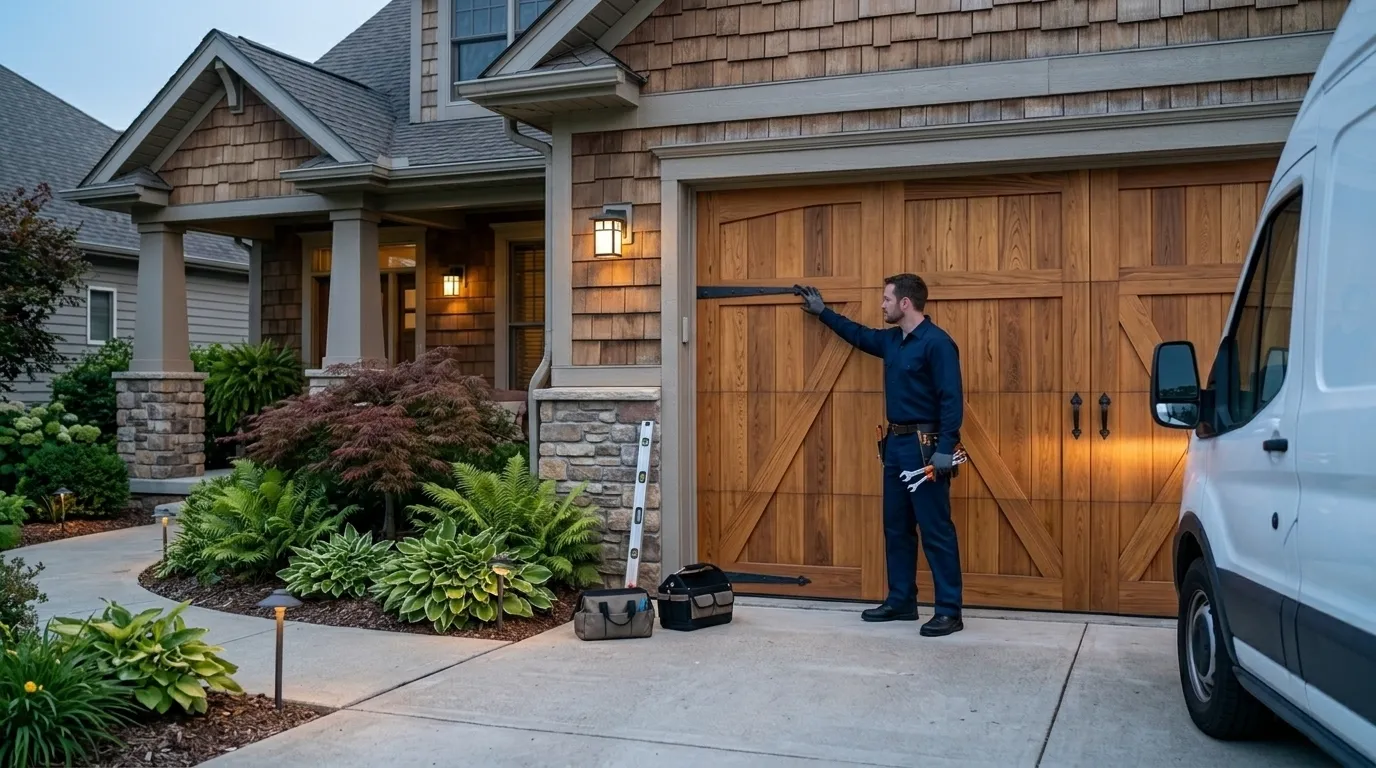
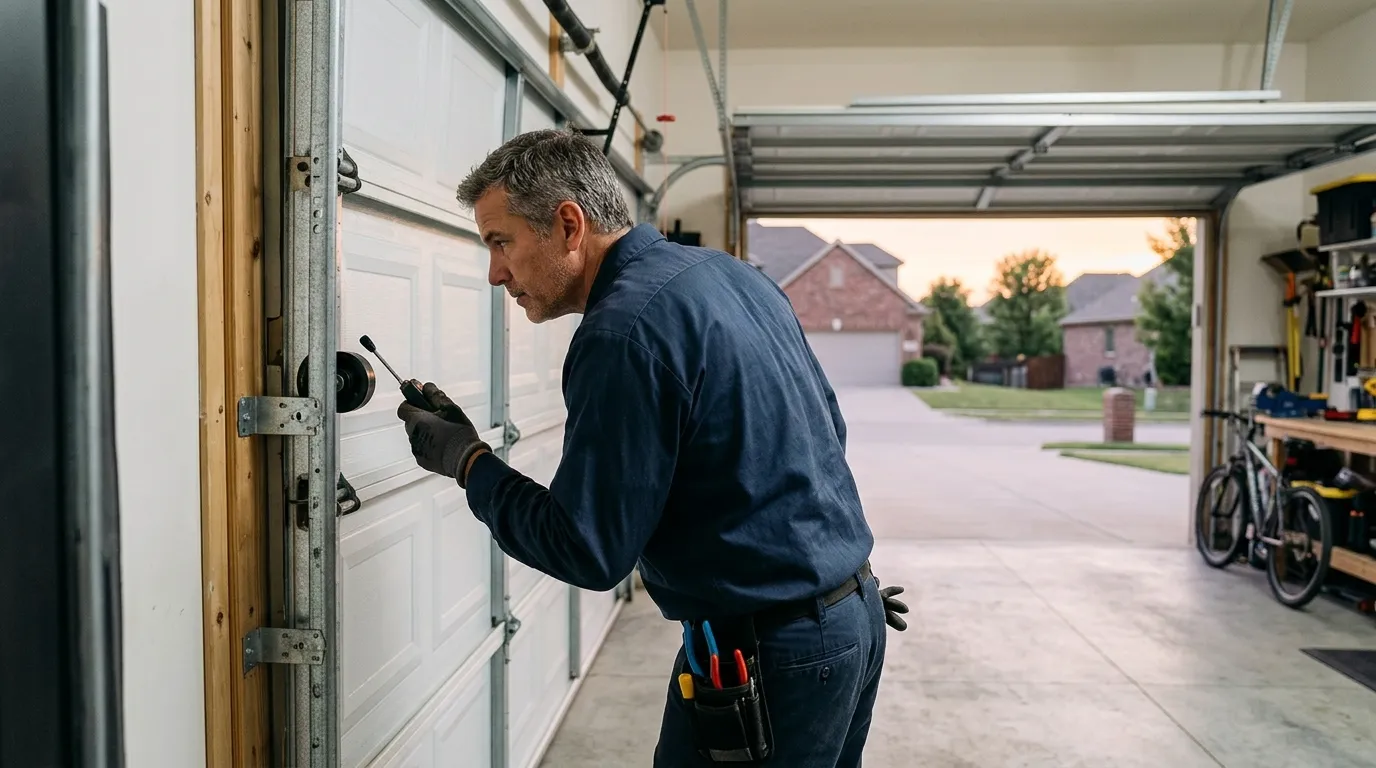
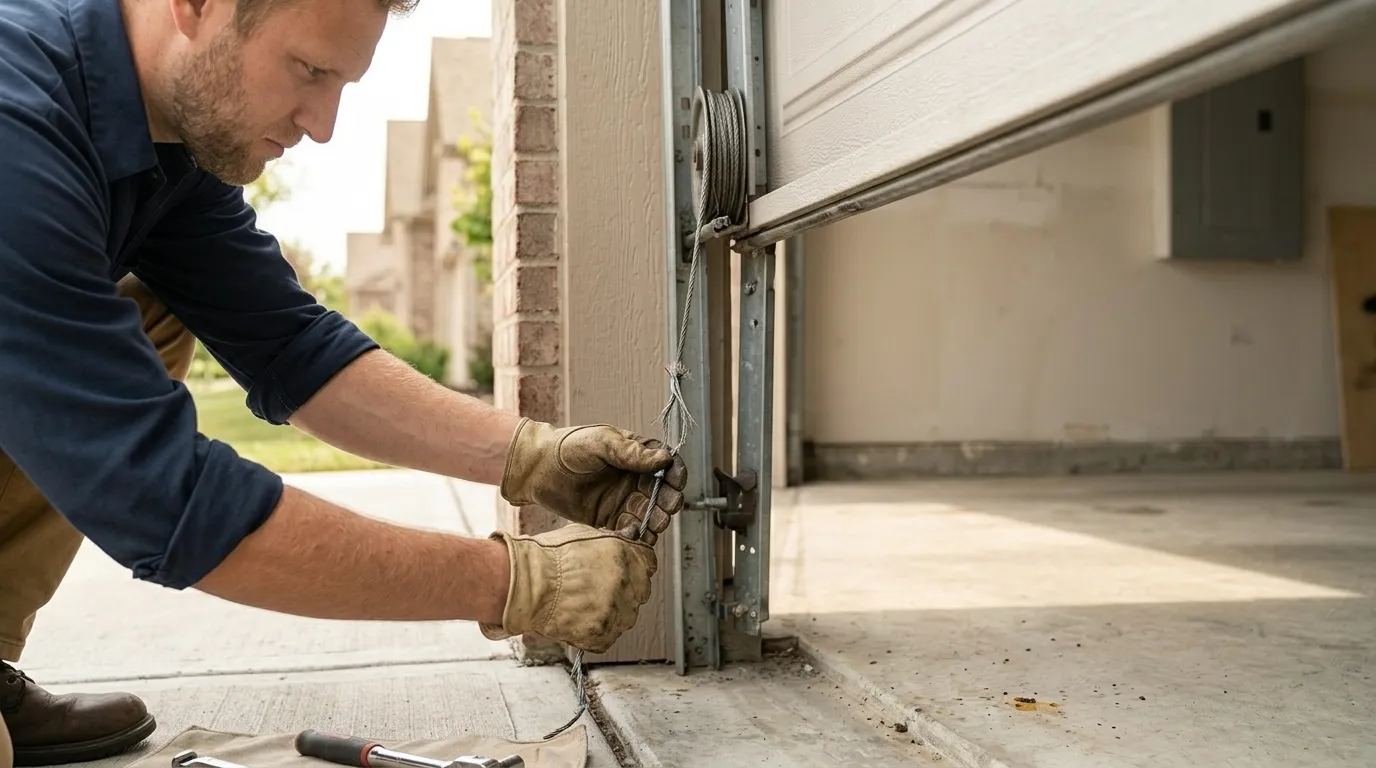
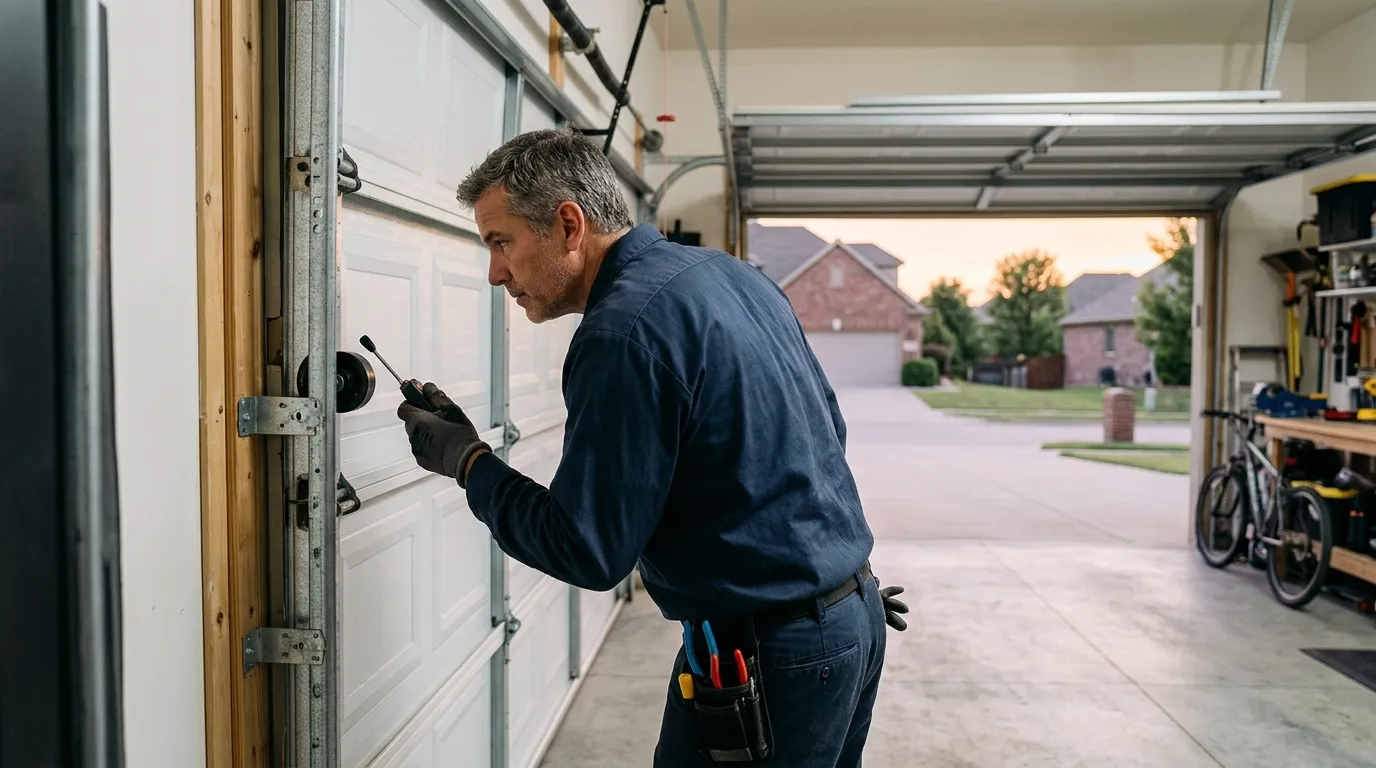
The mistake we see most in this pocket of the area is someone trying to save the service call by loosening the opener's force setting when a spring goes, instead of replacing the spring. The opener isn't built to lift a door with a dead spring - do that for a few weeks and you'll burn out the motor on top of the spring you still need to replace. Another one: cables that look fine but are rusted through inside the wind, invisible until one snaps under load. On a standard torsion setup like most doors here run, a snapped cable with the door up can drop a 150-plus pound door fast. We check both springs and cables together on any service call, not just the one that's obviously making noise, because on doors this age the second failure is usually close behind the first.
Parts We Carry
For torsion springs, sectional steel panels, standard rollers, and cables sized for a typical 1990s-era residential door, we stock what covers the bulk of what Holiday Heights needs - we're not special-ordering common hardware for a door built to standard dimensions. Where we do have to order in is anything custom: an odd-width opening, a insulated panel upgrade if someone's retrofitting for the cold, or an opener logic board tied to a specific brand that's gone out of production. We'll tell you upfront if a part's on backorder rather than quote a same-day fix we can't deliver. With winters here running genuinely cold, we also carry weather seal and bottom astragal stock, since a gap under a 30-year-old door lets a lot of cold air into an attached garage.
What Causes It Around Here
The area's cold winters are hard on garage door hardware generally, but the specific pattern in Holiday Heights ties back to the housing here - a smaller, newer pocket than most of the wider service area, with about 1,279 households (well under the roughly 135,000 across the full territory, F6) built mostly in one push around 1990 rather than spread across decades. That means a lot of these doors are hitting spring-failure age within a similar few-year window, not staggered like older mixed-era neighborhoods. Household income here runs lower than the area's overall median of $97,037, which we mention only because it's often the reason a spring gets pushed past its failure point instead of replaced at the first warning creak - deferred maintenance shows up as a bigger repair bill later, not a smaller one.