What Causes It Around Here
Holiday City-Berkeley is a smaller pocket than most of what we cover from Toms River - about 8,349 households, tight enough that the housing went up in a narrow window rather than getting built out over decades. The median home here dates to 1978, which puts most garages on original or first-replacement steel doors and openers that have already been swapped once or are due. That's a different repair mix than the newer subdivisions closer to the shore, where doors are lighter-gauge and openers are newer with circuit boards instead of relays. Around here we see torsion springs that have simply outlived their rated cycle count, and openers from the chain-drive era with worn gears or a burnt-out capacitor.
The cold-climate rating for this whole service area matters more on a smaller, older housing stock like this one - steel contracts in winter, and a spring that's already fatigued from forty-plus years of cycling is the one that snaps on the first hard freeze, not the newer ones a few miles closer to the water. We also see more single-owner homes here, which means original hardware nobody's touched, for better and for worse.
What the Fix Involves
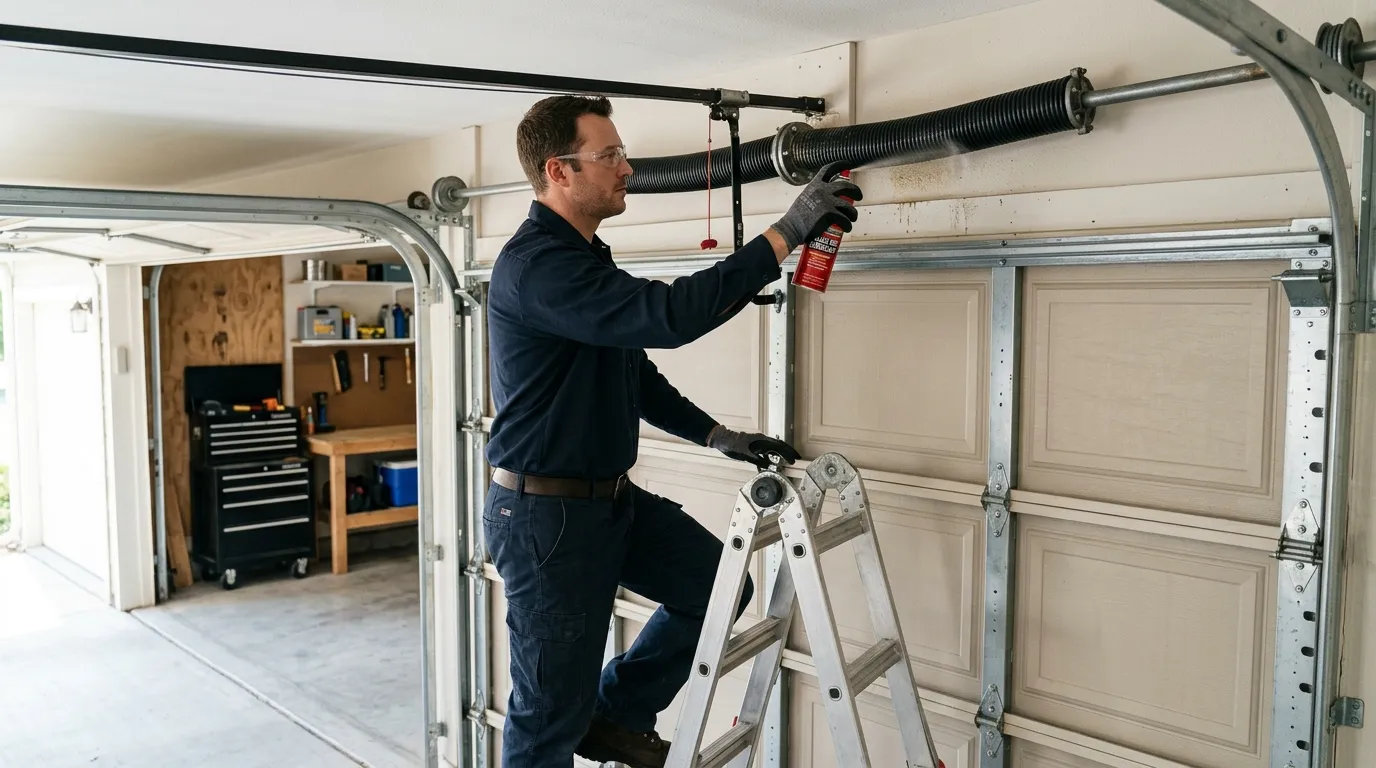
Torsion spring replacement on a door this age means matching the wire gauge and wind direction to what's already on the shaft, not just grabbing a stock spring off the truck. We measure the door weight and drum size before winding anything - get that wrong and the door either won't hold its position or slams down when the opener releases it.
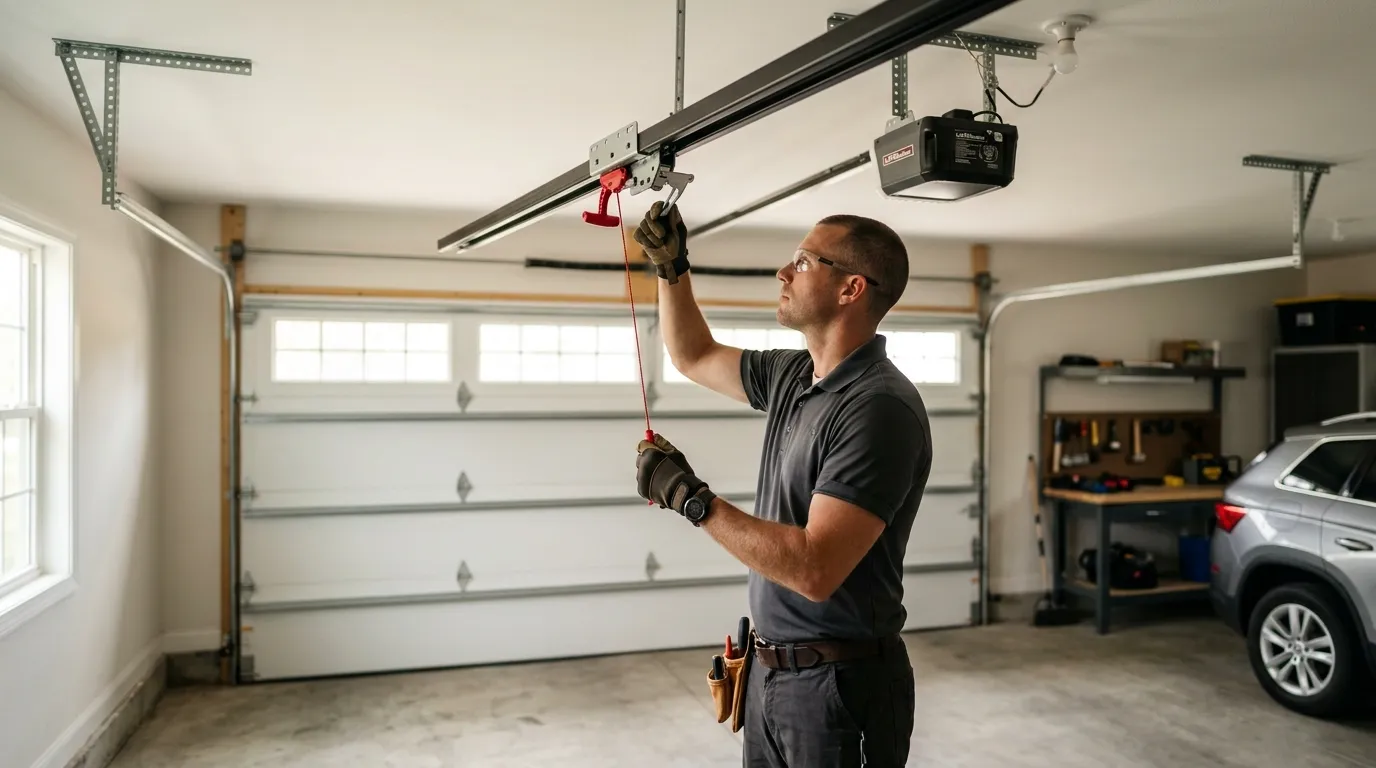
For openers, we typically move a household in this bracket from an aging chain-drive unit to a comparable chain or belt-drive replacement, matched to the door's actual weight rather than oversold on horsepower. We don't push a smart-opener upgrade on every call - if the existing rail and mounting are sound, we reuse them and just swap the motor head, which keeps the bill down.
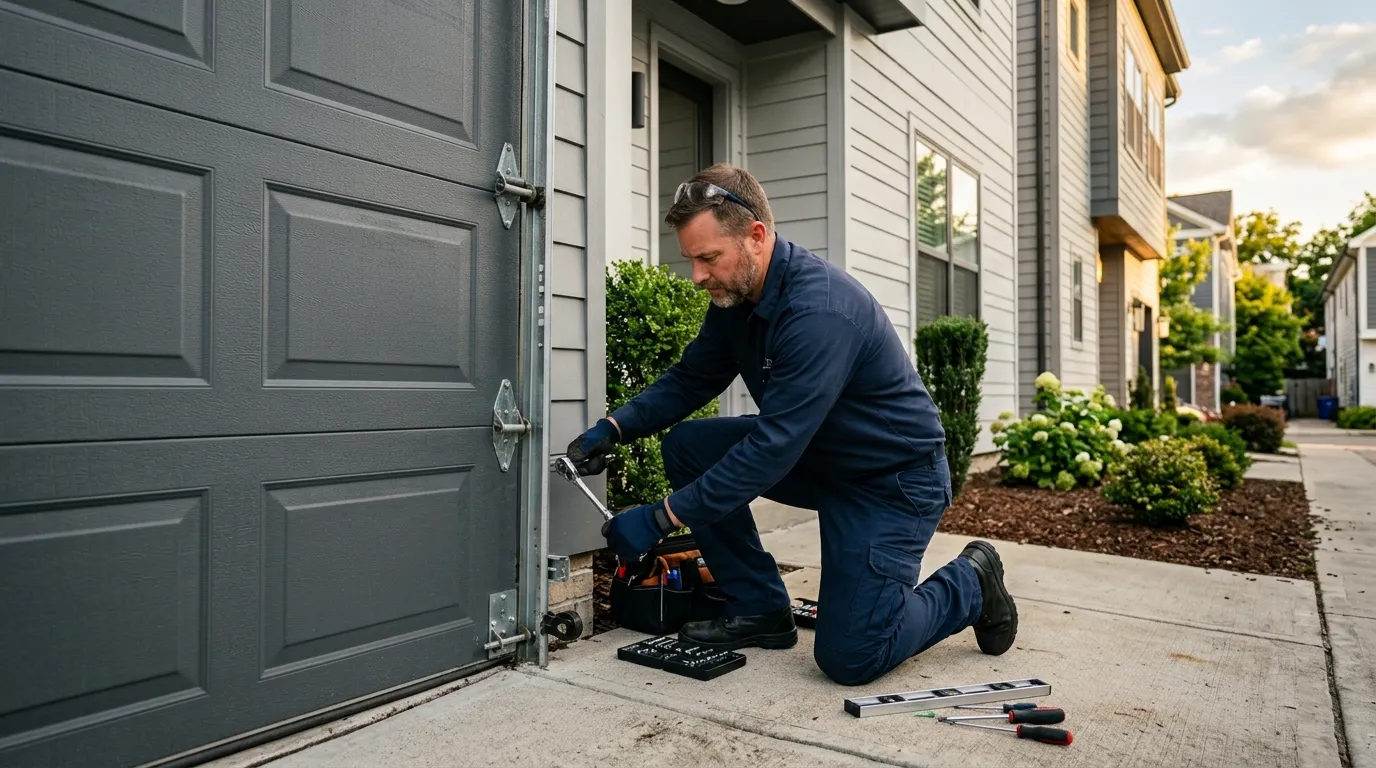
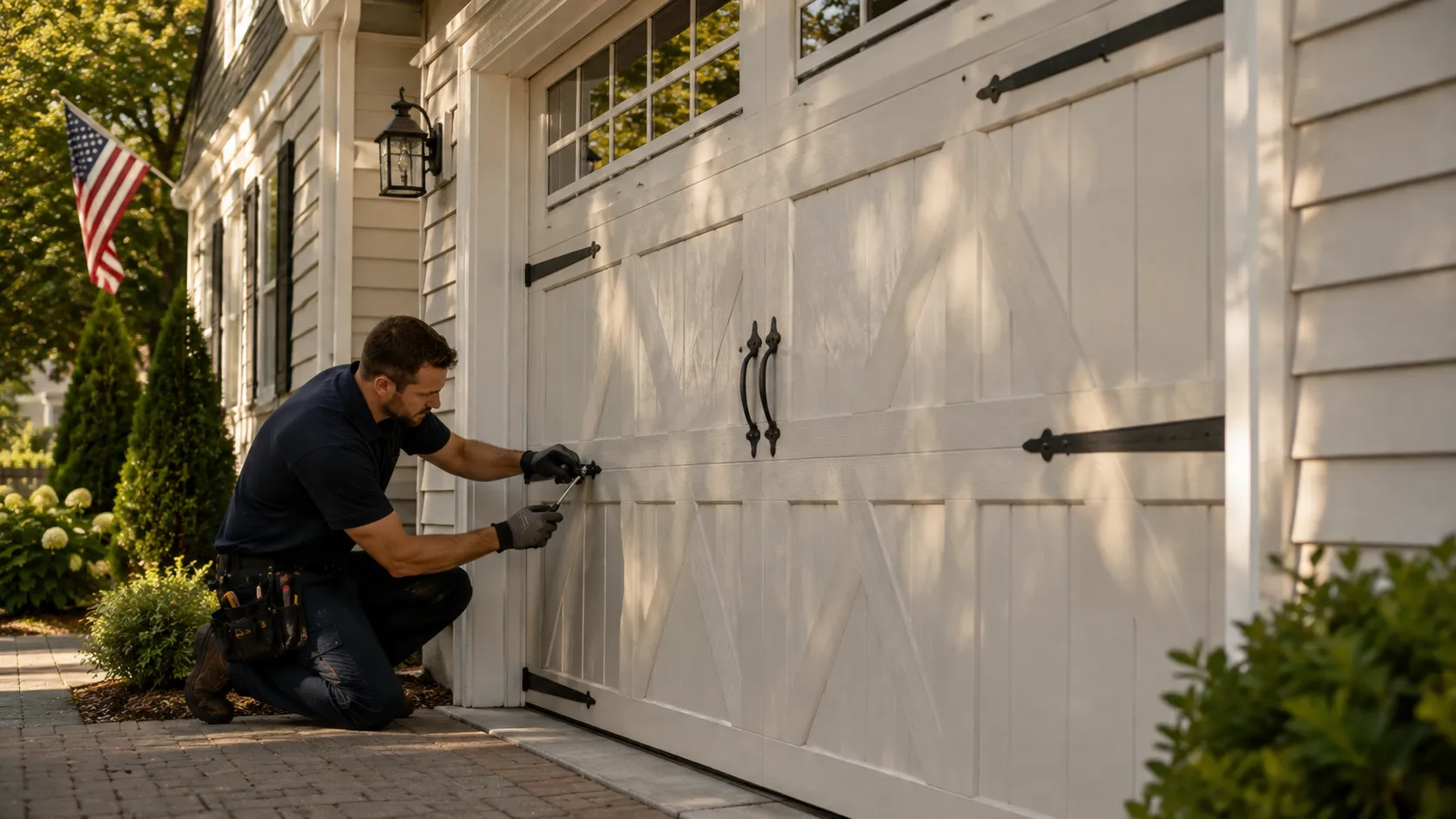
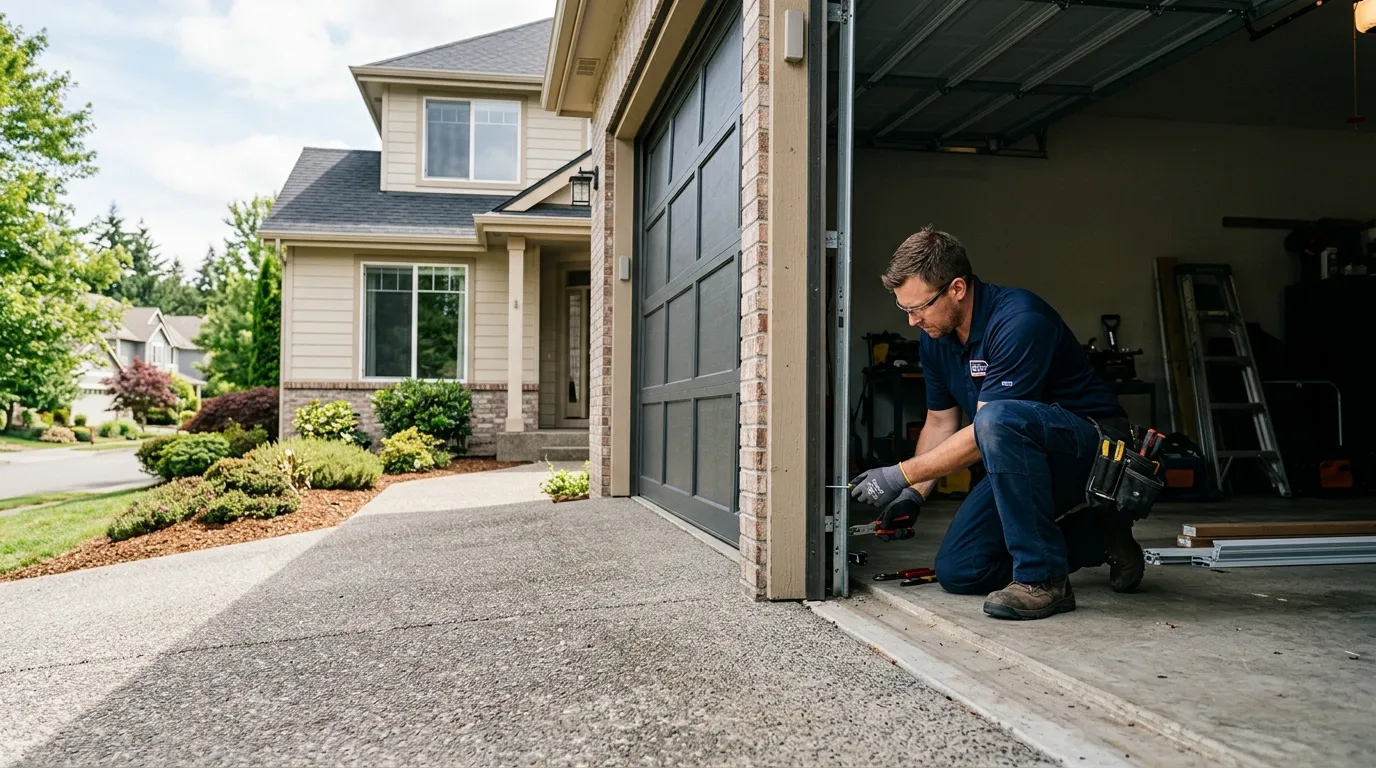
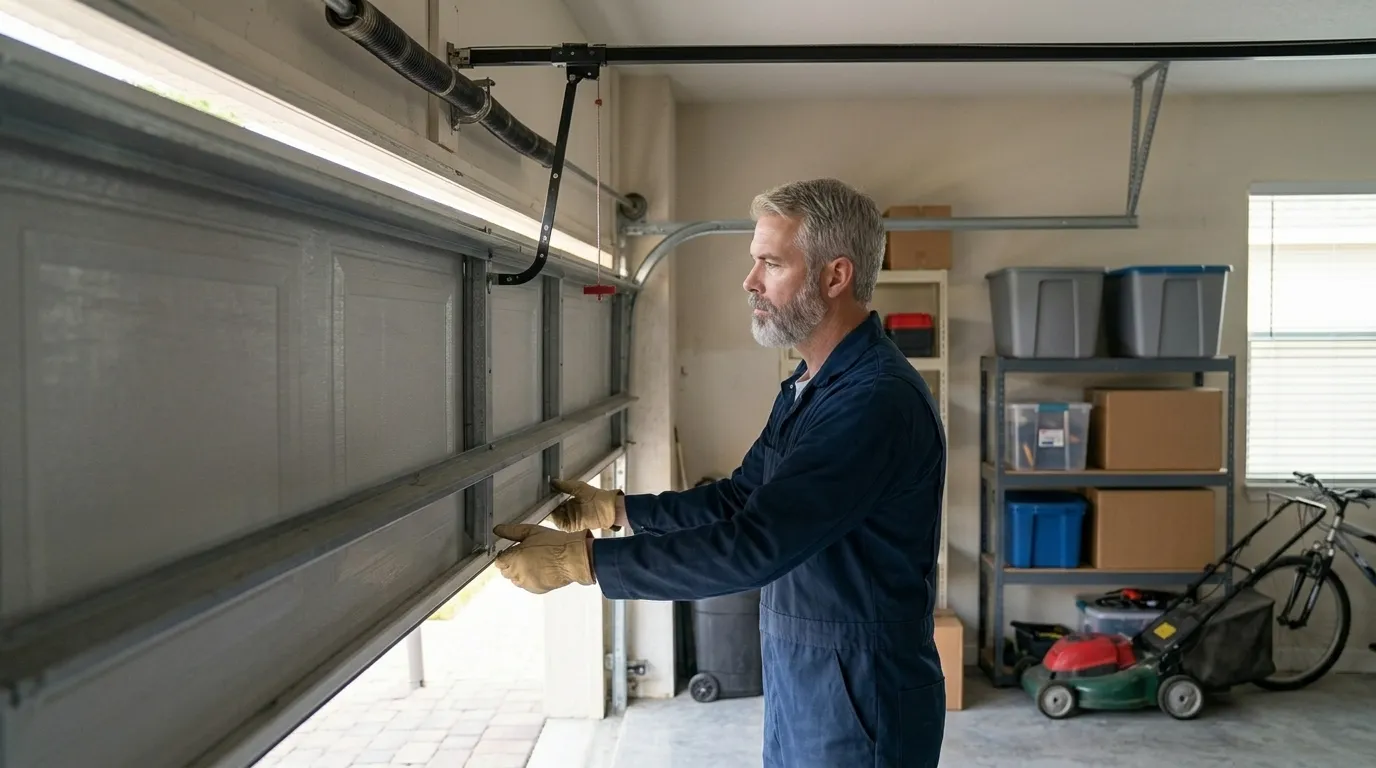
Track and roller work is usually a same-visit fix: realign the vertical track, replace worn rollers with a gauge that matches the original track width, and check the header bracket for movement. On a door this old, we also check the bottom bracket and cables while we're in there, since a cable that frays on a 1978-era door usually goes unnoticed until it lets go.
Getting It Booked In
We run this call out of Toms River, about 5 miles from Holiday City-Berkeley, so we're not sitting in the neighborhood waiting on jobs - we schedule the run based on what's on the truck for that route that day. When you call, tell us the door's approximate age and whether it's a single or double door; on a household income median in this range ($47,855), we try to give you a straight repair-vs-replace number before we start, not after.
We carry common spring sizes and standard opener parts on the truck already, since most of what fails on 1970s-era doors in this area is predictable. If your door has a less common track width or an opener model that's been discontinued, we'll tell you on the call whether we need to order it, rather than showing up and finding out together.
Parts We Carry
On the truck for this route we keep standard torsion springs in the common residential sizes, chain and belt-drive opener motors, steel and nylon rollers, and cable and bracket hardware sized for older single and double doors. What we don't stock is anything custom - a non-standard track width or a discontinued opener control board has to be special-ordered, and we'll tell you that up front rather than promising a same-day fix we can't back up. For a door built in the 1978 range, the standard parts cover the large majority of what actually breaks.